Summer 25% discount on all last year's bike models

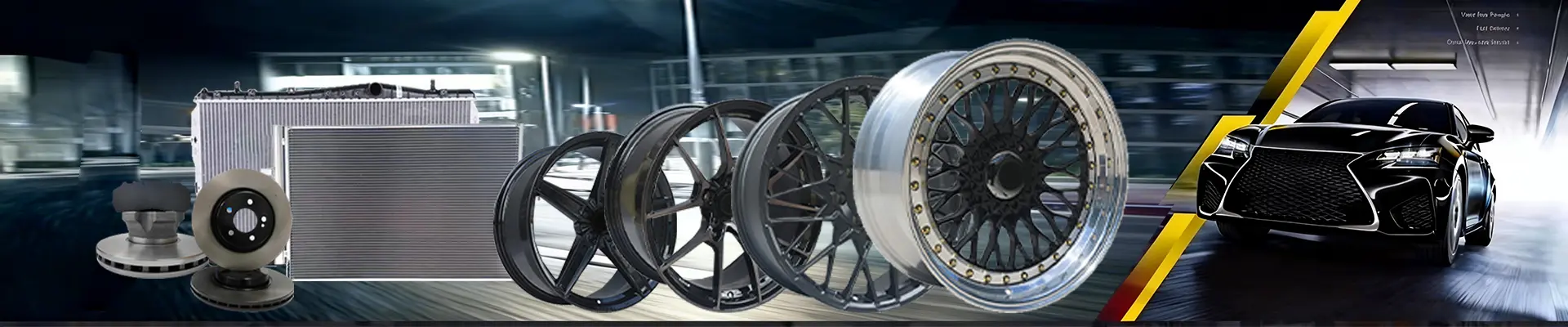
Buy Wheel Accessories Best Price 2026 Wholesale Supplier

Buy Wheel Accessories Best Price 2026 Wholesale Supplier
The lowest unit price on a wheel accessory quote is almost never the real cost you will pay by the time the container reaches your warehouse.
To buy wheel accessories at the best price in 2026, you must split your sourcing by accessory category, match surface finish grades to your target market’s climate, and respect the MOQ breakpoint where custom tooling amortization actually starts working in your favor. A factory-direct wheel accessories supplier who can cover center caps, lug nuts, spacers, and TPMS under one roof typically delivers a 40-60% saving versus retail-branded parts, but only when the order is structured correctly.
I still remember a shipment we sent to a Middle East distributor a few years back. The alloy wheels themselves were flawless, but the配套 center caps and locking lug nuts had been finished with a standard clear coat rather than a higher-grade salt-spray treatment. Within a few months, the nuts developed white corrosion spots. The distributor threatened to return the entire batch. The replacement freight, re-plating, and repackaging cost several times the original price difference we had tried to save on. That single order taught me that when you buy wheel accessories at the best price on paper, the hidden cost always lives in surface treatment, packaging compliance, and certification gaps. [NEED_CITE: root cause distribution of wheel fastener field failures per ISO 15243]
Let me walk you through how a serious buyer should structure the purchase in 2026, category by category.
What Wheel Accessories Should You Prioritize for 2026 Margins?
High-margin wheel accessories in 2026 concentrate in custom center caps and locking lug nuts, not in generic valve stems or standard hub caps.
Generic valve stems and plain hub caps have become commoditized. Margins are thin, competition is brutal, and buyers tend to grab the cheapest wheel accessories supplier they can find on Alibaba. The real profit sits in items where branding, fitment specificity, and finish customization matter.
| Accessory Category | Margin Potential | Customization Depth | MOQ Sensitivity |
|---|---|---|---|
| Custom Center Caps | High | Full logo, color, diameter | Moderate |
| Locking Lug Nuts | High | Pattern, finish, thread | Moderate |
| Wheel Spacers / Adapters | Moderate-High | Thickness, PCD, bore | Low |
| TPMS Sensors | Moderate | Protocol, frequency | High |
| Standard Valve Stems | Low | Minimal | Very High |
A US-based e-commerce seller I worked with once told me he was pushing generic valve stems because they moved fast. Fast, yes, but at a margin so thin that one FBA storage fee wipeout erased a full quarter’s profit. When he shifted part of his catalog to private-label center caps and colored locking nuts matched to popular aftermarket wheel styles, his average order value climbed noticeably and his return rate dropped. [NEED_CITE: aftermarket wheel accessories margin benchmark by category per SEMA market report]
The lesson is simple: when you buy wheel accessories at the best price, prioritize the SKUs where your buyer actually cares about appearance and fitment, because those are the SKUs where they will pay a reasonable premium.
How Do Surface Finishes Affect Real Cost and Complaint Rate?
Every step up in salt-spray resistance grade adds roughly a small single-digit percentage to unit cost, but it cuts field complaint rates by a wide margin.
This is the single most misunderstood area when buyers compare quotes from different wheel accessories suppliers. Two factories can quote you locking lug nuts at noticeably different prices, and the difference is almost never about the steel itself. It is about the plating sequence, the number of coating layers, and the tested salt-spray endurance.
| Finish Grade | Salt-Spray Endurance | Typical Use Case | Field Complaint Risk |
|---|---|---|---|
| Basic Zinc | Standard | Dry inland markets | Vulnerable |
| Zinc + Clear Coat | Extended | Temperate coastal | Noticeably reduced |
| Zinc-Nickel Alloy | Substantially extended | Humid tropical, Middle East | Robust |
| Dacromet / Geomet | Maximum | Marine, heavy-duty trucks | Highly resistant |
I once reviewed a complaint file from a Southeast Asian distributor who had bought a large batch of chrome-center caps from a wheel accessories supplier offering rock-bottom pricing. The caps looked perfect on arrival. Three months later, in a humid port city, the chrome started peeling around the rim edge. The distributor had to pull stock from retail partners, reprint packaging, and re-plate. The total loss ran into mid-five figures. [NEED_CITE: salt-spray test methodology per ASTM B117 for automotive fasteners]
When you evaluate a quote, ask the supplier for the salt-spray test report, not just the finish name. A responsible wheel accessories supplier will provide a certified test certificate showing the hours endured before red rust appears. If they cannot, walk away. The price you save today will come back as a return claim tomorrow.
What Is the Real MOQ Breakpoint for Custom vs Stock Accessories?
Stock wheel accessories can be ordered in very small quantities, but custom pieces only become economically sensible once you cross a specific MOQ threshold where tooling amortization stops punishing your unit cost.
Many buyers assume that lower MOQ is always better. It is not. For stock items such as standard black center caps or common conical-seat lug nuts, a wheel accessories supplier can often ship as few as a couple of dozen pieces. The unit price is slightly higher than a full container load, but the cash commitment is minimal and the lead time is short.
Custom items are a different story. If you want your logo on a center cap, a unique locking pattern on a lug nut, or a specific PCD on a spacer, the factory has to build tooling. That tooling cost gets divided across the order quantity. Below a certain threshold, the per-piece tooling share pushes your real unit cost above what you would pay for a larger run.
| Order Type | Typical MOQ Range | Tooling Cost Impact | Best For |
|---|---|---|---|
| Stock / Catalog | Very low | None | Testing, small shops |
| Light Custom (logo, color) | Low-Moderate | Low | E-commerce sellers |
| Full Custom (pattern, PCD) | Moderate | Meaningful | Distributors, OEMs |
A modification shop in Latin America once asked us to produce a run of custom-spoked center caps in a very small quantity. The per-piece cost was unattractive because the mold amortization was spread over too few units. We suggested they combine the caps with a matching set of locking nuts in the same finish, which allowed us to share setup time across SKUs. The blended unit cost dropped noticeably, and the shop got a coordinated look for their wheel packages. [NEED_CITE: tooling amortization economics in aftermarket fastener production]
The practical rule: when you buy wheel accessories at the best price, treat stock and custom as two separate purchasing strategies. Stock for fast rotation, custom for margin-building programs where you can commit to a meaningful batch.
Which Certifications Are Mandatory by Region in 2026?
Wheel fasteners and certain accessories face mandatory certification in multiple key markets, and shipping without them means your cargo will not clear customs.
This is the trap that catches new importers every year. They find a wheel accessories supplier with attractive pricing, place an order, and then discover at the port that the goods lack required documentation. The container sits, demurrage accumulates, and the buyer either pays for re-certification or ships the goods back.
| Market | Key Certification | Applies To | Consequence of Missing |
|---|---|---|---|
| Middle East (SASO) | SASO IECEE / QC | Lug nuts, bolts, safety parts | Customs hold, rejection |
| United States | DOT compliance | Wheel fasteners, TPMS | Cannot clear port |
| Europe | TÜV / VIA where applicable | Structural accessories | Market access blocked |
| Japan | JWL / VIA | Load-bearing parts | Import denied |
A Middle East buyer once received a batch of locking lug nuts from a wheel accessories supplier who had not bothered with SASO documentation. The goods arrived in Jeddah and were held. The buyer had to arrange third-party inspection and re-labeling, which added weeks of delay and a meaningful surcharge to the landed cost. [NEED_CITE: SASO regulatory requirements for automotive fasteners in GCC markets]
Before you commit to any wheel accessories supplier, ask them which certifications they hold and for which product categories. A credible supplier will have ISO 9001 as a baseline, plus market-specific marks like DOT, TÜV, JWL, or CCC depending on their export footprint. If they wave off the question, they are not the right partner for a serious import program.
How to Structure a Factory-Direct Order for Maximum Savings?
The biggest savings come not from negotiating a lower unit price, but from combining SKUs into mixed containers, standardizing packaging, and staging deliveries to match your cash flow.
When you buy wheel accessories at the best price through a factory-direct channel, you unlock a cost structure that is fundamentally different from buying through trading companies or retail brands. The factory absorbs the production margin, and you take on the logistics coordination. The trick is to coordinate it smartly.
First, mix your container. A modification shop or e-commerce seller rarely needs a full container of a single SKU. By combining center caps, lug nuts, spacers, valve stems, and TPMS sensors into one shipment, you spread the freight cost across a broader catalog and keep your per-SKU inventory investment manageable.
Second, standardize your packaging early. Amazon FBA, for example, has strict labeling and poly-bag requirements. If your wheel accessories supplier ships goods in bulk cartons without individual barcodes, you will pay a third-party prep service to re-pack everything before FBA will accept it. That rework adds a meaningful cost per unit. Build the packaging spec into your purchase order from day one.
Third, stage your deliveries. If you have a large custom order, ask the supplier whether they can produce in batches and ship in stages. This smooths your cash outflow and lets you test the market response before committing to the full volume.
| Strategy | Cost Impact | Operational Benefit |
|---|---|---|
| Mixed-SKU Container | Substantial freight saving per SKU | Broader catalog, lower inventory risk |
| Pre-Compliant Packaging | Avoids rework fees | FBA-ready, retail-ready on arrival |
| Staged Production & Delivery | Smoother cash flow | Market testing before full commitment |
A European distributor I worked with used to order wheel accessories in separate small parcels from multiple suppliers. The freight and handling cost per unit was high, and the packaging was inconsistent. When they consolidated their sourcing with a single wheel accessories supplier who could cover the full accessory range, their landed cost per unit dropped noticeably, and their warehouse receiving process became far simpler. [NEED_CITE: container utilization efficiency in mixed aftermarket parts shipping]
Conclusion
Buying wheel accessories at the best price in 2026 is a sourcing architecture problem, not a unit-price negotiation problem. Match surface finish to climate, respect the custom MOQ breakpoint, secure the right certifications before shipping, and structure your orders as mixed, staged, and pre-packaged programs. A factory-direct wheel accessories supplier who handles center caps, lug nuts, spacers, and TPMS under one roof gives you the widest lever to pull on all four fronts at once.


