Summer 25% discount on all last year's bike models

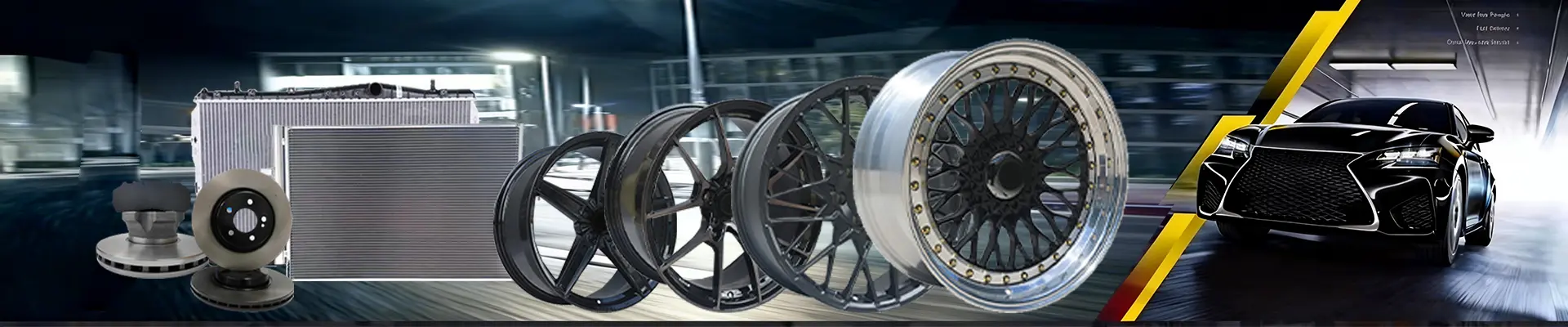
Alloy Wheels for Mexico Market 2026 Wholesale Supplier Guide

Alloy Wheels for Mexico Market 2026 Wholesale Supplier Guide
The best-selling alloy wheels in Mexico are never the most expensive ones—they are the ones matched to local road conditions, vehicle parc, and coastal climate stress.
For 2026, the Mexico aftermarket is dominated by 15- to 17-inch wheels for economy sedans, with 17- to 18-inch matte black finishes driving SUV modification growth; successful sourcing hinges on selecting the right PCD/ET combinations, UV-resistant surface treatments, and maritime-grade packaging to survive Veracruz port humidity.
I still remember a shipment of matte black 17-inch wheels bound for a Mexico City tuning shop. They arrived at Veracruz with white oxidation spots scattered across the lip edges. The buyer assumed the clear coat had failed salt-spray testing. We pulled the container open, checked the humidity indicator cards inside, and found the desiccant bags had been saturated within the first week of the ocean transit. The paint was fine—the container had been sweating. [NEED_CITE: container condensation mechanisms during tropical sea freight] That incident reshaped how every Mexico-bound order gets packed from that point forward.
Sourcing alloy wheels for Mexico Market requires understanding which specifications actually move off the shelf, which certifications keep customs agents happy, and which shipping mistakes turn a profitable order into a bonded-warehouse nightmare. Let me walk through what the data and field experience actually show.
What Are the Best-Selling Alloy Wheel Sizes in Mexico for 2026?
Fifteen- and sixteen-inch wheels account for the majority of aftermarket volume on economy sedans, while seventeen- and eighteen-inch sizes are the growth segment for SUV and pickup modifications.
The Mexican vehicle parc skews heavily toward compact sedans and subcompacts—Nissan Versa, Chevrolet Aveo, VW Vento, and Toyota Yaris dominate registration numbers year after year. [NEED_CITE: AMIA vehicle registration data by segment for Mexico] These platforms predominantly ship from the factory on 15-inch steel wheels, meaning the aftermarket upgrade path runs straight to 15- and 16-inch alloy replacements. Shops in Mexico City, Puebla, and Guadalajara restock these sizes constantly, with reorder cycles measured in weeks rather than months.
| Vehicle Segment | Popular Models | OEM Wheel Size | Aftermarket Sweet Spot | PCD Range |
|---|---|---|---|---|
| Subcompact Sedan | Nissan Versa, Chevy Aveo | 15-inch steel | 15-16 inch alloy | 4×100, 4×114.3 |
| Compact Sedan | VW Vento, Toyota Corolla | 16-inch alloy | 16-17 inch alloy | 5×100, 5×114.3 |
| Mid-Size SUV | Nissan X-Trail, Chevrolet Tracker | 17-inch alloy | 17-18 inch alloy | 5×114.3 |
| Pickup | Toyota Hilux, Nissan Frontier | 16-17 inch steel | 16-17 inch alloy | 6×139.7 |
A wholesale buyer in Monterrey once told me his fastest-moving SKUs were 15-inch multi-spoke designs in silver and hyper silver for Versa owners wanting a cosmetic refresh. His margin was thin, but the volume was relentless—he needed a supplier who could hold consistent stock depth and ship mixed-SKU containers without long lead times. [NEED_CITE: aftermarket wheel size distribution trends in Latin American markets]
The SUV segment tells a different story. Monterrey and northern border cities see heavy demand for 17- and 18-inch matte black and gunmetal finishes on X-Trail, Tracker, and Hilux platforms. These buyers are less price-sensitive and more style-driven, often ordering staggered or deep-concave fitments. The key for wholesalers is balancing the high-volume economy sizes with enough SUV SKUs to capture the modification shop dollar.
Which Surface Finishes Withstand Mexico’s Climate?
High-UV inland cities demand UV-resistant clear coats, while coastal ports require finishes that pass extended salt-spray endurance testing—matte black and machined face generally outperform chrome in these conditions.
Mexico’s climate is not monolithic. Mexico City sits at high altitude with intense ultraviolet exposure but low humidity. Veracruz and Tampico sit on the Gulf coast with persistent salt-laden air and high ambient humidity. Monterrey swings between dry heat and seasonal downpours. Each environment attacks wheel finishes differently.
| Finish Type | UV Resistance | Salt-Spray Endurance | Coastal Suitability | Inland Suitability |
|---|---|---|---|---|
| Full Chrome | Vulnerable | Vulnerable | Not recommended | Standard |
| Gloss Black | Standard | Standard | Standard | Standard |
| Matte Black with UV Clear | Resistant | Resistant | Robust | Robust |
| Machined Face with Clear | Resistant | Standard | Standard | Robust |
| Hyper Silver | Standard | Standard | Standard | Standard |
Chrome wheels look stunning on the showroom floor but develop micro-cracking and peeling in coastal Mexico within a single rainy season if the underlying copper and nickel layers are thin. I have seen entire display sets at a Veracruz tire shop turn hazy within months. Matte black, when paired with a quality UV-stabilized clear coat, holds up noticeably better in both inland and coastal environments. [NEED_CITE: automotive wheel coating durability under tropical UV and saline exposure]
A modification shop owner in Cancún switched his display inventory from chrome to matte black and machined face finishes after two consecutive summers of customer complaints about peeling. His return rate dropped noticeably, and he stopped fielding calls about warranty claims on finish quality. The finish itself was not the full story—he also started advising customers on proper cleaning chemistry, avoiding acidic wheel cleaners that strip clear coats prematurely.
For wholesale buyers specifying finishes to a Chinese factory, the conversation should center on clear-coat formulation and primer layer count rather than just color names. A machined face wheel with a single clear-coat pass will behave very differently from one with a dual-pass UV-stabilized top coat when exposed to Yucatán sunlight for a year. [NEED_CITE: automotive clear coat UV stabilization standards for tropical markets]
How to Choose the Right Certifications for Mexican Customs?
VIA and JWL certifications open doors with modification shops, while DOT and TÜV documentation satisfies OEM and large-scale wholesale importers—missing paperwork means bonded warehouse fees that erase any per-piece price advantage.
Mexican customs does not mandate a single universal wheel certification for aftermarket imports. However, the practical reality is more nuanced. Large distributors importing full containers for resale to tire shop chains expect certification documentation to accompany every shipment. Modification shops catering to enthusiasts ask for VIA or JWL test reports as a trust signal. And any buyer sourcing wheels that may touch OEM-adjacent supply chains will require DOT or TÜV paperwork.
| Certification | Primary Market Signal | Typical Buyer Expectation |
|---|---|---|
| VIA / JWL | Japanese aftermarket testing standard | Modification shops, enthusiast retailers |
| TÜV | European technical compliance | OEM-adjacent, premium distributors |
| DOT | US regulatory compliance | Cross-border trade, large wholesalers |
| CCC | Chinese manufacturing compliance | OEM programs, government fleet tenders |
A Latin American regional distributor I worked with once had a container held at Manzanillo for weeks because the commercial invoice listed wheel specifications that did not match the TÜV test report attached. The wheels themselves were perfectly fine. The paperwork mismatch triggered a secondary inspection, and the demurrage charges ended up costing several times the per-wheel price difference between a certified and uncertified supplier. [NEED_CITE: Mexican customs documentation requirements for automotive wheel imports]
The lesson for buyers is straightforward: confirm that the supplier can provide certification documents that match the exact wheel specifications—diameter, width, PCD, ET, and center bore—being shipped. Generic certificates covering a "family" of wheels often fail under customs scrutiny. When evaluating an alloy wheels for Mexico Market supplier, ask upfront whether they issue model-specific test reports and whether those reports are current and verifiable.
I always make sure the certification package travels with the bill of lading and packing list as a single bundle. It saves the buyer from chasing documents across time zones while a container accumulates port storage fees.
What Are the Common Shipping Pitfalls and How to Avoid Them?
Veracruz port’s high-humidity environment demands a dual-layer defense—container desiccant placement and pre-seal humidity verification—to prevent oxidation claims that have nothing to do with paint quality.
The "container breathing" effect is the single most misunderstood cause of wheel damage on the China-to-Mexico sea route. During a multi-week transit crossing the equatorial Pacific, daytime heat causes air inside the container to expand and escape through microscopic vent gaps. Nighttime cooling pulls moist external air back in. Over successive cycles, condensation forms on every metal surface inside—including wheel faces and lips.
The common mistake is treating desiccant as an afterthought. Tossing a few clay desiccant bags into the corners of a container loaded with aluminum wheels bound for a tropical port is a recipe for oxidation claims. The correct approach involves calculating desiccant mass based on container volume and transit duration, hanging desiccant units from ceiling tie-down points to maximize air contact, and sealing the container only after confirming internal relative humidity sits below a defined threshold using indicator cards. [NEED_CITE: marine container condensation prevention best practices for metal goods]
| Shipping Step | Common Mistake | Correct Approach |
|---|---|---|
| Desiccant Loading | Bags placed on container floor | Units hung at multiple heights for air circulation |
| Humidity Check | No verification before sealing | Indicator cards read and photographed at sealing |
| Wheel Wrapping | Bare wheels stacked directly | Individual PE bag wrapping with anti-corrosion interleave |
| Container Lining | No moisture barrier | Kraft paper or bubble liner on ceiling and walls |
A batch of wheels I supervised for a Guadalajara buyer followed this protocol strictly. The container left the factory in Dongguan, transited via the Pacific, and arrived at Manzanillo. The buyer opened the container, checked the humidity cards we had taped inside the door, and confirmed they still showed the "dry" color. Zero oxidation claims across the entire order. The extra packaging cost per wheel was marginal compared to the risk of a full-container rejection.
For buyers evaluating an alloy wheels for Mexico Market supplier, ask to see their packing standard operating procedure. A supplier who photographs desiccant placement and shares humidity readings before sealing demonstrates process discipline that protects your investment far more than a slightly lower unit price.
Why Source from a Chinese Factory with Latin America Experience?
A factory familiar with Latin American import workflows provides Spanish-language documentation, understands regional certification expectations, and optimizes packaging for tropical port conditions—reducing hidden costs that erode the apparent price advantage.
The gap between a factory that exports primarily to Northern Europe and one that regularly ships to Latin America is not just about product specifications. It is about operational familiarity. Spanish-language packing lists and commercial invoices that match Mexican customs formatting requirements. Certificates organized in the sequence that Mexican import brokers expect. Packaging designed for high-humidity port environments rather than dry European warehouses.
A factory with repeated Mexico shipment experience also understands the vehicle parc nuances. They know that a 4×100 PCD wheel for a Versa needs to be stocked in deeper quantities than a niche 5×120 fitment. They know that matte black 17-inch wheels for SUV platforms are trending upward in northern Mexican cities. They can advise on SKU mix optimization for a first container order rather than forcing the buyer to guess.
Working with a manufacturer that holds multi-certification capability—including VIA, JWL, TÜV, and DOT—means the buyer does not need to juggle multiple suppliers to cover different customer segments. A single source that can produce a certified 15-inch economy wheel and a certified 18-inch SUV wheel in the same production cycle simplifies logistics, consolidates shipping, and ensures consistent quality control across the entire order. [NEED_CITE: advantages of multi-certified wheel manufacturers for emerging market buyers]
The real value shows up when something goes wrong. A supplier who has dealt with Mexican customs queries before knows which documents need revision, which translations are required, and how to respond without triggering a full re-inspection. That institutional memory saves the buyer from expensive delays and protects the relationship with their own customers downstream.
Conclusion
Winning in the Mexico alloy wheel aftermarket comes down to matching specifications to local conditions, not chasing the lowest unit price. The best-selling sizes cluster around 15 to 17 inches for economy platforms with 17 to 18 inches growing in the SUV segment. Surface finishes must resist both UV degradation inland and salt-spray attack on the coast. Certification documents must be exact, current, and bundled correctly for customs clearance. And shipping packaging must account for tropical humidity with the same rigor applied to wheel engineering. Buyers who treat these factors as a system—rather than optimizing each in isolation—consistently avoid the costly surprises that sink first-time importers.


