Summer 25% discount on all last year's bike models

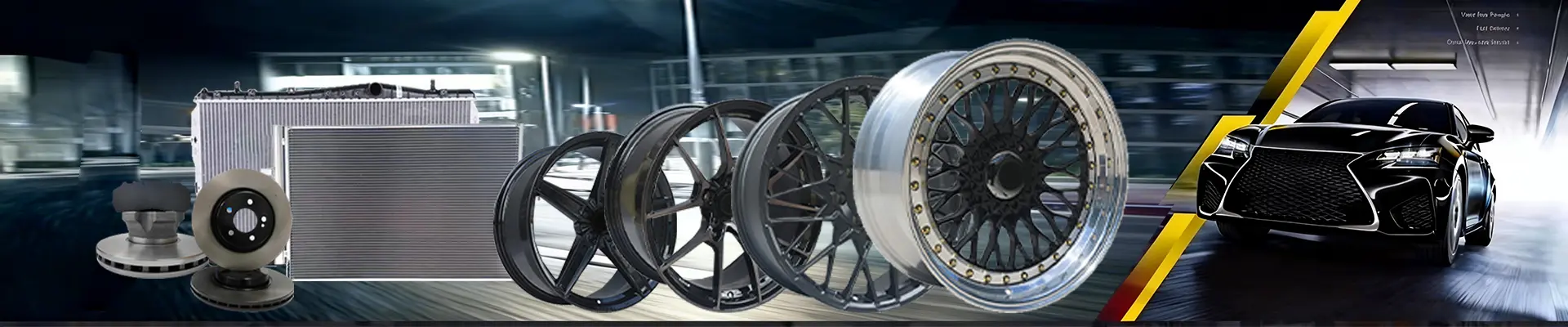
Alloy Wheels Price in Chile: 2026 Wholesale Buyer Guide

Alloy Wheels Price in Chile: 2026 Wholesale Buyer Guide
The real alloy wheels price in Chile is never the FOB number on a quotation sheet — it is the sum of landed cost, certification amortization, import duties, and mold allocation spread across your order volume.
If you are sourcing alloy wheels price in Chile for resale or modification shop inventory, the per-piece wholesale range depends on three dimensions: diameter, manufacturing process, and surface finish. A 15-inch cast matte black wheel sits at the baseline; a 22-inch forged hyper-silver rim can cost multiples of that. Adding VIA certification, Chilean customs duty, and Valparaiso port handling charges creates a hidden cost layer that turns a seemingly cheap FOB quote into an expensive landed unit. [NEED_CITE: Chilean customs tariff classification for aluminum alloy wheels and applicable ad valorem rate]
I have watched buyers from Santiago to Antofagasta make the same mistake: fixating on the factory unit price while ignoring what happens after the container leaves Ningbo. One modification shop owner I met at a trade show locked in a two-container order of 18-inch gloss black wheels because the FOB price looked unbeatable. By the time the wheels cleared Valparaiso, VIA certification gaps and port storage fees had erased the savings entirely. That is why I break down every cost layer explicitly for South American clients — even when it makes the first quotation look less attractive.
Let me walk you through what actually drives the alloy wheels price in Chile and how to calculate a realistic landed cost before you commit to a purchase order.
What Determines Alloy Wheels Price for Chilean Importers?
Four variables set the base factory price: diameter, production method, surface treatment, and order quantity — and they interact with each other, not just add up linearly.
Diameter is the most visible driver. Moving from 15-inch to 17-inch to 19-inch to 22-inch does not increase material cost proportionally. The real cost jump comes from longer cycle times in casting or flow-forming, higher rejection rates during machining, and more expensive packaging for larger diameters. A 22-inch wheel is not just a bigger 17-inch wheel — it demands different tooling, slower production speed, and stricter dynamic balance control. [NEED_CITE: relationship between wheel diameter and manufacturing cycle time in low-pressure casting processes]
Production method creates the next pricing tier. Gravity casting sits at the entry level. Flow-forming (also called rotary forging or spin-forming) adds a secondary process that thins the barrel while strengthening the rim, pushing the price upward. Full forging — machining from a solid billet or closed-die forging — occupies the premium tier. Most Chilean aftermarket demand clusters in the casting and flow-forming range; pure forging orders remain niche, typically tied to high-end modification shops in Santiago or Viña del Mar.
Surface finish adds a third layer. Matte black and gloss black are the cheapest because they use standard powder coating with high throughput. Machined face requires secondary CNC work. Chrome plating involves multiple chemical baths and longer curing. Custom colors — bronze, gunmetal, hyper silver, or any Pantone match — introduce paint mixing waste and smaller batch runs, which factories price at a premium.
Order quantity is the multiplier that ties everything together. Factories amortize setup costs, mold depreciation, and paint line changeover across the number of pieces in a run. A four-piece set order and a full-container order of the same wheel will carry very different per-piece costs.
| Factor | Entry Tier | Mid Tier | Premium Tier |
|---|---|---|---|
| Diameter | 15–17 inch | 18–19 inch | 20–22 inch |
| Process | Gravity casting | Flow-forming | Full forging |
| Finish | Matte/gloss black | Machined face | Chrome or custom color |
| Order Volume | Full container mixed | Full container single SKU | Multi-container annual contract |
A wholesale buyer in Valparaiso once compared quotes for 17-inch, 19-inch, and 22-inch wheels in the same flow-forming construction and matte black finish. The per-piece price did not climb by the weight difference — it climbed substantially more, because the factory had to slow the line for the 22-inch size and accept a noticeably higher scrap rate. That is the part of the alloy wheels price in Chile that most quotation sheets hide.
FOB vs CIF vs DDP: Which Trade Term Actually Controls Your Landed Cost?
FOB looks cheapest on paper, but it transfers freight risk and port coordination burden entirely to you — and for Chilean importers, that burden is heavier than it appears.
FOB (Free On Board) means the factory delivers the wheels to the departure port in China and clears export customs. From that point, ocean freight, insurance, Chilean import customs clearance, and inland delivery to your warehouse are your responsibility. The FOB unit price is always the lowest number you will see, which is why it dominates initial quotation comparisons.
CIF (Cost, Insurance, and Freight) means the factory arranges and pays for ocean freight and basic insurance to the destination port — typically Valparaiso or San Antonio. The per-piece price rises, but you gain predictability on shipping cost and avoid negotiating freight rates with carriers who may not prioritize smaller South American lanes. [NEED_CITE: typical ocean freight routing and transit time from major Chinese ports to Valparaiso]
DDP (Delivered Duty Paid) is rare for alloy wheel shipments to Chile because it requires the factory to handle Chilean import duties and VAT on your behalf, which most Chinese manufacturers are not structured to do. When DDP is offered, the per-piece price includes everything to your door — but the margin the factory builds in to cover that complexity can exceed what you would pay a local customs broker.
The critical point for Chilean buyers: the trade term you choose determines who controls the certification documentation timeline. VIA certification requires test reports and factory audit documents to accompany the shipment. Under FOB, you must coordinate between the factory, the testing lab, and your customs broker simultaneously. Under CIF, the factory has stronger incentive to keep the documentation aligned with the shipping schedule because they control the freight booking.
A distributor in Santiago learned this the hard way. He booked FOB to save on freight, but the factory’s VIA test report was still pending when the container arrived at Valparaiso. The wheels sat in port storage for weeks while the documentation caught up. The storage fees alone added a noticeable per-piece cost that no FOB quotation had warned him about.
When you evaluate alloy wheels price in Chile, always ask the factory to quote the same SKU under both FOB and CIF so you can see the freight differential clearly. Then add your estimated customs duty, VIA certification amortization, and local port handling to both numbers. The gap between the two landed costs is usually smaller than buyers expect — and the CIF route often delivers fewer surprises.
Hidden Costs Chilean Buyers Often Overlook in Landed Pricing
VIA certification amortization, port storage during document delays, and mold cost allocation for custom orders are the three cost layers that turn a clean factory quote into an unpleasant surprise at the warehouse.
Let me address each one with the kind of detail that only shows up after you have shipped a few containers to South America.
VIA Certification Cost Allocation. Chile requires VIA certification (or equivalent recognized certification) for alloy wheels entering the market. The certification process involves factory audit, wheel sample testing for dynamic fatigue, radial fatigue, impact resistance, and salt-spray endurance. [NEED_CITE: VIA certification testing requirements for aluminum alloy wheels including dynamic and radial fatigue standards] The certification fee itself is a fixed cost per wheel family (same design, same diameter, same PCD). If you order a full container of one wheel design in one diameter, the per-piece certification amortization is negligible. If you order a mixed container with multiple designs and diameters, each wheel family needs its own certification — and the amortization per piece climbs noticeably.
This is where the alloy wheels price in Chile diverges sharply from the factory quotation. A modification shop ordering small batches of trendy designs across multiple diameters faces certification costs that can add a meaningful percentage to the per-piece landed cost. The solution is to plan your certification portfolio annually: group your orders by wheel family, certify once, and reorder within the certified family for the rest of the year.
Port Storage and Document Delays. Valparaiso and San Antonio ports charge daily storage fees after the free demurrage period expires. If your Bill of Lading, packing list, commercial invoice, or VIA certificate has any discrepancy, Chilean customs will hold the container. I have seen containers sit for extended periods over minor documentation inconsistencies — a misspelled consignee name, a missing seal number, a certification document in the wrong format. The storage fees accumulate daily and are billed in Chilean pesos, adding a variable cost that no factory quotation can predict.
Mold Cost for Custom Designs. If you want a wheel design that is not in the factory’s existing mold library, you need a new mold. The mold cost is a one-time charge, but it must be amortized across your order quantity. For a small trial order, the per-piece mold allocation is substantial. As order volume grows across reorders, the mold cost per piece drops toward zero. [NEED_CITE: typical mold cost range for low-pressure cast alloy wheel tooling by diameter]
A buyer in Concepción ordered a custom color in a small quantity for a limited-edition vehicle package. The mold cost and paint line changeover fee spread across the small order pushed the per-piece cost well above the factory’s catalog price for the same design in standard black. He understood the economics only after the invoice arrived.
| Hidden Cost | Trigger Condition | Cost Behavior |
|---|---|---|
| VIA Certification | Mixed designs or diameters in one order | Fixed per wheel family; amortized across pieces |
| Port Storage | Documentation discrepancy at Chilean customs | Daily rate; variable and unpredictable |
| Mold Allocation | Custom design not in factory library | One-time cost; decreases per piece with volume |
When you request the alloy wheels price in Chile from a factory, ask explicitly: Does this price assume existing molds? Does it include VIA certification documentation? What happens to the per-piece cost if I add a second diameter or a custom finish to the same order? The answers to those questions determine whether your landed cost matches your budget.
How to Get Accurate Wholesale Pricing from Chinese Alloy Wheel Factories
The most common reason Chilean buyers receive inaccurate quotations is that they send incomplete specifications — and the factory fills the gaps with assumptions that do not match your actual order.
To get a quotation that reflects the real alloy wheels price in Chile, you need to provide the factory with a complete specification package. Here is what that package must contain.
First, the wheel specification itself: diameter, width, PCD (pitch circle diameter), offset (ET), center bore, and number of lug holes. These five parameters define fitment. Without all five, the factory cannot confirm whether the wheel suits your target vehicles. [NEED_CITE: standard wheel fitment parameters including PCD, offset, and center bore definitions]
Second, the surface finish requirement. Do not just say "black." Specify matte black powder coat, gloss black powder coat, machined face with gloss black spoke pockets, or whatever your exact requirement is. Each finish has a different production cost and lead time.
Third, your annual volume estimate and order pattern. Factories price differently for a buyer who orders one container per year versus a buyer who orders monthly. If you plan to reorder the same designs across multiple containers within a certification cycle, tell the factory — it affects how they allocate certification and mold costs.
Fourth, your certification requirement. If you need VIA certification for the Chilean market, state it upfront. Some factories hold VIA certification for their standard designs already; others need to initiate testing for your specific order. The lead time and cost difference is significant.
Fifth, your preferred trade term. Ask for FOB, CIF Valparaiso, and if possible, a reference price for DDP — even if DDP is not your final choice. Comparing all three on the same specification sheet reveals the freight and duty layers clearly.
A wholesale buyer in La Serena started receiving accurate quotations only after he switched from sending casual inquiry messages to submitting structured specification sheets with all five fitment parameters, finish photos, annual volume, and certification needs. His first round of quotations from the new approach looked higher than his previous inquiries — because the previous inquiries had been based on incomplete information and the factory had quoted its most optimistic assumptions. The new quotations, once adjusted for actual certification and freight costs, turned out to be more realistic and ultimately more reliable for his business planning.
The alloy wheels price in Chile that you see on a well-structured quotation is a number you can build a business plan around. The number you get from a vague inquiry is a number that will change — usually upward — once the real order details emerge.
Conclusion
The alloy wheels price in Chile is a layered calculation, not a single factory number — diameter, process, finish, order volume, trade term, certification, and port handling all contribute to the final per-piece landed cost. Buyers who request complete specifications, compare trade terms side by side, and plan certification portfolios annually will always see a more accurate and more stable cost structure than those who chase the lowest FOB quote. The factory that breaks down every cost layer transparently — even when the total looks higher than expected — is the partner that protects your margin at the warehouse door.


