Summer 25% discount on all last year's bike models

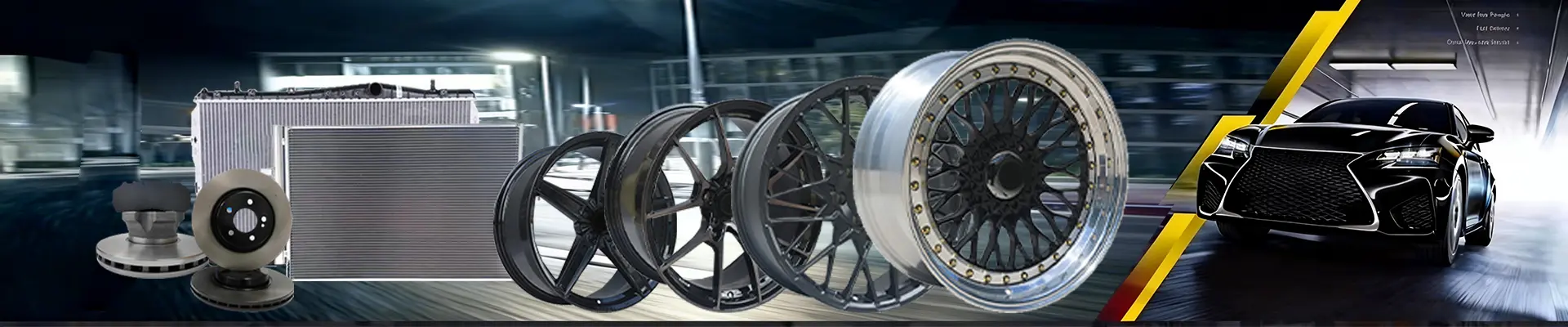
Car Rims Supplier for Egypt: China Factory Direct Wholesale

Car Rims Supplier for Egypt: China Factory Direct Wholesale
Cheapest unit price rarely means lowest total cost when importing alloy wheels to Egypt.
The real deciding factors for sourcing from a Car Rims Supplier for Egypt are customs certification readiness, surface finish durability under high heat and salinity, and complete documentation to avoid port delays at Alexandria or Sokhna—where factory-direct sourcing from Shandong compresses mid-chain costs substantially while keeping paperwork traceable.
I still remember a container of seventeen-inch matte black wheels sitting at Alexandria port for over a month. The buyer, a well-established distributor in the Nile Delta, had picked the lowest quotation available. What nobody checked beforehand was whether the powder coating batch carried the surface treatment certification Egypt’s customs now routinely demand. The wheels looked perfect. The paperwork did not. Demurrage charges ended up exceeding the cargo value itself. That shipment taught everyone involved a lesson no spreadsheet can capture: when you evaluate a Car Rims Supplier for Egypt, the conversation must start with certification files, not price lists [NEED_CITE: Egyptian customs requirements for imported alloy wheel surface treatments].
Once you shift the focus from unit price to landed compliance, the entire sourcing picture changes. Let me walk you through what actually matters.
What Certifications Do Car Rims Need for Egypt Customs?
Egyptian customs increasingly require verifiable quality and origin documentation for imported alloy wheels, and missing even one file can freeze an entire container at the port.
The regulatory landscape for automotive parts entering Egypt has tightened noticeably over the past several years. Importers now face scrutiny not only on the physical product but on the paper trail behind it. The two most common stumbling blocks I see are origin certification and structural compliance marks.
| Document Type | Typical Requirement | Risk If Missing |
|---|---|---|
| Certificate of Origin (CO) | Mandatory for customs valuation | Cargo held, fines applied |
| VIA / TÜV / JWL Structural Mark | Required for aftermarket verification | Batch rejected at inspection |
| ISO Quality System Certificate | Requested during document review | Delayed clearance processing |
| Commercial Invoice & Packing List | Standard trade documentation | Shipment blocked at entry |
| Surface Treatment Compliance Proof | Increasingly requested by inspectors | Coating-related hold at port |
[NEED_CITE: Egypt import documentation requirements for automotive alloy wheels]
A Middle East trading company I worked with once received a full container of custom-painted wheels. Everything matched the purchase order. But the Certificate of Origin listed a different manufacturing entity than the one stamped on the wheels. Customs flagged the mismatch. The container sat for weeks while the supplier scrambled to issue a corrected CO from the original factory. The buyer’s relationship with their end customers suffered far more than their warehouse space did.
The practical takeaway: before you confirm any order with a Car Rims Supplier for Egypt, request a sample document package. Verify that the manufacturer name, product description, and HS code align across every single page. If the supplier hesitates or says they will prepare it later, treat that as a red flag [NEED_CITE: common documentation mismatches causing Egypt port delays].
Which Rim Sizes and Finishes Sell Best in Egypt?
The Egyptian aftermarket leans heavily toward fifteen to seventeen-inch wheels in silver and matte black finishes, though SUV-sized rims are gaining ground steadily.
Walking through modification shops in Cairo and Alexandria, you notice a clear pattern. The majority of passenger cars on Egyptian roads—Toyota Corolla, Nissan Sunny, Hyundai Elantra, Chevrolet Optra generations—run on fifteen and sixteen-inch platforms. These sizes dominate replacement demand. Matte black has overtaken traditional silver as the preferred finish among younger buyers, driven by social media exposure and regional tuning trends.
| Size Range | Market Segment | Popular Finish | Demand Trend |
|---|---|---|---|
| 15-16 inch | Economy sedan replacement | Silver, Hyper Silver | Stable, high volume |
| 17 inch | Mid-size sedan upgrade | Matte Black, Gunmetal | Growing noticeably |
| 18-20 inch | SUV and crossover | Machined Face, Bronze | Rising steadily |
| 22-24 inch | Luxury and show vehicles | Chrome, Custom Paint | Niche but profitable |
[NEED_CITE: popular alloy wheel size distribution in the Egyptian aftermarket]
However, Egypt’s climate adds a layer most catalogs ignore. Coastal cities like Alexandria and Port Said carry high salinity in the air. Inland areas experience extreme summer heat. Cheap paint jobs blister and peel within a single season. I have seen wheels that looked showroom-fresh in the factory develop micro-cracks along the spoke edges after a few months near the Mediterranean coast.
This is where your choice of Car Rims Supplier for Egypt becomes critical. The supplier must understand that surface treatment for this market needs extended salt-spray endurance and UV-resistant clear coats, not just the standard two-layer process sufficient for temperate climates. Ask for their coating specification sheet and compare it against international耐候 benchmarks [NEED_CITE: surface finish durability requirements for wheels in high-salinity coastal environments].
A modification shop owner in Giza told me he switched suppliers after receiving two batches where the matte black finish showed visible color shift between left and right wheels on the same car. The new supplier, a factory-direct operation from Shandong, matched the color within tight tolerances across every batch. Consistency, not just aesthetics, keeps customers coming back.
How to Compare China Factory-Direct vs Trading Companies?
Factory-direct sourcing from Shandong delivers substantially lower per-piece costs, faster document turnaround, and full production traceability—advantages that compound over repeated orders.
The Egyptian market is flooded with quotations from trading companies that source from multiple factories and add their margin on top. On paper, their prices sometimes look competitive. In practice, the gaps emerge when you need customization, documentation, or after-sales support.
| Comparison Factor | Factory-Direct (Shandong) | Trading Company (Multi-Source) |
|---|---|---|
| Unit Price Structure | Noticeably lower, no middle margin | Higher due to layered markup |
| Certification Document Speed | Full batch-level, same-factory traceability | Sample-level or delayed |
| Custom Color / PCD Flexibility | Full OEM / ODM capability | Limited to existing factory stock |
| Quality Consistency Across Batches | Controlled, single production line | Uncontrolled, variable sources |
| Minimum Order for Custom Design | Accessible for small shops | Often inflated to cover sourcing effort |
[NEED_CITE: cost structure comparison factory-direct vs trading company alloy wheel export]
I once handled an order for a Tunisian buyer who initially chose a trading company based on a slightly lower first quotation. When the second batch arrived, the PCD pattern was correct but the center bore differed by a fraction that required hub rings—something the trading company had not caught because they switched sub-suppliers without informing the buyer. The buyer absorbed the cost of hub rings for an entire container.
With a factory-direct Car Rims Supplier for Egypt, the production line is fixed. The same engineers who run the X-ray inspection on the rim barrel also sign off on the coating batch. When you call with a question about bolt pattern tolerance or offset range, you reach the people who actually machined the wheels. That traceability matters enormously when customs asks why this batch differs from the last one [NEED_CITE: advantages of factory-direct alloy wheel sourcing for African importers].
The MOQ structure also favors direct factories for serious buyers. Stock models can start from as few as twenty pieces—ideal for modification shops testing a new style. Custom designs typically require a full pallet or more, but the factory handles the entire engineering loop in-house, from flow-forming simulation to final dynamic balance check.
What Is the Real Landed Cost: FOB, CIF, and Port Delays?
Port demurrage and documentation delays can erase the savings from choosing the cheapest quotation—making total landed cost the only number that matters.
Most buyers focus on the FOB price per wheel. That number is misleading. The real cost includes ocean freight, insurance, customs duties, inland transport from Alexandria or Sokhna to your warehouse, and—most dangerously—potential demurrage if anything goes wrong at the port.
| Cost Component | Typical Impact | Control Factor |
|---|---|---|
| FOB Unit Price | Base manufacturing cost | Supplier selection |
| Ocean Freight (FCL) | Noticeable per-container cost | Shipping term negotiation |
| Egypt Import Duty & VAT | Fixed by HS code | Correct classification |
| Customs Clearance Fees | Standard processing | Complete documentation |
| Port Demurrage (if delayed) | Potentially devastating | Supplier document readiness |
[NEED_CITE: Egypt port demurrage cost structure for imported automotive parts]
Let me illustrate with a scenario I witnessed firsthand. A buyer in the Delta region ordered wheels CIF Alexandria. The supplier—a trading company—promised everything would be smooth. But the commercial invoice listed an incorrect HS code. Customs reclassified the goods, applied a higher duty rate, and held the container for re-inspection. The demurrage bill ran into figures that wiped out the entire margin the buyer expected to make on resale.
When you work with a Car Rims Supplier for Egypt that operates its own factory, the document preparation happens under one roof. The export team knows exactly which HS code matches each wheel specification. They prepare the CO, packing list, commercial invoice, and any required quality certificates before the container even leaves the loading bay. This parallel processing shaves days off the clearance cycle [NEED_CITE: documentation preparation best practices for alloy wheel export to North Africa].
Shipping term choice also interacts with supplier type. A factory-direct supplier can offer accurate CIF quotes because they control production scheduling and coordinate with their forwarder directly. A trading company must wait for their upstream factory to confirm readiness, then source freight separately—introducing delays at every step.
Conclusion
Sourcing alloy wheels for Egypt succeeds or fails on documentation, coating durability, and landed cost transparency—not on the lowest unit quotation alone.
A reliable Car Rims Supplier for Egypt must demonstrate certification readiness, climate-appropriate surface treatment, and factory-direct pricing that holds up under real port conditions. Factory-direct operations from Shandong offer the traceability, flexibility, and cost structure that Egyptian distributors and modification shops need to compete profitably in a demanding market.


