Summer 25% discount on all last year's bike models

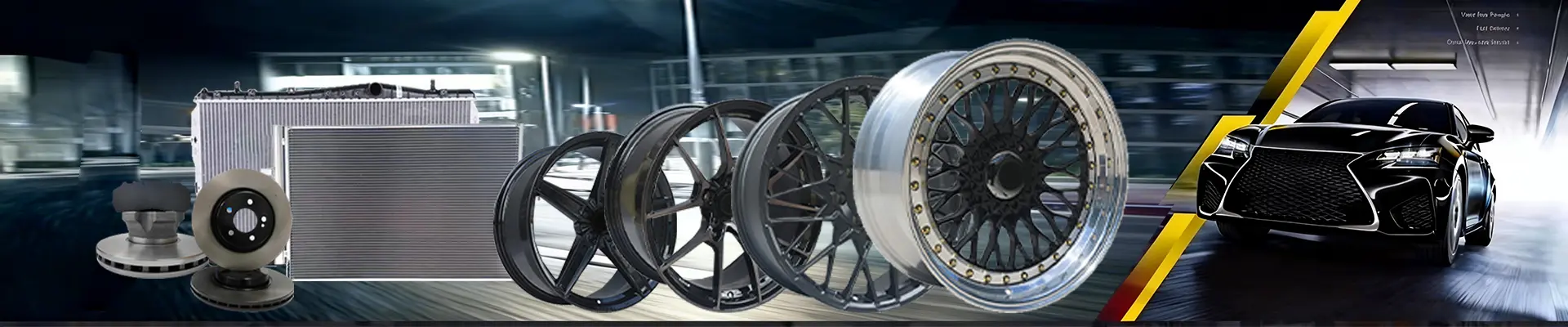
Wheel Rims Price in Germany: 2026 Wholesale Buyer Guide

Wheel Rims Price in Germany: 2026 Wholesale Buyer Guide
A per-piece quote that looks cheaper than every competitor is not a bargain in the German market — it is a red flag that certification, compliance packaging, or surface finish labor has been silently stripped out.
Wholesale wheel rims price in Germany is built on four cost layers that most buyers overlook: raw aluminum and casting, machining and surface finish labor, TÜV/VIA certification amortization, and EU-compliance packaging plus landed logistics. The final per-piece figure shifts noticeably depending on diameter, finish complexity, and order volume — not on aluminum ingot price alone.
I still remember a morning at a trade fair in Frankfurt, years after I had moved from the melting shop floor to handling export orders. A buyer from Munich stopped at our booth, picked up an 18-inch multi-spoke rim with a machined-face finish, and asked for a wholesale price. I gave him a number based on what we had been quoting Latin American distributors — a clean, competitive figure. He set the rim back down and said, flatly, that at this price he suspected we were blending in recycled aluminum. At the time it felt like an insult. Later it clicked: he was not questioning our metal source. He was reading the price for what it signaled about what had been left out. German buyers treat a missing cost line as a missing compliance step, and a missing compliance step as a customs rejection waiting to happen [NEED_CITE: EU customs rejection rate drivers for alloy wheel imports without type-approval documentation].
That conversation reshaped how I build every quotation for the European market. Below is the cost architecture behind wheel rims price in Germany, written the way I now explain it to buyers before they sign a purchase order.
Once the cost layers are visible, the next question is which ones move the needle most — and that is where diameter and surface finish come in.
How Do Surface Finish and Wheel Size Shift the Wholesale Price?
The widest price gap inside a single product catalog is rarely between two similar-looking rims of different diameters — it is between two rims of the same diameter finished in different ways.
A 17-inch matte black rim and an 18-inch machined-face rim from the same mold family can sit very far apart on the price list, and the gap has almost nothing to do with the extra kilogram of aluminum. The machining pass that creates a bright, mirror-like face on the rim lip requires a second CNC setup, longer cycle time, and a higher scrap rate if the lathe tool mark depth is not held within tolerance [NEED_CITE: machining cycle time comparison between painted and machined-face alloy wheel finishes]. Chrome plating pushes the cost further still, because it adds multiple dipping stages and strict wastewater handling that gravity-cast-only suppliers often underquote.
The table below shows how finish type and construction method combine to move wholesale wheel rims price in Germany across a typical aftermarket catalog. All tiers are expressed as relative cost positioning rather than fixed numbers, because aluminum ingot pricing and energy surcharges shift monthly.
| Diameter | Finish Type | Construction | Relative Cost Tier |
|---|---|---|---|
| 15"–16" | Gloss / Matte Black | Gravity Cast | Baseline |
| 17" | Hyper Silver | Gravity Cast | Noticeably above baseline |
| 18" | Machined Face | Flow-Formed | Substantially above baseline |
| 19"–20" | Chrome | Flow-Formed | Premium tier |
| 21"+ | Custom Paint + Machined Lip | Flow-Formed | Highest tier |
A tuning shop in southern Germany once asked us to quote a staggered set — 19-inch front, 20-inch rear, hyper silver with a machined lip — for a small batch run. The per-piece number came back higher than they expected, not because the aluminum weight was unusual, but because the smaller batch meant the CNC lathe setup cost was amortized over fewer units, and the hyper silver spray booth time per rim was fixed regardless of diameter. When they doubled the order to a half-container mix, the per-piece figure dropped, but not in a straight line. The discount curve flattens quickly once the certification and tooling costs are fully absorbed [NEED_CITE: alloy wheel MOQ amortization curve for certification and tooling costs].
Finish and diameter set the baseline. The next cost layer is the one that separates a rim that clears Hamburg customs from one that sits in a bonded warehouse for weeks.
Why Does TÜV / VIA Certification Matter for Your Per-Piece Cost?
Certification fees are paid once per design, but their per-piece impact depends entirely on how many units you spread them across — which is why a trial order and a full container can carry very different unit costs even from the same factory.
For the German market, the non-negotiable standard is TÜV certification, issued under the Kraftfahrt-Bundesamt type-approval framework. Every rim diameter, width, and offset combination that carries the TÜV mark requires its own test cycle — dynamic radial fatigue, dynamic cornering fatigue, impact resistance, and salt-spray endurance — plus an annual factory audit [NEED_CITE: TÜV Rheinland wheel rim type-approval test sequence and audit requirements]. VIA and JWL certifications follow a similar logic for markets that recognize them, and DOT registration applies to any rim sold into the United States.
Here is the part that catches buyers off guard: the certification fee itself is a fixed upfront cost. Whether you order one pallet or five containers, the test lab charges the same amount for that rim reference. On a trial order of a few dozen pieces, that fixed cost sits heavily on each unit. On a full container, it becomes a thin line item. This is why the wheel rims price in Germany for a first-time buyer testing a new design always looks higher than the price they see quoted to an established distributor ordering the same reference in volume.
A European aftermarket distributor I worked with learned this the hard way. Their first order was a mixed pallet of three references, each in a different finish, intended to test retail response. The per-piece quotation included the full certification amortization because none of those references had prior TÜV paperwork. When they came back six months later with a full-container reorder of the two best sellers, the per-piece price dropped noticeably — not because the factory had been overcharging before, but because the certification cost was now spread across a much larger unit count. The risk they had avoided, without realizing it at the time, was shipping an uncertified rim into Germany and facing a customs hold that would have cost several times the certification fee in demurrage and re-routing [NEED_CITE: EU customs demurrage cost impact for non-compliant alloy wheel shipments].
| Certification Scope | Trial-Batch Amortization | Full-Container Amortization |
|---|---|---|
| Single TÜV reference | Heavy per-piece load | Thin per-piece load |
| Multi-reference TÜV batch | Noticeably heavy | Moderate |
| TÜV + VIA combined | Highest per-piece load | Substantially reduced |
| No certification | Artificially low — high rejection risk | N/A for German market |
The quotation that arrives without a visible certification line is the quotation that should make a buyer pause.
Certification and finish set the factory price. The next layer is what happens between the factory gate and the warehouse door in Hamburg.
FOB Quote vs. Landed Cost: What German Importers Actually Pay
The number on the proforma invoice is the starting point of the cost conversation, not the end — and buyers who compare suppliers on FOB price alone are comparing only one slice of the total spend.
A wheel rims price in Germany comparison that stops at the FOB figure ignores three cost layers that accumulate between the Chinese port and a distributor’s warehouse in central Europe: ocean freight, EU anti-dumping duty on alloy wheels originating from China, and customs clearance plus inland haulage. Each of these is a measurable addition, and each behaves differently depending on order size and Incoterm.
Ocean freight for alloy wheels is volume-sensitive rather than weight-sensitive, because rims are bulky relative to their mass. A half-container shipment pays a noticeably higher per-unit freight cost than a full container, and a less-than-container load pushes it further still [NEED_CITE: ocean freight cost structure for alloy wheel shipments by container load type]. EU anti-dumping duty on alloy wheels from Chinese origin is a fixed tariff rate applied to the customs value, and it does not disappear for small orders — it simply adds a consistent percentage on top of every shipment [NEED_CITE: EU TARIC anti-dumping duty rate schedule for alloy wheel imports from China]. Customs clearance fees and inland transport from Hamburg or Bremerhaven to a final warehouse add a flat per-shipment cost that, again, amortizes better over larger orders.
A distributor based near Stuttgart was comparing two supplier quotations for the same 18-inch machined-face reference. Supplier A quoted a lower FOB price. Supplier B quoted a higher FOB price but included a full itemization of certification, packaging, and a CIF Hamburg breakdown. The distributor initially favored Supplier A — until they ran the landed cost calculation. Supplier A’s rim had no visible TÜV line item, which meant either the certification cost had been absorbed elsewhere in the quotation or it had been omitted entirely. Supplier B’s rim carried the certification cost openly, and the CIF figure, once duty and inland haulage were added, ended up very close to Supplier A’s true landed cost — with the difference that Supplier B’s rim would clear customs on arrival. The cheaper FOB quote, in this case, was not cheaper at all [NEED_CITE: alloy wheel landed cost components from Chinese port to German inland warehouse].
| Cost Layer | Behavior Across Order Sizes |
|---|---|
| FOB factory price | Drops with volume, plateaus after full container |
| Ocean freight per unit | Noticeably higher for LCL, lowest for FCL |
| EU anti-dumping duty | Fixed rate on customs value |
| Customs clearance | Flat per shipment, amortizes with volume |
| Inland haulage | Flat per shipment, amortizes with volume |
The lesson is straightforward: the wheel rims price in Germany that matters is the one that includes every layer from factory to warehouse, not the one that looks cleanest on a proforma invoice.
Understanding the cost layers is one thing. Getting a supplier to show them openly is another — and that depends on how the request for quotation is structured.
How to Request a Meaningful Price Breakdown from Suppliers
A single per-piece number on a quotation tells you almost nothing about what you are actually paying for — and a well-structured RFQ is the fastest way to separate transparent suppliers from those hiding cost gaps.
The most effective RFQs I have seen from European buyers do not ask for a lower price. They ask for a visible price architecture. They request the quotation broken into the same cost layers that the German market expects to see: raw material and casting, machining and surface finish, certification allocation, packaging specification, and logistics terms. This approach does two things. First, it forces the supplier to show whether certification costs are included or quietly excluded. Second, it signals to the supplier that the buyer understands the cost structure, which changes the seriousness of the response.
A practical RFQ for wheel rims price in Germany should include the following elements:
- Reference specification: diameter, width, offset, PCD, center bore, and finish type — stated explicitly, not left to interpretation.
- Certification requirement: TÜV, VIA, JWL, or DOT stated by name, with a request for the supplier to confirm whether the cost is included in the per-piece figure or quoted separately.
- Order volume scenario: at least two quantities — for example, a trial batch and a full container — so the supplier can show how the per-piece figure shifts as certification and tooling costs amortize.
- Incoterm clarity: FOB, CIF, or DDP stated explicitly, with a request for the supplier to itemize what is included under that term.
- Packaging specification: EU-compliance packaging requirements — including rim protection, stacking method, and marking — stated upfront so that packaging cost is not added later as a surprise.
A buyer from a European tuning shop network once sent us an RFQ structured exactly this way. The quotation came back with each cost layer visible, and the conversation moved directly to finish options and delivery timing — no back-and-forth about what was or was not included. A different buyer, from a separate company, sent a one-line request asking for "best price on 18-inch machined rims." The quotation we prepared had to come with a long list of assumptions, and the buyer spent the next several weeks asking what each line meant. The first buyer placed an order within the same month. The second is still comparing quotations [NEED_CITE: RFQ structure impact on alloy wheel procurement cycle time and quotation accuracy].
The pattern is consistent: the more specific the RFQ, the more honest the quotation. And in a market where a missing cost line can mean a customs hold, an honest quotation is worth more than a low one.
Conclusion
Wheel rims price in Germany is a layered figure, not a single number — and reading it correctly requires understanding what sits beneath the per-piece quote. Raw material and casting set the base. Surface finish and diameter create the widest variance within a catalog. Certification amortization explains why trial batches and full containers carry different unit costs. And landed cost — freight, duty, clearance, and inland haulage — determines what the rim actually costs once it reaches a German warehouse. Buyers who request itemized quotations and read every cost layer will consistently make better sourcing decisions than those who compare single-line figures.


