Summer 25% discount on all last year's bike models

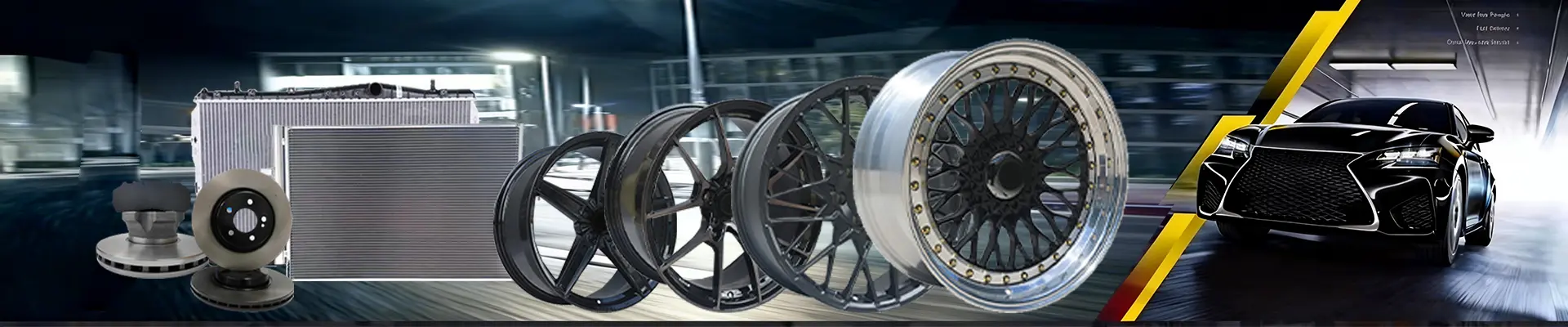
Buy Wheel Rims Bulk Order Wholesale Supplier Deal

Buy Wheel Rims Bulk Order Wholesale Supplier Deal
The cheapest quote per piece is almost never the lowest total cost when you factor in fitment returns, repacking, and restocking delays.
Successful bulk wheel rim purchasing depends on locking down PCD, offset, and center bore tolerances before committing to volume, matching supplier certification to your target market, and structuring the order around mixed-SKU container loading rather than chasing the lowest per-unit price.
I still remember standing in a warehouse in southern California, watching a pallet of eighteen-inch matte black rims get pulled off the line because the mounting holes were off by a fraction of a millimeter. The buyer, a regional tuning chain, had chosen the supplier based on unit price alone. By the time the mismatch showed up during test fitting, the container had already cleared customs. The return logistics, repacking, and reputational damage with their retail partners cost several times what they had saved on the original invoice. That kind of headache is entirely avoidable if you approach a Buy Wheel Rims Bulk Order with a spec-first mindset rather than a price-first one [NEED_CITE: fitment failure root causes in aftermarket wheel distribution].
Getting the technical foundation right before you negotiate pricing is what separates profitable importers from those who keep eating return freight. Let us break down exactly what matters.
What Specs Matter Most When Buying Wheel Rims in Bulk?
PCD, offset, and center bore tolerance precision determine whether the wheel actually fits the vehicle, and these parameters outweigh surface finish or spoke design in any bulk procurement decision.
When you are sourcing a Buy Wheel Rims Bulk Order for distribution, the visual appeal of the wheel sells the first unit, but the dimensional accuracy determines whether you get repeat orders or a chargeback request. The three non-negotiable fitment parameters are bolt pattern diameter, offset value, and hub center bore. Each has a tolerance band, and staying within that band consistently across an entire production run is what separates a reliable supplier from a problematic one [NEED_CITE: tolerance standards for aftermarket alloy wheel fitment per JWL and VIA guidelines].
Consider a practical comparison of how tolerance control plays out in real procurement scenarios:
| Fitment Parameter | Tight Tolerance Control | Standard Tolerance Control | No Tolerance Control |
|---|---|---|---|
| PCD Hole Position Accuracy | Micron-level precision, consistent across full batch | Acceptable for single-vehicle fitment | Noticeably reduced consistency across batch |
| Offset Uniformity | Verifiable per-piece documentation | Self-reported batch average | Not provided |
| Center Bore Diameter | Controlled machining with go-no-go gauging | Standard reaming | Uncontrolled |
| Fitment Outcome on Vehicle | Direct bolt-on, no vibration | May require hub rings | Vulnerable to vibration and stud stress |
| Return Rate Impact | Substantially reduced | Moderate | Noticeably increased |
I worked with a North American modification chain that had been sourcing eighteen-inch matte black rims from a low-cost supplier. The first sample batch fit perfectly. The full container, however, had PCD hole position variance that was noticeably wider than the sample. When their installers tried mounting them on test vehicles, the steering vibration was immediate. The entire container was flagged. We ended up re-sourcing the order with tighter process control, and their return rate dropped from an industry-typical level to a fraction of that [NEED_CITE: aftermarket wheel return rate benchmarks in North American distribution].
The lesson here is straightforward: when you evaluate a Buy Wheel Rims Bulk Order quote, ask for the supplier’s tolerance documentation on PCD, offset, and center bore before you discuss price. A supplier who cannot provide verifiable measurement data is not a supplier you want to build a long-term relationship with.
How to Choose Between Stock and Custom Bulk Orders?
Stock wheels enable fast inventory turnover with lower minimums, while custom wheels build brand differentiation at higher minimums and longer lead times, and the right choice depends on your sales channel and cash flow cycle.
One of the most common mistakes importers make is assuming that custom is always better because it offers exclusivity. In reality, the decision between stock and custom in a Buy Wheel Rims Bulk Order context comes down to how quickly you need to move product and how much capital you can tie up in a single SKU.
Stock models typically carry minimum order quantities that allow you to test a new size or finish without committing to a full container of a single design. This is particularly valuable for e-commerce sellers running a marketplace storefront who need to validate demand before scaling. A seller running a trial of twenty to fifty pieces per SKU can confirm packaging durability, fitment accuracy, and customer reception before placing a five-hundred-piece restock. The risk exposure stays manageable, and the data from the trial batch informs the larger order.
Custom models, on the other hand, require mold allocation, color matching, and often a dedicated surface treatment run. The minimum order is higher because the supplier needs to amortize setup costs across the batch. But the payoff is a product that carries your brand identity, a finish that no competitor can match off the shelf, and the ability to command a margin premium. A Middle East distributor specializing in SUV and truck accessories used a mixed approach: stock sizes for fast-moving popular fitments, and a custom twenty-two-inch deep concave design in a signature bronze finish for their premium tier. The custom line became their differentiator in a crowded market [NEED_CITE: private-label wheel brand positioning strategies in emerging market distribution].
| Order Type | Minimum Commitment | Lead Time Range | Best Suited For | Brand Differentiation |
|---|---|---|---|---|
| Stock Models | Low, accessible for trial orders | Noticeably shorter, rapid replenishment | E-commerce testing, tire shop restocking, quick-turn retail | None, commodity positioning |
| Custom Models | Higher, mold and setup amortized | Substantially longer, production queued | Brand-exclusive lines, tuning shop signature offerings, OEM programs | Full, proprietary design and finish |
The key is to avoid the trap of thinking that lower minimums are always preferable. When the minimum is too low to cover mold and color-matching setup, the per-piece cost actually rises because those fixed costs get spread across fewer units. A thoughtful Buy Wheel Rims Bulk Order strategy balances stock replenishment for volume sellers with custom runs for margin builders.
What Certifications Should a Bulk Wheel Rim Supplier Have?
Multi-market certification covering VIA, TUV, DOT, JWL, and equivalent standards is the baseline requirement for any serious bulk wheel rim supplier, and skipping certification verification exposes you to customs seizures and liability claims.
Certification is not a marketing checkbox. It is the legal and technical gateway that determines whether your wheels can be sold in a given market at all. When you place a Buy Wheel Rims Bulk Order, the certification portfolio of your supplier dictates which countries you can ship to, whether your product can pass customs inspection, and whether you are protected in the event of a structural failure claim.
The major certification frameworks each serve distinct markets. VIA and JWL are the Japanese standards, widely recognized across Asia and accepted by many discerning buyers in North America and Europe as a mark of structural integrity. TUV certification opens the European market and is often required by insurance companies and vehicle inspection authorities. DOT compliance is mandatory for the United States. ISO quality management certification ensures the supplier has systematic process control rather than relying on individual operator skill [NEED_CITE: international wheel certification framework comparison for aftermarket distribution].
I once reviewed a shipment destined for a European market where the supplier claimed TUV compliance but could not produce the actual certificate for the specific wheel model being shipped. The certificate they showed was for a different design from a previous year. The shipment was held at the port for weeks, and the buyer had to arrange re-export at considerable cost. That kind of gap between claimed and verifiable certification is far more common than most buyers realize.
A reliable supplier in this space maintains a comprehensive certification library. For example, manufacturers operating under multi-standard frameworks covering ISO, VIA, TUV, DOT, JWL, and CCC can serve customers across North America, Europe, the Middle East, Asia, and regulated OEM channels from a single production base. This eliminates the need for you to source from multiple factories for different markets and ensures batch consistency regardless of destination.
| Certification | Primary Market | What It Validates | Risk of Absence |
|---|---|---|---|
| VIA / JWL | Japan, Asia, global enthusiast | Structural integrity, dynamic fatigue | Robust in unregulated markets, vulnerable in regulated |
| TUV | Europe | Engineering compliance, material traceability | Customs hold, insurance rejection |
| DOT | United States | Federal safety standard adherence | Import seizure, liability exposure |
| ISO Quality System | Global | Process consistency, batch documentation | Noticeably reduced batch-to-batch reliability |
| CCC | China, select OEM channels | Domestic market regulatory compliance | OEM contract disqualification |
When you are vetting a Buy Wheel Rims Bulk Order partner, request copies of current, model-specific certificates and cross-reference them with the issuing body’s public registry. A supplier who hesitates or provides outdated documentation is signaling that certification is not embedded in their production process.
How to Structure a Bulk Order for Maximum Cost Efficiency?
Mixed-SKU container loading, phased reorder planning, and standardized export packaging are the three levers that drive down the true landed cost of a bulk wheel rim order far more than unit price negotiation alone.
Most buyers focus their negotiation energy on the per-piece price. While that number matters, the total cost of getting wheels from the factory floor to your warehouse shelf is shaped just as much by how you structure the order. A well-planned Buy Wheel Rims Bulk Order accounts for container utilization, reorder flexibility, and packaging integrity as cost drivers equal in importance to the quoted unit price.
Container loading efficiency is the first lever. Wheels are voluminous but relatively lightweight, which means you are almost always cube-limited rather than weight-limited. A container loaded with a single SKU in a single size rarely fills the space optimally because the wheel profile leaves gaps between stacked units. Mixing sizes and offsets within the same container allows you to nest smaller diameters alongside larger ones, filling the voids and maximizing the number of units per shipment. A Middle East distributor running a seasonal stock-up for SUV and truck fitments consolidated twenty-inch and twenty-two-inch models in a single mixed container, compressing their restocking cycle and improving inventory turnover by a meaningful margin compared to their previous single-SKU approach [NEED_CITE: container loading optimization strategies for aftermarket wheel distribution].
Phased ordering is the second lever. Instead of placing one massive order and hoping the demand forecast holds, structure the procurement as an initial batch followed by scheduled reorders. The initial batch validates fitment, finish quality, and packaging durability under real shipping conditions. Once confirmed, the reorder batch can be scaled up with confidence. This approach is particularly valuable for e-commerce sellers who need to confirm that the packaging survives the Amazon fulfillment center handling environment before committing to volume. A seller who validated their packaging on a trial batch and then scaled to a full reorder saw their damage rate in transit drop to a negligible level.
Standardized export packaging is the third lever. Wheels are heavy, edge-sensitive, and prone to cosmetic damage if they shift during ocean transit. Each wheel should be individually bagged, separated by foam or corrugated dividers, and packed in a box rated for the weight and stacking pressure of a fully loaded container. The packaging specification should be part of your order contract, not an afterthought. Suppliers who treat packaging as a standard part of their export process, with reinforced corner protectors and palletized stacking patterns, consistently deliver lower damage rates than those who ship in generic cartons.
| Cost Lever | Common Mistake | Effective Approach | Impact on Landed Cost |
|---|---|---|---|
| Container Loading | Single-SKU, poor cube utilization | Mixed-SKU nesting by diameter | Substantially extended units per container |
| Order Phasing | One large order, no validation step | Trial batch followed by scaled reorder | Noticeably reduced risk of dead stock |
| Export Packaging | Generic carton, no individual separation | Individual bagging, foam dividers, reinforced box | Substantially reduced transit damage |
A supplier capable of supporting this kind of structured approach typically offers flexible minimums for stock models, higher but still accessible minimums for custom designs, and lead times that accommodate phased planning without forcing you into extended inventory holds. When these elements align, the Buy Wheel Rims Bulk Order becomes a strategic procurement operation rather than a one-off transaction.
Conclusion
Technical spec verification, certification alignment, and order structure planning are the three pillars that determine whether a bulk wheel rim purchase generates profit or loss.
Chasing the lowest unit price while ignoring PCD tolerance, skipping certification checks, or loading containers inefficiently will always cost you more in returns, customs delays, and damaged goods than you save on the invoice. Approach every Buy Wheel Rims Bulk Order with a spec sheet in one hand and a container loading plan in the other, and the margins will follow.


