Summer 25% discount on all last year's bike models

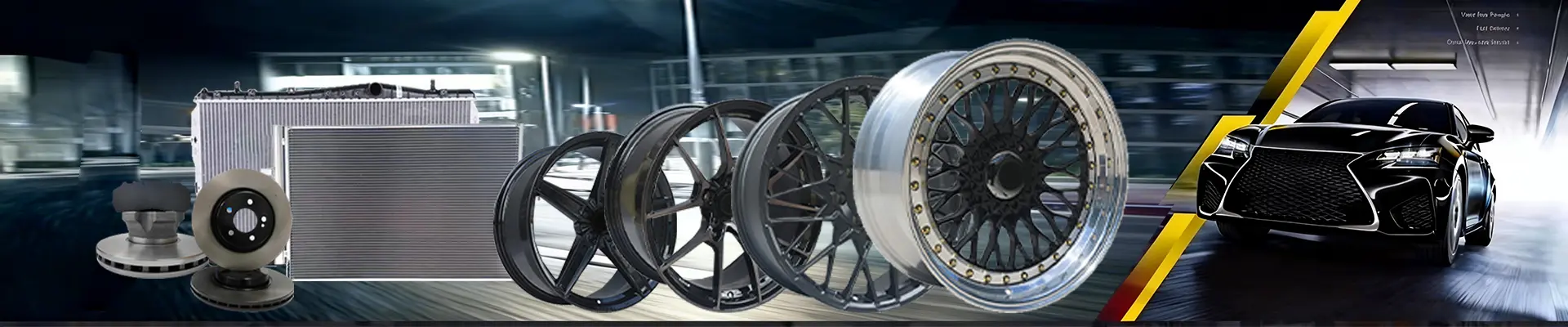
VW Wheel Fitment Guide: Replica Wheels Wholesale Supplier

VW Wheel Fitment Guide: Replica Wheels Wholesale Supplier
Most replica wheel buyers obsess over bolt pattern. The real fitment killer hiding in plain sight is ET offset and center bore tolerance — a single millimeter off, and the rim either grinds the caliper or sticks out past the fender.
For VW replica wheels wholesale buyers, the correct answer is simple: PCD, CB, ET, and J-width must be verified per specific model before any bulk order is placed. Skipping this step turns a container load into scrap metal.
Back when I was handling shipping documents at Qingdao port, I processed a full container of 18-inch replica BBS-style rims bound for a Lagos modification shop. The invoice looked clean, the PCD matched, and customs clearance at Tin Can Island went through without a hitch. Then the customer sent a video: the mounting face protruded noticeably, and the brake caliper was rubbing the inner barrel on every turn. Over forty wheels were dead stock. Airfreighting replacements ate through the entire margin and then some. That single shipment taught me to treat fitment data the way I used to treat bills of lading — every digit cross-checked, every tolerance confirmed in writing. [NEED_CITE: VW OEM wheel specification tolerance ranges per model generation]
Let’s walk through the parameters that actually matter, the models that share them, and the sourcing discipline that keeps containers from becoming losses.
What Are the Critical Fitment Specs for VW Replica Wheels?
Four parameters decide whether a VW replica wheel fits or fails: PCD, center bore, ET offset, and J-width. Missing any one of them is a guaranteed installation failure or safety hazard.
| Parameter | What It Controls | Typical VW Range | Risk If Wrong |
|---|---|---|---|
| PCD (bolt pattern) | Lug alignment | 5×112 (most models) | Wheel cannot mount |
| Center Bore (CB) | Hub centering | 57.1 mm / 66.6 mm | High-speed vibration |
| ET Offset | Hub-face distance | 20–55 mm | Caliper rub or fender poke |
| J-Width | Tire bead seating | 7J–9J common | Tire unseating or stretch |
[NEED_CITE: Volkswagen Group wheel fitment data sheet by chassis code]
PCD is the easiest to get right — nearly every modern VW passenger car uses 5×112. Center bore splits mainly between 57.1 mm (Golf, Passat, many MQB platforms) and 66.6 mm (larger SUVs, some Touareg applications). ET is where wholesale buyers consistently lose money. A replica wheel with ET 35 where the OEM spec calls for ET 43 will push the rim outward by eight millimeters per side — enough to foul the fender lip on a lowered Golf or expose the hub on a Tiguan.
J-width determines which tire widths mount safely. A 7.5J rim accepts roughly 215–235 mm section widths; a 9J handles 245–265 mm. Mismatching J-width and tire stretches the bead or pinches it, both of which fail at highway speed.
A West African tuning shop once ordered a batch of replica multi-spoke rims for a fleet of Golf Mk7s. The supplier quoted the correct PCD but shipped ET 35 instead of ET 43. The wheels physically mounted, but the fenders had to be rolled and the suspension geometry was compromised. The entire batch was written off. [NEED_CITE: VW MQB platform OEM ET offset specifications by model]
Which VW Models Share the Same Wheel Specs?
Golf, Passat, Tiguan, and select Audi models share the 5×112 bolt pattern, but ET and center bore must still be checked per chassis code — they are not interchangeable.
| Model Family | PCD | Common CB | Typical ET Range | Shared With |
|---|---|---|---|---|
| Golf (Mk5–Mk8) | 5×112 | 57.1 mm | 40–50 | Audi A3, Q2 |
| Passat (B7–B8) | 5×112 | 57.1 mm | 40–52 | Audi A4, A5 |
| Tiguan (Mk1–Mk2) | 5×112 | 57.1 mm | 33–45 | Audi Q3 |
| Touareg | 5×112 | 66.6 mm | 25–40 | Audi Q7, Q8 |
| Amarok | 5×120 | 66.6 mm | 45–55 | Select commercial platforms |
[NEED_CITE: VW Group chassis-to-wheel-fitment cross-reference database]
The trap here is assuming "5×112 means one size fits all." A Tiguan owner wanting 20-inch replica rims needs a completely different ET range than a Golf owner wanting the same diameter. A Passat B8 with factory 18-inch wheels typically runs ET 43; swap in a replica with ET 30 and the rim sits thirteen millimeters further out per side — visually aggressive, structurally problematic, and illegal in several markets.
An East African safari operator once custom-ordered 17-inch replica wheels for a fleet of Tiguan support vehicles. The center bore was machined to 66.6 mm instead of 57.1 mm. The wheels mounted, but without proper hub-centric seating, every vehicle developed steering shimmy above eighty kilometers per hour. The fleet was grounded until new center rings and corrected rims arrived. [NEED_CITE: Hub-centric vs lug-centric vibration tolerance data]
How to Avoid Fitment Errors When Ordering Replica Wheels Wholesale?
Require a three-point inspection report per batch, sample at least five percent of the container, and hold ET tolerance to within one millimeter of spec — anything looser is a gamble with a full container’s value.
The wholesale ordering process should follow a disciplined sequence:
- Confirm chassis codes, not just model names. A "Golf" could be Mk5, Mk6, Mk7, or Mk8 — each has slightly different ET and CB requirements. Request the buyer’s VIN range or chassis year spread. [NEED_CITE: VW chassis code to wheel fitment verification procedure]
- Request a per-SKU fitment sheet from the supplier before production. This sheet must list PCD, CB, ET, J-width, and max tire width for each reference number.
- Specify ET tolerance in the purchase contract. Acceptable range: ±1 mm from target. Anything wider invites the caliper-rub and fender-poke problems described above.
- Mandate pre-shipment sampling. Pull five percent of the batch and measure PCD with a bolt-pattern gauge, CB with a calibrated bore gauge, and ET with a straight-edge and depth micrometer.
- Verify dynamic balance on sample units. A replica wheel that passes static dimensional checks can still fail at speed if the mass distribution is uneven.
A Latin American distributor learned this the hard way. They ordered replica wheels for Golf and Passat applications from a new supplier, accepted the supplier’s self-reported specs, and skipped sampling. When the container arrived, nearly a third of the Passat-spec wheels had ET values off by three to four millimeters. The goods were technically mountable, but customer complaints about fender clearance destroyed the distributor’s reputation in that segment. [NEED_CITE: Wheel fitment inspection methodology per SAE or ISO standard]
What Certifications Should VW Replica Wheels Have?
VIA, TÜV, and JWL certifications are the baseline for entering regulated markets — structural test reports must accompany every shipment, not just sit on a supplier’s website.
| Certification | Issuing Body | What It Proves | Market Access |
|---|---|---|---|
| VIA | Japan | Structural integrity (cornering fatigue, radial fatigue, impact) | Japan, recognized globally |
| TÜV | Germany | Full vehicle fitment and load rating compliance | EU, Middle East, premium markets |
| JWL | Japan | Minimum structural standard for passenger vehicles | Japan baseline |
| DOT | USA | Compliance with US federal safety standards | United States |
| ISO 9001 | International | Quality management system | General credibility |
[NEED_CITE: Certification requirements for aftermarket alloy wheels by target market]
The mistake many wholesale buyers make is treating certification as a marketing checkbox. In reality, customs authorities in the EU, Middle East, and parts of Latin America increasingly demand physical copies of test reports tied to specific production batches. A TÜV certificate from three years ago does not cover a container shipped today.
A Middle East importer once cleared a shipment of replica wheels into Dubai using outdated certification paperwork. The goods cleared initially, but a routine post-clearance audit flagged the mismatch between the certificate production dates and the shipment manifest. The entire container was held, re-tested at the importer’s expense, and the delay cost the importer a major contract with a regional tuning chain. [NEED_CITE: Aftermarket wheel import documentation requirements by GCC customs authority]
Why Choose a Factory-Direct Supplier for VW Replica Wheels?
Factory-direct sourcing cuts unit cost substantially, enables flexible minimum orders starting from small batch quantities, shortens production lead time, and ensures that fitment data and customs documentation travel with the goods — not as an afterthought, but as part of the standard package.
The structural advantage of working directly with a manufacturer rather than a trading company comes down to traceability and accountability. When a fitment error surfaces — and it will, eventually, in any high-volume business — the buyer needs to know exactly which production run, which mold, and which QC inspector signed off on the batch. Trading companies rarely hold this information. Factories do.
A distributor in Southeast Asia switched from a trading-company sourcing model to factory-direct purchasing for their VW replica wheel range. Within a single ordering cycle, they reduced fitment-related returns to near zero, because the factory provided per-batch dimensional reports and held ET tolerance to within half a millimeter of spec. The distributor also gained the ability to request custom center bore machining for specific market requirements — something the trading company had simply forwarded as a special request and never verified. [NEED_CITE: Factory-direct vs trading company quality control comparison in aftermarket wheels]
Jinan Yoker Auto Parts Co., Ltd. operates under the Ouya trademark with an annual production capacity of ten million alloy wheels, covering sizes from 12 to 24 inches across passenger, SUV, luxury, modified, truck, racing, and motorcycle applications. The facility holds ISO, VIA, TÜV, DOT, JWL, and CCC certifications, offers OEM and ODM customization with minimum orders starting at twenty pieces for stock models and one hundred for custom designs, maintains production lead times of fifteen to thirty days, and provides complete customs documentation including certificates of origin and structural test reports. A three-year structural warranty backs every unit. For VW replica wheels wholesale buyers, this means the fitment data, the certification paperwork, and the physical product all originate from a single accountable source.
Conclusion
PCD gets the wheel on the hub. ET, CB, and J-width keep it there safely.
VW replica wheels wholesale sourcing succeeds or fails on the discipline of parameter verification before the container is stuffed. The models share bolt patterns but not offsets. The certifications matter most when customs opens the box. And the factory-direct relationship matters most when something goes wrong at the other end of the world. Get the data right first. The wheels will follow.


