Summer 25% discount on all last year's bike models

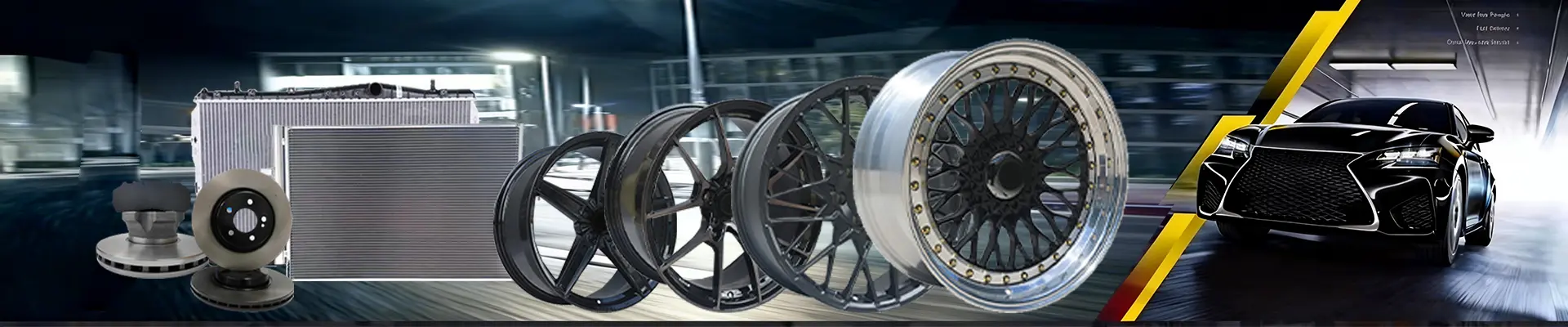
Car Rims Price in Argentina: 2026 Complete Buyer Guide

Car Rims Price in Argentina: 2026 Complete Buyer Guide
The sticker price on a rim is the least important number on your invoice.
In 2026, the landed cost of car rims in Argentina is shaped by a chain of variables far beyond the per-piece quote: FOB pricing at origin, South Atlantic ocean freight, Mercosur external tariffs, domestic VAT, and theARS exchange rate mechanism. Buyers who source directly from certified Chinese manufacturers can compress their total landed cost substantially compared to purchasing through regional intermediaries or importing from Japan and Europe — often cutting the middleman premium by a significant margin.
I still think about a container of 18-inch gloss black rims we shipped to Buenos Aires a while back. Everything was right — the finish, the packaging, the load plan. But the HS code on the commercial invoice didn’t match what the customs broker in Dock Sud had on file. That single classification mismatch parked the container at the port for over three weeks. The storage fees alone ate into the margin so deeply that the buyer nearly walked away from the next order. That shipment taught me something no spreadsheet can: when you’re importing car rims into Argentina, the price you negotiate at the factory is only the opening move. [NEED_CITE: Argentina customs classification rules for alloy wheels under Mercosur Common Nomenclature]
Let me walk you through what actually determines what you’ll pay when that rim rolls off the truck in Argentina.
What Determines Car Rims Price in Argentina in 2026?
The terminal price of car rims in Argentina is a layered structure — and the factory price is typically less than half of what you ultimately pay.
When a wholesaler in La Boca asks about car rims price in Argentina, the honest answer has to unpack several cost blocks stacked on top of each other. The first layer is the FOB cost at the manufacturing plant in China. The second is ocean freight — container rates from Qingdao or Shanghai to Buenos Aires fluctuate with global shipping cycles, and South Atlantic routes carry their own seasonal volatility. The third layer is where most buyers get surprised: Argentina’s import duty structure. [NEED_CITE: Mercosur Common External Tariff rates for aluminum alloy wheels]
Argentina applies a Common External Tariff under the Mercosur framework on alloy wheels, plus domestic VAT on top of the CIF value. The combined tax burden can add a substantial percentage to the base cost before the rim even reaches a warehouse in Córdoba or Rosario. On top of that, theARS exchange rate environment — whether you’re operating under the official rate or a parallel mechanism — directly affects how many pesos each dollar of cost translates into. [NEED_CITE: Argentina import duty and VAT structure for automotive alloy wheels 2026]
I’ve seen buyers fixate on a per-piece quote from a trading company in São Paulo, only to discover later that the same rim sourced directly from a factory in Jinan — with identical specs and certifications — would have landed at a noticeably lower total cost. The trading company’s margin, the re-invoicing through Brazil, and the extra documentation layer all added up. The rim was the same. The price wasn’t.
A practical way to think about it: if you break down the final wholesale price of a popular 17-inch alloy wheel sitting on a shelf in Buenos Aires, the factory cost, freight, duties, taxes, and local distribution margin each represent a distinct slice. Understanding where each slice sits is the only way to evaluate whether a quote is competitive.
How Do Size and Finish Affect Wholesale Rim Costs?
Diameter and surface treatment are the two biggest cost drivers within the product itself — and their impact is not linear.
Buyers comparing car rims price in Argentina often start with size. A 15-inch rim for a compact sedan is fundamentally less material and simpler to machine than a 22-inch deep concave wheel for a full-size pickup. But the cost gap between sizes is not just about aluminum weight. Larger diameters require longer cycle times on the flow-forming or low-pressure casting line, more rigorous balancing checks, and higher reject rates during quality control — especially on complex spoke designs. [NEED_CITE: Alloy wheel manufacturing cost factors by diameter and design complexity]
Surface finish adds another layer that many first-time importers underestimate. Here’s how different finishes compare in terms of production cost and landed pricing impact:
| Size Range | Paint Finish | Machined Face | Chrome Plating | Full Custom Color |
|---|---|---|---|---|
| 15–17 inch | Baseline cost | Noticeably higher | Substantially higher | Premium tier |
| 18–20 inch | Moderate increase | Moderate increase | High premium | Highest premium |
| 21–24 inch | Significant increase | Significant increase | Very high premium | Custom quoting required |
The jump from a standard gloss black to a machined face with painted pockets isn’t just an aesthetic choice — it adds machining passes, masking steps, and additional QC inspection points. Chrome plating involves multiple chemical bath stages and environmental compliance costs that have risen noticeably in recent years. And a full custom color match — say, a specific bronze or gunmetal shade to match a vehicle manufacturer’s palette — requires dedicated paint mixing and small-batch curing runs.
A tire shop in Mendoza that I work with runs a tight operation. They stock mostly 16 and 17-inch rims in three or four popular finishes for the Toyota, Chevrolet, and Volkswagen models that dominate their local market. Their reorder cycle is regular, their inventory turns are healthy, and they avoid the temptation to carry exotic sizes that sit. Meanwhile, a modification shop in Córdoba that specializes in 20-inch staggered setups for SUVs faces a completely different cost structure — each SKU moves slower, the custom finishes add cost, and the MOQ requirements from factories mean they’re committing to larger batches per design.
Neither approach is wrong. But the car rims price in Argentina looks very different depending on which end of that spectrum you’re operating on.
What Certifications Are Required for Argentina Customs Clearance?
Certifications are not a nice-to-have add-on — they are the difference between your rims clearing customs in days and sitting at the port for weeks.
This is where I’ve seen the most painful and expensive mistakes. Argentina’s customs authority — AFIP — requires specific documentation for automotive wheel imports, and the certification expectations align closely with international standards. Without the right paperwork, your car rims price in Argentina inflates rapidly through storage fees, demurrage charges, and re-export costs. [NEED_CITE: AFIP import documentation requirements for automotive alloy wheels]
The key certifications that matter for the Argentine market include:
- VIA (Vehicle Inspection Agency of Japan) — widely recognized across South America as a mark of structural integrity for alloy wheels.
- DOT (U.S. Department of Transportation) — while technically a U.S. standard, DOT compliance documentation is frequently requested by South American customs brokers as proof of quality.
- TÜV (Technischer Überwachungsverein) — German-origin certification that carries heavy weight in markets with strong European automotive influence, including Argentina.
- ISO 9001 — baseline quality management system certification that most serious manufacturers hold, and that customs agents may request as part of the supplier qualification file.
I once worked with a buyer who sourced a batch of rims from a factory that could provide a competitive price but had no VIA or TÜV documentation. The rims looked perfect. The price was right. But when the container reached Buenos Aires, the customs broker flagged the shipment for missing technical compliance certificates. The result was a hold that lasted weeks, during which the port storage fees climbed steadily. By the time the issue was resolved — and it required re-exporting part of the batch — the effective per-piece cost had risen to a level that erased the initial savings entirely.
| Certification | Customs Clearance Value | Market Recognition | Risk Without It |
|---|---|---|---|
| VIA | High | Strong across South America | High — potential shipment hold |
| DOT | Moderate-High | Recognized as quality benchmark | Moderate — broker may request |
| TÜV | High | Strong in European-influenced markets | High — limits market access |
| ISO 9001 | Baseline | Expected for any serious supplier | Moderate — affects supplier credibility |
The lesson is straightforward: when you’re evaluating car rims price in Argentina, the certification cost is baked into the real cost of doing business. A factory that holds ISO, VIA, TÜV, and DOT certifications — and can provide complete, consistent documentation for every shipment — is not charging you extra for paperwork. They’re protecting you from a port-side disaster.
How to Source Directly from Chinese Manufacturers and Save Significantly?
Cutting out intermediaries and sourcing factory-direct is the single most effective way to reduce your landed rim cost in Argentina — but only if you know what to verify before placing an order.
Most wholesale buyers comparing car rims price in Argentina are ultimately trying to answer one question: can I buy this directly from the factory in China, and what do I need to watch out for? The short answer is yes — and the savings compared to buying through a trading company or a regional distributor can be substantial. But "factory-direct" is a term that gets used loosely, and the gap between a real manufacturer and a trading company posing as one can cost you dearly.
Here’s what matters when you’re setting up a direct sourcing relationship:
Verify the certifications independently. Don’t take a PDF at face value. Check the certification number against the issuing body’s database. A real manufacturer will have ISO, VIA, TÜV, and DOT certifications that are current, verifiable, and tied to their actual production facility — not a partner factory.
Understand the MOQ structure. For stock models, some factories can accommodate orders as small as a few dozen pieces per SKU. For custom designs — your own spoke pattern, your own finish, your own center cap branding — the MOQ typically starts at a few hundred pieces per design. This is important for modification shops and niche distributors who need variety without overcommitting to inventory.
Clarify the lead time realistically. A well-run factory with in-house casting, machining, painting, and quality control can produce a custom order in a matter of weeks, not months. But that assumes your design is finalized, your finish is confirmed, and your payment terms are settled. Delays on your side cascade into delays on theirs.
Request complete export documentation upfront. The commercial invoice, packing list, certificate of origin, and all certification copies need to be accurate and consistent before the container is loaded. This is where that Buenos Aires port story I mentioned earlier becomes relevant — a single mismatch between documents can trigger a customs hold that costs far more than the rim itself.
A distributor I’ve worked with across multiple Latin American markets runs their sourcing operation on a simple principle: visit the factory, audit the production line, check the certification files in person, and start with a trial order before committing to container-load volumes. That approach has kept their car rims price in Argentina competitive while avoiding the kind of compliance surprises that destroy margins.
What Are Common Import Mistakes That Inflate Your Landed Cost?
The mistakes that cost the most are rarely about the rim itself — they’re about the paperwork, the classification, and the assumptions buyers make before the order ships.
After years of shipping wheels to Argentina and watching buyers navigate the import process, I’ve catalogued a set of recurring errors that consistently inflate the final landed cost. These mistakes don’t show up in the factory quote. They show up at the port, in the broker’s office, or — worst of all — on the balance sheet months after the rims have been delivered.
HS Code misclassification. This is the single most common and most expensive mistake. Alloy wheels have specific classification codes under the Mercosur Common Nomenclature, and a code that seems close enough can trigger a customs review, a hold, or a reclassification that changes the duty rate entirely. I’ve seen buyers assume their broker would handle it, only to discover that the broker’s classification didn’t match the product specs on the commercial invoice. The result is a container sitting at Dock Sud while both sides scramble to correct the paperwork.
Missing or inconsistent certification documents. Customs agents in Argentina are increasingly rigorous about technical compliance for automotive parts. If your VIA certificate references a different factory address than your ISO certificate, or if your DOT documentation doesn’t match the product specifications on the packing list, the shipment will be flagged. Fixing this from China while the container is sitting in Buenos Aires is slow, expensive, and sometimes impossible without re-exporting.
Ignoring the exchange rate mechanism. Argentina’s foreign exchange system has multiple layers. Whether you’re converting at the official rate, accessing a parallel rate, or operating under a specific import payment authorization, the rate you actually get determines how many pesos each dollar of cost translates into. Buyers who don’t plan for this find their real cost shifting between the time they place the order and the time they settle payment.
| Mistake Type | Typical Impact | Prevention Approach |
|---|---|---|
| HS Code misclassification | Port hold, reclassification, storage fees | Pre-verify code with customs broker before shipment |
| Certification mismatch | Document rejection, shipment delay | Cross-check all certificates against product specs |
| Exchange rate miscalculation | Unexpected peso cost increase | Confirm applicable rate mechanism before ordering |
| Incomplete commercial invoice | Customs review, documentation resubmission | Use factory’s export team to prepare documents |
The pattern here is clear: the car rims price in Argentina that you see on a quote is never the final number. The final number is determined by how well the paperwork, the certifications, and the financial planning align before the container leaves the factory.
Conclusion
The real cost of importing car rims into Argentina is determined long before the container reaches the port — it’s decided in the factory, in the certification files, and in the accuracy of your export documents. Buyers who understand the full cost structure — FOB, freight, duties, taxes, and exchange rate dynamics — and who source directly from multi-certified manufacturers, consistently achieve a more competitive landed cost than those who rely on intermediaries or overlook compliance details. The difference between a smooth clearance and a port-side hold isn’t luck. It’s preparation.


