Summer 25% discount on all last year's bike models

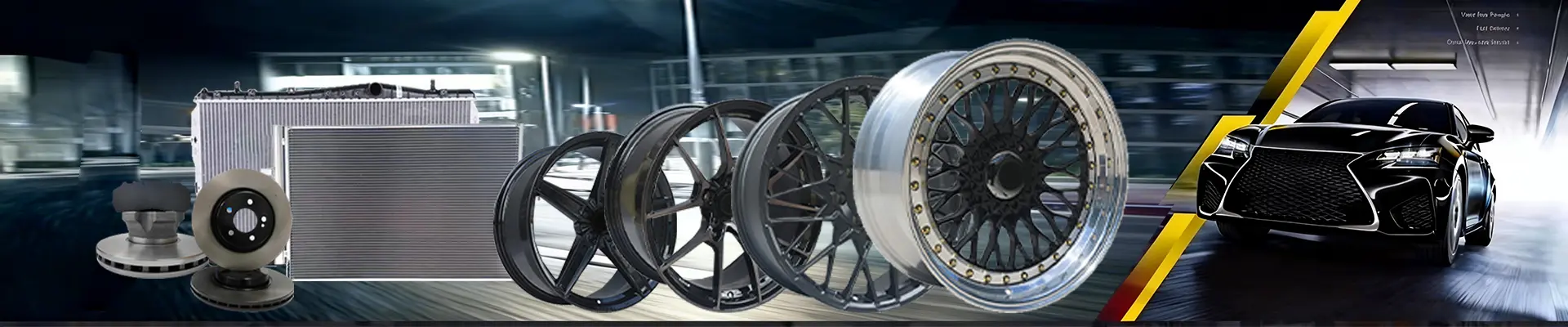
Car Rims Supplier for Peru: China Factory Direct Wholesale

Car Rims Supplier for Peru: China Factory Direct Wholesale
Lowest unit price rarely equals lowest total cost when importing alloy wheels to South America. Missing certifications or inadequate moisture protection can erase any upfront savings through customs delays, rejected cargo, or warranty claims.
The most reliable path for Peruvian importers is sourcing directly from a certified China factory that provides complete export documentation, climate-adapted packaging, and verifiable batch consistency—cutting landed costs substantially while eliminating common freight and quality disputes.
I still think about that shipment to Lima. A modification shop ordered a full batch of 20-inch matte black wheels. They looked perfect leaving the factory floor. Weeks later, photos arrived showing uneven surface tones across the spokes. The buyer refused the entire container. The root cause was not poor paint adhesion—it was the combination of high humidity during the sea crossing and packaging designed for dry climates, not Callao’s coastal moisture. [NEED_CITE: correlation between sea freight humidity exposure and alloy wheel surface oxidation] That single incident reshaped how I approach every order heading to Peru. As a car rims supplier for Peru operations, the lesson was clear: verification and preparation matter far more than price negotiation.
Let me walk through what actually determines whether a Peru-bound wheel shipment succeeds or fails.
What Certifications and Documents Are Required for Peru Customs?
Peruvian customs authorities require specific international certifications and complete documentation packages; missing any single document can hold a container at port for weeks, generating storage fees that dwarf the wheel cost itself.
Many buyers assume that a commercial invoice and packing list are sufficient. They are not. Peru’s import regulations for automotive parts demand proof of compliance with recognized safety and quality standards. The most frequently requested certifications include DOT for the American market alignment, VIA or JWL for Japanese-spec verification, and TÜV for European-style type approval. [NEED_CITE: Peru customs documentation requirements for automotive alloy wheel imports]
Here is what a proper documentation package should contain:
| Document Type | Purpose | Verification Level |
|---|---|---|
| Certificate of Origin | Confirms manufacturing country for tariff classification | Verifiable via chamber of commerce |
| Quality Certification (DOT/VIA/TÜV) | Proves wheels meet structural and dimensional safety standards | Cross-checkable with issuing body databases |
| Commercial Invoice with HS Code | Correct tariff classification for alloy wheels | Must match physical goods description |
| Packing List with Weight and Dimensions | Required for customs valuation and freight calculation | Should correspond to bill of lading data |
| Bill of Lading | Proof of shipment and title transfer | Issued by carrier, must be original or telex release |
| Test Reports (Salt Spray, Impact, Radial Runout) | Demonstrates batch-level quality compliance | Issued by accredited third-party laboratory |
A wholesale buyer in Arequipa once shared that their previous supplier shipped wheels without a proper Certificate of Origin. The cargo sat at the port of Callao for an extended period while the importer scrambled to obtain retroactive paperwork. The demurrage charges ended up costing several times what the certification would have cost initially. [NEED_CITE: impact of missing certificates of origin on import clearance timelines in Latin American ports]
The key takeaway: before confirming any order with a car rims supplier for Peru, request a complete sample documentation package. If the supplier hesitates or says they will "arrange it later," treat that as a serious red flag.
How to Avoid Quality Issues During Sea Freight to Peru?
The majority of surface defects reported on alloy wheels arriving in Peru stem from moisture-related damage during ocean transit, not from manufacturing defects—proper packaging design for humid coastal conditions is the decisive factor.
Peru’s geography creates a unique challenge. The coastal cities where most importers operate—Lima, Callao, Chimbote—experience high humidity levels year-round, with a distinct wet season that pushes moisture even higher. Meanwhile, highland destinations like Cusco present a different set of conditions: lower humidity but significant temperature swings during transport from the coast.
A standard export packaging approach uses a single layer of protective film and basic cardboard dividers. For Peru-bound shipments, this is insufficient. The packaging system needs to account for the full journey: factory warehouse, inland transport to the loading port, the ocean crossing itself, and final delivery to the buyer’s warehouse.
The packaging approach that has proven effective involves multiple protective layers:
- Inner layer: Individual wheel wrapping in sealed plastic film with desiccant packets placed inside each bag. The desiccant weight must be calculated based on the sealed volume—undersized desiccants provide a false sense of security. [NEED_CITE: desiccant quantity calculation methods for sealed metal product packaging]
- Middle layer: Foam or EPE separators between wheels to prevent contact damage during container movement.
- Outer layer: Reinforced carton boxes with moisture-resistant coating, stacked on treated wooden pallets and secured with strapping inside the container.
Beyond packaging, pre-shipment testing provides an objective baseline. Salt spray test reports from accredited laboratories confirm that the wheel’s surface treatment can withstand extended humidity exposure. A reputable car rims supplier for Peru should provide these reports for every batch, not just upon special request.
I recall a case where a buyer in Trujillo received wheels that appeared fine at the port but developed white oxidation spots within days of being moved to their unclimatized warehouse. The supplier’s salt spray test had only covered standard exposure durations, not the extended conditions typical of a Peru sea crossing plus local storage. After switching to a supplier who tested for extended salt spray endurance and matched the packaging to the destination climate, the oxidation complaints stopped entirely.
Which Wheel Specifications Suit Peru’s Market Demand?
The Peruvian aftermarket favors specific size ranges and finishes that differ from North American or European trends—stocking the right specifications from a car rims supplier for Peru avoids dead inventory and maximizes turnover.
Based on order patterns observed across multiple South American buyers, the most consistently requested specifications fall into predictable ranges:
| Size Range | Popular Finishes | Typical Applications | Demand Level |
|---|---|---|---|
| 15-17 inch | Matte black, hyper silver | Compact sedans, entry-level modifications | Substantially high |
| 18-20 inch | Matte black, gunmetal, machined face | Mid-size sedans, SUVs, enthusiast builds | Noticeably high |
| 21-24 inch | Custom paint, chrome, bronze | Luxury vehicles, show cars, low-volume specialty | Moderate |
The matte black finish dominates across all size categories in Peru. Gunmetal has gained ground as a close second, particularly in the 18-20 inch range. Chrome remains relevant but is increasingly concentrated in specific regional preferences rather than nationwide demand.
For SUV and pickup truck applications—which represent a meaningful share of Peru’s vehicle parc—load rating becomes a critical specification. These vehicles often carry heavy loads on rough roads, and wheels not rated for the actual usage conditions can develop structural fatigue prematurely. [NEED_CITE: load rating requirements for alloy wheels on SUV and pickup applications in developing markets]
A tire shop operator in Lima told me that their best-selling wheel SKU changed noticeably after they started carrying a wider range of fitments for Toyota Hilux and Nissan Frontier pickups. The wheels needed to match not just the bolt pattern but also the offset and center bore specific to these platforms. Sourcing from a car rims supplier for Peru who maintains comprehensive fitment data and offers multiple PCD options per size eliminated their custom-order delays.
The Ouya brand product line covers the full spectrum from 12 to 24 inches, with ready stock in the most popular sizes and finishes. This breadth matters because Peruvian buyers often need to fill mixed containers—combining high-volume mainstream sizes with smaller quantities of specialty fitments to serve their diverse customer base.
How to Verify Supplier Credibility Before Placing Orders?
Factory audits, third-party inspection reports, and structured trial orders form a three-layer verification system that separates legitimate manufacturers from trading companies posing as factories—skipping any layer invites costly surprises.
The alloy wheel market in China contains both genuine manufacturers and intermediaries who present themselves as factories. For a buyer selecting a car rims supplier for Peru, distinguishing between the two requires deliberate verification steps.
Layer one: Document verification. Request copies of ISO 9001 quality management certification, product-specific certifications (VIA, TÜV, DOT, JWL as applicable), and any industry-specific accreditations. These should be verifiable through the issuing organization’s database. [NEED_CITE: methods for verifying authenticity of ISO and product certifications for automotive wheel manufacturers]
Layer two: Physical or virtual factory inspection. A legitimate manufacturer will accommodate inspection requests without hesitation. The facility should show active production lines, quality control stations with measurable testing equipment (X-ray flaw detection, radial runout measurement, dynamic balance testing), and organized raw material storage. Trading companies typically cannot provide this level of access because they do not control the production environment.
Layer three: Structured trial order. Before committing to a full container, place a trial order of a modest quantity—enough to evaluate packaging integrity upon arrival, dimensional accuracy across the batch, and surface finish consistency. This step reveals batch-level consistency that no certificate can fully capture.
A modification shop owner in Cusco shared their experience: their first supplier claimed OEM capability and provided impressive-looking certificates. The trial order of several hundred wheels arrived with PCD measurements that varied noticeably across the batch. Some wheels fit perfectly; others required forceful mounting that damaged hub components. The supplier’s response was to blame the buyer’s hub specifications. Switching to a supplier with documented X-ray inspection protocols and a formal three-year structural warranty eliminated the fitment issues entirely. [NEED_CITE: importance of batch-level PCD consistency in alloy wheel manufacturing quality control]
The verification process takes additional time upfront, but it prevents the far greater cost of discovering problems after a full container has crossed the Pacific.
Conclusion
Sourcing alloy wheels from China for the Peruvian market demands more than price comparison—it requires systematic verification of certifications, climate-adapted packaging, specification alignment, and supplier legitimacy. Buyers who invest in thorough due diligence before ordering consistently avoid the port delays, surface damage, and fitment disputes that plague less prepared importers. The right car rims supplier for Peru operations functions as a long-term partner, not just a vendor, providing the documentation, testing, and batch consistency that keep cargo moving and customers satisfied.


