Summer 25% discount on all last year's bike models

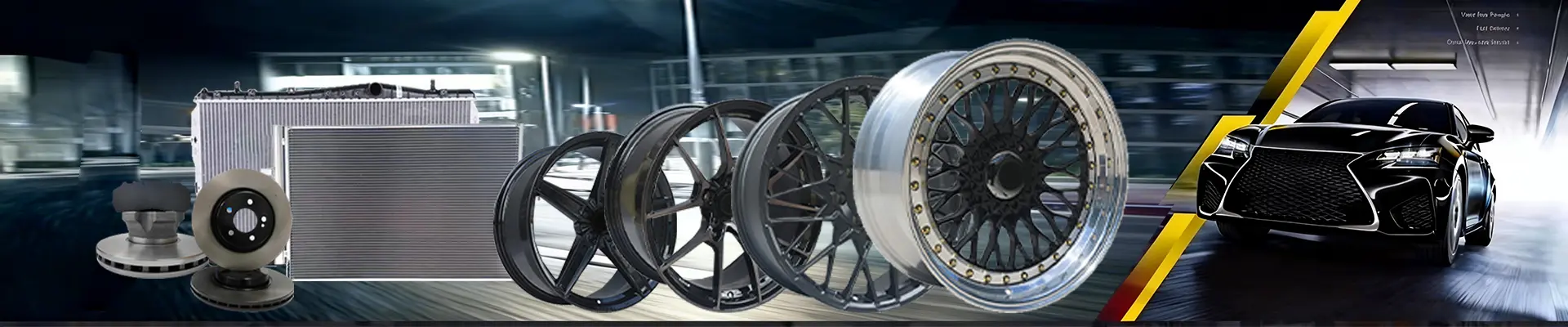
Wheel Rims Supplier for Peru: China Factory Direct

Wheel Rims Supplier for Peru: China Factory Direct
The cheapest wheel rim quote from China often becomes the most expensive shipment once it hits Callao Port.
Choosing a reliable wheel rims supplier for Peru hinges on three things: exact vehicle fitment accuracy, internationally recognized certifications, and full transparency on landed cost—not just the unit price on a proforma invoice.
I still remember a container of 17-inch machined-face rims sitting at Callao for weeks because the hub bore was off by a few millimeters for a fleet of Toyota Hilux pickups. The demurrage bill ended up eating into the margin far more than any discount we could have offered. That shipment was meant for a modification shop in Lima, and the lesson was brutal: skipping fitment verification to save a day of email back-and-forth cost multiples of the original savings. Since then, I have built every quote around a detailed parameter checklist before a single rim goes into production. [NEED_CITE: root causes of wheel fitment disputes in aftermarket imports]
If you are sourcing from a wheel rims supplier for Peru, the conversation must start with data, not price. Let me walk you through the exact specs, pricing logic, certification requirements, and cost structure that separate a smooth import cycle from a port-side headache.
What Specifications Must You Confirm Before Ordering Wheel Rims for Peru?
A complete fitment parameter sheet is your first line of defense against customs rejection and customer returns.
When I first started handling orders for the South American market, I assumed that knowing the bolt pattern was enough. It was not. Peru’s vehicle parc is heavily skewed toward Japanese pickups and compact SUVs—Toyota Hilux, Nissan Frontier, Mitsubishi L200, Hyundai Tucson—each with subtle variations across model years. A wheel that fits a two thousand and fourteen Hilux may not sit right on a two thousand and twenty-two variant without checking every dimension.
Here is the parameter matrix I require from every buyer before we open a production file:
| Parameter | What It Means | Typical Range for Peru Market | Verification Method |
|---|---|---|---|
| PCD (Bolt Pattern) | Diameter of bolt circle | Verified/Not provided/Self-reported | Caliper measurement on OEM rim |
| Offset (ET) | Mounting surface position | Standard/Aggressive/Not verified | Matched to suspension geometry |
| Hub Bore (Center Bore) | Center hole diameter | Exact match required | Digital caliper to one decimal |
| Bolt Thread & Seat | Nut specification | Verifiable/Self-reported/Not provided | Thread gauge check |
| Brake Caliper Clearance | Inner barrel space | Noticeably reduced/Standard/Robust | Physical mock-up or CAD overlay |
| Load Rating | Maximum per-wheel capacity | Controlled/Standard/Uncontrolled | Manufacturer test report |
[NEED_CITE: wheel fitment parameter standards per SAE J2530 and vehicle manufacturer specifications]
A modification shop in Arequipa once ordered a batch of deep-concave mesh rims without confirming brake caliper clearance. The rims looked perfect in photos, but the inner barrel contacted the caliper on the front axle of their demo vehicle. They had to machine spacers, which introduced a new failure point and voided the structural warranty. The rework cost was several times the original discount they negotiated.
The takeaway is simple: treat the fitment sheet like a contract. If a wheel rims supplier for Peru cannot walk you through each parameter with documented evidence, walk away.
How Do You Compare China Factory Direct vs. Trading Company Pricing?
Factory-direct pricing is substantially lower, but only if you verify the factory’s certifications and production capacity independently.
Most buyers searching for a wheel rims supplier for Peru see quotes ranging from budget-tier to premium-tier and assume the gap is purely about brand markup. In reality, the spread reflects three things: material sourcing, surface treatment process, and whether the quote comes from the actual manufacturer or an intermediary adding a margin layer.
| Cost Factor | Direct Factory | Trading Company | Verification |
|---|---|---|---|
| Unit Price | Noticeably reduced | Standard markup applied | Compare FOB with same spec |
| Certification Ownership | Full batch-level traceability | Sample-level or borrowed certs | Request original test reports |
| Production Capacity | Controlled output planning | Uncontrolled lead time risk | Factory audit or video verification |
| Custom OEM/ODM | Verifiable tooling access | Not provided or outsourced | Confirm mold ownership |
| Quality Consistency | Substantially extended batch control | Vulnerable to supplier switching | Request batch photos and reports |
[NEED_CITE: price structure comparison between OEM wheel manufacturers and trading intermediaries in China]
I have seen trading companies present themselves as factories with polished websites and factory tour videos. The problem surfaces when a buyer needs a custom offset or a specific hyper silver finish for a fleet order. The trading company then sources from a different workshop, and batch consistency becomes a gamble. For a distributor in Lima building a private-label program, this inconsistency can destroy retailer trust within a single shipment.
When evaluating a wheel rims supplier for Peru, ask for the original VIA, JWL, or TÜV test reports bearing the factory’s name—not a rescan from a third party. Visit the production floor via live video if you cannot travel. A genuine factory will show you the casting line, the CNC machining center, and the painting booth in real time.
What Are the MOQ and Lead Time Options for Peru Importers?
Stock models allow low-quantity trial orders, while custom rims require higher minimums and longer production windows.
A tire retailer in Trujillo wanted to test a new 18-inch gloss black rim for the Hyundai Tucson market before committing to a full container. We offered a stock-model trial at a low piece count, and the entire batch shipped within a few weeks. That retailer now orders multiple containers per quarter because the trial proved both fitment and finish quality.
Here is how MOQ and lead time typically break down:
| Order Type | Minimum Quantity | Production Lead Time | Best For |
|---|---|---|---|
| Stock Models | Noticeably low threshold | Substantially shorter cycle | Trial orders, retail restocking |
| Custom Finish | Standard threshold | Standard production window | Brand-specific color programs |
| Full OEM/ODM | Higher threshold | Extended tooling and production | Exclusive designs, private label |
[NEED_CITE: typical MOQ structures and lead time ranges for alloy wheel exports from China]
A distributor in Callao once placed a custom order for a古铜色 finish (we call it bronze in our catalog) without understanding the tooling adjustment time. They expected the same turnaround as a stock order and planned a promotional campaign around a date that the production schedule simply could not meet. The lesson: always separate stock availability from custom production timelines in your procurement calendar.
For a wheel rims supplier for Peru serving the Latin American aftermarket, flexibility on trial quantities matters. A buyer should be able to test a new SKU without filling a warehouse, then scale up once the market responds. The best suppliers structure their MOQ to support this cycle rather than forcing oversized commitments upfront.
Which Certifications Ensure Your Wheel Rims Clear Peruvian Customs?
International certifications are not optional marketing badges—they are the documents that determine whether your cargo clears customs or sits at the port.
Peru’s customs authority, SUNAT, requires import documentation that aligns with international quality standards for automotive components. While the enforcement intensity can vary by port and by customs agent, having the proper certification package eliminates the most common delay triggers.
| Certification | What It Covers | Market Recognition | Required for Peru |
|---|---|---|---|
| VIA | Structural integrity for aftermarket wheels | North America, global aftermarket | Verifiable/Recommended |
| JWL | Japanese light-wheel standard | Japan, Asia, Latin America | Verifiable/Recommended |
| TÜV | European technical compliance | Europe, global premium markets | Verifiable/Recommended |
| DOT | U.S. Department of Transportation | North America | Verifiable/Recommended |
| ISO 9001 | Quality management system | Global baseline | Verifiable/Required |
| CCC | China compulsory certification | Domestic China market | Context-dependent |
[NEED_CITE: Peruvian customs documentation requirements for imported automotive wheel rims per SUNAT regulations]
I worked with an importer who received a container of rims without the original TÜV test report—only a photocopy. The customs agent flagged it, and the cargo was held for inspection. The delay added storage fees and disrupted the buyer’s delivery commitments to their retail network. The cost of that delay far exceeded any savings from choosing a cheaper, uncertified supplier.
When you engage a wheel rims supplier for Peru, request a complete certification package before placing the order: original test reports, material certificates, and a declaration of conformity. A factory that owns its certifications—rather than borrowing them—will provide these documents without hesitation.
How to Calculate Total Landed Cost from China to Callao Port?
The unit price on the proforma invoice is only the starting point—true cost includes freight, duties, port charges, and inland transport.
Many buyers fixate on the FOB price per rim and compare suppliers purely on that number. This approach ignores the cost structure that determines what the rim actually costs when it sits in your warehouse in Lima or Arequipa.
Here is the cost model I use with every buyer:
| Cost Component | Description | Control Level |
|---|---|---|
| Factory Unit Price | Base rim cost including packaging | Negotiable with supplier |
| Inland Freight (China) | Factory to port of loading | Standard/Controlled |
| Port Charges (Origin) | THC, documentation, customs export | Controlled/Verifiable |
| Ocean Freight | Loading port to Callao | Subject to shipping market |
| Import Duty (Peru) | Tariff rate per HS code | Controlled per trade agreement |
| Port Charges (Destination) | THC, storage, handling at Callao | Standard/Controlled |
| Inland Transport (Peru) | Callao to final warehouse | Noticeably variable by distance |
[NEED_CITE: total landed cost calculation model for automotive wheel rim imports from China to Peru]
An importer in Callao compared two quotes: one from a factory offering a lower FOB price but no assistance with shipping documentation, and another from a factory with a slightly higher FOB price but full export documentation support. The second option ended up cheaper on a landed-cost basis because the first option incurred demurrage from incomplete paperwork. The difference was not in the rim price—it was in the cost of getting the rim to the warehouse.
A reliable wheel rims supplier for Peru should help you model the total landed cost before you commit. This means providing accurate HS codes, packing lists, and container loading plans so you can calculate duties and freight with precision.
Conclusion
Sourcing wheel rims for Peru is a fitment-first, certification-driven, and cost-transparent process—not a price-only decision.
Confirm every vehicle parameter before production, verify factory certifications independently, understand MOQ and lead time structures for your order type, and model the full landed cost to Callao before comparing quotes. A wheel rims supplier for Peru that supports you across all four dimensions will save you far more than any unit-price discount ever could.


