Summer 25% discount on all last year's bike models

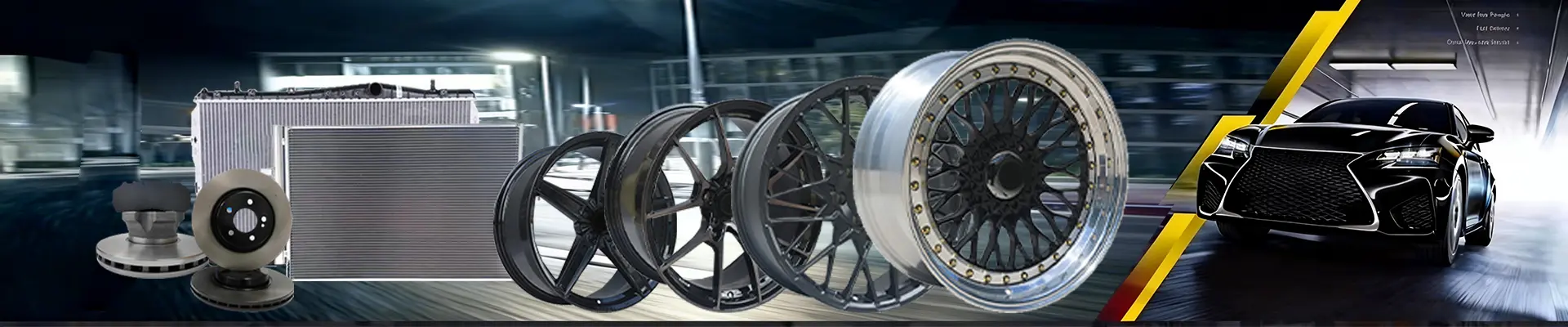
Alloy Wheels Supplier for Poland: China Factory Direct

Alloy Wheels Supplier for Poland: China Factory Direct
The cheapest quote on paper often becomes the most expensive mistake on the road.
Poland-based distributors, tuning shops, and e-commerce sellers can source alloy wheels directly from Chinese factories at factory-gate pricing, provided the supplier holds verifiable TÜV, VIA, or JWL certifications, maintains documented quality control checkpoints, and can deliver complete EU customs documentation. The alloy wheels supplier Poland buyers choose must prove structural compliance through test reports—not marketing labels—because the gap between a compliant wheel and a failed one is measured in production process control, not price tags.
I spent months at a West African port watching containers of alloy wheels get unloaded for local fleet operators. One shipment arrived from a southern Chinese trading company at a price that looked unbeatable. Within a few thousand kilometers on rough roads, spoke roots started cracking across the batch. The fleet owner filed claims, the trading company vanished behind email aliases, and an entire regional market turned hostile toward Chinese wheels for years. That scene replays in my head every time a European buyer asks me what "factory direct" actually means. The alloy wheels supplier Poland customers engage with needs to stand behind every rim with traceable certification and open production lines, because a cracked wheel on a Warsaw highway carries consequences no discount can offset. [NEED_CITE: root cause distribution of alloy wheel structural failures in aftermarket applications]
Understanding what separates a reliable alloy wheels supplier Poland buyers can trust from a risky one requires looking at certifications, pricing structures, lead times, and factory verification methods in detail.
What Certifications Does the Polish and EU Market Actually Require?
An alloy wheels supplier Poland distributors work with must provide TÜV, VIA, JWL, or equivalent certification with independently verifiable test reports—self-declared compliance holds no legal or insurance value in the European market.
Poland operates under European Union vehicle safety regulations, and alloy wheels sold as aftermarket replacements must meet recognized structural integrity standards. The key certifications buyers encounter are:
| Certification | Scope | Testing Focus | Verification Level |
|---|---|---|---|
| TÜV (Germany) | European road use | Structural fatigue, impact, radial runout | Third-party audited |
| VIA (Japan) | Global aftermarket | Cornering fatigue, radial fatigue, impact | Third-party lab tested |
| JWL (Japan) | Japanese standard vehicles | Load capacity, structural endurance | Third-party lab tested |
| ISO 9001 | Quality management system | Process consistency, documentation | Registrar audited |
| CCC (China) | Chinese domestic market | Basic structural compliance | Government designated lab |
For Poland specifically, TÜV certification carries the strongest market recognition because many Polish buyers source through German distribution channels. VIA and JWL are equally valid structurally and widely accepted across European aftermarket networks. [NEED_CITE: EU regulatory framework for aftermarket alloy wheel certification requirements]
A tuning shop in central Poland once ordered a batch of custom concave wheels from a supplier who provided a certificate that looked authentic. When the shop submitted the certificate number to the issuing body for verification, the number did not exist in the database. The "certification" was a printed document with no backing test data. The shop had to scrap the entire order and source from a different alloy wheels supplier Poland market participants had already vetted.
The critical distinction is this: legitimate certification means the factory’s production process—material composition, heat treatment parameters, machining precision, surface coating thickness—has been independently tested and documented. A sticker on a box means nothing without a traceable report. [NEED_CITE: alloy wheel certification verification methods and common fraud patterns]
How Do Factory-Direct Pricing and Trading Company Pricing Compare?
Factory-direct pricing from a Chinese alloy wheels supplier Poland buyers source from typically eliminates multiple margin layers that trading companies add, but the real savings depend on order volume and customization requirements.
The pricing structure between factory-direct and trading company channels differs fundamentally:
| Cost Component | Factory-Direct | Trading Company |
|---|---|---|
| Base manufacturing cost | Transparent, tied to material and process | Marked up with undisclosed margin |
| Certification amortization | Spread across production volume | Added as separate line item |
| Quality control | Integrated into production flow | Outsourced or skipped |
| Customization tooling | Direct factory engineering response | Relayed through intermediary, delayed |
| Minimum order flexibility | Negotiable based on production schedule | Fixed to protect trading margin |
| Documentation support | Factory-issued, complete | May lack original test reports |
A European distributor who previously sourced through a trading company switched to factory-direct purchasing and noticed that per-piece costs dropped noticeably once order volumes reached container-load levels. However, the more significant savings came from eliminating the communication lag—engineering changes that previously took weeks to relay through the trading company now resolved in direct conversations with the production team.
The trap many buyers fall into is comparing unit prices without accounting for hidden costs. A trading company may quote a lower per-piece price on small orders, but when certification gaps surface, when batch consistency fails, or when custom color requests get miscommunicated, the total cost of ownership rises sharply. An alloy wheels supplier Poland buyers evaluate should be judged on total delivered value—certified quality, consistent batches, responsive engineering—not just the headline unit price. [NEED_CITE: cost structure analysis of alloy wheel supply chain intermediaries versus factory-direct sourcing]
What Is the Realistic Lead Time from a Chinese Factory to a Polish Warehouse?
The total lead time from a Chinese alloy wheels supplier Poland customers order from to warehouse delivery typically spans several weeks, combining production cycles, ocean or rail freight, and EU customs clearance—buyers who plan around factory promises alone will face stockouts.
The lead time breaks down into distinct phases:
| Phase | Typical Duration | Variables |
|---|---|---|
| Production (stock models) | Short cycle | Inventory availability |
| Production (custom orders) | Noticeably longer | Mold complexity, surface treatment |
| Ocean freight (China to Gdansk/Gdynia) | Extended transit | Shipping season, vessel availability |
| Rail freight (China to Poland via Belt and Road) | Moderate transit | Rail schedule, border transfers |
| EU customs clearance | Variable | Documentation completeness, inspection triggers |
A Polish e-commerce seller who stocks popular fitment sizes for Japanese and Korean vehicles learned to plan orders at least two full cycles ahead of peak season. Their first experience with a new alloy wheels supplier Poland market connections introduced them to resulted in a stockout because the buyer assumed the factory’s production timeline was the total delivery timeline. Ocean freight added weeks, and a missing certificate of origin delayed customs by additional days.
The rail route from China to Poland—part of the trans-Eurasian logistics network—offers a middle ground between ocean freight cost and air freight speed. However, rail capacity fluctuates, and border transfer procedures at the Poland-Belarus crossing can introduce unpredictable delays. [NEED_CITE: trans-Eurasian rail freight transit times and customs clearance procedures for automotive parts entering the EU]
Buyers should request a complete timeline breakdown from any alloy wheels supplier Poland operations depend on, including production start date, estimated completion, shipping method, and expected customs clearance window. Suppliers who provide only a single "total days" figure without phase-level detail are either inexperienced in export logistics or deliberately obscuring risk.
How Do You Verify a Chinese Alloy Wheel Factory Before Placing an Order?
Verifying an alloy wheels supplier Poland buyers are considering requires checking certification authenticity, inspecting production capabilities, testing sample quality independently, and confirming export documentation track record—skipping any of these steps invites costly failures.
The verification process follows a structured sequence:
Step 1: Request original certification documents and verify independently. Contact the issuing certification body directly with the certificate number and factory name. Do not accept scanned PDFs as proof—legitimate suppliers will facilitate direct verification.
Step 2: Audit the production line, either on-site or virtually. A credible factory will offer live video walkthroughs showing casting or forging equipment, CNC machining centers, heat treatment furnaces, X-ray inspection stations, dynamic balance testing rigs, and salt spray testing chambers. [NEED_CITE: essential quality control equipment for alloy wheel manufacturing facilities]
Step 3: Order samples and conduct independent testing. Send sample wheels to a third-party laboratory for structural fatigue testing, material composition analysis, and surface coating adhesion verification. The cost of independent testing is negligible compared to the cost of a failed batch.
Step 4: Review the supplier’s export documentation history. Ask for copies of previous shipments’ customs declarations, certificates of origin, and bills of lading to EU destinations. An established alloy wheels supplier Poland buyers work with should have documented experience clearing EU customs.
A Middle Eastern distributor once shared their experience of receiving wheels that looked identical to certified samples but failed radial fatigue testing when independently checked. The supplier had switched the alloy material grade between sample production and batch production—a practice impossible to detect without independent testing. This is why verification cannot rely on supplier self-reporting alone.
What Quality Control Checkpoints Separate Reliable Suppliers from Risky Ones?
A trustworthy alloy wheels supplier Poland buyers partner with will demonstrate documented quality control at every production stage—from raw material incoming inspection through final packaging—while risky suppliers rely on end-stage spot checks or skip testing entirely.
The critical quality control checkpoints in alloy wheel manufacturing include:
| Checkpoint | Purpose | Reliable Supplier Practice | Risky Supplier Practice |
|---|---|---|---|
| Incoming material inspection | Verify alloy composition | Spectrometer testing per batch | Self-reported material certificates |
| Casting/forging process control | Ensure structural integrity | Temperature and pressure logging | Uncontrolled parameters |
| CNC machining precision | Achieve dimensional accuracy | In-process measurement | End-of-line sampling only |
| X-ray inspection | Detect internal defects | Full-wheel or critical-zone scanning | Visual inspection only |
| Dynamic balance testing | Ensure vibration-free operation | 100% testing per wheel | Sample-based testing |
| Salt spray testing | Validate corrosion resistance | Controlled-duration testing per batch | Coating thickness check only |
| Final audit | Confirm finish and packaging | Documented inspection records | Random visual check |
The difference between these approaches becomes visible only when wheels enter real-world use. A wheel that passes visual inspection but contains internal porosity from uncontrolled casting will develop fatigue cracks under repeated loading. A wheel with inadequate salt spray protection will show corrosion within a single winter season on Polish roads where de-icing salts are heavily used.
An alloy wheels supplier Poland distributors trust will provide batch-level test reports, not just generic quality promises. When a buyer requests X-ray images from a specific production run and the supplier cannot provide them, that is a definitive signal to look elsewhere. [NEED_CITE: alloy wheel quality control standards and testing methodologies per international specifications]
Conclusion
Sourcing alloy wheels from a Chinese factory for the Polish market delivers real cost advantages, but only when buyers verify certifications, understand pricing structures, plan realistic lead times, and conduct independent quality validation. The alloy wheels supplier Poland distributors, tuning shops, and e-commerce sellers choose must demonstrate structural compliance through traceable documentation, maintain transparent production processes, and support buyers with complete export logistics—because in this industry, the wheel that fails on the road always costs more than the wheel that was properly verified before shipping.


