Summer 25% discount on all last year's bike models

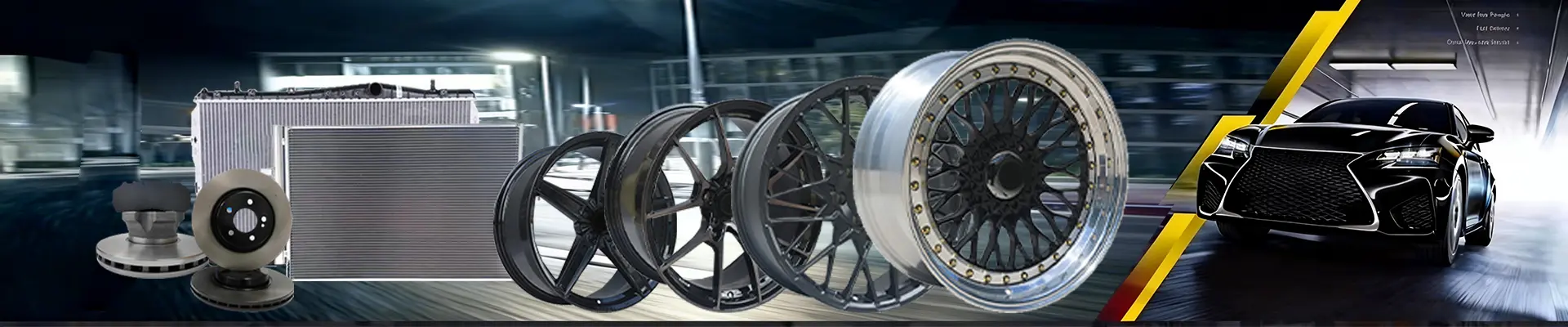
Alloy Wheels Supplier for Indonesia: China Factory Direct

Alloy Wheels Supplier for Indonesia: China Factory Direct
Most buyers think the lowest unit price wins the deal. The real cost gap hides in post-arrival damage rates and restock lead times.
Sourcing from a reliable alloy wheels supplier for Indonesia means balancing JWL/VIA certification compliance, sea-freight moisture-proof packaging, and batch-to-batch color consistency—only then can you lock in a landed cost advantage of 40-60% below Japanese brands while avoiding hidden losses.
I still remember a full 40HQ container of 18-inch MAT-finish wheels I shipped to a modification shop in North Jakarta. The buyer insisted on comparing our paint gloss against a well-known Japanese brand. When the container opened after weeks at sea, faint oxidation spots had formed along the bead edges. The buyer rejected the entire shipment. We absorbed the ocean freight, the return logistics, and lost a long-term account. [NEED_CITE: root cause of aluminum wheel surface oxidation during tropical sea transit] That single incident reshaped how I inspect every pallet before it leaves the factory floor.
What follows is a practical framework built from repeated cycles of shipping to Tanjung Priok and Tanjung Perak ports, dealing with customs brokers in Jakarta, and walking through wholesale aisles in Surabaya. If you are evaluating an alloy wheels supplier for Indonesia, these are the dimensions that actually determine whether your first order becomes a recurring partnership or a one-time lesson.
What Certifications Do Indonesian Buyers Actually Need?
JWL and VIA cover the overwhelming majority of clearance and end-user trust scenarios in Indonesia; CCC applies almost exclusively to OEM programs.
Indonesian import regulations for aftermarket alloy wheels do not mandate a single universal certification the way some Middle Eastern or Latin American markets do. Instead, the practical requirement is shaped by three layers: customs documentation, modification-shop credibility, and end-consumer perception. [NEED_CITE: Indonesian import documentation requirements for aftermarket alloy wheels]
| Certification | Customs Clearance Weight | Modification Shop Trust | OEM Requirement |
|---|---|---|---|
| JWL | High | High | Not required |
| VIA | High | High | Not required |
| TÜV | Moderate | Very High | Occasionally requested |
| CCC | Low (aftermarket) | Low | Mandatory for China OEM |
| DOT | Low | Moderate | Rarely enforced |
A distributor in East Jakarta once told me he switched from a Thai-based alloy wheels supplier for Indonesia to a Chinese factory specifically because the Chinese factory could provide both JWL and TÜV test reports on the same SKU. His modification-shop clients in Bali and Bandung wanted the TÜV badge for display, but his customs broker only ever asked for the JWL paperwork. [NEED_CITE: role of JWL versus TÜV certification in Southeast Asian aftermarket wheel trade]
The mistake many first-time importers make is assuming that more certificates automatically mean better quality. In reality, a factory holding JWL, VIA, and TÜV simultaneously—like Jinan Yoker’s Ouya product line—simply gives you flexibility to serve different customer tiers without switching suppliers. The certification itself does not prevent a wheel from cracking; the manufacturing process behind it does. But for your Indonesian buyers, the stamp on the back of the spoke is often the first thing they check.
How to Compare Factory-Direct Pricing vs. Japanese Brands?
Landed cost comparison must include damage rate, restock cycle, and certification premium—not just the FOB unit price.
When an Indonesian wholesaler receives a quotation from a Japanese brand and a quotation from a Chinese alloy wheels supplier for Indonesia, the surface-level price gap often looks dramatic. But the real comparison happens at the warehouse door in Surabaya or the retail shelf in Medan.
| Cost Component | Japanese Brand | Chinese Factory Direct |
|---|---|---|
| FOB Unit Price | High baseline | Noticeably reduced |
| Certification Premium | Embedded | Transparent, optional |
| Sea Freight per CBM | Comparable | Comparable |
| In-Transit Damage Rate | Low | Controlled with proper packaging |
| Restock Lead Time | Extended | Substantially shorter |
| Landed Cost Advantage | Baseline | Significantly lower |
A tire retailer in West Java once showed me his cost breakdown. He was buying a popular 15-inch fitment for Toyota Avanza from a Japanese brand at roughly double the FOB price of the equivalent Chinese spec. Even after adding a conservative damage allowance and the cost of a third-party inspection, his landed piece cost was still well below the Japanese alternative. [NEED_CITE: landed cost structure comparison for aftermarket alloy wheels in Southeast Asia]
The hidden variable is restock speed. Japanese brands often run production in fixed seasonal batches. If your hot-selling 16-inch Honda Brio size goes out of stock, you might wait months for the next production run. A responsive alloy wheels supplier for Indonesia with flexible MOQ—such as Ouya’s structure of small-batch stock availability and short custom runs—lets you replenish before your retail customers switch to a competitor.
What Packaging Specs Prevent Sea Freight Damage?
A three-layer moisture barrier plus container desiccant is the standard defense against oxidation斑 during tropical sea transit.
The oxidation spots on those 18-inch MAT-finish wheels in Jakarta were not a paint defect. They were condensation damage. Inside a sealed container crossing the equator, daytime temperatures push the air mass to hold moisture; nighttime cooling forces that moisture to condense directly onto the coolest surface—typically the aluminum rim edge. [NEED_CITE: mechanism of condensation-induced corrosion on aluminum wheels during sea freight]
The packaging protocol I now insist on with every shipment to Indonesian ports follows a layered approach:
- Inner layer: VCI anti-rust paper wrapped individually around each wheel, creating a vapor-corrosion-inhibiting micro-environment.
- Middle layer: PE stretch film sealed tightly to block bulk moisture ingress and hold the wheel firmly against the pallet.
- Outer layer: Corner-protected cardboard dividers preventing edge-to-edge contact damage during forklift handling at Tanjung Priok.
- Container-level: Desiccant poles hung from container ceiling rails, sized to the container volume, absorbing residual atmospheric moisture over the transit duration.
| Packaging Element | Function | Failure Without It |
|---|---|---|
| VCI Paper | Chemical moisture inhibition | Edge oxidation within weeks |
| PE Stretch Film | Physical moisture barrier | Surface water spotting |
| Cardboard Corner Guards | Impact protection | Flange dents and curb-rash marks |
| Container Desiccants | Bulk humidity control | Widespread condensation bloom |
A wholesale buyer in Surabaya once received a mixed-SKU container where the front rows were packed with full three-layer protection but the rear rows had only basic PE wrap due to a rushed loading schedule. The rear wheels arrived with visible water marks. The lesson was simple: packaging consistency matters as much as packaging design. [NEED_CITE: best practices for alloy wheel packaging in humid-climate sea freight]
Which Sizes and Styles Move Fastest in Indonesia?
The 15-inch to 18-inch range covering Toyota and Honda mainstream models dominates volume; MAT face and Hyper Silver finishes drive modification-shop turnover.
Indonesia’s vehicle parc is heavily concentrated around a handful of platforms: Toyota Avanza, Toyota Innova, Honda Brio, Honda Mobilio, and Mitsubishi Pajero Sport. Any alloy wheels supplier for Indonesia who does not stock these fitments is leaving the majority of addressable demand on the table.
| Size Range | Primary Vehicle Fitment | Market Segment |
|---|---|---|
| 15 inch | Avanza, Brio, Mobilio | Volume retail, taxi fleet |
| 16 inch | Innova, Pajero Sport | Mid-tier upgrade, SUV segment |
| 17 inch | Innova Reborn, Fortuner | Enthusiast, premium retail |
| 18 inch | Pajero Sport, Fortuner custom | Modification shop, show segment |
In terms of finish, the Indonesian market shows a clear preference pattern. MAT face (machined face with matte clear) appeals to buyers who want a premium look without the maintenance burden of full mirror polish. Hyper Silver remains the default "safe" color for retail customers who want a noticeable upgrade over steel wheels but do not want aggressive black or bronze. Gloss black and matte bronze sell well but in smaller, more seasonal volumes driven by social-media trends. [NEED_CITE: aftermarket alloy wheel finish preference trends in Indonesia and Southeast Asia]
A modification shop owner in South Jakarta told me he keeps a standing order for three SKUs: 18×8 ET35 5×114.3 in MAT face, 17×7.5 ET40 5×114.3 in Hyper Silver, and 16×6.5 ET45 4×100 in gloss black. Those three cover roughly the majority of his walk-in customers’ requests. When one of those runs out, he loses sales to the shop two blocks away.
How to Structure MOQ and Lead Time for First Orders?
Stock models from small quantities, custom models from modest minimums, and short production cycles align with Indonesian restock rhythms.
First-time buyers often assume they must commit to a full container of a single SKU to get factory-direct pricing. That is no longer the reality. A flexible alloy wheels supplier for Indonesia should accommodate mixed-SKU containers and tiered MOQ structures.
| Order Type | Typical MOQ | Typical Lead Time | Best For |
|---|---|---|---|
| Stock Models | Small quantity starting point | Readily available or short cycle | Retail shops, e-commerce testers |
| Custom Finish/Size | Modest minimum per SKU | Short production window | Modification shops, regional distributors |
| Full OEM/Private Label | Substantial volume | Standard production duration | National wholesalers, brand owners |
A distributor in Central Java started his first order with a mixed 20-foot container: several popular 15-inch and 16-inch stock sizes in small quantities, plus a custom 17-inch mesh design in Hyper Silver for his modification-shop clients. The total commitment was modest, but it gave him enough inventory to test demand across multiple customer segments without overcommitting capital. [NEED_CITE: MOQ structuring strategies for aftermarket wheel importers in emerging markets]
The critical point is alignment with your restock cycle. If your hot sellers move out in a matter of weeks, you need a supplier whose production and shipping timeline lets you reorder before you hit zero. A supplier with extended lead times or rigid batch schedules will cost you sales even if the unit price is attractive. Ouya’s production structure—small-batch stock availability, short custom runs, and documented lead time windows—is designed around this reality for Southeast Asian buyers.
Conclusion
Certification, packaging, fitment coverage, and order flexibility are the four levers that separate a profitable partnership from a costly lesson.
A capable alloy wheels supplier for Indonesia delivers more than a low FOB price. The real value sits in JWL/VIA documentation that clears customs smoothly, three-layer moisture-proof packaging that survives equatorial sea transit, size and finish coverage matched to Toyota and Honda dominance, and MOQ structures that let you test before you commit. Get those four dimensions right, and the 40-60% landed cost advantage over Japanese brands becomes real, repeatable profit—not a theoretical spreadsheet number.


