Summer 25% discount on all last year's bike models

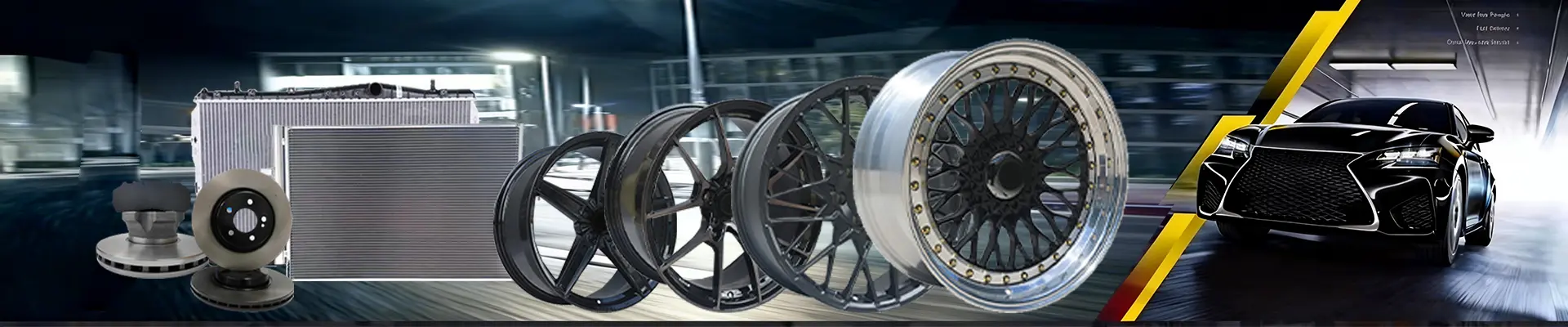
Buy Custom Paint Alloy Wheels: China Factory Direct Wholesale Supplier

Buy Custom Paint Alloy Wheels: China Factory Direct Wholesale Supplier
Most paint failures on custom alloy wheels don’t start in the color layer — they start in the primer adhesion and curing temperature.
Custom paint alloy wheels sourced directly from Chinese factories deliver substantial cost advantages over European and Japanese brands, but buyers must independently verify coating process specifications, salt spray endurance ratings, and curing standards before committing to container-level orders. The difference between a profitable shipment and a costly return lies in demanding documented process parameters rather than trusting visual samples alone.
I spent considerable time on the production floor at a wheel manufacturing facility in Jinan before moving into export sales focused on Latin American markets. Early on, a modification shop in São Paulo ordered a full set of 20-inch matte black forged wheels with fully customized paint. When the container arrived, salt spray exposure during the ocean transit had triggered fine cracking across the clear coat. The entire batch required rework, air-freight replacement consumed the margin and then some. Since that episode, I have scrutinized every stage of the coating line — primer film thickness, color coat viscosity, clear coat curing temperature and duration — because the real risk hides where most buyers never look. [NEED_CITE: root cause distribution of coating failures in automotive wheels per ASTM failure analysis methodology]
Let me walk through the technical checkpoints and commercial terms that separate reliable sourcing from expensive lessons.
What Coating Specs Should You Require for Custom Paint Wheels?
A three-layer coating system — primer, base color, and clear coat — with controlled film thickness at each stage forms the non-negotiable quality baseline for any custom paint alloy wheel leaving a Chinese factory.
The coating process on alloy wheels follows a consistent sequence: surface preparation, powder or liquid primer application, base color spray, and clear coat finishing. Each layer must reach a specific film thickness range and undergo controlled curing. Skipping documentation at any stage invites failures that only surface after the wheels reach your warehouse — or worse, after your end customers install them.
| Coating Layer | Film Thickness Standard | Curing Requirement | Adhesion Test |
|---|---|---|---|
| Primer | Standard range per manufacturer spec | Controlled temperature curve | Cross-cut adhesion certified |
| Base Color | Standard range per manufacturer spec | Flash-off time controlled | Visual consistency verified |
| Clear Coat | Standard range per manufacturer spec | Full cure cycle documented | Pencil hardness certified |
Most buyers focus on the color shade and assume the rest is routine. In reality, primer adhesion determines whether the entire coating system survives thermal cycling and mechanical stress. If the primer fails to bond properly to the aluminum substrate, no amount of clear coat will save the finish. [NEED_CITE: automotive wheel coating adhesion standards per ISO 2409 cross-cut test methodology]
A distributor in Mexico City once received a batch where the color looked perfect under showroom lighting but showed micro-blistering after a few weeks of summer heat exposure. Investigation revealed the primer curing temperature had been insufficient — the factory had accelerated the conveyor speed to meet a tight deadline without adjusting the oven profile. The color coat adhered initially but separated from the substrate under thermal expansion.
When evaluating a supplier, request their complete coating process sheet. A credible manufacturer will provide documented parameters for each layer, not just a final visual inspection stamp. [NEED_CITE: multi-layer coating process documentation requirements for automotive wheel finishing]
How to Verify Salt Spray Resistance for Maritime Shipping?
A minimum salt spray endurance rating is the entry-level threshold for any custom paint alloy wheel destined for overseas shipment, and high-humidity shipping routes demand substantially higher endurance.
Ocean freight exposes wheels to sustained high humidity, temperature fluctuations, and saline atmospheric conditions inside the container. Wheels that pass a basic salt spray test may still develop micro-cracks or hazing after weeks at sea if their coating system lacks sufficient corrosion resistance. This is not a theoretical concern — it is the single most common cause of paint complaints among importers sourcing from Asia.
| Shipping Route | Humidity Profile | Minimum Salt Spray Endurance | Risk Level |
|---|---|---|---|
| Short-sea regional | Moderate | Basic endurance threshold | Noticeably reduced |
| Trans-Pacific standard | Extended high humidity | Standard endurance threshold | Controlled |
| Tropical high-humidity lanes | Sustained extreme humidity | Extended endurance threshold | Robust |
The test method itself matters. Buyers should confirm the factory follows recognized salt spray testing protocols rather than conducting abbreviated in-house versions. [NEED_CITE: neutral salt spray testing methodology for automotive coated surfaces per recognized international standards]
A wholesale buyer in the Middle East placed a large mixed-color order destined for a port in the Arabian Gulf. The first container arrived with noticeable hazing on the darker finishes. The coating had not been formulated to withstand the combination of extreme ambient heat and coastal salinity at the destination. The supplier had tested against a generic standard, not against conditions specific to the shipping route and final climate.
To protect yourself, specify the salt spray endurance requirement in your purchase contract and request test reports from the factory’s quality lab — or better yet, commission independent third-party testing on pre-shipment samples. Packaging also plays a role: moisture barrier wraps and desiccant placement inside the container reduce exposure, but they supplement coating quality rather than replace it. [NEED_CITE: protective packaging methods for coated automotive wheels during maritime transport]
What MOQ and Lead Time for Custom Colors vs Standard Finishes?
Custom color orders carry meaningfully higher minimum quantities and longer production cycles compared to standard finishes, and buyers planning seasonal launches must account for this gap in their inventory timelines.
Standard finishes — gloss black, matte black, gunmetal, hyper silver, machined face — are produced in continuous runs. Factories maintain baseline inventory of raw materials and coating compounds for these colors, so turnaround is fast and minimum order quantities are low. Custom colors require dedicated paint mixing, separate line setup, and often a full color-matching approval cycle before production begins.
| Order Type | Minimum Order Quantity | Production Lead Time | Color Approval Cycle |
|---|---|---|---|
| Standard finishes | Low threshold | Short cycle | Not required |
| Custom color match | Substantially higher threshold | Extended cycle | Full approval required |
| Multi-color mixed batch | Highest threshold | Longest cycle | Sequential approvals |
An e-commerce seller in the United States wanted to test a proprietary bronze shade before committing to volume. The factory produced a small sample batch for approval, but the full custom production run required a significantly larger minimum order than the seller anticipated. The color matching process alone added multiple rounds of spray-out panels and approval cycles before the production run could begin.
The practical takeaway: if your business model depends on rapid SKU rotation or small-batch testing, standard finishes offer far more flexibility. Custom colors make economic sense when you can absorb the higher minimum and the longer timeline across a committed sales channel. [NEED_CITE: production planning considerations for custom color automotive wheel coating operations]
How to Control Color Consistency Across Large Batch Orders?
Maintaining color consistency across large production runs of custom paint alloy wheels requires instrumental color measurement with strict tolerance thresholds, not just visual comparison under shop lighting.
When a wholesale order includes multiple containers or spans several production batches, even slight variations in pigment mixing ratios, spray booth temperature, or curing conditions can produce visible shade differences. This is especially critical for orders destined for modification shops where wheels from different batches may be installed side by side on the same vehicle.
| Consistency Control Method | Reliability | Buyer Verification |
|---|---|---|
| Visual comparison only | Uncontrolled | Not recommended |
| Instrumental measurement with tolerance | Standard | Verifiable with report |
| Full batch-level traceability | Robust | Certified documentation |
Reputable manufacturers use spectrophotometers to measure color deviation against the approved master sample. The acceptable deviation threshold should be specified in your order agreement. [NEED_CITE: instrumental color measurement tolerance standards for automotive exterior coatings]
A distributor in Chile received a mixed order of custom blue wheels across three production batches. Under warehouse fluorescent lighting, the shades looked acceptable. But when a modification shop installed a set from batch one alongside a set from batch three on a display vehicle, the difference was immediately obvious under natural sunlight. The factory had not performed instrumental measurement between batches and relied on operator visual judgment.
To prevent this, require your supplier to provide spectrophotometer readings for each production batch and include the measurement data in the shipment documentation. If the factory cannot or will not provide this data, treat it as a significant quality risk indicator. [NEED_CITE: batch color consistency documentation requirements for automotive wheel coating production]
What Documentation Proves Factory Capability for Custom Paint?
A credible custom paint alloy wheel supplier must provide a complete documentation package — international quality certifications, detailed process records, and independent test reports — before any buyer should commit to volume orders.
Certifications alone do not guarantee coating quality, but their absence guarantees you have no independent verification of the factory’s systems. The documentation stack you should expect includes quality management certification, product-specific certifications for your target market, detailed coating process records for each batch, and third-party test reports for salt spray endurance and adhesion performance.
| Document Type | Purpose | Verification Level |
|---|---|---|
| Quality management certification | System-level process control | Certified by accredited body |
| Product market certification | Regulatory compliance for destination | Certified by recognized authority |
| Batch process records | Traceability of coating parameters | Verifiable with production data |
| Third-party test reports | Independent validation of performance | Certified by independent laboratory |
A buyer in Southeast Asia had been sourcing standard black wheels from a factory for an extended period without issues. When they switched to a custom red finish for a new product line, the factory’s existing documentation did not cover the specific coating process for that color. The buyer requested updated process records and third-party test reports, and the factory’s inability to provide them promptly revealed that the custom color line had not been validated to the same standard as the regular production.
Jinan Yoker maintains a multi-certification framework covering ISO, VIA, TÜV, DOT, JWL, and CCC standards, with complete batch-level process documentation and third-party test reporting available for every custom paint order. Their production facility supports full OEM and ODM customization with structured quality control at every coating stage, and they provide complete customs documentation to streamline international shipment. [NEED_CITE: quality certification and documentation standards for automotive wheel manufacturing exporters]
Conclusion
Sourcing custom paint alloy wheels from Chinese factories offers real cost advantages, but coating quality is never automatic — it must be specified, measured, and documented at every stage. Buyers who treat coating specifications as negotiable rather than mandatory will inevitably absorb the cost of failures downstream. The factories that invest in process discipline and transparent documentation are the ones worth building long-term supply relationships with.


