Summer 25% discount on all last year's bike models

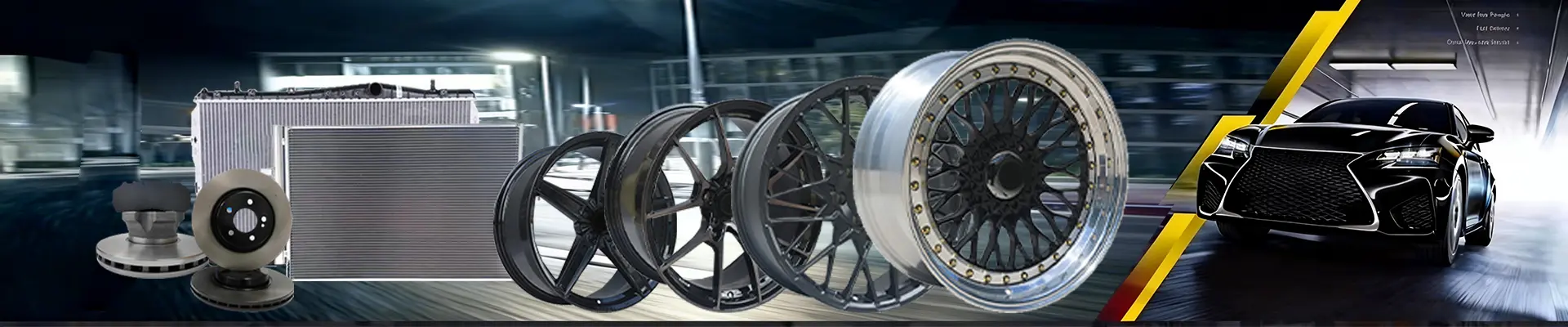
Alloy Wheel Import ROI: Wholesale Distributor Profit Margin Analysis

Alloy Wheel Import ROI: Wholesale Distributor Profit Margin Analysis
The factory price you see on the quotation sheet is rarely the price that hits your warehouse floor.
Calculating true alloy wheel import ROI requires summing every landed cost—certification compliance, minimum order thresholds, ocean freight volatility, customs duties, and inland logistics—then measuring that total against your terminal selling price. Most distributors who fixate solely on FOB pricing discover too late that hidden compliance and logistics expenses have already consumed their margin.
I still remember a shipment of 18-inch matte black rims bound for a modification shop in Lagos. The wheels rolled off the line looking perfect, but when the container hit the port, customs flagged the paperwork. The buyer had explicitly requested JWL certification, yet our documentation package only included VIA test reports. The cargo sat in bonded storage for weeks while we scrambled to sort it out. By the time the wheels cleared, the storage fees alone had eaten into the margin so deeply that we barely broke even on the entire order. That single misalignment between certification expectation and paperwork reality taught me to lock down every cost variable before a single wheel enters production. [NEED_CITE: JWL and VIA certification scope differences per Japan Light Alloy Wheel Association standards]
Let me walk you through how experienced procurement teams actually calculate alloy wheel import ROI, and where the margin traps tend to hide.
How Do You Actually Calculate Landed Cost on Imported Alloy Wheels?
The total import cost is the sum of FOB price, certification and testing fees, ocean freight, import duties, port handling charges, inland transportation, and warehousing—never just the factory quote.
Many first-time importers treat the per-piece FOB price as their baseline and then apply a simple markup. This approach ignores layers of expense that accumulate between the factory gate and your distribution center. A proper cost model for alloy wheel import ROI must account for each of these line items individually.
The process typically unfolds as follows:
-
FOB Price Negotiation – The base manufacturing cost per unit, which varies by size, finish complexity, and order volume. Larger diameters and multi-piece designs carry materially higher production costs. [NEED_CITE: Alloy wheel manufacturing cost drivers by size and surface finish category]
-
Certification and Testing Fees – Depending on your target market, you may need JWL, VIA, TÜV, DOT, or CCC certification. Each certification involves testing protocols, documentation preparation, and sometimes annual factory audit fees. These costs are often amortized across the order quantity, meaning smaller batches carry a heavier per-unit certification burden.
-
Ocean Freight and Insurance – Container rates fluctuate seasonally and by trade lane. A full container load significantly reduces per-unit freight cost compared to less-than-container-load shipments. Insurance typically runs as a small percentage of cargo value but must be factored in. [NEED_CITE: Container freight rate volatility patterns on Asia-to-West trade lanes]
-
Import Duties and Tariffs – Harmonized System codes for alloy wheels vary by destination country, and duty rates can differ substantially. Some markets impose anti-dumping duties on wheels from specific origins, which can dramatically alter landed cost.
-
Port Handling and Inland Transport – Terminal handling charges, customs brokerage fees, and trucking from port to warehouse add fixed and variable costs that differ by destination.
-
Warehousing and Inventory Carrying Cost – Wheels sitting in your warehouse tie up capital and incur storage expenses. The longer inventory turns, the more this erodes your effective margin.
A distributor in the southeastern United States once shared their internal cost model with me. When they added up every line item on a recent container of 20-inch machined-face wheels, the true landed cost per piece was substantially higher than the FOB figure they had used to set retail pricing. Their initial margin projection had been optimistic by a wide margin. Recalculating alloy wheel import ROI with full landed costs forced them to adjust their pricing structure across the entire product line.
Can the Wrong Certification Destroy Your Entire Profit Margin?
Yes—certification mismatches at customs can generate storage penalties, delay revenue recognition, and in severe cases result in cargo rejection or destruction.
Different markets enforce different certification requirements, and the consequences of getting this wrong are far more expensive than the certification fees themselves. JWL and VIA, for instance, are related but distinct. JWL is the Japanese government technical standard, while VIA is the verification program administered by the Japan Light Alloy Wheel Association that confirms compliance with JWL. Some customs authorities accept one but not the other, or require both documents in the shipment paperwork. [NEED_CITE: JWL versus VIA certification distinction and customs acceptance by region]
Similarly, TÜV certification is mandatory for the European aftermarket in many jurisdictions, while DOT compliance applies to the United States. CCC is required for the Chinese domestic market. Shipping wheels to a market without the correct certification documentation is not a minor paperwork oversight—it is a cargo hold event.
Consider the Lagos scenario I mentioned earlier. The buyer needed JWL documentation for their local import clearance. The shipment carried VIA reports, which technically confirm JWL compliance, but the local customs broker insisted on seeing the JWL certificate specifically. The container was held in bonded storage. Daily storage fees accumulated. The buyer’s end customers were waiting. The modification shop threatened to cancel and source from a competitor who could guarantee immediate delivery. We eventually resolved the situation by expediting the correct documentation from the testing body, but the delay cost was significant—both in direct storage fees and in the relationship strain with the buyer.
Here is a practical risk framework for certification alignment:
| Certification | Target Market | Documentation Risk Level | Consequence of Mismatch |
|---|---|---|---|
| JWL / VIA | Japan, parts of Middle East and Africa | Moderate to High | Customs hold, bonded storage fees |
| TÜV | European Union, select Middle East | High | Shipment rejection or re-export |
| DOT | United States | Moderate | Clearance delay, compliance audit |
| CCC | China domestic | High | Cannot clear customs at all |
| None / Self-reported | Unregulated markets | Low initially | Long-term brand and liability risk |
[NEED_CITE: Market-specific alloy wheel certification requirements and enforcement practices]
The lesson is straightforward: before you finalize a purchase order, confirm with your customs broker exactly which certification documents the destination port requires. Then confirm with your supplier that those exact documents will be included in the shipping file. This alignment step is non-negotiable for protecting your alloy wheel import ROI.
Does Ordering Smaller Quantities Always Save Money?
No—lower minimum order quantities reduce your upfront cash commitment but raise your per-unit cost, often compressing margin rather than protecting it.
This is one of the most counterintuitive dynamics in alloy wheel procurement. Buyers naturally assume that ordering fewer pieces reduces risk. And it does reduce financial exposure on a single transaction. However, the per-unit economics shift unfavorably at lower volumes for several reasons.
First, manufacturers structure their pricing around production batch efficiency. Setting up casting molds, machining programs, and surface treatment lines involves fixed costs that get distributed across the order quantity. A batch of a few dozen wheels carries a materially higher per-piece production cost than a full container load of several hundred units.
Second, certification and testing fees do not scale down proportionally with order size. Whether you order a small batch or a large one, the certification testing cost for a given wheel design remains roughly the same. Spread across fewer units, this fee becomes a larger line item per wheel.
Third, freight efficiency drops. A less-than-container-load shipment costs more per unit than a full container load, and it often takes longer because the shipment waits for consolidation with other cargo.
A tuning shop operator in the Gulf region once told me about their experience testing a new wheel design. They ordered a small initial batch to gauge customer response before committing to a larger purchase. The per-unit cost on that trial batch was noticeably higher than what they would have paid on a full container order. When the design proved popular and they went back for a larger quantity, the margin on the initial trial batch had already been thin. In retrospect, they calculated that ordering a larger initial quantity—even with the risk of slower turnover on an unproven design—would have yielded better overall economics. [NEED_CITE: Alloy wheel production batch size impact on per-unit manufacturing cost]
The balancing act is real. Ordering too much of an unproven SKU ties up capital and warehouse space. Ordering too little inflates per-unit cost. The sweet spot depends on your sales velocity, your warehouse capacity, and your cash flow tolerance. Experienced distributors often run the numbers both ways—small batch with higher per-unit cost versus larger batch with lower per-unit cost but higher inventory risk—and make the call based on their specific situation.
For distributors building their alloy wheel import ROI model, the recommendation is to request tiered pricing from your supplier at multiple quantity breakpoints. This gives you the data to model different scenarios and choose the order size that optimizes your margin relative to your risk appetite.
How Do Lead Time Delays Impact Your Return on Investment?
Production delays and shipping disruptions can force expensive air freight补救, cause missed seasonal selling windows, and trigger customer order cancellations—all of which directly reduce your realized ROI.
Lead time is not just a scheduling convenience. It is a financial variable. When a shipment of alloy wheels arrives late, the consequences cascade through your operation.
The most immediate impact is missed sales revenue. If you planned to have a new wheel line in stock for the spring selling season and the cargo is delayed by several weeks, you lose sales during peak demand. Customers do not wait indefinitely—they buy from whoever has inventory available.
The second impact is expedited shipping cost. If the delay is severe enough and the customer commitment is binding, you may need to switch from ocean freight to air freight for at least a partial rescue shipment. Air freight for heavy items like alloy wheels is extraordinarily expensive—often multiples of the ocean freight rate per kilogram. This cost can wipe out the margin on the entire order. [NEED_CITE: Air freight versus ocean freight cost differential for heavy automotive parts]
The third impact is operational disruption. Your warehouse team has planned receiving schedules. Your sales team has promised delivery dates to customers. Your cash flow projections assumed a certain inventory turn timeline. A delay throws all of these off simultaneously.
I worked with a distributor in Latin America who faced this exact scenario. Their supplier encountered a production bottleneck during peak season, and the original shipment was delayed by several weeks. The distributor had already committed to supplying a chain of modification shops by a specific date. To honor those commitments, they air-freighted a partial replacement order. The air freight cost was so high that it consumed the profit on the entire container. The ocean shipment eventually arrived, but by then the damage was done—the rescue mission had turned a profitable order into a near-breakeven event.
To manage this risk, sophisticated buyers build lead time buffers into their procurement planning. They order seasonal inventory well in advance of the selling window. They maintain safety stock on proven SKUs. And they work with suppliers who have demonstrated production reliability and transparent communication about scheduling.
When evaluating your alloy wheel import ROI, factor in a scenario analysis: what happens to your margin if the shipment is delayed by a few weeks? If the answer is that a moderate delay would destroy your profitability, your supply chain is too fragile. Building resilience through advance ordering, safety stock, and reliable supplier partnerships is not a cost—it is margin protection.
How Do You Negotiate Terms That Protect Your Real Margin?
Lock in certification documentation requirements, tiered pricing at multiple MOQ breakpoints, production lead time commitments with penalty clauses, and complete customs file accuracy before you place the order—not after.
The negotiation phase is where your alloy wheel import ROI is either protected or compromised. Many buyers focus almost exclusively on per-piece price and miss the contractual terms that determine whether that price is achievable in practice.
Here is a pre-order checklist that experienced procurement teams use:
-
Certification Documentation Confirmation – Specify in writing exactly which certificates and test reports must accompany the shipment. Do not assume the supplier knows your local customs requirements. Get this in the purchase order terms.
-
Tiered Pricing Schedule – Request pricing at multiple quantity levels. This gives you flexibility to scale orders based on demand signals without losing cost efficiency.
-
Lead Time Commitment with Accountability – Agree on a production timeline and understand what happens if the supplier misses it. Some contracts include penalty clauses for late delivery. Even without formal penalties, having a written timeline creates accountability.
-
Customs File Accuracy Guarantee – Confirm that the commercial invoice, packing list, certificate of origin, and all certification documents will be accurate and consistent. Discrepancies in these documents are a leading cause of customs delays.
-
Quality Inspection Protocol – Agree on whether a pre-shipment inspection will occur, who conducts it, and what the acceptance criteria are. Catching defects before the cargo leaves the factory is far cheaper than dealing with claims after arrival.
-
Payment Terms Aligned with Risk – Structure payment milestones so that a meaningful portion is due only after successful shipment or even arrival. This gives you leverage if issues arise.
A distributor in Southeast Asia shared their approach with me. They maintain a standardized supplier evaluation scorecard that rates potential partners on certification capability, production lead time consistency, documentation accuracy, and pricing transparency. Suppliers who score poorly on documentation accuracy or lead time reliability are flagged, even if their per-piece price is attractive. This disciplined approach has helped them avoid the kind of margin-eroding surprises that catch less prepared buyers off guard.
The core principle is simple: your supplier should be a partner in protecting your alloy wheel import ROI, not a source of hidden cost. The right supplier will welcome these conversations because they demonstrate that you are a serious, professional buyer who values reliability as much as price.
Conclusion
Alloy wheel import ROI is determined by total landed cost, not factory price—and the hidden variables of certification compliance, order quantity economics, and lead time reliability are where margins are won or lost. Distributors who model every cost component, align certification documentation with destination requirements, optimize order quantities against inventory risk, and build lead time buffers into their planning consistently outperform those who focus narrowly on per-piece FOB pricing. The difference between a profitable import operation and a margin-eroding one often comes down to the discipline of asking the right questions before the order is placed.


