Summer 25% discount on all last year's bike models

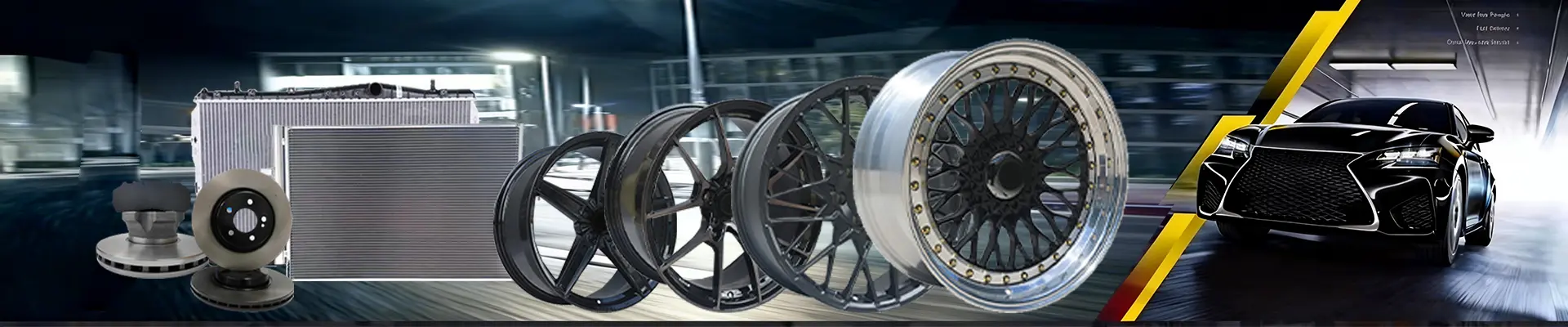
Car Rims Price in Nigeria: 2026 Wholesale Supplier Guide

Car Rims Price in Nigeria: 2026 Wholesale Supplier Guide
The per-piece FOB quote you see on Alibaba tells you almost nothing about what those wheels actually cost once they reach your warehouse in Lagos.
Car rims price in Nigeria is shaped by a layered cost structure — quality tier, rim diameter, surface finish, and order volume set the base, while freight, Nigerian customs duties, VAT, port handling surcharges, and inland trucking stack on top to determine your true landed cost. A low unit price from China can easily double by the time it clears Apapa or Tincannon Port, and choosing the wrong quality tier for Nigerian road conditions can wipe out your margin through returns and warranty claims within a single selling season.
I spent years moving from quality inspection on the production floor to handling export orders for the West African market, and the single biggest mistake I see first-time importers make is fixating on the factory gate price while ignoring the cost multiplier that happens between the port of loading and their shop door. [NEED_CITE: Nigeria Customs Service tariff schedule for alloy wheel imports under HS code 8716.90] A buyer who compares only FOB quotes will consistently underbudget and either eat unexpected costs or pass them on in a way that kills competitiveness.
Let me walk you through how car rims price in Nigeria actually breaks down, so you can budget accurately and source with confidence.
What Actually Determines Car Rims Price in Nigeria in 2026?
Four variables intersect to set the final shelf price — quality tier, rim diameter, surface finish, and order volume — and none of them works in isolation.
When a Lagos distributor asks me why two 17-inch wheels with the same bolt pattern carry wildly different car rims price in Nigeria quotes, the answer is never one factor. It is the combination.
Quality tier sets the baseline. Economy cast wheels use lower-grade aluminum alloy with minimal quality control, mid-range flow-formed wheels balance weight and strength, and premium forged or multi-piece wheels command the highest per-piece cost. [NEED_CITE: VIA and TUV certification requirements for aftermarket alloy wheel structural integrity]
Rim diameter drives material cost and shipping density. A 15-inch wheel weighs noticeably less than an 18-inch wheel, and you can fit substantially more pieces per container at smaller diameters, which lowers the per-unit freight allocation.
Surface finish adds cost layers. A basic painted finish is the cheapest entry point. Machined face with painted pockets requires secondary CNC processing. Hyper silver or chrome involves additional plating steps. Matte black or gloss black sits in the middle but demands careful packaging to avoid transit scratches that become warranty claims.
Order volume unlocks tiered pricing. A single pallet order carries a meaningfully higher per-piece cost than a full container load, because fixed costs — mold amortization, setup, documentation — spread across more units.
| Factor | Economy Tier | Mid-Range Tier | Premium Tier |
|---|---|---|---|
| Manufacturing Process | Gravity cast | Flow-formed / low-pressure cast | Forged or multi-piece forged |
| Certification Level | Basic or self-reported | VIA or TUV certified | Full VIA, TUV, and JWL |
| Surface Finish Options | Single-color paint | Machined face, matte black | Chrome, hyper silver, custom |
| Batch Consistency | Noticeably variable | Standard-controlled | Strictly controlled |
| Warranty Risk on Nigerian Roads | Vulnerable | Resistant | Robust |
A Middle East buyer once showed me his cost sheet — he had sourced the cheapest gravity-cast 17-inch wheels available, and within months, crack complaints from customers driving on rough suburban roads cost him several times what he saved on the unit price. The car rims price in Nigeria that looks attractive on paper can become the most expensive choice you make all year.
Price Breakdown by Quality Tier: Economy vs. Mid-Range vs. Premium
The gap between economy and premium car rims price in Nigeria is wider than most importers expect, and the mid-range tier is where the most consistent profit margins sit for the Nigerian market.
Let me break down what each tier actually delivers, because the terminology suppliers use can be misleading.
Economy tier wheels are typically gravity-cast from recycled or lower-grade aluminum alloy. They meet basic dimensional specs but lack the structural consistency needed for sustained use on roads with frequent potholes and speed bumps. Certification, if present at all, tends to be self-reported rather than third-party verified. These wheels attract price-sensitive retail customers but carry a noticeably higher return and claim rate.
Mid-range tier wheels use flow-forming or low-pressure casting processes that produce a denser grain structure and better impact resistance. Reputable manufacturers in this tier hold VIA or TUV certification, which matters when you need to clear Nigerian customs with proper documentation and when your customers start asking about durability. [NEED_CITE: SON import conformity assessment requirements for automotive wheels]
Premium tier wheels include fully forged monoblock and multi-piece constructions. They offer the best strength-to-weight ratio and the most finish options, but the per-piece cost is substantially higher. These sell well in affluent neighborhoods and to modification shops, but the addressable market is smaller.
| Dimension | Economy | Mid-Range | Premium |
|---|---|---|---|
| Per-Piece FOB Cost | Lowest baseline | Moderate — noticeably above economy | Substantially above mid-range |
| Structural Durability | Vulnerable to pothole impact | Resistant under typical conditions | Robust across varied conditions |
| Certification Traceability | Not provided | Verifiable via third-party body | Fully verifiable with multi-standard coverage |
| Target Customer Segment | Budget retail, ride-hailing fleets | General aftermarket, modification shops | Luxury owners, tuning enthusiasts |
| Claim Rate on Nigerian Roads | Noticeably elevated | Low under normal use | Minimal |
An Abuja modification shop owner told me he switched his primary stock from economy to mid-range after one rainy season — the potholes that year were brutal, and the crack claims on the cheaper wheels ate his entire margin for that quarter. The mid-range wheels cost him more per piece, but his warranty expenses dropped so sharply that his net profit per container actually improved. That is the counterintuitive reality of car rims price in Nigeria — cheaper does not mean more profitable.
Hidden Costs: From FOB China to Your Warehouse in Lagos
The FOB price is just the starting line — freight, customs duty, VAT, port charges, and inland transport can collectively double your per-unit cost before a single wheel reaches your shelf.
This is the section that separates importers who stay in business from those who quietly bleed out over their first few orders.
Ocean freight from major Chinese ports to Apapa or Tincannon varies by container size and shipping season. A full container of 15-inch wheels carries a meaningfully lower per-unit freight allocation than the same container filled with 20-inch wheels, simply because you fit more pieces. [NEED_CITE: current freight rate indices for China to West Africa lanes]
Nigerian customs duty on alloy wheels falls under a specific HS code heading, and the rate applied depends on proper classification. Getting this wrong — or letting a clearing agent guess — can cost you significantly. [NEED_CITE: Nigeria Customs Service applicable duty rate for HS 8716.90 alloy wheel imports]
VAT at the standard Nigerian rate applies on top of the duty-assessable value, and it compounds with the duty itself.
Port handling charges, terminal dues, and storage fees at Apapa or Tincannon are notorious for variability. Delays in documentation can trigger demurrage charges that accumulate daily and dwarf the original freight cost.
Inland transport from the port to your warehouse in Lagos, or further to Abuja, Kano, or Port Harcourt, adds another layer. Fuel price fluctuations and road conditions affect this cost regularly.
| Cost Component | Impact on Per-Unit Landed Cost |
|---|---|
| Ocean Freight | Moderate — varies by rim size and container utilization |
| Customs Duty | Substantial — applied on CIF value |
| VAT | Moderate — compounds on duty-inclusive base |
| Port Handling and Demurrage | Highly variable — documentation delays amplify cost |
| Inland Trucking | Moderate to substantial depending on destination |
A first-time importer I worked with budgeted based purely on the FOB quote and the freight estimate his agent gave him. When the goods cleared, the total landed cost was nearly double what he had projected. He had not accounted for the duty rate properly, had underestimated port storage because his paperwork arrived late, and had not factored in the trucking cost to his warehouse outside Lagos. The car rims price in Nigeria he had promised his customers was already too low to absorb the shock.
The lesson is simple: build your budget from the warehouse door backward, not from the factory gate forward.
Best-Selling Rim Sizes and Styles for the Nigerian Market
The 15-to-17-inch range dominates Nigerian sales volume because it matches the country’s most common vehicle fleet — Toyota Corolla, Camry, Honda Accord, and Hyundai models — and balances style appeal with structural practicality on imperfect roads.
If you are stocking for the Nigerian aftermarket, chasing the largest diameters is a mistake. The 20-inch and 22-inch wheels look striking in catalog photos, but the addressable customer base is narrow, the per-piece cost is high, and the risk of damage from potholes is substantially greater.
The 15-inch and 16-inch sizes fit the highest volume of everyday sedans and compact SUVs on Nigerian roads. These are the wheels that move fastest off the shelf and carry the lowest滞销 risk. The 17-inch size serves the growing mid-size SUV and crossover segment and offers a sweet spot where customers are willing to pay a modest premium for a more aggressive look.
Popular styles in the Nigerian market include:
- Multi-spoke designs — classic, versatile, and perceived as premium. They clean up well after dusty conditions.
- Mesh or basket-weave patterns — strongly associated with luxury OEM fitments and highly requested by modification shop customers.
- Deep concave profiles — trendy among younger enthusiasts, but the structural demands are higher, and not all manufacturers produce them with adequate strength for Nigerian road realities.
| Rim Diameter | Primary Vehicle Fitments | Sales Velocity | Pothole Risk |
|---|---|---|---|
| 15-inch | Toyota Corolla, Honda Civic, older sedans | Highest | Lowest |
| 16-inch | Toyota Camry, Honda Accord, compact SUVs | High | Low |
| 17-inch | Mid-size SUVs, crossovers, modified sedans | Moderate to high | Moderate |
| 18-inch and above | Large SUVs, luxury sedans, tuning builds | Moderate | Substantially elevated |
Surface finish preferences skew toward matte black and machined face with dark pockets, because these finishes hide brake dust and road grime effectively in dusty or rainy conditions. Hyper silver remains popular for customers seeking a bright, OEM-plus look.
A tire shop retailer in Lagos told me his fastest-moving SKU by a wide margin was a 16-inch matte black multi-spoke wheel that fit the Camry and Accord platform. He kept trying to push 19-inch options because the margin per piece looked better, but they sat on the rack for months. The car rims price in Nigeria that matters most is the one that turns over quickly — velocity beats margin per unit every time in this market.
How to Choose a Reliable Rim Supplier from China
Certification depth, MOQ flexibility, production lead time, and after-sales warranty terms are the four pillars that separate a dependable supplier from a risky one — and each is verifiable before you place an order.
The supplier landscape for alloy wheels in China is vast, and the gap between a factory with genuine quality infrastructure and a trading company slapping labels on inconsistent castings is wide. Here is how to evaluate.
Certification is non-negotiable for serious importers. VIA certification from Japan, TUV certification from Germany, and ISO quality management system registration are the baseline markers of a manufacturer that invests in process control. [NEED_CITE: VIA and TUV certification scope and testing protocols for aftermarket alloy wheels] A supplier that cannot produce valid, current certificates on request is signaling something — and it is not reliability.
MOQ flexibility matters enormously for the Nigerian market. Your first order may be a test batch to gauge customer response. A supplier that demands container-load minimums for every SKU locks you into inventory risk. Look for manufacturers that offer low MOQs on stock models and reasonable thresholds on custom designs.
Lead time consistency protects your cash flow. Seasonal demand spikes — ahead of dry-season travel and festive periods — mean you need a supplier that can deliver within a predictable window. Factories with in-house machining and finishing capacity control their timelines; those that outsource key steps are at the mercy of subcontractor queues.
Warranty terms reveal confidence. A supplier that offers a multi-year structural warranty is standing behind its manufacturing process. One that offers none, or only a vague "quality guarantee," is shifting all the risk to you.
| Evaluation Criterion | What to Look For | Red Flag |
|---|---|---|
| Certification | Valid VIA, TUV, ISO certificates with current dates | Expired, missing, or self-issued only |
| MOQ Structure | Low threshold for stock, reasonable for custom | Container-load minimums on every SKU |
| Lead Time | Predictable window with in-house production control | Vague estimates, outsourced finishing |
| Structural Warranty | Multi-year coverage with clear terms | No warranty or vague verbal assurance |
| Documentation Support | Complete customs and compliance paperwork | Reluctance or delays in providing documents |
A distributor in West Africa who had been burned by two previous suppliers finally switched to a manufacturer that held full multi-standard certification and offered a three-year structural warranty. His claim rate dropped so noticeably that his clearing agent joked he was ordering the wrong product. The car rims price in Nigeria he paid was not the lowest in the market — but his total cost of doing business, including claims and reputation damage, was the lowest he had ever experienced.
Conclusion
Car rims price in Nigeria is a landed-cost equation, not a unit-price snapshot — and treating it as anything else is the fastest way to erode your margin. Quality tier selection aligned with local road conditions, accurate budgeting that includes every cost between the Chinese port and your warehouse, and stocking the sizes that match the dominant vehicle fleet are the three decisions that determine whether your import operation thrives or struggles. Source from a certified manufacturer with transparent pricing, flexible MOQs, and real warranty backing, and the numbers will work in your favor.


