Summer 25% discount on all last year's bike models

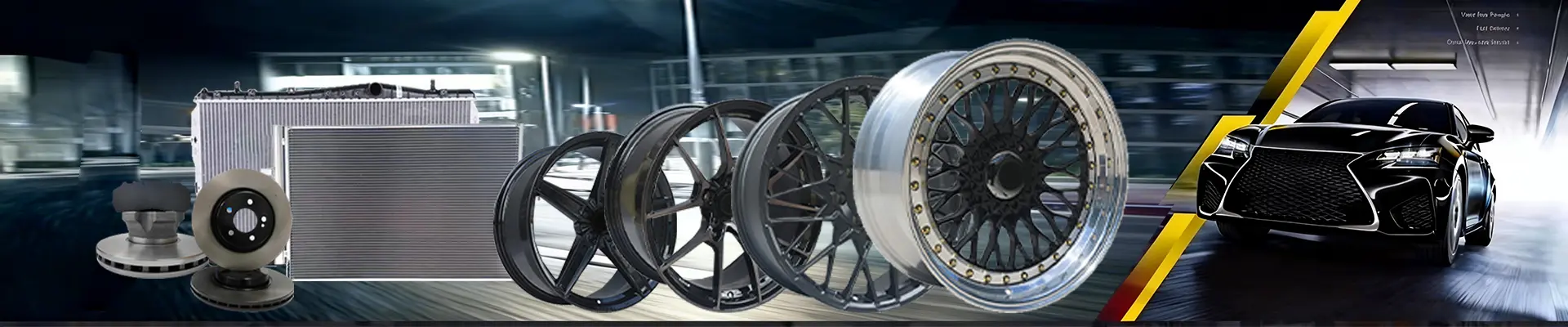
Buy Cast Alloy Wheels 12″-24″ | China Factory Direct Wholesale Supplier

Buy Cast Alloy Wheels 12"-24" | China Factory Direct Wholesale Supplier
Lower price does not automatically mean lower strength in cast aluminum wheels. Most buyers assume gravity-cast rims are inherently weaker than low-pressure variants, when the real difference lies in mold design, alloy purity, and heat-treatment protocols rather than the casting method alone.
Factory-direct sourcing of cast alloy wheels from China typically delivers per-piece costs substantially below European and Japanese branded equivalents, with MOQs starting from a few dozen pieces for stock SKUs and slightly higher thresholds for custom offsets or finishes. Lead times generally fall within a few weeks, and quality parity with premium brands is achievable when buyers verify certifications, request batch-level test data, and confirm fitment specs before committing to volume.
I still remember a shipment of 18-inch cast rims bound for a modification shop in the Middle East. The PCD was correct on paper—five-lug, standard bolt pattern—yet the installer called back saying the wheels would not seat flush. Turns out, local tuning shops routinely use spacer adapters, and we had not accounted for the extra flange clearance they needed. That single oversight cost us a return freight bill and a weekend of re-drilling. Since then, I check fitment context before I check price every single time [NEED_CITE: common fitment issues in aftermarket wheel installation].
Sourcing cast alloy wheels at factory-direct pricing is only half the equation. The other half is knowing which specs to validate, how to structure trial orders without overcommitting, and how to separate genuine quality signals from marketing claims. Let me walk you through the decisions that actually matter.
What Are Cast Alloy Wheels and How Do They Compare to Forged?
Cast alloy wheels are formed by pouring molten aluminum alloy into a mold, whereas forged wheels are shaped under extreme pressure from a solid billet. The manufacturing distinction drives nearly every downstream difference in cost, weight, design flexibility, and market positioning.
Gravity casting remains the most economical method. Molten A356 alloy fills the mold under its own weight, producing wheels with thicker walls and slightly higher mass. Low-pressure casting improves on this by feeding the alloy upward through a riser tube under controlled gas pressure, yielding better density and fewer internal voids [NEED_CITE: metallurgical comparison between gravity and low-pressure casting methods].
| Attribute | Gravity Cast | Low-Pressure Cast | Forged |
|---|---|---|---|
| Relative Cost | Most affordable | Moderate | Substantially higher |
| Wall Thickness | Thicker | Balanced | Thinnest |
| Internal Porosity | Higher risk | Noticeably reduced | Minimal |
| Design Complexity | Moderate | High | Moderate |
| Typical Market Segment | Aftermarket replacement, fleet | Aftermarket premium, OEM | Performance, racing, luxury |
A tire shop in West Africa once asked me why their cast wheels kept developing hairline cracks near the bead seat after extended use on rough roads. They were buying the cheapest gravity-cast option available, and the walls were simply too thin for the load conditions. Switching to low-pressure cast rims with verified heat treatment eliminated the issue within a single batch cycle.
The takeaway is not that forged is always better. Forged wheels excel in high-stress applications—track use, heavy off-road loads, luxury OEM fitments—but their price premium is difficult to justify for a replacement wheel on a daily-driver sedan. Cast alloy wheels, when produced with proper alloy composition and T6 heat treatment, deliver more than adequate strength for the vast majority of aftermarket and OEM applications [NEED_CITE: T6 heat treatment effects on A356 aluminum alloy mechanical properties].
How Much Do Cast Alloy Wheels Cost from China Factories?
Direct-from-factory pricing for cast alloy wheels typically runs substantially below branded European and Japanese equivalents, with the gap widening as order volume increases.
The cost structure breaks down into several variables: wheel diameter, surface finish complexity, order quantity, and whether the design is a stock mold or a custom OEM pattern. A 15-inch matte black cast wheel will cost noticeably less than an 18-inch machined-face version with a multi-spoke design, simply because of the additional CNC time and material volume.
Surface finish matters more than most buyers realize. A standard gloss black or silver paint job adds minimal cost. Chrome plating or a full machined-face with painted pockets requires additional production steps and drives the per-piece price upward. Hyper silver and bronze finishes sit somewhere in between [NEED_CITE: surface treatment cost factors in aluminum wheel manufacturing].
| Cost Driver | Low Impact | Moderate Impact | High Impact |
|---|---|---|---|
| Diameter | 13"-15" | 16"-18" | 19"-24" |
| Finish | Solid paint | Machined face | Chrome, multi-tone |
| Order Volume | Full container | Partial container | Mixed SKU pallets |
| Mold Status | Stock design | Minor offset change | Fully custom OEM |
An Amazon seller I worked with started by ordering small batches of popular fitments—17-inch five-lug patterns for Honda and Toyota platforms. Their initial per-piece cost was higher than a full-container buyer, but they validated demand before committing to volume. After several restock cycles, they consolidated SKUs and negotiated better pricing. The lesson: trial orders carry a cost premium, but they prevent the far larger cost of unsold inventory sitting in a warehouse.
Factory-direct sourcing eliminates layers of distribution markup. When you buy from a trading company rather than the production facility itself, you are absorbing margins at each intermediary step. Working directly with a manufacturer that handles its own casting, machining, finishing, and quality inspection compresses the supply chain and passes those savings to the buyer [NEED_CITE: supply chain cost structure in alloy wheel export trade].
What Specs Should You Check Before Buying Cast Wheels?
Diameter, PCD, offset, center bore, and load rating must all align with the target vehicle platform—getting even one wrong means the wheel will not mount, will rub, or will fail under load.
I cannot overstate how many disputes originate from spec mismatches that a five-minute cross-reference would have prevented. The most common pitfalls:
- PCD (Pitch Circle Diameter): A 5×114.3 pattern will not fit a 5×112 hub without adapters, and adapters introduce their own clearance and safety considerations.
- Offset (ET): Too much positive offset pushes the wheel inward, risking suspension contact. Too little positive offset pushes it outward, causing fender rub and altering scrub radius.
- Center Bore: Hub-centric wheels require an exact center bore match. Lug-centric wheels rely on lug nuts for centering, which is acceptable but less ideal for vibration-free operation at highway speeds.
- Load Rating: Every wheel carries a maximum load rating. Fitting a passenger-car-rated wheel on a light truck or SUV application risks structural failure under cornering or braking loads [NEED_CITE: wheel load rating standards and vehicle application matching].
| Spec Parameter | Common Range (Passenger) | Common Range (SUV/Truck) | Verification Method |
|---|---|---|---|
| Diameter | 15"-19" | 17"-22" | Vehicle placard, OEM catalog |
| PCD | 4×100, 5×112, 5×114.3 | 5×120, 5×127, 6×135 | Hub measurement, fitment database |
| Offset (ET) | +35 to +50 | +25 to +45 | Caliper measurement, modification intent |
| Center Bore | 54.1mm – 73.1mm | 78.1mm – 108.1mm | Hub ring compatibility check |
| Load Rating | 500-700 kg | 800-1200 kg | Vehicle GVWR divided by four |
A modification shop in Southeast Asia ordered a batch of deep-concave 19-inch cast wheels for a popular sedan platform. The offset was technically within the acceptable range, but the concave design pushed the mounting surface inward, and the wheels contacted the brake calipers on vehicles with larger brake kits. They had to machine the mounting surface—a costly workaround that a simple caliper clearance check would have avoided.
Always request a fitment confirmation sheet from the supplier before production begins. Reputable manufacturers maintain fitment databases covering thousands of vehicle applications and can flag incompatibilities before the first mold is loaded [NEED_CITE: wheel fitment database accuracy in aftermarket supply].
What Is the MOQ and Lead Time for Wholesale Orders?
Stock models typically carry low MOQ thresholds—often starting from a few dozen pieces—while custom OEM designs require higher minimums due to mold production and setup costs.
The MOQ structure reflects production economics. Stock wheels are already tooled and scheduled into regular production runs, so adding a few pallets to an existing batch carries minimal incremental cost. Custom designs require dedicated mold fabrication, first-article sampling, and approval cycles, which is why manufacturers set higher thresholds to justify the setup investment.
Lead time depends on order complexity and seasonal capacity. Standard stock orders can ship within a few weeks. Custom orders with new mold development, special finishes, or private-label packaging typically require a longer production window. Peak season—usually the months leading into the Northern Hemisphere spring and summer—can extend timelines as factories prioritize large OEM contracts.
| Order Type | Typical MOQ | Typical Lead Time | Best For |
|---|---|---|---|
| Stock models | Low threshold | Short cycle | E-commerce testing, retail restock |
| Custom offset/finish | Moderate threshold | Medium cycle | Tuning shops, regional distributors |
| Full OEM/ODM | Higher threshold | Extended cycle | Vehicle manufacturers, large distributors |
An e-commerce seller in the United States approached us wanting to test a new mesh-pattern design in 18-inch for the European market. They started with a small trial order—just enough to list on their platform and gauge customer response. Sales were strong, and within a few restock cycles they had moved to full-container volumes. The key was that the initial low-MOQ option let them validate without tying up capital in inventory that might not move.
When evaluating MOQ commitments, consider your inventory turnover rate. A wheel that sits in your warehouse for months costs you storage, capital lockup, and potential damage risk. It is often more economical to place smaller, more frequent orders than to chase the lowest per-piece price on a massive quantity that may not sell through quickly [NEED_CITE: inventory turnover optimization in aftermarket wheel distribution].
How to Verify Quality When Sourcing Cast Alloy Wheels from China?
Request third-party certifications, batch-level test reports, and—when possible—arrange independent inspection before shipment. Price means nothing if the wheels cannot pass dynamic balancing or fail a salt-spray test within months.
Quality verification is where inexperienced buyers get caught. A supplier may claim their wheels meet international standards, but without documentation, that claim is unverifiable. The certifications that carry real weight in global trade include ISO quality management system certification, VIA (Vehicle Inspection Association) approval for the Japanese market, TÜV certification for European compliance, DOT for the United States, and JWL as a baseline Japanese industrial standard [NEED_CITE: international wheel certification requirements by market region].
Beyond certifications, request these specific test documents for each production batch:
- Dynamic balance test data: Every wheel should be individually balanced and the residual imbalance recorded. Wheels that ship without balancing data are a red flag.
- Salt-spray test results: Surface finish durability is critical, especially for buyers in coastal or high-humidity markets. A credible report should show extended endurance without corrosion breakthrough.
- X-ray or radiographic inspection reports: These reveal internal porosity and shrinkage defects that visual inspection cannot detect. Low-pressure cast wheels should show minimal porosity; gravity cast wheels will show more, but it must be within acceptable limits.
- Impact test and radial fatigue test data: These simulate real-world loading conditions and reveal structural weaknesses before they manifest as field failures.
| Verification Item | What to Request | Red Flag |
|---|---|---|
| Certifications | ISO, VIA, TÜV, DOT, JWL copies | Supplier refuses or provides expired docs |
| Dynamic Balance | Per-wheel residual imbalance data | No data provided |
| Salt-Spray | Batch-level test report with hours | Self-reported only, no lab backing |
| Internal Integrity | X-ray inspection images | No radiographic records |
| Structural | Impact and fatigue test results | Generic certificate only, no batch specificity |
A distributor in Latin America received a container of chrome-finished cast wheels that looked perfect on arrival. Within months, customers reported bubbling and peeling in humid coastal conditions. The supplier had not performed adequate salt-spray testing, and the chrome adhesion was insufficient for the climate. The distributor absorbed the replacement cost and lost several fleet accounts. A pre-shipment third-party inspection would have caught the adhesion issue before the container left the factory.
When possible, engage a third-party inspection service to conduct pre-shipment checks at the production facility. The cost is modest relative to the risk of receiving a full container of non-conforming product. Alternatively, arrange a factory audit to assess production processes, quality control systems, and traceability practices [NEED_CITE: third-party inspection protocols for aluminum wheel imports].
Conclusion
Buying cast alloy wheels from Chinese factories delivers meaningful cost advantages, but those advantages only materialize when buyers invest time in spec verification, MOQ structuring, and quality validation. The gap between a successful sourcing relationship and a costly mistake is rarely about price—it is about whether the buyer asked the right questions before placing the order.


