Summer 25% discount on all last year's bike models

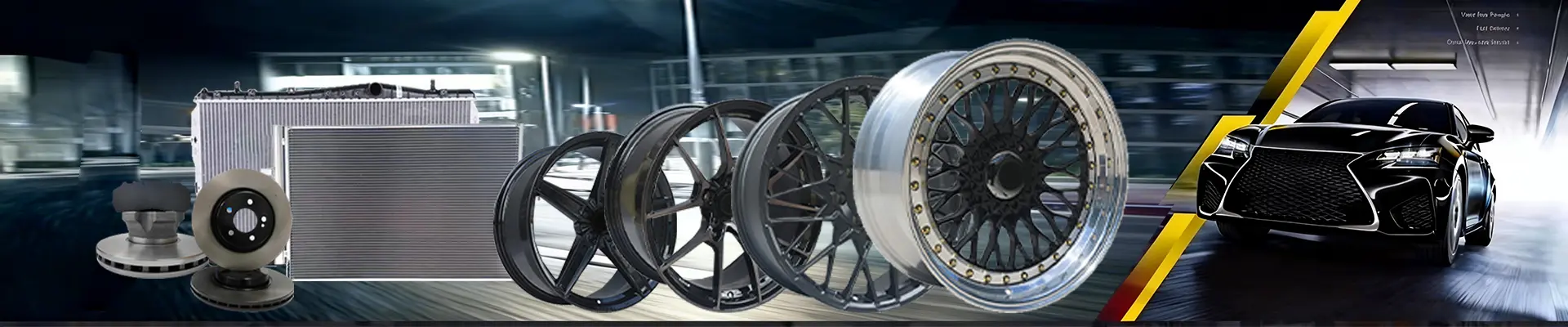
Buy Alloy Wheels with Free Shipping | Wholesale Supplier

Buy Alloy Wheels with Free Shipping | Wholesale Supplier
"Free shipping" on alloy wheels is never free—it is bundled into your unit price, offset by volume thresholds, or shifted to destination port charges you did not anticipate.
If you want alloy wheels with free shipping, the real question is not whether freight is waived, but what total landed cost per piece you are actually paying. Smart buyers calculate the full formula—FOB price plus ocean freight per unit plus insurance plus duty plus destination port fees—divided by sellable quantity, then compare that number across quotes, not headline freight claims.
I spent my early career handling customs declarations at Qingdao Port, watching alloy wheel containers roll through every week. One shipment that still sticks in my mind involved a Middle East distributor ordering a batch of 18-inch gloss black wheels. The supplier quoted what looked like an attractive CIF price to Jebel Ali. What the buyer did not realize until the container arrived was that destination port handling, demurrage, and local delivery fees consumed a significant share of the supposed "savings" versus a straightforward FOB arrangement. The freight was not free—it had simply been repositioned into charges the buyer was unprepared for. That pattern repeats constantly in this trade: the word "free" moves cost around rather than eliminating it.
Let me walk you through what actually happens behind that "free shipping" label and how to structure your order so the math works in your favor.
What Does "Free Shipping" Actually Mean for Alloy Wheels?
When a supplier advertises alloy wheels with free shipping, the freight cost has almost always been absorbed into the per-piece unit price, or it is conditional on meeting a minimum order quantity that aligns with full container loading breakpoints.
There is no magic logistics discount. Ocean freight for heavy, dense cargo like alloy wheels is priced by weight and volume, and a 20-foot general-purpose container loaded with 18-inch wheels approaches its weight limit long before it fills volumetrically. [NEED_CITE: container weight limits for alloy wheel cargo on standard 20GP and 40HQ units] When a supplier says shipping is free, one of three things is happening:
- The per-piece FOB price has been marked up to cover freight internally.
- The offer is contingent on ordering enough pieces to fill a container, spreading fixed port and documentation costs across maximum units.
- The supplier is using a consolidated shipping contract and passing a portion of the savings forward while retaining margin.
A Latin American tuning shop I worked with once received a quote advertising free delivery on a popular mesh-style wheel. The unit price was noticeably higher than competing quotes that charged freight separately. When we ran the landed cost comparison, the "free shipping" offer actually cost more per piece once you accounted for the inflated unit price. The buyer had been anchored by the word "free" and never compared total delivered cost.
The takeaway is simple: strip away the marketing language and compare landed cost per wheel, not freight labels.
FOB vs. CIF vs. DDP: Which Terms Give You the Real Lowest Cost?
FOB looks cheapest on paper, but for buyers without established freight forwarding relationships and destination port clearance capability, CIF or even DDP often produces a more predictable—and sometimes lower—total cost.
Here is how the three most common Incoterms actually play out for alloy wheel buyers:
| Term | What the Supplier Covers | What the Buyer Manages | Risk Profile for New Buyers |
|---|---|---|---|
| FOB | Production, export customs, loading at origin port | Ocean freight, insurance, import customs, destination port fees, inland delivery | High—buyer must coordinate multiple parties |
| CIF | Production, export customs, ocean freight, insurance to destination port | Import customs, destination port fees, inland delivery | Moderate—freight is bundled but destination charges remain buyer’s responsibility |
| DDP | Production, all freight, import duties, delivery to buyer’s door | Nothing beyond receiving the goods | Low—highest upfront price but most predictable landed cost |
[NEED_CITE: Incoterms 2020 definitions for FOB, CIF, and DDP obligations]
A US-based e-commerce seller testing four wheel SKUs via LCL shipment discovered that per-piece shipping cost under CIF was substantially higher than FCL rates would suggest, because consolidation fees, destination warehouse unpacking, and local delivery added up quickly. The "free shipping" offer from that supplier was technically CIF, but the buyer still paid significant destination-side charges that were never mentioned in the initial quote.
The mistake many first-time buyers make is assuming FOB is always the best deal because the invoice number looks smallest. In reality, if you lack experience with destination port operations or do not have a reliable freight forwarder, the hidden charges at the receiving end can exceed the freight savings entirely. [NEED_CITE: destination port surcharge structures for LCL alloy wheel shipments]
For buyers sourcing alloy wheels with free shipping, the practical advice is to request both an FOB price and a CIF price to the same destination port, then add your known local charges to each. Whichever yields the lower landed cost per piece is your real baseline.
How to Calculate Landed Cost Per Wheel (Not Just Unit Price)
The only number that matters is total delivered cost divided by sellable pieces at your warehouse. Everything else—unit price, freight claims, duty rates—is an intermediate input.
The landed cost formula for alloy wheels looks like this:
(FOB unit price + ocean freight per piece + insurance + import duty + destination port charges + inland transport) ÷ number of sellable wheels received
Each component has variables that shift based on order structure:
- Ocean freight per piece drops dramatically as you move from LCL to FCL. A full 40HQ container loaded with 18-inch wheels carries substantially more units than a shared LCL booking, and the fixed documentation and port fees get spread across more pieces. [NEED_CITE: typical FCL versus LCL cost differential for heavy auto parts]
- Import duty depends on correct HS code classification. Alloy wheels fall under a specific heading, and misclassification can trigger anti-dumping surcharges in certain markets—particularly the US, EU, and Turkey, where wheel-specific duties have been imposed on Chinese-origin products. [NEED_CITE: anti-dumping duty applicability for Chinese-origin alloy wheels by destination country]
- Destination port charges include terminal handling, chassis fees, customs examination fees if selected, and local delivery. These are often the most underestimated line item, especially for first-time importers.
A distributor in Southeast Asia once compared two quotes: one with a lower FOB price and separate freight, another with "free shipping" built into a higher unit price. After calculating full landed cost including local Thai port fees and inland trucking to their warehouse in Rayong, the two offers came out nearly identical per piece. The "free shipping" label had created an illusion of savings that did not exist.
Always build a spreadsheet with every line item before comparing suppliers. The headline unit price tells you almost nothing about what you will actually pay.
MOQ, Container Loading & How to Qualify for Free Shipping
Suppliers offer free shipping at volume thresholds tied directly to full container loading capacity—plan your orders around 20GP and 40HQ breakpoints to unlock the best freight economics.
Alloy wheels are heavy and relatively compact, which means container loading is usually constrained by weight rather than volume. A 20GP container loaded with 18-inch wheels typically reaches its payload limit with a few hundred pieces, while a 40HQ can carry roughly double that quantity. [NEED_CITE: approximate container loading quantities for 18-inch alloy wheels in 20GP and 40HQ]
This physical reality shapes how suppliers structure "free shipping" offers:
- Below container-load quantities, the supplier must use LCL consolidation, which carries higher per-piece freight and more destination handling complexity. Free shipping is rarely offered here because the cost is unpredictable.
- At or near full container quantities, the supplier can lock in a fixed FCL rate, spread it across maximum units, and absorb it into the unit price without destroying margin.
- Multi-SKU container orders allow tuning shops and e-commerce sellers to mix sizes and finishes while still hitting the container threshold. This is where flexible MOQ policies become a genuine competitive advantage.
For context, manufacturers serving the aftermarket typically set stock-model MOQs in the low dozens of pieces and custom-order MOQs in the low hundreds. [NEED_CITE: typical aftermarket alloy wheel MOQ ranges for stock versus custom production] A buyer ordering mixed SKUs totaling a full container can often negotiate freight absorption that would be impossible on a smaller, single-SKU order.
The practical strategy: if your target quantity falls slightly below a container-load breakpoint, ask the supplier whether adding one or two additional SKUs to fill the container would unlock a free-shipping tier. The incremental pieces often cost less than the freight you would pay on a smaller shipment.
Common Shipping Pitfalls Buyers Should Avoid
Misdeclaring HS codes, underestimating destination port fees, and ignoring anti-dumping duty exposure are the three pitfalls that turn "free shipping" promises into expensive surprises.
HS Code Misclassification. Alloy wheels have a specific classification under the Harmonized System. Declaring them under a generic auto parts code to simplify paperwork can trigger customs examinations, fines, and retroactive duty assessments. [NEED_CITE: correct HS code heading for aluminum alloy wheels for motor vehicles] Always confirm the HS code with your customs broker before the shipment departs.
Destination Port Fee Underestimation. Port charges vary enormously by location. Major hubs like Los Angeles, Rotterdam, and Dubai have published tariff schedules, but smaller ports may add surcharges that are not obvious until the invoice arrives. Buyers who have only imported lightweight goods are often shocked by the terminal handling and demurrage charges that accumulate on heavy cargo like wheels.
Anti-Dumping Duty Blind Spots. Several markets have imposed anti-dumping duties specifically targeting Chinese-origin alloy wheels. The US, the EU, Turkey, and other jurisdictions have active orders that can add substantial per-kilogram surcharges to your landed cost. [NEED_CITE: active anti-dumping duty orders on Chinese-origin aluminum alloy wheels by country] A "free shipping" quote means nothing if a duty assessment arrives months later that exceeds the freight savings by a wide margin.
Ignoring Packaging and Labeling Requirements. Some destination markets require specific packaging markings, country-of-origin labeling, or material certifications to clear customs smoothly. Wheels shipped without proper documentation can be held at port, generating storage fees that erase any freight advantage.
A buyer in the Middle East once received a shipment where the supplier had used the wrong HS code on the commercial invoice. The customs hold lasted several weeks, and the resulting storage and re-documentation fees consumed a significant portion of the order value. The "free shipping" had cost more than if proper freight had been paid upfront with correct paperwork.
Conclusion
"Free shipping" on alloy wheels is a pricing structure, not a discount—always evaluate total landed cost per piece, not headline freight claims.
Whether you are a distributor filling containers, a tuning shop ordering mixed SKUs, or an e-commerce seller testing new designs, the math only works when you account for every charge from factory floor to your warehouse door. Request complete cost breakdowns, confirm HS codes and duty exposure with your broker, and structure your orders around container loading breakpoints. The suppliers who can support that approach—offering flexible MOQs, proper documentation, and transparent pricing—will deliver real value regardless of what the shipping line item says.


