Summer 25% discount on all last year's bike models

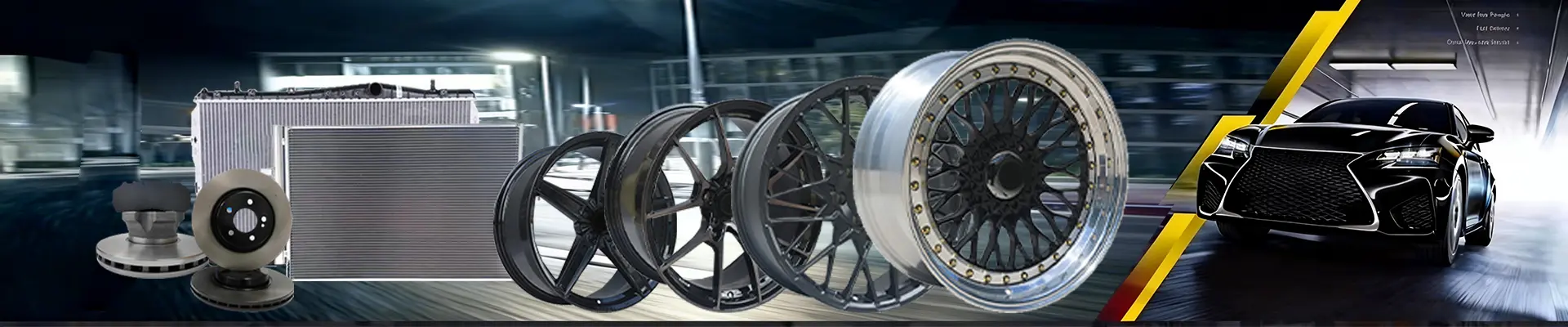
Alloy Wheels Price in Qatar: 2026 Wholesale Supplier Guide

Alloy Wheels Price in Qatar: 2026 Wholesale Supplier Guide
Cheaper alloy wheels often end up costing more once they reach Doha port and cannot be mounted on a single vehicle.
Alloy wheels price in Qatar for 2026 typically ranges from budget casting options to premium forged units, with the final per-piece cost determined by manufacturing process, size specification, surface treatment, and certification level. Casting wheels dominate the volume replacement market, while forged wheels serve the modification segment at a noticeably higher unit price but substantially longer service life. Understanding trade terms, Qatar’s import duty structure, and critical fitment tolerances prevents costly fitment failures and maximizes landed value.
I still remember a container that arrived at Hamad Port a few years back. The buyer, a modification shop in Doha, had ordered a full load of 17-inch matte black forged wheels for Toyota and Nissan applications. When they opened the crates and tried mounting the first set, the center bore was off. The wheels simply would not sit flush on the hub. We ended up paying for local machining to re-bore every single piece, and that expense ran into a mid-five-figure sum. Since that day, I treat PCD, center bore, and offset values as non-negotiable parameters. I would rather spend days confirming drawings with a client before production than argue at the port after discharge [NEED_CITE: root cause distribution of wheel fitment failures in aftermarket supply chains].
Let me walk you through what actually drives alloy wheels price in Qatar this year, how to compare processes, how to calculate real landed cost, and which fitment parameters you must lock down before placing any order.
What Factors Determine Alloy Wheels Price in Qatar 2026?
Material process, wheel diameter, surface finish, and certification tier form the four pillars that set alloy wheels price in Qatar.
Every quotation you receive breaks down along these axes. A 15-inch gravity-cast wheel with basic painted finish and no international certification sits at the lowest price tier. Move to an 18-inch flow-formed wheel with machined face and VIA certification, and the unit cost climbs noticeably. Jump to a 20-inch fully forged wheel with TÜV approval and custom color, and you are in an entirely different pricing bracket [NEED_CITE: alloy wheel manufacturing cost structure breakdown by process and certification].
From my experience sourcing for Middle East buyers, the process choice alone creates the widest price gap. Casting involves pouring molten aluminum into a mold, which is fast and economical. Forging starts from a solid billet pressed under extreme tonnage, which demands heavier equipment and longer cycle times. The raw material grade also differs: casting alloys rely on silicon content for fluidity, while forging alloys prioritize magnesium and zinc for tensile strength after deformation.
Surface treatment adds another layer. Basic silver paint is the most economical. Matte black, gunmetal, and bronze require additional coating steps. Chrome plating and multi-layer hyper silver finishes push costs higher still because each layer needs curing, masking, and quality inspection.
Certification is the factor buyers most often underestimate. A wheel carrying JWL, VIA, or TÜV marks has undergone documented structural testing including radial fatigue, impact, and cornering fatigue cycles. Factories producing certified wheels maintain traceable batch records, which adds overhead but protects you from liability claims downstream [NEED_CITE: international wheel certification testing requirements comparison JWL VIA TÜV].
| Price Factor | Budget Tier | Mid-Range Tier | Premium Tier |
|---|---|---|---|
| Process | Gravity casting | Flow forming | Full forging |
| Certification | None or self-reported | Partial testing | Full VIA/TÜV/JWL |
| Surface | Single-color paint | Machined face or gloss black | Chrome or multi-layer custom |
| Batch Traceability | Not provided | Sample-level | Full batch-level |
A tire shop owner in Doha once told me he switched from the cheapest casting supplier to a mid-range flow-formed source. His return rate from customers complaining about vibration dropped substantially, and his repeat business grew because the wheels held balance longer on Qatar’s highway surfaces.
Casting vs Forged Alloy Wheels: Which Offers Better Value for Qatar Market?
Casting wheels serve the high-volume replacement segment, while forged wheels deliver superior performance for modification shops targeting enthusiasts who demand lightweight strength.
This is where many buyers get confused by alloy wheels price in Qatar. They see a forged wheel quoted at several times the casting price and assume it is overpriced. The reality is more nuanced.
Casting wheels are produced by pouring molten A356 or similar aluminum alloy into a steel mold. The process is efficient, tooling costs are moderate, and output per shift is high. These wheels suit fleet operators, rental companies, and tire shops selling standard replacement sizes for Toyota Land Cruiser, Nissan Patrol, and Hyundai models that dominate Qatar’s roads. The weight is higher, which means slightly more unsprung mass, but for daily driving the performance difference is acceptable to most end users [NEED_CITE: casting vs forging metallurgical properties and weight comparison in aluminum alloy wheels].
Forged wheels begin as a solid billet of 6061-T6 or similar aerospace-grade aluminum. A press applies thousands of tons of force to shape the metal while aligning its grain structure. The result is a wheel that is noticeably lighter, stronger, and more resistant to impact fatigue. For Qatar’s modification scene, where customers want deep concave profiles and aggressive spoke designs on large-diameter applications, forging is the only process that can deliver those shapes without compromising structural integrity.
I worked with a modification shop in the Gulf region that specialized in Nissan GT-R and Toyota Supra builds. They initially ordered casting wheels to keep their retail prices competitive. Within months, they were fielding complaints about curb damage and hairline cracks from customers who drove aggressively. They switched to forged wheels. The unit cost was higher, but their customer satisfaction improved dramatically, and their reorder rate climbed because enthusiasts trust forged construction.
| Attribute | Gravity Casting | Flow Forming | Full Forging |
|---|---|---|---|
| Weight | Heaviest | Noticeably reduced | Substantially reduced |
| Impact Resistance | Basic | Standard | Robust |
| Design Complexity | Limited spoke profiles | Moderate | Deep concave and multi-spoke |
| Typical Buyer | Replacement market | Mid-tier retail | Modification and performance |
| Price Positioning | Lowest | Mid-range | Highest per piece |
The key is matching the product to your customer base. If you run a tire shop selling to daily drivers, casting wheels at competitive alloy wheels price in Qatar make sense. If you serve enthusiasts willing to pay for performance, forged wheels justify their premium through durability and weight savings.
How to Calculate Total Landed Cost: FOB, CIF, and Import Duties Explained
The quoted wheel price is only the starting point; freight terms, Qatar customs duty, and port handling charges determine what you actually pay per wheel once it reaches your warehouse.
Many buyers focus exclusively on the per-piece FOB price and assume the lowest number wins. This is a costly mistake. Alloy wheels price in Qatar must be evaluated on a total landed cost basis, which means adding freight, insurance, duty, and local delivery into the calculation.
Let me explain the trade terms clearly. FOB means the seller delivers the goods to the port of loading and clears export customs. From that point, freight and insurance are your responsibility. CIF means the seller arranges and pays for freight and insurance to the destination port. On the surface, CIF looks convenient because you do not need to arrange shipping yourself. However, the seller builds a margin into the freight cost, and you lose visibility into the actual shipping rate [NEED_CITE: Incoterms 2020 FOB CIF cost allocation and risk transfer points].
I have seen buyers choose CIF because the per-piece number looked lower, only to discover at Hamad Port that demurrage charges and terminal handling fees pushed their real cost above what a self-arranged FOB shipment would have cost. When you control the freight under FOB, you can negotiate directly with shipping lines, consolidate containers if you are ordering from multiple suppliers, and avoid hidden surcharges that get buried in a CIF quote.
Qatar applies a customs duty on imported alloy wheels. The rate is standardized under the GCC common external tariff. You must factor this percentage on top of the CIF value when calculating your final per-unit cost. Additionally, port handling, inland transport to your warehouse, and any warehousing fees add to the total.
Here is a practical approach I recommend to buyers:
- Request FOB pricing from multiple factories and compare the base wheel cost directly.
- Obtain freight quotations from at least two freight forwarders for the same container volume.
- Calculate the customs duty based on the GCC tariff rate applied to the CIF value.
- Add estimated port handling and inland transport based on your warehouse location.
- Sum all components to arrive at true landed cost per wheel.
A wholesale distributor in the Middle East once shared that after switching from CIF to FOB and negotiating freight directly, his per-container savings were substantial enough to fund an additional pallet of accessories on every shipment. That margin made the difference between a thin-profit order and a healthy one.
Critical Fitment Parameters: Avoiding the Tolerance Trap
PCD, offset, and center bore tolerances must be held tightly; even a small deviation renders an entire batch unmountable and turns a profitable order into a financial loss.
This is the lesson I learned the hard way, and it is the single most important technical point in this guide. Alloy wheels price in Qatar means nothing if the wheels do not fit the vehicles your customers drive.
PCD, or pitch circle diameter, defines the bolt pattern. Common patterns for Toyota and Nissan models popular in Qatar include specific five-lug configurations. If the PCD is off by even a small amount, the lug nuts will not align with the hub studs, and the wheel cannot be mounted. There is no workaround.
Offset determines how far the wheel sits inward or outward relative to the hub mounting surface. Incorrect offset causes the wheel to rub against the suspension components or the fender liner, especially on lowered vehicles or those with wider tires. In Qatar’s modification scene, customers expect precise offset values to achieve the desired stance without interference.
The center bore is where my painful experience comes in. The wheel’s center bore must match the vehicle’s hub pilot diameter. If the bore is too small, the wheel will not sit on the hub. If it is too large, the wheel relies entirely on the lug nuts for centering, which causes vibration at highway speeds. The acceptable tolerance on center bore is tight. I now insist that any factory I work with holds center bore within a very narrow band, and I require 3D drawings for client approval before production begins [NEED_CITE: wheel fitment specification tolerances PCD offset center bore measurement standards].
When I place orders or advise buyers, I follow a strict verification sequence:
- Confirm the exact vehicle applications the wheels must fit.
- Request the factory’s 3D drawing showing PCD, offset, center bore, and bolt seat type.
- Verify every dimension against the vehicle manufacturer’s specification.
- Approve the drawing in writing before any production starts.
- Request a first-article sample from the production batch for physical measurement before the full container is packed.
Skipping any of these steps is gambling. I have seen buyers receive containers where the wheels looked perfect visually but had center bore dimensions that prevented mounting. The cost of local machining to correct the bore, combined with the delay and customer dissatisfaction, wiped out the margin on the entire order.
How to Source Quality Alloy Wheels Directly from Chinese Manufacturers
Selecting a certified factory, verifying specifications through drawings, and starting with a trial order are the three steps that separate successful long-term sourcing from costly procurement failures.
If you are researching alloy wheels price in Qatar and looking to import directly from China, the supplier selection process is critical. The market includes factories with full international certifications and trading companies that source from multiple workshops with inconsistent quality. You need to distinguish between them.
Start by verifying certifications. Look for factories holding ISO quality management certification alongside product-specific marks such as VIA, TÜV, JWL, or DOT depending on your target market requirements. These certifications indicate that the factory maintains documented quality control processes and subjects its wheels to independent structural testing [NEED_CITE: Chinese alloy wheel factory certification landscape and verification methods].
Request detailed product documentation before committing to any order. A reliable factory will provide 3D drawings, material certificates, and test reports without hesitation. If a supplier hesitates or provides only vague specifications, treat that as a warning sign.
Begin with a trial order. Even if you plan to order full containers eventually, place an initial smaller batch to verify quality, packaging, and communication responsiveness. This trial lets you inspect the wheels physically, check surface finish consistency, measure critical dimensions, and evaluate how the factory handles any issues that arise.
I have built long-term relationships with factories that started with small trial orders. The factories that welcomed scrutiny and provided transparent documentation turned out to be the most reliable partners over time. Those that resisted questions or pressured for large commitments upfront often had quality inconsistencies that surfaced later.
Communication matters as much as certification. You need a factory that responds to technical questions promptly, provides clear production timelines, and proactively informs you of any delays. In my work, I have found that factories investing in English-speaking technical staff and detailed order tracking systems tend to deliver more consistent results for international buyers.
Packaging is another detail that affects your final cost. Wheels packed in individual cartons with foam protection arrive in better condition than those bulk-packed with minimal padding. Damage during transit means claims, replacements, and delayed availability for your customers. A factory that takes packaging seriously saves you money downstream.
Conclusion
Alloy wheels price in Qatar reflects a combination of manufacturing process, specification, certification, and logistics that requires careful evaluation beyond the quoted per-piece number.
Casting and forged wheels serve different market segments, and choosing the right process for your customer base determines your profitability more than chasing the lowest unit price. Trade terms, customs duty, and fitment tolerances are the hidden variables that separate successful importers from those who face costly surprises at the port. Verify every specification before production, start with trial orders, and partner with certified factories that welcome technical scrutiny.


