Summer 25% discount on all last year's bike models

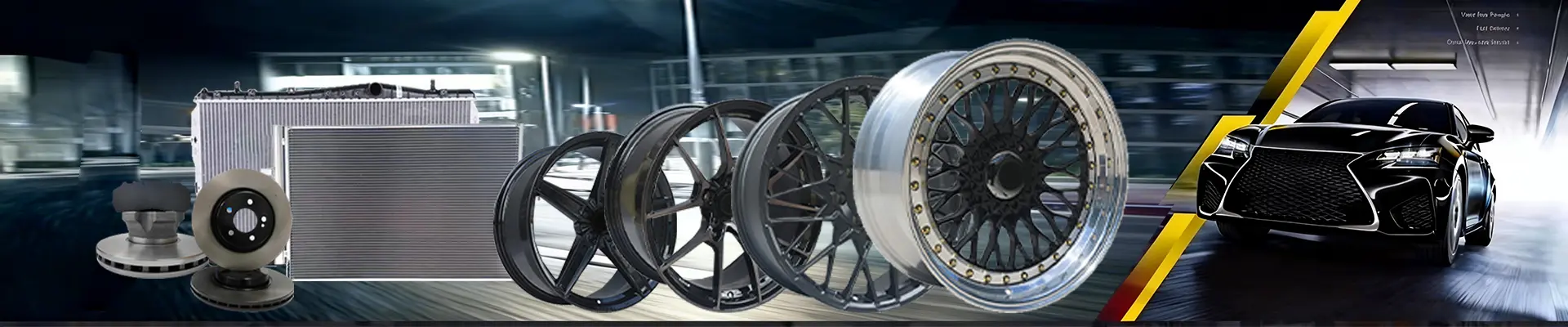
Wheel Rims Price in Poland: 2026 Wholesale Buyer Guide

Wheel Rims Price in Poland: 2026 Wholesale Buyer Guide
Cheap wheel rims rarely stay cheap once they hit European roads.
Wheel rims price in Poland in 2026 is driven by four variables: material grade, manufacturing process, certification compliance, and import logistics. Buyers who balance unit cost against certification expenses and choose Chinese factory-direct supply with full TÜV/VIA documentation can reduce total landed cost by a substantial margin compared to sourcing from European or Japanese brands.
I spent years on the ground in Riyadh fitting aftermarket wheels on modified vehicles. One job still sticks with me. A local fleet ordered a batch of 18-inch flow-formed rims from a southern Chinese workshop I had not personally audited. The price looked excellent on paper. Within days of installation, drivers reported violent steering vibration at highway speed. I pulled a dial indicator at the shop and measured lateral runout well beyond acceptable tolerance on nearly every unit. The entire batch was rejected. Shipping the replacements cost more than the original purchase. That lesson followed me into sourcing: I never look at a price sheet before I look at runout specs and certification paperwork. Poland’s market is even less forgiving than the Middle East. European customs and end users demand traceable paperwork, and a single missing certificate can sink a full container. [NEED_CITE: European wheel aftermarket import compliance requirements 2025-2026]
Understanding wheel rims price in Poland requires walking through each cost layer before comparing quotes.
What Factors Drive Wheel Rims Price in Poland in 2026?
Material, process, certification, and logistics are the four cost pillars that determine wheel rims price in Poland this year.
Aluminum alloy pricing has shifted noticeably since the middle of the decade. A356 and 6061-T6 alloys, the two grades most commonly used for passenger and SUV rims, track global LME benchmarks, but European buyers also absorb regional energy surcharges and carbon adjustment fees that do not apply in all sourcing regions. [NEED_CITE: EU CBAM impact on aluminum wheel import cost 2026]
Manufacturing method is the single largest differentiator. Gravity-cast rims sit at the lowest price point. Flow-formed rims occupy the middle tier with meaningful weight and strength gains. Fully forged rims command the highest unit cost but deliver the best strength-to-weight ratio. The gap between casting and flow-forming is wide enough that buyers often misread the value equation.
Certification is where many first-time importers get trapped. TÜV, VIA, and JWL marks are not optional extras for the Polish market. They are gate requirements. A container arriving at Gdańsk or Gdynia without proper homologation paperwork faces rejection or costly re-inspection. The certification fee itself is a modest share of per-unit cost, but skipping it multiplies risk exponentially. [NEED_CITE: TÜV and VIA certification requirements for alloy wheels sold in EU 2026]
Freight and customs complete the picture. Ocean rates from Chinese ports to Northern Europe have stabilized compared to the pandemic spikes, but insurance, VAT, and anti-dumping considerations still add a meaningful layer. Buyers who consolidate orders and plan shipments around production cycles protect margins better than those who reorder reactively.
When you add these layers together, wheel rims price in Poland becomes a function of compliance-aware sourcing rather than simple piece-price comparison.
How Do Casting, Flow-Formed, and Forged Rims Compare in Cost?
Process choice determines both unit price and performance ceiling, and flow-formed rims offer the strongest cost-to-performance ratio for the Polish aftermarket.
The table below compares the three mainstream manufacturing methods across parameters that matter to wholesale buyers and modification shops.
| Parameter | Gravity Casting | Flow-Formed | Fully Forged |
|---|---|---|---|
| Unit Price Tier | Lowest | Mid-Range | Highest |
| Weight vs. Casting | Baseline | Noticeably Lighter | Substantially Lighter |
| Tensile Strength | Standard | Significantly Higher | Highest |
| Batch Consistency | Sample-Level | Full Batch-Level | Full Batch-Level |
| Runout Control | Basic | Controlled | Micron-Level Precision |
| MOQ Flexibility | High | Moderate | Low to Moderate |
| Certification Path | Available | Available | Available |
[NEED_CITE: metallurgical comparison of cast flow-formed and forged aluminum wheel strength and weight]
A European modification shop I worked with tested all three processes on the same 18-inch mesh design. The cast version was the cheapest per piece but showed visible porosity in cross-section cuts. The flow-formed version eliminated most of that porosity in the barrel area while keeping weight well below the cast benchmark. The forged version was the lightest and strongest, but the unit price made it viable only for premium customer orders where the end buyer expected top-tier specification.
The shop settled on flow-formed as its default catalog offering and kept forged as a made-to-order option. That decision balanced margin against return rate. Cast rims with poor runout control generate customer complaints that cost several times the initial savings. [NEED_CITE: aftermarket wheel return rate causes related to runout and balance]
For buyers evaluating wheel rims price in Poland, the flow-formed tier delivers the widest addressable market without the cost penalty of full forging.
What Certification Costs Should Polish Buyers Expect?
TÜV and VIA certifications are non-negotiable for the Polish market, and their cost is a small fraction of the loss a non-compliant shipment would trigger.
European wheel certification operates through several overlapping systems. TÜV certification, issued by German technical inspection bodies, validates structural integrity, dimensional accuracy, and load rating against German KBA standards. VIA certification, the Japanese Vehicle Inspection Agency mark, is recognized across many markets and signals compliance with JWL load and impact standards. For Poland, which follows EU type-approval frameworks, having TÜV documentation in order smooths both customs clearance and end-user confidence. [NEED_CITE: EU type-approval framework for alloy wheels and role of TÜV and VIA marks]
Certification fees cover initial testing, factory audit, and ongoing surveillance. For a manufacturer producing at scale, these costs spread across large production runs and add only a modest percentage to per-unit price. For a buyer sourcing from a factory that already holds TÜV and VIA marks across multiple size ranges, the incremental cost is negligible.
The real cost of skipping certification shows up at the border or in the return queue. A container of non-certified rims held at Gdańsk port incurs storage fees, re-inspection charges, and potential destruction costs that dwarf the original certification investment. I have seen buyers lose an entire shipment’s value because the supplier could not produce test reports on demand.
| Certification Status | Customs Risk | End-User Confidence | Return Exposure |
|---|---|---|---|
| No Certification | High | Low | Very High |
| Self-Reported Only | Moderate | Low | High |
| Full TÜV/VIA Documentation | Low | High | Low |
[NEED_CITE: Polish customs rejection rate for non-certified alloy wheel imports]
When you calculate wheel rims price in Poland, certification cost belongs in the numerator of value, not the denominator of expense.
How to Source Wheel Rims from China to Poland Cost-Effectively?
Factory-direct sourcing with complete export documentation and existing certification coverage delivers the lowest total landed cost for Polish buyers.
The traditional route through European trading houses adds layers of margin at each step. The manufacturer ships to a European distributor, who marks up before selling to the Polish wholesaler. Each handoff inflates wheel rims price in Poland without adding technical value.
Direct factory sourcing collapses this chain. The buyer communicates specifications directly with the production team, reviews sample approval before bulk runs, and receives shipping documents aligned with EU customs requirements. Factories that already produce for multiple European markets understand the documentation expectations: commercial invoices with correct HS codes, packing lists matching container load plans, certificates of origin, and test reports tied to specific batch numbers.
Low minimum order quantities matter for modification shops and e-commerce sellers testing new designs. A factory offering MOQs starting from a few dozen pieces per size allows buyers to validate market response before committing to container loads. This flexibility reduces dead-stock risk and improves SKU turnover.
Lead time predictability separates reliable partners from risky ones. Factories with established production scheduling can commit to delivery windows measured in weeks rather than months, which matters for buyers managing seasonal demand peaks in the European modification market. [NEED_CITE: China to Poland ocean freight lead time and documentation requirements for alloy wheels 2026]
A Polish e-commerce seller I advised started by ordering small batches of popular 18-inch and 19-inch staggered fitments. The factory provided Amazon-ready packaging and fitment data sheets for each SKU. Within one season, the seller identified the top-performing designs and scaled those to full container orders, locking in better unit pricing while avoiding the capital commitment of untested inventory.
For buyers serious about optimizing wheel rims price in Poland, the path runs through a certified Chinese manufacturer with proven European export experience and documentation discipline.
Conclusion
Wheel rims price in Poland rewards buyers who look past piece price and evaluate total landed cost including certification and compliance. Material selection, manufacturing process, certification coverage, and sourcing structure together determine whether an import program generates margin or generates returns. Factory-direct supply from a TÜV and VIA certified manufacturer with flexible MOQ and complete export documentation offers the most efficient route for Polish wholesalers, modification shops, and e-commerce sellers operating in the 2026 market.


