Summer 25% discount on all last year's bike models

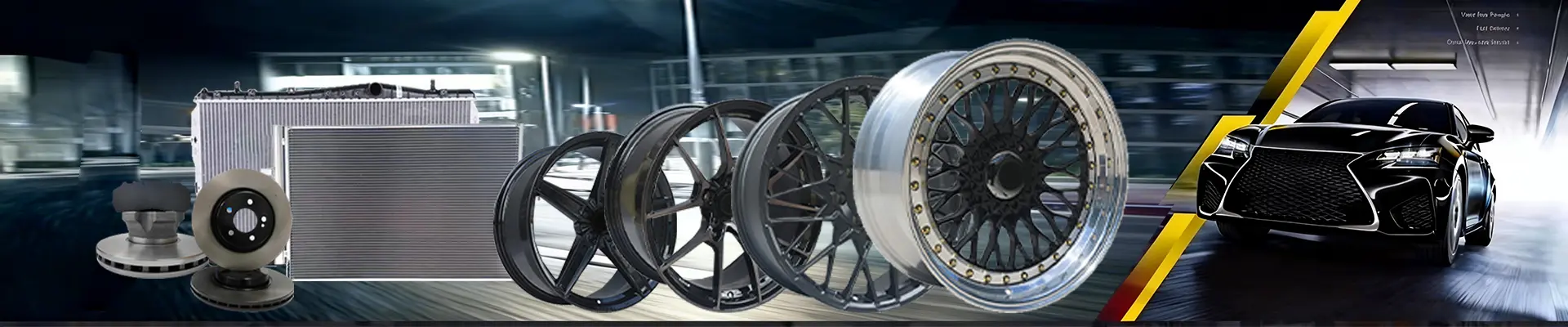
Alloy Wheels Supplier for Argentina: China Factory Direct OEM

Alloy Wheels Supplier for Argentina: China Factory Direct OEM
The cheapest per-piece quote rarely lands as the lowest total cost at Zarate port.
For Argentina importers, selecting a reliable alloy wheels supplier for Argentina hinges on three non-negotiables: certification compliance for Argentine customs, verifiable OEM customization capability, and full landed-cost transparency—not just FOB unit price.
I still remember a container of twenty-inch matte-black forged wheels sitting at Zarate for months, racking up storage fees that devoured most of the margin. The wheels were dimensionally perfect, the PCD matched, the ET was spot-on, but the paperwork was missing a certification stamp Argentine customs required. The buyer had chosen the alloy wheels supplier for Argentina based purely on the lowest FOB quote. That mistake is one I see repeated across Latin American sourcing, and it always starts the same way: price first, compliance later. [NEED_CITE: Argentine customs requirements for imported alloy wheels and certification prerequisites]
Let me walk you through what actually matters when you are sourcing from China for the Argentine market, based on years of watching shipments succeed or stall at the port.
What Certifications Do Alloy Wheels Need for Argentina Import?
VIA, JWL, DOT, and TUV certifications form the core compliance gate for Argentina; missing any of them can strand a container at the port indefinitely.
Argentina does not simply accept a commercial invoice and a packing list. Customs brokers in Buenos Aires and Zarate routinely ask for proof that the wheels meet recognized international standards. The certifications that open doors here are not optional decorations—they are the difference between a container clearing in days and one sitting under a tarp for months.
| Certification | Issuing Body | Primary Market Recognition | Argentina Acceptance Level |
|---|---|---|---|
| VIA | Japan Light Alloy Wheel Testing Association | Japan, global aftermarket | Widely accepted |
| JWL | Japanese Light Alloy Wheel Standard | Japan, Asia-Pacific | Widely accepted |
| DOT | U.S. Department of Transportation | North America | Accepted as supplementary |
| TUV | Technischer Überwachungsverein (Germany) | Europe, global premium | Highly valued |
| ISO 9001 | International Organization for Standardization | Global quality management | Expected baseline |
A distribution client in Rosario once ordered a full container of seventeen and eighteen-inch wheels for popular sedan and SUV fitments. They had verified PCD, center bore, and offset with their local workshops. What they had not verified was whether the alloy wheels supplier for Argentina could produce batch-level VIA test reports matching the exact wheel design in the container. The shipment cleared, but a subsequent batch from a different source got held because the test report referenced a different mold series. [NEED_CITE: VIA certification requirements for batch-level wheel testing documentation]
The lesson here is specific: certification is not a one-time factory credential. It must trace to the exact SKU in your container. Ask your supplier whether their VIA or JWL report covers the specific diameter, width, and PCD combination you are ordering. A generic certificate hanging on a factory wall will not satisfy an Argentine customs inspector who pulls your container for inspection.
For modification shops ordering custom twenty-inch deep-concave forged wheels, the certification conversation shifts slightly. Custom forgings may not carry the same pre-existing VIA catalog listing as mass-produced cast wheels. In these cases, the alloy wheels supplier for Argentina should be able to provide material test certificates, structural fatigue reports, and, where applicable, TUV individual approval documentation. [NEED_CITE: TUV individual approval process for custom aftermarket alloy wheels]
How to Compare Factory-Direct Pricing vs. Trading Company Quotes?
Factory-direct sourcing from a Chinese manufacturer typically runs substantially below trading company quotes, but the real comparison must be landed cost, not FOB price.
When I first started attending Automechanika Frankfurt, I would hand out FOB quotes and feel confident. Then a Brazilian buyer sat me down and pulled out a spreadsheet: FOB price, inland freight to Shanghai, ocean freight to Buenos Aires, insurance, Argentine import duties, certification amortization per unit, custom packaging cost, and an allowance for the typical damage rate in transit. By the time all of that was added, his trading company quote and my factory-direct quote were much closer than I expected.
| Cost Component | Factory-Direct | Trading Company |
|---|---|---|
| FOB Unit Price | Noticeably lower | Marked up substantially |
| Certification Amortization | Spread across full production run | Often excluded or re-quoted |
| Custom Packaging | Included in MOQ negotiation | Added as separate line item |
| MOQ Flexibility | Negotiable for repeat orders | Fixed, often higher |
| Technical Communication | Direct with engineering | Filtered through middleman |
| Claim Resolution | Direct factory accountability | Delayed through intermediary |
A retail client in Córdoba who imports multi-SKU small-batch replenishment orders found that the factory-direct alloy wheels supplier for Argentina could consolidate center cap customization, branded box printing, and pallet labeling into a single production run. A trading company had quoted each of those as separate cost additions. [NEED_CITE: typical cost structure comparison between factory-direct and trading company alloy wheel sourcing]
The trap is focusing on the headline number. I have seen buyers celebrate a low per-piece price, only to discover that the trading company’s quote excluded the specific Argentine marking requirements on the wheel back-pad, or that the custom paint color they needed would be a separate small-batch surcharge. Factory-direct pricing absorbs these into the negotiation because the manufacturer controls the production schedule directly.
That said, factory-direct only works if you are willing to engage with the technical side. You need to communicate offset specifications, confirm center bore tolerances, and review packaging mockups before production starts. If your sourcing model is purely transactional—send a PO, receive a container—then a trading company may still be more convenient. But if you are building a brand in the Argentine aftermarket, direct factory engagement is where the margin lives.
What OEM Customization Options Matter for Argentina Buyers?
Full-chain customization—size, offset, surface finish, center cap, and packaging—is available from capable Chinese manufacturers, and the real bottleneck is certification confirmation, not production time.
There is a persistent myth that OEM custom wheels take months because the factory needs to build molds, run samples, and wait for approval. In reality, the production cycle for a custom alloy wheel is relatively compact. What stretches timelines is the back-and-forth on certification documentation.
A modification shop in Mendoza wanted a staggered setup: nineteens in the front, twenties in the rear, all in a deep-concave mesh design with a brushed face and lip. They had the visual reference, the vehicle fitment data, and the target retail price. What they did not anticipate was that the brushed face finish they wanted required a specific clear-coat process to survive Argentine road conditions—salt, gravel, and intense UV exposure. The factory could produce the finish, but the coating specification needed to be documented for durability claims. [NEED_CITE: surface treatment durability requirements for aftermarket wheels in South American climates]
| Customization Element | Typical Lead Time Impact | Key Verification Point |
|---|---|---|
| Size and Width | Minimal if within existing mold range | Confirm diameter and width availability |
| Offset and PCD | Moderate if non-standard | Validate against vehicle fitment database |
| Surface Finish | Low to moderate | Request salt-spray and UV resistance data |
| Center Cap Design | Minimal | Confirm logo placement and retention method |
| Packaging and Marking | Minimal | Review back-pad marking and box labeling |
The alloy wheels supplier for Argentina you choose should be able to walk you through each of these elements without requiring you to guess. When a modification shop in Buenos Aires ordered a run of twenty-inch multi-spoke wheels with a gunmetal finish, the factory provided coating samples, salt-spray test photos, and a recommended maintenance guide that the shop could pass directly to their retail customers. That level of support does not come from a catalog; it comes from a manufacturer that understands the end market.
The MOQ reality is also worth clarifying. Stock models in standard sizes and finishes can often be ordered in small quantities for trial purposes. Custom designs with unique offsets or finishes typically require a higher minimum, but this is negotiable for buyers who commit to repeat orders across multiple SKUs. [NEED_CITE: typical MOQ structures for stock versus custom alloy wheel orders from Chinese manufacturers]
How to Choose the Right Alloy Wheel Specs for Your Market?
Match wheel specifications to your customer segment: seventeens to twenties dominate distribution channels, while twenties and above serve the modification and enthusiast market.
Argentina’s vehicle parc skews toward mid-size sedans, compact SUVs, and pickup trucks. The wheels that move in volume through distribution channels are the sizes that fit these vehicles out of the factory or with common plus-one upgrades.
| Vehicle Segment | Popular Wheel Sizes | Typical Buyer Channel | Surface Finish Preference |
|---|---|---|---|
| Compact Sedans | 15-16 inch | Tire shops, retailers | Silver, hyper silver, basic black |
| Mid-Size Sedans | 17-18 inch | Distributors, 4S dealers | Machined face, gloss black |
| Compact SUVs | 17-19 inch | Distributors, retailers | Gunmetal, machined face |
| Full-Size SUVs / Pickups | 18-20 inch | Distributors, modification shops | Matte black, bronze, chrome |
| Enthusiast / Modified | 20-22 inch | Modification shops, e-commerce | Deep concave, custom colors |
A distributor in La Plata who supplies tire shops across the Buenos Aires province found that seventeen and eighteen-inch machined-face wheels for Toyota, Chevrolet, and Volkswagen applications turned over fastest. These were not exotic designs; they were clean, versatile five-spoke and multi-spoke patterns that fit a wide range of vehicles and appealed to conservative buyers replacing damaged original wheels.
The modification channel tells a different story. Shops in Palermo and Recoleta dealing with enthusiast clients want visual impact: deep concave profiles, staggered widths, and finishes like brushed bronze or satin gunmetal. These orders are smaller per SKU but carry higher margins. The alloy wheels supplier for Argentina serving this channel needs to offer low-MOQ custom runs and fast sample turnaround, not just container-load pricing. [NEED_CITE: Argentine aftermarket wheel size and finish demand trends by customer segment]
One mistake I see often is buyers ordering the same size range for both channels. A distributor trying to sell twenty-two-inch deep-concave wheels through a tire shop network will move inventory slowly. Conversely, a modification shop trying to stock fifteen-inch basic black wheels will alienate their clientele. Match the spec to the channel, and let your alloy wheels supplier for Argentina help you build a balanced SKU portfolio.
What Should You Verify Before Placing a Trial Order?
Before committing to a trial order, verify four items without exception: certification documents tied to the exact SKU, packaging and marking compliance, customs clearance documentation completeness, and batch consistency guarantees.
This is where experience has made me rigid. I no longer let a trial order proceed without checking all four boxes, because I have seen what happens when even one is missed.
First, certification documents must reference the exact wheel design, diameter, width, and PCD in your order. A VIA certificate for a sixteen-inch wheel does not cover your eighteen-inch order, even if it comes from the same factory. Request the specific test report and cross-check the model number against your purchase order.
Second, packaging and marking. Argentine customs requires specific information on the wheel back-pad: manufacturer identification, size specification, offset, and production date or batch code. The outer packaging must match the commercial invoice description. A mismatch here—say, the boxes say one size and the wheels inside are another—will trigger an inspection and delay. [NEED_CITE: Argentine customs marking and labeling requirements for imported alloy wheels]
Third, customs clearance documentation. This includes the commercial invoice, packing list, bill of lading, certificate of origin, and any certification documents your broker has specified. The alloy wheels supplier for Argentina should provide all of these in a format that your broker can submit directly, without translation or reformatting delays.
| Verification Item | Common Failure | Corrective Action |
|---|---|---|
| Certification Match | Report covers different SKU | Request SKU-specific test report before shipment |
| Back-Pad Marking | Missing or incorrect offset code | Confirm marking layout with factory sample photo |
| Packaging Consistency | Box labeling mismatches invoice | Request pre-shipment packaging photo review |
| Document Completeness | Missing certificate of origin | Confirm document checklist with supplier pre-shipment |
A retail client who imports from multiple sources learned to require a pre-shipment inspection photo package: wheels laid out with back-pad markings visible, packaging with labels visible, and all documents scanned and sent before the container is sealed. This simple step has prevented every documentation-related delay they have faced since implementing it.
Fourth, batch consistency. If you are ordering multiple SKUs in one container, confirm that the surface finish color matches across all wheels of the same design. A subtle shade difference between batches of gunmetal finish may not matter in a factory showroom, but it will generate customer complaints in a retail environment.
Conclusion
Choosing the right alloy wheels supplier for Argentina is a compliance and cost-engineering exercise, not a price-comparison spreadsheet. Certification documentation tied to exact SKUs, factory-direct landed-cost analysis, full-chain OEM customization with realistic lead-time expectations, market-matched specifications, and rigorous pre-shipment verification form the complete framework. Get these right, and the container clears, the wheels sell, and the margin stays where it belongs.


