Summer 25% discount on all last year's bike models

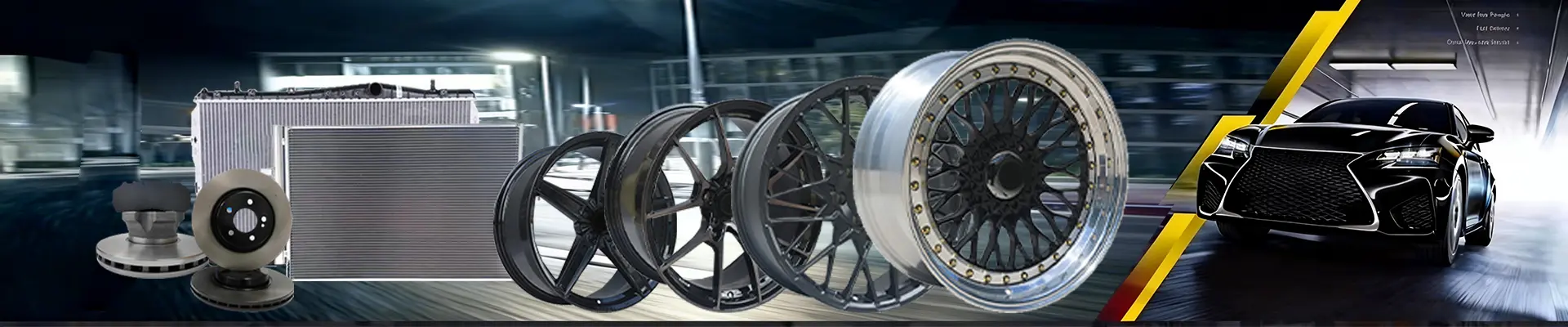
Cast vs Forged vs Flow-Formed Wheels: Wholesale Supplier Guide

Cast vs Forged vs Flow-Formed Wheels: Wholesale Supplier Guide
Most buyers think forged wheels are always better than cast. They are wrong.
Cast, forged, and flow-formed wheels differ fundamentally in molecular structure, strength-to-weight ratio, and production cost. Cast wheels use gravity-poured molten alloy, resulting in a coarse grain structure suited for budget-heavy markets. Forged wheels are machined from a solid billet under extreme pressure, delivering maximum strength and minimum weight at premium cost. Flow-formed wheels hybridize both: a cast center face with a roller-stretched rim, offering near-forged rim strength at roughly half the forging price. Choosing the wrong process for your end market is the single biggest cause of warranty claims in the alloy wheel trade.
I still remember a shipment that landed in Dubai and started cracking on desert patrol routes within weeks. The buyer insisted our casting was defective. After pulling back a few samples and running X-ray analysis, the truth came out: he had ordered standard gravity-cast wheels but was marketing them to off-road customers who needed flow-formed or forged specs. The molecular density simply could not handle the lateral impact loads on sand dune drops. That single mix-up triggered a replacement cycle that dragged on for months and nearly killed the account [NEED_CITE: failure mode distribution in alloy wheels per SAE J2530].
Let me walk you through what actually happens inside each process, because understanding the grain structure explains everything that follows about pricing, weight, and field performance.
What Actually Happens During Each Manufacturing Process?
The manufacturing process determines the molecular grain flow, and grain flow determines the performance ceiling of the wheel.
In gravity casting, molten A356 aluminum alloy is poured into a steel mold and solidifies under atmospheric pressure. The grain structure forms randomly, with microscopic porosity scattered throughout the barrel and rim area. This is the cheapest method and the one that dominates price-sensitive markets across Africa and parts of the Middle East.
Low-pressure casting improves on this by pushing the alloy upward into the mold under controlled pressure, reducing porosity noticeably. Most OEM-style replacement wheels for mainstream passenger vehicles use this method. The grain structure is tighter than gravity cast but still lacks the directional fiber alignment you get from deformation processes [NEED_CITE: grain structure comparison between casting methods per JWL testing standards].
Forging starts with a solid cylindrical billet of 6061-T6 or similar aerospace-grade alloy. A press applies thousands of tons of force, compressing the billet into a rough wheel shape. The grain structure stretches and aligns along the contour of the wheel, creating a continuous fiber flow similar to the grain in a forged steel crankshaft. This is why forged wheels can be made significantly thinner while still passing impact tests.
Flow forming sits between casting and forging. The center section is cast, then the wheel is mounted on a mandrel and the rim barrel is spun at high speed while hardened rollers press against the inner and outer surfaces. The heat and pressure stretch the rim material, aligning its grain flow circumferentially. The face and spokes remain cast; only the rim gains the denser structure.
| Process | Grain Structure | Typical Material | Porosity Level |
|---|---|---|---|
| Gravity Cast | Random, coarse | A356 alloy | Noticeably higher |
| Low-Pressure Cast | Semi-directional | A356 alloy | Standard |
| Flow-Formed | Directional at rim only | A356 or 6061 | Substantially reduced at rim |
| Forged (solid billet) | Fully directional, continuous | 6061-T6 | Minimal |
A modification shop in Latin America once asked me why their forged wheels never bent on pothole hits while their cast stock kept warping. The answer is the grain flow. A bent cast wheel has fractured grain boundaries; a bent forged wheel has merely stretched them. The material yields rather than splits.
How Do Cast, Forged, and Flow-Formed Wheels Compare on Key Specs?
Strength, weight, and cost form a triangle where no single process wins all three corners.
When buyers ask me to compare cast vs forged vs flow-formed wheels, I pull out a spec matrix rather than argue opinions. Here is the framework I use with wholesale buyers across different regions.
Tensile strength is where the gap becomes measurable. Forged billets consistently deliver the highest tensile values due to grain alignment. Flow-formed rims approach forged-level strength in the barrel area but the cast face remains the weaker link. Gravity-cast wheels sit at the bottom of the range, adequate for static loads but vulnerable to repeated impact fatigue [NEED_CITE: tensile strength ranges for A356 vs 6061 alloy per ASTM B209].
Weight tells a similar story. A forged wheel of the same diameter and width can be noticeably lighter than its cast counterpart because the material is stronger and can be machined thinner. Flow-formed wheels typically fall between the two, shedding weight primarily in the rim barrel where the spinning process thins the wall.
Cost is where the conversation gets real for buyers. Forging requires expensive billet material, massive press equipment, and extensive CNC machining time. The material utilization rate is low because most of the billet gets machined away. Casting wastes far less raw material and runs faster. Flow forming adds a secondary process to casting but avoids the full billet cost of forging, landing at a mid-range price point.
| Spec | Gravity Cast | Flow-Formed | Forged |
|---|---|---|---|
| Tensile Strength | Basic | Standard | Certified high |
| Weight (same size) | Heaviest | Noticeably reduced | Lightest |
| Production Cost | Lowest | Mid-range | Highest |
| Material Utilization | Substantially higher | Moderate | Low |
| Impact Resistance | Vulnerable | Resistant | Robust |
A distributor in West Africa once ordered a full container of cast wheels for a market where roads were rough and potholes constant. The unit price was right, but the return rate climbed because the wheels cracked at the spoke roots. When he switched the same SKU to flow-formed spec, the crack complaints dropped sharply even though the face design was identical. The rim and spoke junction was simply tougher.
Which Wheel Type Fits Which End-User Market?
Match the process to the road conditions and wallet of the end driver, not to the marketing brochure.
This is where I see the most costly mistakes. Buyers order forged wheels for markets that cannot support the retail price, or they ship gravity-cast wheels to customers who need impact toughness. The mismatch creates returns, warranty claims, and lost accounts.
For budget-focused markets across Africa, parts of the Middle East, and Southeast Asia, gravity-cast and low-pressure-cast wheels dominate. The end customer prioritizes price and visual appearance over weight savings. A clean machined-face or gloss black cast wheel in popular fitments like 15-inch through 17-inch for Toyota and Nissan sedans moves fast at container-load pricing. The key is to be honest about what these wheels can handle and not oversell them for aggressive driving conditions.
For the European and North American aftermarket modification scene, forged wheels command premium pricing because the enthusiast customer values lightweight performance and is willing to pay for it. Deep concave profiles, aggressive spoke designs, and custom finishes like brushed bronze or hyper silver sell well here. The buyer in this market reads spec sheets and asks about grain flow.
Flow-formed wheels hit the sweet spot for the global mainstream. They offer enough performance credibility to satisfy modification enthusiasts while staying close enough to cast pricing that volume buyers can move them through tire shops and e-commerce channels. This is the process I see winning the broadest shelf space across multiple regions, and it is the process we produce at the highest volume under the Ouya brand across sizes from 12-inch through 24-inch.
| Market Segment | Recommended Process | Key Buyer Priority |
|---|---|---|
| Budget replacement (Africa, SE Asia) | Gravity / Low-Pressure Cast | Unit cost, visual appeal |
| Off-road and desert use (Middle East) | Flow-Formed or Forged | Impact resistance |
| Enthusiast tuning (US, EU) | Forged | Weight, concave styling |
| Mainstream aftermarket (Global) | Flow-Formed | Balanced cost and performance |
A Middle East buyer once called me furious about a batch of cast wheels cracking on desert roads. After checking the order records, I realized he had specified standard cast but was selling to off-road customers who needed flow-formed at minimum. The wheels were not defective; they were spec-matched to the wrong application. We restructured his catalog to separate highway cast SKUs from off-road flow-formed SKUs, and the claim rate dropped noticeably.
What Red Flags Should Buyers Watch for in Supplier Claims?
If a supplier cannot show you the material certificate and the process documentation, walk away.
The alloy wheel market is full of vague marketing language. Suppliers claim their cast wheels are "forged quality" or their flow-formed wheels are "as strong as forged." These statements are misleading at best and fraudulent at worst. Here is how I train my own sales team to evaluate claims, and it is the same checklist I share with serious buyers.
First, demand the material test report. A legitimate manufacturer will provide a certificate showing the alloy grade, tensile strength, and elongation percentage from an independent lab. If the supplier only gives you a self-declared PDF with no lab name, treat it as unverifiable.
Second, ask for the process breakdown in writing. A flow-formed wheel should have documentation showing both the casting stage and the forming stage. A forged wheel should reference the billet source and the press tonnage. If the supplier says "it is our proprietary process" and refuses to elaborate, that is a red flag.
Third, check the certifications. International standards like JWL, VIA, TÜV, and DOT require specific testing protocols. A supplier holding these certifications has submitted wheels to third-party impact, radial fatigue, and dynamic balance testing. Certifications are not optional for serious markets; they are the baseline [NEED_CITE: certification requirements for alloy wheels per JWL and VIA standards].
| Claim Type | What to Demand | Acceptable Evidence |
|---|---|---|
| "High strength alloy" | Material test report | Lab-certified tensile data |
| "Forged quality cast" | Process documentation | Casting plus forming records |
| "Meets international standards" | Certification certificates | JWL, VIA, TÜV, or DOT marks |
| "Same as OEM" | OEM comparison report | Dimensional and load test data |
A buyer from a Latin American e-commerce platform once showed me a competitor’s product page claiming "forged aluminum" at cast-level pricing. The math did not work. Real forging costs more than that in billet material alone. When he requested the forging certificate, the competitor went silent. The wheels were flow-formed at best, likely gravity-cast.
How to Verify Wheel Quality Before Bulk Orders?
Sampling is not optional; it is the cheapest insurance you will ever buy.
Before committing to a full container, any serious buyer should run a verification protocol. I have seen too many deals go sideways because someone skipped the sampling stage to save a few weeks.
Start with dimensional inspection. Pull random samples from the production batch and check the bolt pattern, center bore, offset, and width against your spec sheet. Even small deviations cause fitment complaints that are expensive to resolve after the container has shipped.
Next, request X-ray inspection reports on the samples. X-ray reveals internal porosity, shrinkage cavities, and cold shuts that visual inspection cannot catch. A wheel that looks perfect on the outside can have a honeycomb of voids inside the rim barrel if the casting process was poorly controlled [NEED_CITE: X-ray inspection criteria for alloy wheel porosity per ISO standards].
Then, conduct a dynamic radial fatigue test and a impact test. These simulate real-world loading and curb strikes. If the supplier has in-house testing equipment, ask for the raw data. If not, send samples to an independent lab. The cost is minor compared to the cost of a rejected container.
Finally, verify the surface finish and coating adhesion. Salt spray testing confirms whether the clear coat or powder coat will hold up in humid or coastal climates. A wheel that passes structural tests but peels its finish in six months will still generate complaints.
We maintain full ISO, VIA, TÜV, DOT, JWL, and CCC certifications across the Ouya production line, and every bulk order goes through X-ray sampling and load testing before release. The three-year structural warranty is not marketing language; it is a commitment backed by process control that we can document.
Conclusion
The right wheel process is the one that matches your end customer’s road, budget, and expectations.
Cast, forged, and flow-formed wheels each occupy a distinct position in the market. Cast wins on price for volume replacement sales. Forged wins on performance for enthusiast buyers who pay for weight savings. Flow-formed wins on balance for the broad mainstream of aftermarket and modification customers. Understanding the real differences in grain structure, strength, and cost protects you from spec mismatches that lead to claims, returns, and damaged supplier relationships. Verify every batch with sampling, demand documentation, and match the process to the application before the container loads.


