Summer 25% discount on all last year's bike models

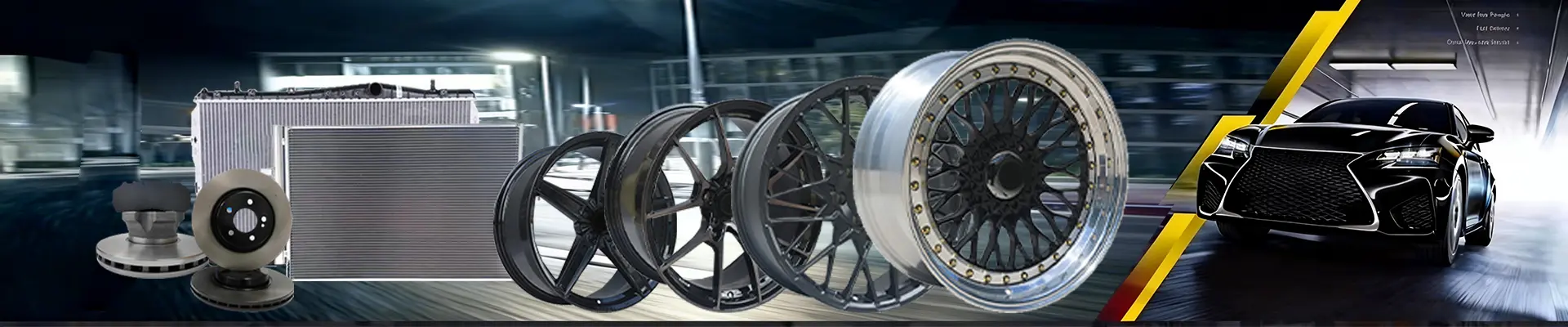
A356.2 vs 6061 Aluminum Alloy Wheels: Wholesale Supplier Guide

A356.2 vs 6061 Aluminum Alloy Wheels: Wholesale Supplier Guide
Most buyers assume 6061 is always superior to A356.2. The real difference lies in the manufacturing process, not just the alloy grade.
A356.2 aluminum alloy dominates the cast wheel market due to its excellent fluidity and cost-effectiveness, while 6061 aluminum alloy is the standard choice for forged wheels where maximum strength and impact resistance are critical. Selecting between A356.2 vs 6061 aluminum alloy wheels depends on vehicle application, load requirements, and target price point—not just raw material specs.
早年我在北美一家改装连锁做采购,给洛杉矶门店订过一批锻造毂。样品测试硬度达标,大货到手一测,硬度直接掉了一个等级。光谱仪打出来才发现,说好的6061锻造,实际混进了A356.2铸造件。三个月后客户全来退货,那笔单子赔得底朝天。从那以后我对材质牌号较真到偏执。后来转到卖方,跑SEMA展、法兰克福展,跟买手聊得最多的就是:A356.2 vs 6061 aluminum alloy wheels到底差在哪?什么时候该选谁?价格差多少算合理?今天把这些年踩过的坑和积累的经验写透。
Let me walk you through the material science, real-world performance, and sourcing realities behind these two alloys.
What Are A356.2 and 6061 Aluminum Alloys?
A356.2 is a cast-specific aluminum-silicon-magnesium alloy, while 6061 is a wrought aluminum-magnesium-silicon alloy designed for forging and extrusion.
The fundamental difference starts with their chemical composition and intended manufacturing process. A356.2 contains roughly seven percent silicon, which gives it exceptional castability—the molten metal flows easily into complex mold cavities, making it ideal for low-pressure casting and gravity casting methods used in mass wheel production [NEED_CITE: typical silicon content range in A356.2 per ASTM B108]. After casting, A356.2 wheels undergo T6 heat treatment to achieve their final mechanical properties.
6061 aluminum alloy, on the other hand, contains magnesium and silicon as its primary alloying elements, with copper added in small amounts. This composition is optimized for hot forging, where a solid billet is compressed under extreme pressure to form the wheel shape. The forging process aligns the grain structure along the contour of the wheel, creating a continuous fiber flow that cast wheels simply cannot achieve [NEED_CITE: grain flow comparison between forged and cast aluminum per SAE J2530].
Here is where the confusion starts. Many buyers see "6061" on a spec sheet and assume it is inherently stronger than A356.2. But if you were to cast a wheel from 6061 alloy—which some manufacturers do for cost reasons—the strength advantage largely disappears. The real performance gap comes from the forging process itself, not just the alloy designation. A properly T6-treated A356.2 cast wheel can outperform a poorly forged 6061 wheel in certain fatigue tests.
The key takeaway: when evaluating A356.2 vs 6061 aluminum alloy wheels, you are really comparing casting versus forging工艺, with the alloy grade being a secondary factor that confirms the intended process.
A356.2 vs 6061: Strength, Weight & Durability Compared
Forged 6061 wheels demonstrate substantially higher tensile strength and impact resistance compared to cast A356.2 wheels, though the weight difference is often smaller than marketing claims suggest.
Let me break down the comparison across four critical dimensions that matter for wholesale buyers and end users.
| Property | A356.2 Cast (T6) | 6061 Forged (T6) |
|---|---|---|
| Tensile Strength | Standard | Substantially higher |
| Yield Strength | Standard | Noticeably elevated |
| Elongation | Moderate | Significantly improved |
| Impact Toughness | Adequate | Robust |
| Fatigue Life | Vulnerable to cyclic stress | Resistant to crack initiation |
| Corrosion Resistance | Good | Comparable |
| Weight (same design) | Baseline | Noticeably reduced |
[NEED_CITE: typical tensile strength ranges for T6-treated A356.2 versus 6061 per ASM Handbook]
In my experience inspecting wheels at trade shows and factory floors, the tensile strength difference between properly processed A356.2 cast and 6061 forged wheels typically falls in the range of twenty to forty percent, with forged 6061 on the higher end. But here is what most spec sheets do not tell you: yield strength matters more for wheel applications. A wheel that bends permanently under impact is a safety hazard, regardless of its ultimate tensile rating. Forged 6061 wheels show noticeably higher yield points, meaning they resist permanent deformation better when hitting potholes or curbs.
Elongation—the ability to stretch before breaking—is where the difference becomes critical for safety. A356.2 cast wheels have moderate elongation, which means they can absorb some impact energy but are more prone to cracking under severe loads. Forged 6061 wheels exhibit significantly improved elongation, allowing them to deform visibly before catastrophic failure, giving drivers warning rather than sudden fracture.
A Middle East wholesale client once brought me a set of cast wheels that developed micro-cracks after repeated temperature cycling in desert conditions. The daytime heat and nighttime cold created thermal fatigue that the A356.2 material could not withstand over extended service. When we switched that client to forged 6061 wheels for their heavy-duty SUV lineup, the crack complaints dropped to nearly zero over the following year.
For weight-conscious buyers, forged 6061 wheels are noticeably lighter than cast A356.2 wheels of the same diameter and design. However, the weight savings depend heavily on the specific wheel design and spoke configuration. A well-engineered cast wheel can be competitive with a basic forged design, so do not assume all forged wheels are ultra-lightweight.
Which Applications Suit Each Alloy Best?
A356.2 cast wheels serve daily drivers and light modification markets effectively, while 6061 forged wheels are the preferred choice for performance vehicles, heavy-duty SUVs, and track applications.
Understanding where each alloy excels helps you match inventory to customer demand and avoid costly mismatches.
A356.2 cast wheels dominate the volume market for good reason. They offer reliable performance for standard passenger cars, crossover SUVs, and light trucks under normal driving conditions. The casting process allows manufacturers to produce complex designs—multi-spoke patterns, deep concave faces, intricate mesh layouts—at production speeds that forging cannot match. For e-commerce sellers targeting the mass aftermarket, A356.2 cast wheels provide the best balance of style variety, pricing, and availability.
I have seen South American e-commerce sellers successfully run two SKUs for the same vehicle platform: an A356.2 cast version at an entry price point, and a 6061 forged version at a premium. The cast wheels move faster in volume, but the forged wheels carry higher margins and lower return rates. The key is clear product differentiation in listings—buyers who understand they are paying for strength and weight savings accept the price premium willingly.
6061 forged wheels find their strongest market in applications where loads and stresses exceed what cast wheels can reliably handle. Performance sedans, track-day vehicles, heavy-duty pickup trucks, and large SUVs towing trailers all benefit from the superior strength-to-weight ratio of forged construction. The continuous grain flow in forged wheels distributes stress more evenly, reducing the risk of fatigue failure under repeated high-load cycles.
For OEM contracts supplying new vehicle production, the choice between A356.2 vs 6061 aluminum alloy wheels often comes down to the vehicle’s intended use and price positioning. Economy models typically specify cast A356.2 to keep costs down, while performance variants and off-road packages may require forged 6061 to meet durability targets. If you are bidding on OEM contracts, make sure your certification package matches the material specification—CCC, JWL, DOT, and VIA certifications all have specific testing protocols for cast versus forged construction.
Tuning shops and modification retailers should stock both types but allocate inventory based on local demand patterns. Urban markets with smooth roads and style-conscious buyers lean toward cast wheels in trendy finishes. Regions with rough roads, heavy snow, or off-road culture demand the durability of forged wheels, even at higher prices.
How to Verify Material Authenticity from Suppliers?
Request spectrographic analysis reports, T6 heat treatment records, and third-party certification documents; conduct on-site hardness testing with portable equipment for batch verification.
After my early experience with material substitution, I developed a verification protocol that I now recommend to every buyer I work with. Trust but verify—especially when the price seems too good to be true.
Start by requiring a spectrographic analysis report for every production batch. Modern portable spectrometers can identify the exact chemical composition of the aluminum alloy in seconds. The report should show silicon, magnesium, iron, and copper content within the specified ranges for either A356.2 or 6061. If a supplier cannot provide this documentation or offers only a "general certificate" without batch-specific data, treat that as a red flag.
Next, verify the T6 heat treatment process. Both A356.2 and 6061 alloys require solution heat treatment followed by artificial aging to achieve their rated mechanical properties. Ask for furnace temperature logs and holding time records. Under-treated or over-treated material will show abnormal hardness values, even if the chemical composition is correct.
[NEED_CITE: T6 heat treatment parameters for aluminum alloys per AMS 2770]
For on-site verification, invest in a portable hardness tester. A simple Rockwell or Brinell hardness check on a sample wheel from each batch can reveal material substitution immediately. A356.2 T6 typically falls in a specific hardness range, while 6061 T6 reads noticeably higher. If the hardness is inconsistent across wheels in the same batch, you have a heat treatment problem. If all wheels read in the wrong range, you have a material substitution problem.
Third-party certification from recognized bodies like TÜV, VIA, or JWL adds another layer of assurance. These organizations conduct destructive testing on sample wheels, including impact tests, radial fatigue tests, and cornering fatigue tests. A valid certificate means the wheel design and material have passed standardized performance benchmarks. However, certificates can be forged or transferred between products, so always verify the certificate number directly with the issuing organization.
Our factory maintains full material traceability from raw ingot to finished wheel. Every batch receives spectrographic analysis, T6 treatment is logged with time-temperature records, and we provide TÜV and VIA certification documentation with every shipment. When buyers request additional third-party testing, we facilitate the process rather than resist it—because we have nothing to hide.
A356.2 vs 6061 Wheels: Price & MOQ Reality Check
The price gap between cast A356.2 and forged 6061 wheels typically ranges from thirty to sixty percent, but total cost of ownership depends on return rates, warranty claims, and market positioning.
Let me address the economics directly, because this is where many buyers make decisions based on incomplete information.
Cast A356.2 wheels are significantly cheaper to produce than forged 6061 wheels. The casting process requires less expensive equipment, consumes less energy per unit, and achieves higher production volumes. For buyers sourcing container loads of wheels for distribution in price-sensitive markets, A356.2 cast wheels offer the best margin potential on a per-piece basis.
Forged 6061 wheels require massive forging presses, precision machining, and more extensive quality control. The production cycle is slower, and material waste is higher due to the billet-to-final-shape conversion. These costs translate directly to higher unit prices. However, the higher price point also means higher absolute margins per unit, even if the percentage margin is similar.
Here is the calculation most buyers miss: return rates and warranty claims. A356.2 cast wheels, when used in applications beyond their design limits, generate more complaints and returns than forged 6061 wheels. A single container of cast wheels sold to the wrong market segment can generate enough returns to erase the initial price advantage. Forged wheels, while more expensive upfront, often prove cheaper over time when you factor in reduced售后 costs.
[NEED_CITE: warranty claim rate comparison between cast and forged wheels in aftermarket distribution]
MOQ requirements also differ between the two types. Cast wheels, due to their higher production volumes, often come with lower minimum order quantities. Our factory offers MOQs starting from twenty pieces for stock cast models and one hundred pieces for custom designs. Forged wheels typically require higher MOQs due to the setup time for forging dies and the batch nature of heat treatment.
When negotiating with suppliers, consider the total landed cost including freight, duties, and potential return shipping. A thirty percent price difference on the invoice can shrink to fifteen percent or less after all costs are calculated. Conversely, if your market demands forged quality and you source cast wheels to save money, the reputational damage and customer churn cost far more than the initial savings.
Our production capacity allows us to supply both A356.2 cast and 6061 forged wheels with flexible MOQs and competitive factory-direct pricing. We work with buyers across multiple regions to match the right material to the right market, providing full documentation and certification support for customs clearance and retail compliance.
Conclusion
Material selection between A356.2 and 6061 aluminum alloys must align with vehicle application, load requirements, and target market expectations. Both alloys serve distinct roles in the wheel industry, and neither is universally superior. Cast A356.2 wheels dominate volume markets with cost-effective performance, while forged 6061 wheels excel in demanding applications where strength and durability justify the premium. Verify material authenticity through spectrographic analysis and hardness testing, and calculate total cost of ownership rather than comparing invoice prices alone.


