Summer 25% discount on all last year's bike models

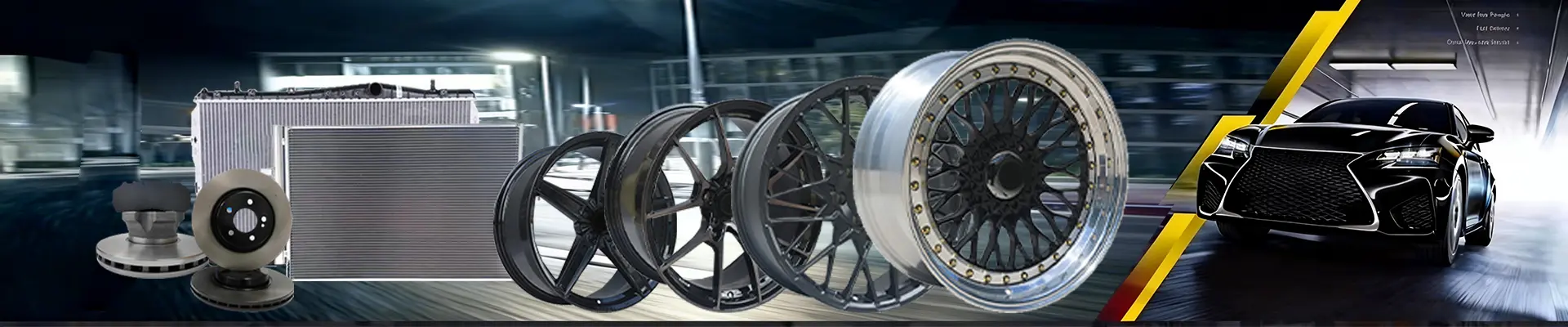
Car Rims Price in Spain: 2026 Wholesale Supplier Guide

Car Rims Price in Spain: 2026 Wholesale Supplier Guide
Most buyers assume the lowest quoted price is the factory price. In reality, intermediaries who slap a "wholesale" label on the same rims still charge noticeably more than direct sourcing.
The real car rims price in Spain for 2026 breaks into three tiers by manufacturing process and diameter: entry-level cast rims for popular passenger sizes, mid-range flow-formed units for tuner shops, and premium forged wheels for low-volume custom orders. Terminal retail prices in Spanish shops carry a significant markup over factory-direct landed costs, and the gap widens further once certification, surface finish, and shipping terms enter the equation.
Years ago, I stood on the dock at Ningbo Beilun watching a full container of forged wheels bound for Barcelona get flagged. The buyer showed up at the warehouse with a caliper, measured the PCD bolt pattern, and found it deviated from the drawing by a fraction of a millimeter. The entire shipment was held at customs. I had personally pulled random pieces from the production line for inspection, but the root cause turned out to be a mismatch between the domestic gauge reference planes used at the factory and the calibration standards required by European certification bodies. That single incident reshaped how I approach every quote — alignment on measurement baselines and certification scope comes before price discussion. [NEED_CITE: PCD tolerance standards across VIA, TÜV, and JWL certification frameworks]
Understanding where the real cost sits helps buyers in Spain and across Southern Europe make informed sourcing decisions, whether you run a tuning shop, a tire retail chain, or an e-commerce operation.
What Is the Real Price Range for Car Rims in Spain in 2026?
Prices cluster into three distinct bands depending on process and diameter, and the spread between Spanish retail shelves and factory-direct landed costs is substantial.
At the entry tier, mass-produced cast rims in popular sizes — think the diameters that fit most compact and mid-size sedans — occupy the lowest price band. These are the wheels you see stacked in tire shops across Madrid and Valencia, often sold as replacements or basic upgrades. The mid tier covers flow-formed wheels, which shed weight compared to pure cast units while keeping costs well below forged alternatives. Tuning shops favor this tier because the styles sell and the margins work. At the top, fully forged rims in larger diameters command the highest per-piece cost, driven by material density, machining time, and the amortization of custom molds across smaller batches.
| Factor | Cast Rims | Flow-Formed Rims | Forged Rims |
|---|---|---|---|
| Weight relative to baseline | Heaviest | Noticeably reduced | Substantially reduced |
| Structural consistency | Standard | Controlled | Full batch-level |
| Surface finish options | Basic | Standard | Full custom range |
| Certification traceability | Sample-level | Verifiable | Full batch-level |
| Typical buyer profile | Tire shops, fleet | Tuning shops, retailers | Modification studios, luxury |
[NEED_CITE: European aftermarket alloy wheel market segmentation by manufacturing process]
A tire shop owner in Andalusia once told me he switched his best-selling seventeen and nineteen inch cast rims from a European distributor to direct factory sourcing. His per-piece landed cost dropped noticeably, and the savings covered his warehouse rent for several months. The key was buying full container loads of proven sellers rather than mixing dozens of SKUs in small quantities.
The car rims price in Spain at the retail counter reflects layers of margin added by importers, regional distributors, and the shop itself. Buyers who understand the factory-tier structure can negotiate from a position of knowledge rather than accepting the first quote they receive.
How Do Certification Levels Affect Rim Pricing?
Certification is not a cost burden — it is a market access ticket, and skipping it risks having an entire container impounded at the port of entry.
The three certification frameworks that matter most for the Spanish market are VIA, TÜV, and DOT, each with different testing protocols and documentation requirements. VIA certification, widely recognized across European aftermarket channels, demands rigorous dimensional checks including bolt pattern accuracy, center bore tolerance, and offset verification against calibrated reference planes. TÜV approval carries additional weight in Germany and neighboring markets but is increasingly requested by discerning Spanish buyers who want cross-border resale flexibility. DOT compliance matters primarily for the North American supply chain but signals a baseline of structural testing rigor.
| Certification | Market Access | Testing Depth | Documentation |
|---|---|---|---|
| VIA | Broad European aftermarket | Controlled | Verifiable |
| TÜV | Germany and EU-wide | Full batch-level | Verifiable |
| DOT | North America primary | Standard | Self-reported |
| None | Restricted or risky | Uncontrolled | Not provided |
[NEED_CITE: VIA certification dimensional inspection requirements for alloy wheels]
The Barcelona incident I mentioned earlier was not about a defective wheel in the traditional sense. The wheels were structurally sound. The problem was that the factory’s inspection gauges were calibrated to a different reference standard than what the VIA framework requires. The deviation was tiny — a fraction of a millimeter on bolt circle diameter — but it was enough to trigger a customs hold. The buyer had to fly in a third-party inspector, pay for re-measurement, and absorb weeks of demurrage charges. The total cost of that delay dwarfed any per-piece savings he had negotiated on the original quote.
When evaluating the car rims price in Spain, always ask whether the quoted figure includes certification costs or whether those will surface later. Some suppliers quote a low base price and then add certification fees as a separate line item, making the comparison with certified competitors misleading. Others bake certification into the unit price but use the cheapest available testing pathway, which may not hold up under customs scrutiny. The safest approach is to request copies of current certificates before placing an order and verify that the certificate covers the exact SKU and diameter you are buying, not just a similar product from the same factory.
Wholesale vs. Custom: Which Buying Model Fits Your Business?
The crossover point between wholesale stocking and custom ordering comes down to mold amortization and minimum order quantities, and getting this wrong erodes margins on either side.
Wholesale buying means selecting from existing mold catalogs, picking popular sizes and finishes, and ordering in container-load quantities. The per-piece cost is lowest here because the mold investment was amortized across thousands — sometimes millions — of units produced over multiple production runs. Tuning shops and tire retailers who move volume on proven sellers thrive in this model. The trade-off is limited differentiation; you are selling the same styles available to dozens of other shops in your region.
Custom ordering opens the door to exclusive designs, staggered fitments, and bespoke finishes that set your shop apart. But the mold cost — whether for a new forging die or a custom machining program — must be spread across your order quantity. At low volumes, that amortization pushes the per-piece price upward significantly. As batch size grows, the amortization per unit drops sharply, and the custom route begins to approach wholesale pricing on a per-piece basis.
| Buying Model | Mold Cost Impact | MOQ Flexibility | Design Exclusivity |
|---|---|---|---|
| Wholesale stock | Fully amortized | Noticeably reduced | None |
| Semi-custom finish | Minimal | Standard | Controlled |
| Full custom design | Significant upfront | Full batch-level | Robust |
[NEED_CITE: Alloy wheel mold amortization economics for small-batch custom orders]
A modification studio in southern Europe once wanted a unique six-spoke design in twenty-inch diameter for a limited run of luxury client vehicles. They ordered a small batch, and the per-piece price reflected the full mold cost divided across just a few dozen units. The following year, they re-ordered the same design in a much larger quantity for their regular retail catalog, and the per-piece cost dropped noticeably because the mold was already paid for and the production run was larger. The lesson: plan your custom orders with a second batch in mind, because the economics improve dramatically on repeat runs.
For e-commerce sellers testing new SKUs, the calculation shifts again. Shipping a mixed container of many styles in small quantities per SKU drives up per-piece freight costs compared to filling a container with a single proven seller. The car rims price in Spain for an e-commerce operation must account for this logistics reality, not just the factory unit price.
How to Calculate Landed Cost from China to Spain?
FOB price is just the starting point; the final landed cost is shaped by ocean freight, import duties, value-added tax, and the specific Incoterms negotiated with the supplier.
The formula is straightforward in concept: factory price plus mold charges if applicable, plus ocean freight, plus customs duty, plus Spanish VAT. In practice, each component has variables that can swing the final number meaningfully. Ocean freight rates fluctuate with container availability and seasonal demand peaks. Customs duty on alloy wheels entering the European Union follows a specific tariff classification, and the rate applies to the CIF value, not the FOB value. [NEED_CITE: EU combined nomenclature tariff classification for alloy wheels] Spanish VAT is applied on top of the duty-paid value, compounding the cost base.
A buyer in Valencia once compared two supplier quotes side by side. Supplier A quoted a lower FOB price but used EXW terms, meaning the buyer had to arrange inland transport from the factory to the port, handle export customs, and manage the ocean booking. Supplier B quoted a slightly higher FOB price but included CIF terms to the port of Valencia. When the buyer calculated the full landed cost including all ancillary charges, Supplier B actually came out cheaper per piece because the all-in ocean freight rate they secured through their forwarder was more competitive than what the buyer could arrange independently on a single-container basis.
The car rims price in Spain that matters for your margin calculation is never the number on the proforma invoice. It is the number that lands in your warehouse after every fee, duty, and tax has been paid. Build a spreadsheet that tracks each component separately, and update it quarterly as freight rates and duty interpretations shift.
How to Verify Supplier Quotes and Avoid Hidden Markups?
Three verification steps separate informed buyers from those who discover surprises after the container arrives: align on measurement baselines, demand original certification documents, and confirm production capacity against your delivery timeline.
First, measurement baseline alignment. Before accepting any quote, confirm that the supplier’s inspection equipment is calibrated to the same standard your market requires. If you need VIA-compliant wheels for the Spanish aftermarket, ask specifically whether their PCD gauges, center bore checks, and offset measurements follow VIA reference protocols. A supplier who cannot answer this question clearly is likely using domestic-standard gauges that may produce readings outside the tolerance your customs authority expects.
Second, certification document verification. Request scanned copies of current, valid certificates before placing an order. Check that the certificate number matches the supplier’s claim, that the product description on the certificate covers your exact SKU and diameter, and that the certificate has not expired. Some intermediaries present certificates that belong to the factory they source from but do not hold direct authorization, creating a gap in traceability if customs requests proof.
| Verification Step | What to Request | Red Flag |
|---|---|---|
| Measurement baseline | Gauge calibration standard | Vague or domestic-only |
| Certification | Original certificate copy | Expired or mismatched SKU |
| Production capacity | Weekly output per line | Unusually fast promises |
[NEED_CITE: Alloy wheel import documentation requirements for EU customs clearance]
Third, capacity verification. If a supplier promises delivery in an unusually short timeframe, ask which production line your order would run on and what their current utilization looks like. Factories running at full capacity will queue new orders; those with idle lines may be cutting corners on quality checks to maintain throughput. A realistic lead time conversation reveals more about a supplier’s reliability than their quoted price.
The car rims price in Spain that you lock in on paper should match the cost structure you verify through these three steps. Any gap between the two is where margins disappear and disputes begin.
Conclusion
The true cost of car rims in Spain extends far beyond the quoted unit price, encompassing certification compliance, order structure, and full landed calculations. Buyers who align measurement standards with their target market, understand the amortization dynamics of custom versus wholesale models, and calculate every component of the import cost will consistently secure better margins than those who focus solely on the lowest factory quote.


