Summer 25% discount on all last year's bike models

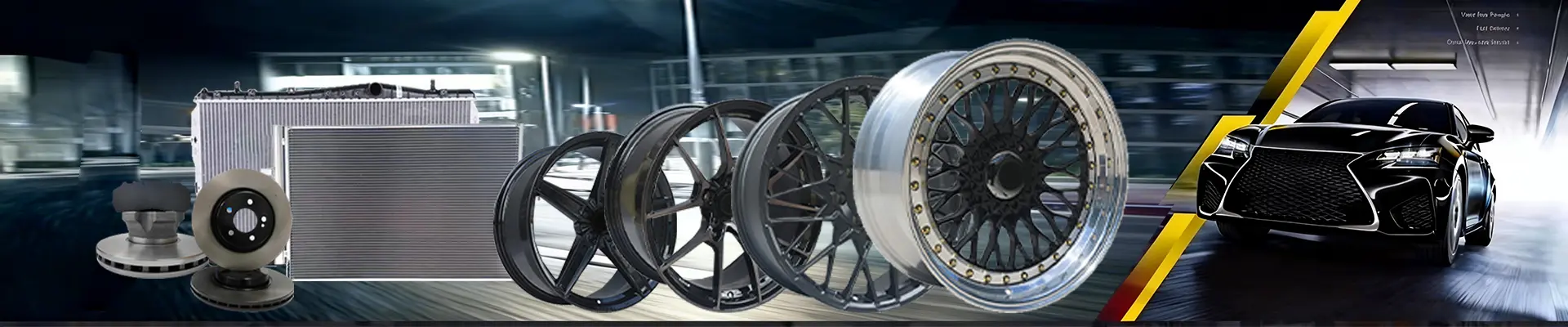
Chinese Alloy Wheels vs Japanese Brands: Wholesale Supplier & Factory Direct Pricing

Chinese Alloy Wheels vs Japanese Brands: Wholesale Supplier & Factory Direct Pricing
The price gap between Chinese and Japanese alloy wheels has little to do with manufacturing quality and almost everything to do with distribution layers and brand premiums.
Chinese alloy wheels that carry identical VIA, JWL, and TÜV certifications as their Japanese counterparts typically cost buyers noticeably less when sourced through a factory-direct channel. The quality perception gap is largely a product of intermediary markups and legacy brand positioning, not actual engineering differences. A Chinese alloy wheels wholesale supplier offering direct factory access can help buyers save substantially while maintaining the same certification-backed structural integrity.
I remember sitting across from a modification shop owner in Bangkok who kept sliding my quotation back across the table. He would flip through our VIA test reports, glance at the TÜV certificates, then set them aside and say something like "the Japanese brands have been doing this for decades — can your wheels really compare?" I used to argue specs and certification parity, but it never landed. What I eventually realized was that he was not comparing engineering data at all. He was comparing a story he could tell his customers — a story built on Japanese heritage and the premium that story commands. Meanwhile, the factory-direct pricing we offered, which saved his shop a significant portion per unit, had no narrative he could repeat at the counter. That was the moment I stopped debating quality assumptions and started breaking down cost structures instead. [NEED_CITE: certification testing standards and procedures are identical across accredited laboratories regardless of manufacturing origin]
Once buyers understand that the certification playing field is level, the real conversation shifts to where the money actually goes.
Are Chinese Alloy Wheels Really the Same Quality as Japanese Brands?
The short answer is yes — when both sets of wheels pass through the same accredited certification bodies using the same testing protocols, the structural and material performance requirements are identical.
The confusion stems from a misunderstanding of how international wheel certifications actually work. VIA, JWL, TÜV, and DOT are not brand-specific quality seals. They are testing standards administered by independent accredited laboratories. A wheel submitted for VIA certification from a factory in Shandong goes through the same dynamic radial fatigue test, the same impact test, and the same bending fatigue test as a wheel submitted from a factory in Niigata. The testing equipment, the load parameters, the failure thresholds — all of it is defined by the standard, not by the country of origin. [NEED_CITE: VIA and JWL certification test procedures and acceptance criteria per Japanese automotive standards]
What differs is the volume of wheels each market produces and the cost structure around that production. Japanese manufacturers historically built strong brand equity in motorsport and OEM supply, which allowed them to command premium pricing. Chinese manufacturers, over the past decade, have invested heavily in the same certification infrastructure — not to copy Japanese brands, but to access the same global markets those brands serve.
I once worked with a distributor in the Middle East who had been exclusively purchasing from a well-known Japanese brand. When he finally agreed to test a batch of comparable specifications from our production facilities, the dynamic balance readings, the runout measurements, and the salt-spray endurance results were within the same acceptable ranges. The difference was not in the wheel. The difference was in the invoice. [NEED_CITE: alloy wheel certification testing parameters including dynamic radial fatigue and impact testing standards]
The quality gap that many buyers perceive is real — but it exists between certified and uncertified wheels, not between Chinese and Japanese wheels. A Chinese alloy wheels wholesale supplier who can provide verifiable, current certification documents from accredited labs is offering a product that meets the same engineering benchmarks as any certified Japanese alternative.
How Does Factory-Direct Pricing Compare to Japanese Brand Markups?
The majority of the retail price difference between Japanese-branded wheels and Chinese factory-direct wheels comes from distribution markups, not manufacturing cost differences.
To understand this, you need to trace what happens to a Japanese-brand wheel between the factory floor and a retail shelf in Southeast Asia or Latin America. The wheel leaves the manufacturer, then moves to a national master distributor, then to a regional sub-distributor, then to a local dealer or modification shop. Each layer adds margin — typically a meaningful percentage at every step — to cover warehousing, credit terms, marketing support, and profit. By the time the wheel reaches the end buyer, the price can easily be double or more of what it cost at the factory gate.
Now consider the factory-direct model. A buyer sources from a Chinese alloy wheels wholesale supplier who manufactures the wheel, handles export documentation, and ships directly. There is no master distributor. There is no regional sub-distributor. The margin that would have been split among three or four intermediaries stays with the manufacturer and the buyer.
| Cost Component | Japanese Brand (Multi-Layer Distribution) | Chinese Factory-Direct |
|---|---|---|
| Base Manufacturing | Comparable | Comparable |
| Brand Premium | Substantial | Minimal |
| Master Distributor Margin | Added | Eliminated |
| Regional Sub-Distributor Margin | Added | Eliminated |
| Local Dealer Markup | Added | Eliminated |
| Certification Cost | Included | Included |
| Final Buyer Price | Significantly Higher | Noticeably Lower |
I sat down with a wholesale buyer in Jakarta who had been running both supply chains side by side. He showed me his landed cost sheets. The Japanese-brand wheels, after all distribution layers and import duties, were arriving at his warehouse at a per-unit cost that was substantially higher than our factory-direct pricing — even after he added ocean freight from Shandong. The certification documents were equivalent. The specifications matched. The only variable was the number of hands the product had passed through. [NEED_CITE: typical distribution margin structures in automotive aftermarket wheel supply chains]
This is not a secret. It is basic supply chain economics. But it is rarely discussed openly because the entire Japanese-brand distribution ecosystem depends on buyers not doing this math.
What Certifications Should Buyers Verify When Switching Suppliers?
Before placing any order, buyers should request current, verifiable certification documents from accredited testing laboratories — not self-issued quality certificates from the manufacturer.
The certifications that matter in the global alloy wheel market are well-defined. VIA and JWL are the Japanese vehicle inspection standards, widely recognized across Asia and the Pacific. TÜV is the European technical certification, required for market access in Germany and increasingly requested across the Middle East and Latin America. DOT covers the United States market. ISO 9001 confirms the manufacturer’s quality management system. CCC is required for the Chinese domestic market and signals baseline manufacturing compliance.
Here is what buyers need to verify:
- Certificate authenticity: Contact the issuing laboratory directly to confirm the certificate number matches the product specification.
- Certificate currency: Ensure the certification has not expired and covers the specific wheel dimensions and designs being ordered.
- Scope coverage: Verify that the certification explicitly lists the sizes, PCD configurations, and offsets in your order.
- Testing lab accreditation: Confirm the laboratory itself holds ISO 17025 accreditation for the relevant test methods.
| Certification | Market Coverage | Testing Focus | Verification Method |
|---|---|---|---|
| VIA / JWL | Japan, Asia-Pacific | Structural integrity, dynamic fatigue | Direct lab confirmation |
| TÜV | Europe, Middle East, Latin America | Dimensional accuracy, material strength | TÜV database lookup |
| DOT | United States | Impact resistance, labeling compliance | NHTSA manufacturer registration |
| ISO 9001 | Global | Quality management system | Accredited registrar database |
A modification shop owner in Latin America once told me he switched suppliers after discovering that his previous Japanese-brand source could not produce current TÜV documentation for several sizes in his range. The certifications had expired and were never renewed, but the wheels kept shipping. When he moved to a Chinese alloy wheels wholesale supplier who maintained active, verifiable TÜV and VIA certificates across the full size range, his compliance risk dropped to zero — and so did his per-unit cost. [NEED_CITE: ISO 17025 accreditation requirements for testing laboratories issuing wheel certifications]
The lesson is straightforward: buy the document first, then buy the wheel.
Which Specifications Match Between Chinese and Japanese Wheel Lines?
Modern Chinese manufacturing facilities produce alloy wheels across the same size ranges, surface finish options, and vehicle fitment coverage as major Japanese brands — with full custom capability.
The specification gap that may have existed a decade ago has closed. Today, a qualified Chinese alloy wheels wholesale supplier can match Japanese-brand offerings across virtually every dimension that matters to aftermarket buyers and modification shops.
| Specification | Japanese Brand Range | Chinese Factory-Direct Range |
|---|---|---|
| Diameter Coverage | Full passenger and SUV range | Full passenger, SUV, truck, and racing range |
| Width Options | Standard and wide fitments | Standard, wide, and custom concave profiles |
| Surface Finishes | Machined face, matte, gloss, painted | Machined face, chrome, matte, gloss, bronze, gunmetal, hyper silver, full custom |
| Vehicle Fitment | Major Japanese and European platforms | Global platforms including Japanese, European, American, and Korean |
| Custom Offset/PCD | Limited to catalog options | Full OEM/ODM customization available |
| Certification Availability | VIA, JWL, TÜV standard | VIA, JWL, TÜV, DOT, ISO, CCC across product lines |
The surface finish technology deserves specific attention. Machined face finishes, which require precision CNC lathe work followed by clear coat application, were once a Japanese manufacturing stronghold. That advantage has dissolved. Chinese production facilities now run the same multi-axis CNC equipment, use the same coating chemistries, and achieve the same visual and corrosion-resistance results. When I walk through a production line and watch a machined-face wheel come off the lathe, the finish quality is indistinguishable from what I used to see coming out of Japanese factories — and the salt-spray endurance testing confirms it. [NEED_CITE: alloy wheel surface treatment technologies and corrosion resistance testing standards]
A wholesale buyer in the Gulf region recently consolidated his entire purchasing from three separate Japanese-brand sources into a single Chinese factory-direct relationship. The reason was not just cost. It was specification flexibility. He needed staggered fitments, custom offsets for luxury SUV applications, and a bronze finish that matched a specific shade his modification shop clients demanded. The Japanese brands could offer some of this through catalog options. The factory-direct supplier offered all of it as standard capability, with minimum order quantities low enough to make small-batch testing practical.
How to Transition from Japanese Brands to Chinese Suppliers Risk-Free?
A structured transition approach — starting with certification verification, moving to sample testing, and scaling through controlled trial orders — eliminates the risk of switching supply sources.
Buyers who have relied on Japanese brands for years understandably hesitate to change. The reputation is established, the relationships are comfortable, and the perceived risk of switching feels high. But the risk of not switching — paying substantially more for equivalent product — compounds every single month.
Here is the transition framework that works:
-
Audit certifications first: Before discussing pricing, request current certification documents for your exact size and specification requirements. Verify them directly with the issuing laboratories. If the supplier cannot provide verifiable, current certifications for your specific needs, move on.
-
Order samples for physical evaluation: Place a small sample order — as few as a handful of units per size — and run your own incoming inspection. Check runout, balance, finish quality, and packaging. Compare directly against your current Japanese-brand inventory.
-
Run a controlled trial batch: Once samples pass, place a trial order sized for a single container or a partial container. Ship it through your normal logistics channel. Track delivery timing, condition on arrival, and any customs documentation issues.
-
Gather end-customer feedback: Install the trial batch wheels on customer vehicles. Monitor for any balance issues, finish complaints, or fitment problems over the first several months.
-
Scale based on data: If the trial batch performs identically to your Japanese-brand product — which it should, given equivalent certifications — begin shifting regular order volume to the new source.
A modification shop network in Southeast Asia followed this exact sequence. They started by ordering samples across their top-selling sizes. The samples passed every internal inspection. They moved to a trial batch, which arrived on schedule with complete documentation. End-customer feedback was indistinguishable from their previous Japanese-brand wheels. Within a few ordering cycles, they had shifted the majority of their purchasing volume — and their per-unit cost had dropped noticeably across the board. [NEED_CITE: best practices for automotive aftermarket supplier qualification and transition procedures]
The key is to let data drive the decision, not assumptions. If the certifications match, the samples pass, and the trial batch performs — there is no rational reason to keep paying a premium for a brand name.
Conclusion
The choice between Chinese and Japanese alloy wheels is not a quality decision — it is a cost structure decision.
Certified Chinese factory-direct wheels meet the same engineering standards as their Japanese-brand counterparts. The price difference reflects distribution layers and brand premiums, not manufacturing capability gaps. Buyers who verify certifications, test samples, and transition through controlled trial orders can access equivalent quality at a substantially lower cost — and the data from every market region confirms this works.


