Summer 25% discount on all last year's bike models

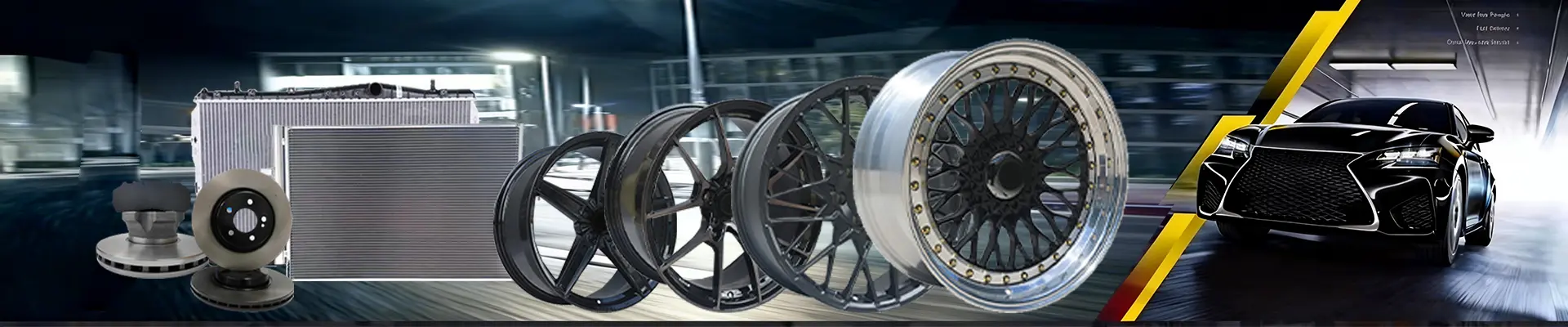
Wholesale 2026 Alloy Wheels for Truck | OEM Manufacturer Bulk Supply

Wholesale 2026 Alloy Wheels for Truck | OEM Manufacturer Bulk Supply
Most buyers think forged wheels are always the best choice for heavy-duty fleets. They are not. The best alloy wheels for truck depend entirely on load profile, certification market access, and landed cost at volume — not on marketing hype around forging.
If you are sourcing best alloy wheels for truck for fleet replacement or distribution, the answer is a three-axis matrix: match the manufacturing process to your axle load range, verify certification before committing to a container, and calculate true landed cost including compliance risk — not just per-piece FOB price.
I spent years handling customs paperwork at Yantian port before moving to the trade side of the wheel business. One morning I got a call about a full container of 22.5-inch truck rims stuck in Lagos for over ten days — the commercial invoice listed an HS code for passenger car rims, while the actual goods were heavy-duty commercial vehicle wheels with a different alloy composition declaration. The buyer was already paying demurrage, and the storage fees ended up costing several times the original freight saving we had negotiated. That single shipment taught me more about what "best" really means than any product catalog ever could [NEED_CITE: HS code classification rules for aluminum alloy wheels per WCO Harmonized System].
That is why the rest of this guide is structured around the three decisions that actually determine whether a wheel order succeeds or fails in the field.
What Makes the "Best" Truck Alloy Wheel for Your Fleet?
There is no single best alloy wheels for truck — the right choice is the one that matches your specific load cycle, target market certification, and volume economics.
Commercial vehicle wheels are judged on three non-negotiable axes: structural capacity under sustained load, regulatory clearance for the destination country, and total cost per wheel when duty, freight, and compliance risk are included. A wheel that wins on price but lacks JWL certification cannot legally enter Japan; a wheel that passes TÜV but is priced for the European aftermarket will destroy your margin in West Africa.
Fleet operators in the Middle East who switched entire rigs from steel to aluminum reported meaningful fuel savings and noticeable brake temperature reduction on long desert hauls, but only after they confirmed the load index matched their gross axle weight ratings. Meanwhile, a Latin American distributor who chased the lowest per-piece quote ended up paying for a full container return because the wheels carried no recognized certification stamp — the customs authority refused clearance, and the re-export logistics cost several times the original unit savings [NEED_CITE: commercial vehicle wheel load index standards per ETRTO and TRA].
The pattern is consistent: buyers who define "best" by process alone (forged vs. cast) or by price alone (lowest FOB) almost always encounter problems downstream. The best alloy wheels for truck are defined by fit-to-purpose, not by specification sheet prestige.
Casting vs Forging vs Flow-Formed: Which Process Fits Your Fleet?
Manufacturing process should be selected based on your axle load range and replacement cycle — not on the assumption that forging is automatically superior.
The three dominant processes for commercial aluminum wheels each occupy a distinct zone on the load-weight-cost triangle. Gravity casting delivers the lowest unit cost and suits light-duty or regional distribution where axle loads stay moderate. Flow-forming (also called rotary forging or spin-forming) produces a rim barrel with grain flow similar to forged wheels while retaining a cast center disc — this hybrid approach offers a strong middle ground for mixed fleets. Monoblock forging delivers the highest fatigue resistance and the lowest weight, but at a unit cost that only justifies itself on long-haul heavy axle loads where fuel savings and extended service life offset the premium over multiple years [NEED_CITE: fatigue life comparison of cast vs forged aluminum wheels per SAE J2530].
| Process | Load Capacity | Weight | Unit Cost | Best Suited For |
|---|---|---|---|---|
| Gravity Casting | Standard | Heaviest | Noticeably reduced | Regional light-duty, price-sensitive markets |
| Flow-Forming | Standard to High | Noticeably reduced | Moderate | Mixed fleets, medium-haul regional |
| Monoblock Forging | Highest | Substantially reduced | Highest | Long-haul heavy axle, fuel-critical operations |
A West African transport company running 40-ton gross combinations initially specified forged 22.5 inch truck alloy wheels OEM across the entire fleet. After reviewing actual route data — mostly port-to-warehouse runs under 200 kilometers with frequent stops — we recommended flow-formed wheels for the majority of the fleet and reserved forged wheels only for the long-haul intercity tractors. The blended approach delivered most of the weight saving at a fraction of the capital outlay, and the fleet manager later confirmed that tire wear patterns and brake temperatures stayed within expected ranges across both wheel types.
The mistake many buyers make is treating forging as a universal upgrade. For a regional distributor whose customers replace wheels every few years due to curb damage rather than fatigue failure, the extra cost of forging delivers almost no return. The best alloy wheels for truck are the ones whose process matches the actual failure mode in your operating environment.
Critical Specs: Size, Load Rating & Fitment for Heavy-Duty Trucks
Specification mismatch is the single largest cause of return claims in wholesale truck alloy wheels supplier transactions — and almost all of them are preventable with a pre-order parameter check.
Commercial truck wheels carry a dense set of fitment parameters, and getting even one wrong means the wheel either will not mount, will not carry the intended load, or will fail inspection at the destination. The critical parameters every buyer must verify before signing a purchase order include: rim diameter (typically 17.5, 19.5, or 22.5 inches for medium and heavy trucks), rim width (6.00 to 9.00 inches depending on application), PCD (pitch circle diameter — commonly 10 inches or 285 mm for heavy-duty, but 8 inches for some medium-duty platforms), offset or ET value (which determines how the wheel sits relative to the hub and affects dual-spacing on rear axles), center bore diameter (must match the hub pilot exactly), and the load index rating stamped per tire and wheel industry standards [NEED_CITE: truck wheel fitment parameter definitions per TIA and ETRTO standards].
| Parameter | What It Controls | Risk If Wrong |
|---|---|---|
| Rim Diameter | Tire bead seat compatibility | Tire will not mount |
| PCD | Hub bolt pattern alignment | Wheel will not bolt on |
| Offset (ET) | Dual spacing and fender clearance | Rubbing or unsafe track width |
| Center Bore | Hub pilot centering | Vibration and stud shear |
| Load Index | Maximum safe axle capacity | Structural failure under load |
A European fleet procurement manager once sent us a purchase order for 22.5 inch truck alloy wheels OEM with the correct diameter and PCD, but the offset value was copied from a passenger car catalog. Had we shipped without flagging it, the rear dual wheels would have interfered with the brake chambers on their specific chassis. We caught it during the pre-production drawing review and adjusted the ET before the first mold run — saving the buyer what would have been a full container rejection at the port of entry.
Always request a fitment confirmation drawing from your wholesale truck alloy wheels supplier before production begins. The drawing should show all critical dimensions against your vehicle specification, and both parties should sign off. This single step eliminates the majority of return claims in commercial wheel transactions.
Certifications That Matter: DOT, JWL, TÜV & Market Access
Certification is not a paperwork formality — it is the gate that determines whether your shipment clears customs or sits in a bonded warehouse accumulating daily storage charges.
Different markets require different certification stamps, and the consequences of shipping without them range from delayed clearance to outright seizure. The major certification frameworks that buyers of heavy duty truck rims bulk must understand include: DOT (U.S. Department of Transportation) for the North American market, JWL and VIA for Japan, TÜV for Germany and much of the European Union, CCC for China domestic sales, and ISO 9001 as a baseline quality management requirement that almost all serious buyers now expect regardless of destination [NEED_CITE: international wheel certification requirements by market per ISO and regional transport authorities].
| Certification | Primary Market | What It Verifies |
|---|---|---|
| DOT | North America | Structural integrity per FMVSS |
| JWL / VIA | Japan | Dynamic radial and cornering fatigue |
| TÜV | Germany / EU | Full technical conformity assessment |
| CCC | China | Domestic market safety compliance |
| ISO 9001 | Global baseline | Quality management system maturity |
A buyer in Southeast Asia once sourced a large batch of 22.5 inch forged aluminum wheels for commercial vehicles from a factory that could only provide self-issued test reports — no third-party certification. The wheels passed the buyer’s own incoming inspection, but when the shipment reached the destination port, customs demanded a recognized certification mark. The container was held for weeks, the buyer had to arrange re-export at their own cost, and the total loss — including freight, duty paid on import, and re-shipment — ended up being a mid-six-figure figure in their local currency. The per-piece price saving they had negotiated was a tiny fraction of that loss [NEED_CITE: customs clearance rejection rates for uncertified automotive wheels].
When evaluating a wholesale truck alloy wheels supplier, ask for copies of current certification certificates before placing any order — and verify that the certificate covers the exact SKU, size, and PCD you are buying, not just a similar product from the same factory. Certification scope mismatches are a common trap, and they only surface at the worst possible moment: the customs desk.
Wholesale Pricing & MOQ: How to Source Cost-Effectively
The real cost of a wheel order is not the per-piece FOB price — it is the landed cost including freight, duty, certification compliance, and the hidden cost of MOQ-driven inventory risk.
Wholesale pricing for forged aluminum wheels for commercial vehicles follows a clear volume gradient: unit cost drops noticeably as order quantity rises, but the marginal saving per additional piece shrinks after a certain threshold. Buyers who understand this gradient can optimize their order size to balance unit cost against working capital and warehouse space. Most manufacturers offer tiered pricing — for example, a lower unit price at a full container load compared to a partial container — and the difference between tiers is often large enough to justify consolidating orders across multiple SKUs into a single shipment [NEED_CITE: volume pricing structure for commercial alloy wheels per industry sourcing benchmarks].
MOQ (minimum order quantity) is the other lever that shapes real cost. Stock sizes in standard finishes often carry a low MOQ, sometimes as few as a couple of dozen pieces, which suits modification shops and e-commerce sellers testing new SKUs. Custom finishes, special PCDs, or private-label branding typically require a higher MOQ because the factory must set up dedicated production runs and packaging lines. The key is to match your MOQ to your actual sales velocity — ordering a full container of a slow-moving custom SKU to hit a lower unit price is a false economy if the inventory sits for months before turning.
| Order Type | Typical MOQ Range | Best Suited For |
|---|---|---|
| Stock sizes, standard finish | Noticeably reduced | Testing, e-commerce, modification shops |
| Custom finish or PCD | Moderate to high | Distributors with established demand |
| Private-label OEM | High | Brand owners, exclusive territory partners |
A distributor in Latin America who specialized in aftermarket truck wheels wanted to launch a private-label line of 22.5 inch truck alloy wheels OEM in a custom matte black finish. Their initial plan was to order a very large quantity to drive the unit price down. After reviewing their sales data for similar SKUs, we recommended starting with a moderate first order in the custom finish — enough to qualify for the custom-tier pricing, but not so large that unsold inventory would tie up their warehouse for an extended period. The first batch sold through within a reasonable cycle, and they placed a second, larger order with confidence based on actual market response. Their total inventory carrying cost stayed controlled, and their per-piece landed cost ended up very close to what the large-order scenario would have delivered — without the cash flow strain.
The best alloy wheels for truck sourcing strategy is one that treats MOQ and pricing tiers as variables to optimize against your actual demand pattern, not as fixed constraints to accept passively. A flexible wholesale truck alloy wheels supplier will work with you on MOQ structure and production scheduling to keep your landed cost competitive without forcing you into inventory positions that hurt your cash flow.
Conclusion
The best alloy wheels for truck are defined by three-dimensional fit — load-matched process, verified certification, and volume-optimized sourcing — not by any single specification or price point.
Buyers who evaluate wheel suppliers against this matrix consistently avoid the two most expensive mistakes in the category: shipping product that cannot clear customs, and over-investing in inventory that does not match actual demand. Process selection, specification verification, and MOQ negotiation are not separate tasks — they are interconnected levers that together determine whether a wheel order delivers margin or destroys it.


