Summer 25% discount on all last year's bike models

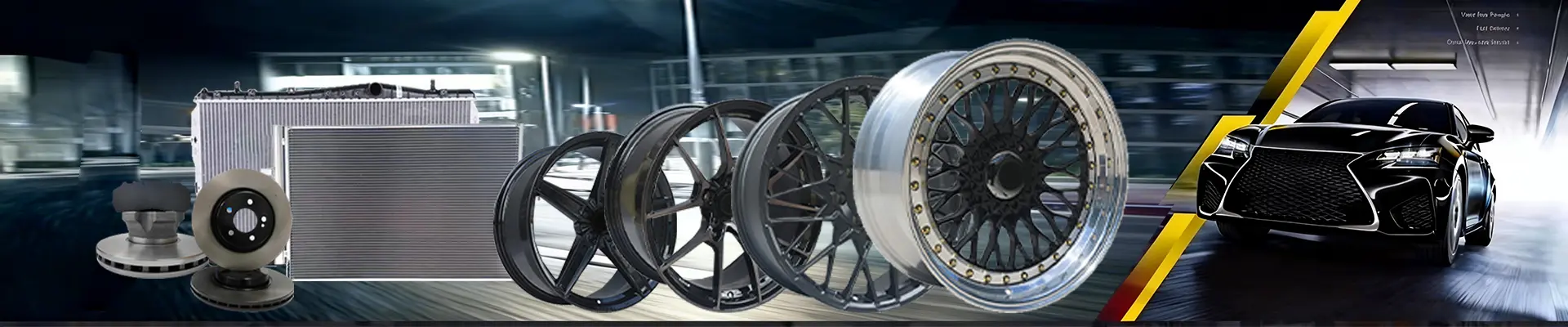
Buy Car Rims Bulk Order Wholesale Supplier

Buy Car Rims Bulk Order: Wholesale Supplier Guide for Distributors & Shops
Unit price is the cheapest part of a bulk rim order. The real cost hides in surface coating grade, pallet engineering, and whether your supplier can actually trace a single batch back to the casting ladle.
When buying car rims in bulk order, the decision is won or lost on three things: salt-spray endurance of the finish, packaging design rated for ocean transit, and the depth of the supplier’s audit trail — not the per-piece quote on the spreadsheet.
I spent my early years on the shop floor in Jinan, grinding cast blanks and running go/no-go gauges on bolt patterns before the factory sent me out to meet overseas buyers. Since then, I’ve walked through repair yards in Lagos and tuning garages in Addis Ababa, watching containers get opened for the first time. One West African fleet client once sourced a batch of matte black 17-inch rims from a cheaper vendor, skipping the salt-spray verification step to save a few cents per piece. After roughly forty days at sea, the containers were opened at the port and the inner spokes were covered in white corrosion. The entire shipment was rejected, and the freight loss alone was multiples of what had been "saved" on unit price. [NEED_CITE: failure mode distribution of salt-spray corrosion in marine-transit alloy wheels per ISO 9227 field reports]
That kind of loss is what separates a real wholesale partner from a quotation factory. Below is how I break down a bulk rim purchase — the specs that actually matter, the supplier red flags, the hidden costs most buyers only discover at the port, and how to structure MOQs for different business models.
What Specs Matter Most When Buying Car Rims in Bulk?
Diameter, PCD, and offset are the entry ticket — surface finish grade and salt-spray endurance are where bulk orders actually separate good from defective.
Any buyer can read a fitment sheet. The real technical gap in bulk rim purchasing sits in the coating specification. A gloss black finish and a matte black finish can look identical on a sample, yet behave completely differently after six weeks in a salt-laden container crossing the equator.
| Coating Tier | Salt-Spray Endurance | Typical Use Case | Batch Traceability |
|---|---|---|---|
| Basic E-coat + clear | Vulnerable | Short domestic transit only | Self-reported |
| Standard powder coat | Resistant | Regional distribution | Sample-level |
| Marine-grade multi-layer | Robust | Intercontinental ocean freight | Full batch-level |
| Custom OEM spec | Controlled to buyer spec | Dealer/OEM programs | Verifiable per lot |
[NEED_CITE: ISO 9227 salt-spray testing hours by coating category for automotive alloy wheels]
A Middle East tuning shop I worked with once ordered a trial run of deep-concave wheels in a custom bronze tone. The supplier’s sample looked perfect, but the production batch used a thinner clear layer to hit a lower price point. Within one regional summer, the bronze started peeling near the valve stem area. The shop had to replace dozens of wheels under warranty — far more than the original margin on the order.
When you buy car rims in bulk order, ask for the coating build-up spec in microns, the exact salt-spray test duration the batch was rated for, and whether the test was done on a coupon from the same production run or on a generic reference panel. [NEED_CITE: coating thickness measurement standards for automotive alloy wheels per ISO 2808]
How to Evaluate a Wholesale Wheel Rim Supplier?
Certifications on a brochure are marketing. Certifications with batch-level traceability and product-scope alignment are a supply chain.
Most buyers ask for ISO, VIA, TÜV, JWL, or DOT certificates and stop there. The real audit question is: does the certificate actually cover the exact product range and size you are ordering, and can the supplier pull a specific batch number back to the casting date and the alloy ingot lot?
| Audit Dimension | Strong Supplier | Weak Supplier |
|---|---|---|
| Certificate scope | Covers full size and PCD range ordered | Generic certificate, excludes your spec |
| Batch traceability | Full lot-level tracking | Sample-level only |
| Capacity flexibility | Can scale seasonal orders | Fixed to one shift |
| Lead-time mechanism | Contractual with penalty | Verbal estimates |
| Third-party inspection | Welcomes SGS/BV pre-shipment | Refuses or delays |
[NEED_CITE: TÜV and JWL certification scope requirements for aftermarket alloy wheel manufacturers]
A Latin American tire retailer I know needed to stock popular fitments for Toyota, Hyundai, and Chevrolet models — a mix of sizes, offsets, and bolt patterns. Their first supplier quoted attractively but could not guarantee restock timing on the fast-moving SKUs. By the time the second container arrived, the hot sizes were out of stock for weeks, and the slow sizes piled up. The real cost was not the unit price difference — it was the lost shelf turnover.
When evaluating who to buy car rims in bulk order from, request a sample batch certificate tied to a specific production lot, visit the factory or hire a third-party inspector, and confirm in writing whether the quoted lead time is contractual or indicative. [NEED_CITE: third-party pre-shipment inspection standards for alloy wheels per SGS automotive protocol]
What Hidden Costs Kill Bulk Rim Orders?
Ocean corrosion, transit breakage, and restock delays routinely cost more than the unit-price gap between a cheap supplier and a reliable one.
The invoice price is the smallest line in a bulk rim import. The real bill comes from three places most first-time buyers do not model:
- Salt-spray damage in transit. Wheels stacked without anti-corrosion paper or VCI wraps, in a container that sweats through tropical ports, arrive with white oxidation on inner spokes and lug holes. The wheels are technically usable but unsellable as new.
- Packaging failure. Rims shipped loose on a pallet with only stretch wrap — no cardboard dividers, no corner protectors — arrive with curb-rash scratches from rim-on-rim contact. A full container can have a noticeable percentage of sellable stock drop to B-grade.
- Restock latency. A supplier who promises a quick reorder but actually queues your second order behind larger clients leaves your shelves empty during peak season.
| Cost Category | Cheap Packaging | Engineered Packaging |
|---|---|---|
| Salt-spray protection | None | Noticeably reduced |
| Rim-on-rim contact | Vulnerable | Robust |
| Pallet stability | Uncontrolled | Controlled |
| Restock lead time | Self-reported | Contractual |
[NEED_CITE: packaging failure rate data for alloy wheels in ocean container transit per freight industry reports]
A distributor in Southeast Asia once switched from a low-cost supplier to a factory that used individual cardboard separators and steel-strapped pallets. The unit price was slightly higher, but the damage claim rate dropped noticeably, and the insurance premium on subsequent shipments came down as well. [NEED_CITE: ocean freight packaging best practices for automotive alloy wheels]
When you negotiate a deal to buy car rims in bulk order, the packaging spec must be written into the contract — not left as a verbal "we always pack well."
How to Structure MOQ and Lead Time for Different Buyer Types?
A tuning shop, a container-level distributor, and an e-commerce seller need completely different MOQ and restock terms — one supplier profile rarely fits all three.
The MOQ conversation is not about who can offer the lowest number. It is about matching the supplier’s production model to your business rhythm.
- Tuning shops and fitment specialists typically need small batches of trendy styles — deep concave, mesh, multi-spoke — in custom colors and staggered offsets. They need a supplier willing to run short custom batches and hold a core stock of popular sizes for fast reorder.
- Container-level distributors are buying full 40HQ loads of mixed SKUs. They need a supplier with enough casting capacity to fill a container in a single production window, and the flexibility to mix sizes and finishes within that container.
- E-commerce sellers testing new SKUs on Amazon or eBay need the ability to order small trial quantities, get Amazon-ready packaging, and reorder quickly once a listing gains traction.
| Buyer Type | Typical MOQ Need | Lead-Time Priority | Restock Model |
|---|---|---|---|
| Tuning shop | Noticeably reduced | Fast on stock items | Rolling reorder |
| Container distributor | Full container mix | Contractual window | Seasonal planning |
| E-commerce seller | Trial-quantity friendly | Fast on first run | Agile reorder |
[NEED_CITE: MOQ structures and production batching practices in aftermarket alloy wheel manufacturing]
A US-based e-commerce seller once told me they lost an entire summer sales window because their supplier’s "fast reorder" actually meant waiting for the next production slot — which was queued behind a large Middle Eastern order. By the time the wheels arrived, the listing had lost ranking momentum.
When you buy car rims in bulk order, clarify in writing whether the quoted lead time applies to stock items only or to custom finishes as well, and whether your reorder gets production priority or goes to the back of the queue. [NEED_CITE: production scheduling practices for mixed-SKO alloy wheel orders]
What Documentation Do You Need for Smooth Customs Clearance?
A bulk rim order stuck at customs because of a missing certificate of origin costs more per day than the entire order’s margin.
Customs documentation is the boring part of importing that becomes catastrophic when it is wrong. For alloy wheels, the standard document package includes:
- Commercial invoice with full product description, HS code, unit price, and Incoterms
- Packing list with net weight, gross weight, package count, and container number
- Certificate of origin, preferably preferential if the importing country has a trade agreement with China
- Quality certificates (ISO, VIA, TÜV, JWL, DOT, CCC as applicable to the destination market)
- Bill of lading and insurance certificate
[NEED_CITE: HS code classification and customs documentation requirements for alloy wheel imports]
A buyer in West Africa once received a container where the certificate of origin listed the wrong country of manufacture because the supplier had used a template from a previous order. The goods sat at the port for weeks while the paperwork was corrected, incurring demurrage charges that wiped out the order’s profit.
When you buy car rims in bulk order, request a draft document package before the container ships. Verify that the HS codes, country of origin, and product descriptions match exactly across all documents. A one-day pre-shipment document check can save weeks of port storage fees. [NEED_CITE: common customs clearance delays for automotive wheel imports and document error patterns]
Conclusion
Bulk rim purchasing is a supply-chain exercise, not a price-comparison exercise. Surface coating endurance, packaging engineering, batch traceability, and contractual lead times determine whether a container of wheels arrives as sellable inventory or a port-side write-off. Match your supplier’s MOQ model to your business rhythm, lock the packaging spec into the contract, and audit the document package before the ship sails.


