Summer 25% discount on all last year's bike models

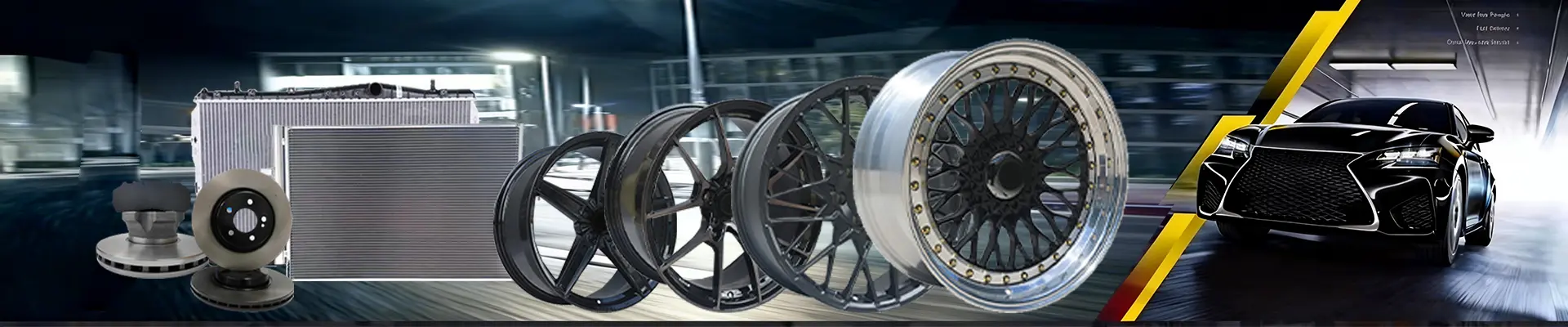
Buy Car Rims for Distributors | Wholesale OEM Alloy Wheels

Buy Car Rims for Distributors | Wholesale OEM Alloy Wheels
The single biggest cost in bulk wheel procurement is never the unit price — it is the container that sits at port because the center bore data does not match the local vehicle fleet. Distributors buying car rims for distributors in volume must lock fitment parameters, certification paperwork, and batch consistency before a single piece enters production; otherwise the landed cost dwarfs any per-piece discount negotiated at the quote stage.
I spent years inside a quality lab in Jinan staring at X-ray films and dynamic balance readouts before moving to the trade side, and the shift from microscope to shipping documents taught me one thing fast: a wheel that passes every factory test can still become dead stock the moment it hits Jebel Ali if the hub-centric ring dimension is off by a millimeter. A Middle East distributor I work with once took delivery of a full container of 20-inch matte-black units; the finish was flawless, the spoke design was trending, yet the center bore spec did not align with the hub caps his end-retailers used for the dominant SUV platforms in the region. The container sat in bonded storage for weeks, and the demurrage bill alone ate into margins more than the entire freight invoice. [NEED_CITE: port demurrage cost structure for delayed container clearance in UAE free zones] That incident reshaped how I structure every order conversation — fitment verification first, price second.
If you are sourcing car rims for distributors across aftermarket channels, the checklist below covers the five questions that determine whether your order ships smoothly or stalls at customs.
What MOQ and pricing structure should distributors expect when buying car rims in bulk?
Stock models typically start at a low piece count, while custom finishes and private-label runs require a higher threshold; volume tiers then unlock meaningful factory-direct savings versus branded retail pricing. Most factories that serve the global aftermarket operate a dual-track system: a stock catalog with popular sizes and finishes available in smaller quantities, and a custom track where you specify diameter, width, offset, color, and branding.
For stock wheels, the entry point is usually around twenty pieces per SKU, which lets a distributor test a new market without committing to a full container. Once the buyer moves to custom paint, machined face combinations, or private-label center caps, the minimum order generally shifts to one hundred pieces per SKU. The reason is simple — setting up a powder-coat line or a CNC lathe for a machined face involves tooling and color-matching runs that only make economic sense above a certain batch size. [NEED_CITE: production setup economics for custom powder coating and CNC machining in alloy wheel manufacturing]
Volume pricing follows a tiered logic. A distributor placing a single container mix of stock and semi-custom wheels can expect per-piece costs substantially below what Japanese or European aftermarket brands charge at the retail level. The gap widens further when the buyer commits to an annual framework agreement with quarterly call-offs, because the factory can plan raw material procurement and furnace scheduling around predictable volume.
A Latin American buyer I dealt with started with a trial order of stock wheels in three popular sizes, just enough to supply a handful of tire shops in São Paulo. The trial confirmed which finishes moved fastest. Six months later, the same buyer placed an annual framework order that was several times the trial volume, and the per-piece cost dropped noticeably. The lesson: treat the first order as a market probe, not a margin event.
| Order Type | Typical MOQ Range | Pricing Tier | Lead Time Impact |
|---|---|---|---|
| Stock catalog wheels | Low piece count per SKU | Standard factory-direct | Shortest production slot |
| Semi-custom finish | Moderate per SKU | Mid-tier discount | Additional coating days |
| Full private-label OEM | Higher per SKU | Deepest volume tier | Full production scheduling |
One risk worth flagging: chasing the lowest possible MOQ can backfire on batch consistency. Smaller runs are more vulnerable to shade variation between coating batches, especially with metallic or hyper-silver finishes. If your retail channel demands uniform shelf presentation, consolidating SKUs into fewer larger batches often produces more consistent results than spreading the same volume across many small orders. [NEED_CITE: batch-to-batch color consistency challenges in small-run powder coating operations]
Which certifications are mandatory for importing alloy wheels to different regions?
Certification is not paperwork — it is the gate that determines whether your container clears customs or gets rejected at the port. Different markets enforce different wheel certification standards, and the documentation must travel with the shipment, not arrive later.
For the United States, DOT compliance is the baseline requirement for any wheel sold as a replacement or aftermarket component. The European Union and several neighboring markets require ECE or TÜV marking. China’s domestic market mandates CCC certification. Japan and markets that follow Japanese industrial standards look for JWL and VIA markings. Each certification body has its own testing protocol covering impact resistance, radial fatigue, and cornering fatigue, and the test reports must reference the exact SKU and size being shipped. [NEED_CITE: comparative requirements of DOT ECE JWL VIA certification standards for aftermarket alloy wheels]
I have seen shipments to West Africa held at the port of destination because the commercial invoice referenced a certification scope that did not cover the specific diameter being imported. The paperwork said the factory was certified, but the test report attached was for a different size range. The cargo sat for weeks while the exporter scrambled to obtain a supplementary test certificate from the lab. The delay cost the distributor relationships with retail partners who had been promised stock by a certain date.
| Region | Primary Certification | Documentation Risk |
|---|---|---|
| North America | DOT | Missing size-specific test report |
| European Union | ECE / TÜV | Scope mismatch with shipped SKUs |
| Middle East & Africa | Varies by country; often ECE or SASO | Late supplementary certificates |
| East Asia | JWL / VIA | Marking not physically on wheel |
The practical takeaway: before confirming any order, ask the factory for a certification matrix that maps each SKU to the destination market’s requirement. A reliable manufacturer will have ISO, VIA, TÜV, DOT, JWL, and CCC coverage already in place, which means the paperwork exists — the task is simply to pull the right documents for the right container. [NEED_CITE: ISO quality management system integration with wheel certification documentation workflows]
How do distributors avoid fitment mismatches that cause container-level returns?
Fitment data errors are the silent destroyer of margin in wheel distribution — a single wrong parameter can turn a full container into a liability. The critical dimensions are PCD, center bore diameter, offset, and bolt specification. Every one of these must be cross-checked against the dominant vehicle platforms in the destination market before production begins.
The process I follow with every new distribution partner starts with a vehicle database exchange. The distributor provides the makes, models, and year ranges that dominate their retail channel. The factory then maps each SKU to those platforms and confirms PCD, center bore, offset, and bolt thread in a written fitment sheet. Both sides sign off. Only then does the order enter the production queue.
A distributor in the Gulf region learned this lesson the hard way. The order was for a popular multi-spoke design in a size that fits several mid-size SUVs. The PCD was correct, the offset was within spec, but the center bore was machined to a dimension that did not accept the hub-centric rings his retail network stocked locally. The wheels physically mounted on the hub, but the gap required a non-standard ring that nobody in the market carried. The distributor had to source custom rings from overseas, adding cost and delay to every retail sale. [NEED_CITE: hub-centric ring sizing standards and aftermarket availability across regional vehicle fleets]
The risk is not limited to center bore. Offset errors cause clearance issues with brake calipers or suspension components. PCD errors prevent mounting entirely. Bolt specification mismatches — such as M12 versus M14 thread, or ball-seat versus cone-seat — create safety hazards even if the wheel appears to fit.
A structured fitment verification protocol should include:
- Written confirmation of PCD, center bore, offset, and bolt spec per SKU before production
- Cross-reference against the distributor’s vehicle coverage list
- Physical sample approval for any new SKU before full batch release
- Clear labeling on each wheel and on the packaging showing the fitment data
Factories with mature OEM and ODM capabilities maintain vehicle fitment databases covering passenger cars, SUVs, light trucks, and performance platforms across major global markets. Leveraging that database during the quoting stage eliminates guesswork and reduces the probability of a fitment-related return to near zero.
What is the realistic lead time from order confirmation to port delivery?
Production lead time for alloy wheels typically falls in the range of several weeks, but total port-to-port delivery depends on finish complexity, seasonal demand, and documentation readiness. A distributor planning inventory replenishment needs to understand each variable separately, because stacking assumptions leads to stockout surprises.
Standard catalog wheels with common finishes — gloss black, matte black, hyper silver — move through production fastest. The raw material is in stock, the molds are ready, and the coating line runs these colors daily. Custom finishes, such as a specific bronze tone or a machined face with painted pockets, add production days because the coating line must be cleaned and recalibrated, and the machined face operation requires dedicated CNC scheduling. [NEED_CITE: production scheduling variables for custom surface finishes in alloy wheel manufacturing]
Peak season — typically the months leading into the Northern Hemisphere spring and summer driving season — compresses available production slots. Factories that serve multiple regional markets simultaneously may have order books that extend well beyond the standard production window during these months. Distributors who plan their ordering cycle around the off-peak window consistently secure faster turnaround.
Shipping time adds another layer. Ocean freight from Chinese ports to Middle Eastern destinations is shorter than to Latin American or West African ports, but customs clearance at the destination port depends entirely on whether the documentation package is complete. A container with all certificates, packing lists, and invoices in order clears in days. A container missing a single test report can sit for weeks.
A practical lead time framework:
| Stage | Typical Duration Range | Variable Factors |
|---|---|---|
| Production | Several weeks | Finish complexity, order volume |
| Inland transport to port | Short transit | Factory proximity to port |
| Ocean freight | Varies by destination | Route, carrier scheduling |
| Customs clearance | Days if docs complete | Certification paperwork readiness |
The most effective way to compress total lead time is to front-load the documentation work. If the certification matrix, fitment sheet, and packing specifications are locked at the order confirmation stage, the factory can prepare export documents in parallel with production rather than after the wheels are packed.
How can distributors verify quality consistency across large batch orders?
Quality consistency in bulk wheel orders is not a matter of trust — it is a matter of defining inspection checkpoints in the purchase agreement and verifying them with evidence before the container is sealed. The three critical tests are X-ray inspection for internal defects, dynamic balance testing for vibration performance, and coating adhesion testing for finish durability.
X-ray inspection reveals porosity, inclusions, and internal cracks that visual inspection cannot detect. A factory operating under a robust quality management system will perform X-ray inspection on a defined sample rate from every production batch. The specific sampling ratio should be stated in the purchase agreement, not left to the factory’s discretion after the fact. [NEED_CITE: X-ray inspection sampling standards for cast and flow-formed alloy wheels]
Dynamic balance testing ensures the wheel does not introduce vibration at highway speeds. Every wheel should be tested, not sampled, because a single unbalanced unit in a retail box creates a customer complaint that damages the distributor’s reputation far beyond the cost of the replacement.
Coating adhesion testing — typically a cross-cut test per international standards — confirms that the finish will not peel or chip prematurely. The frequency of this test should be defined per batch, and the results should be documented with photographic evidence.
A distributor in Southeast Asia once received a batch where the first few boxes looked perfect, but wheels packed in the middle of the pallet showed micro-chipping around the lug holes. The root cause was a coating adhesion issue on a subset of the batch that had not been caught because the inspection protocol only covered the top-layer units. After that experience, the distributor revised the purchase agreement to require inspection access at three points: after casting, after machining, and before packing. [NEED_CITE: multi-stage quality inspection protocols for alloy wheel batch consistency]
| Inspection Checkpoint | Purpose | Recommended Coverage |
|---|---|---|
| X-ray internal defect scan | Detect porosity and cracks | Defined sample rate per batch |
| Dynamic balance test | Ensure vibration-free performance | Full batch coverage |
| Coating adhesion cross-cut test | Verify finish durability | Per batch with photographic record |
Manufacturers who offer multi-year structural warranties typically have the inspection infrastructure and process discipline to support these checkpoints. The warranty is not just a marketing statement — it is a reflection of the quality system running behind every wheel that leaves the factory.
Conclusion
Successful bulk wheel procurement rests on five locked variables: MOQ structure aligned to market testing, certification documentation matched to destination requirements, fitment data verified against local vehicle fleets, lead time planned around production and shipping realities, and quality inspection checkpoints written into the purchase agreement. Distributors who treat these five elements as pre-production prerequisites rather than post-order details consistently avoid the port delays, retail returns, and margin erosion that plague less structured sourcing operations.


