Summer 25% discount on all last year's bike models

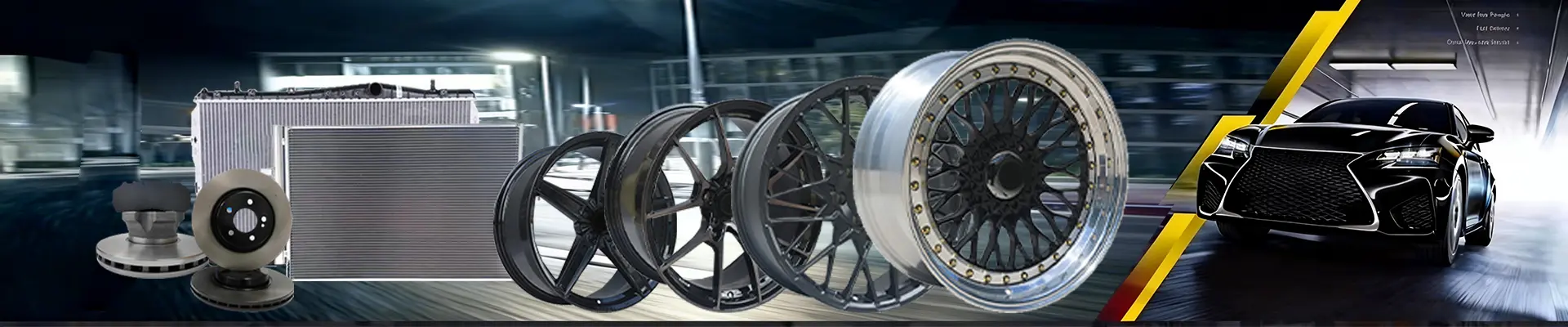
Car Rims Price in Oman: 2026 Wholesale Supplier Guide

Car Rims Price in Oman: 2026 Wholesale Supplier Guide
Most buyers think the FOB quote is the final landed cost. The real margin killer at Muscat Port is missing VIA certification originals—not the rim price itself.
In 2026, the terminal Car Rims Price in Oman breaks into four layers: factory FOB, ocean freight, customs VIA compliance cost, and local channel markup. Sourcing factory-direct from certified Chinese manufacturers can eliminate 40%-60% middleman premiums while keeping the same quality tier as Japanese or European branded wheels.
I still remember the first time a Middle East client called me in a panic. His container of 20-inch MAT cast rims had been sitting at Muscat Port for over a week. The customs officer demanded original VIA test reports, and all we had sent were scanned copies. Daily demurrage charges were eating into the entire order’s margin, and emergency air-freighting replacement documents cost several times the original sea freight. That single paperwork gap turned a profitable shipment into a mid-four-figure loss. Since then, the first line on every quotation I write lists the exact certification package and document delivery timeline—before the price matrix even starts. [NEED_CITE: Oman customs requirements for imported alloy wheels and mandatory VIA/JWL certification documentation]
Let me walk you through how each layer actually forms, where the hidden costs hide, and what your first RFQ must contain to avoid the same port-side headaches.
What Are the Real Price Tiers for Car Rims in Oman in 2026?
Terminal pricing splits into three distinct tiers: wholesale container-load, aftermarket retail, and OEM contract—and the gap between them is almost entirely channel markup, not product cost.
When I break down the Car Rims Price in Oman for a standard 17-inch gravity-cast wheel, the wholesale tier (full-container quantity) sits at the lowest per-piece cost, driven by factory-direct FOB plus consolidated sea freight to Sohar or Muscat. The retail tier—what a modification shop in Seeb charges an end customer—typically adds a substantial margin for warehousing, fitment service, and small-quantity convenience. The OEM tier, used by regional assembly plants, locks in annual framework pricing with stricter certification documentation but benefits from the lowest unit cost due to volume commitment. [NEED_CITE: aftermarket alloy wheel pricing structure across wholesale, retail, and OEM channels in GCC markets]
| Price Tier | Typical Buyer | Documentation Depth | Per-Piece Cost Position |
|---|---|---|---|
| Wholesale Container-Load | Distributors, large retailers | Full VIA/ISO/TÜV original sets | Lowest tier |
| Aftermarket Retail | Modification shops, tire stores | Basic compliance copies | Noticeably elevated |
| OEM Framework Contract | Regional vehicle assemblers | Full batch-level traceability | Lowest tier with volume |
A regional distributor I worked with once compared his local Muscat sourcing cost against a direct factory quotation for the same 18-inch machined-face rim. The local intermediary’s price was substantially higher—enough that even after adding sea freight and customs clearance, the factory-direct route still delivered significant per-piece savings on a full 40-foot container. The distributor switched to direct sourcing within one quarter and reinvested the margin difference into expanding his SKU range.
The takeaway is straightforward: the Car Rims Price in Oman you see on a local dealer’s shelf is rarely the real cost of the product—it is the cost of the product plus every hand it passed through.
How Do Size, Material, and Finish Affect Per-Piece Cost?
A 15-inch basic cast rim and a 20-inch MAT-flow-formed wheel can differ by several multiples in per-piece cost—and surface finish alone can shift the price bracket noticeably.
The Car Rims Price in Oman is fundamentally shaped by three physical parameters: diameter, manufacturing process, and surface treatment. Gravity casting remains the most economical route for standard sizes up to 18 inches, while low-pressure casting and MAT (flow-formed) technology become the baseline for 19-inch and above, where weight reduction and structural integrity matter more. Fully forged wheels occupy the top cost tier, reserved for high-end modification and racing applications. [NEED_CITE: alloy wheel manufacturing process cost comparison across gravity casting, low-pressure casting, flow-forming, and forging]
| Diameter Range | Typical Process | Cost Tier | Common Applications |
|---|---|---|---|
| 12–16 inch | Gravity casting | Entry tier | Compact cars, commercial fleets |
| 17–18 inch | Low-pressure casting / MAT | Mid tier | SUVs, sedans, mainstream aftermarket |
| 19–20 inch | MAT flow-forming | Upper-mid tier | Luxury aftermarket, tuning shops |
| 21–24 inch | Forging or multi-piece assembly | Premium tier | Exclusive modification, racing |
Surface finish adds another cost dimension. A standard gloss black or machined-face finish sits at the baseline. Chrome plating, hyper silver, or custom bronze tones require additional processing stages and raise the per-piece cost noticeably. Full custom paint matching to a buyer’s Pantone reference adds further cost and extends lead time.
A modification shop owner in Salalah once ordered two batches of deep-concave 20-inch rims—one in standard matte black, one in a custom gunmetal shade matched to his showroom branding. The custom-color batch carried a meaningful cost premium and required a longer production window, but the visual consistency across his display fleet justified the investment for his premium client base.
Understanding these layers helps buyers position their Car Rims Price in Oman quotation requests accurately—asking for a forged 22-inch price when your market moves 17-inch cast wheels is a wasted RFQ cycle.
What Hidden Costs Catch Oman Importers at Muscat Port?
VIA certification originals and complete customs documentation are the single largest preventable cost trap—and they do not appear on any product spec sheet.
The Car Rims Price in Oman looks clean on a proforma invoice. What the invoice does not show is the compliance cost layer: VIA test report originals, ISO factory audit certificates, certificate of origin, and commercial documentation formatted to Royal Oman Police customs standards. Missing any single document can trigger port demurrage that runs into thousands of dollars per day, plus emergency air-freight costs for replacement paperwork that dwarf the original sea freight. [NEED_CITE: Oman customs clearance documentation requirements for imported alloy wheels and VIA certification enforcement]
I have seen three distinct failure patterns repeat across Middle East shipments:
- Certification copies instead of originals. Customs officers at Muscat and Sohar ports routinely demand physical original VIA test reports. Scanned PDFs sent by email are not accepted. The cost of air-couriering original documents mid-clearance is substantial.
- Mismatched batch numbers. The VIA report must correspond exactly to the production batch shipped. If the factory’s report references a different batch code than the packing list, the entire container is held pending re-verification.
- Missing ISO factory certificate. Without a current, valid ISO quality management certificate from the manufacturing facility, customs may classify the shipment as non-compliant and require re-export or destruction.
| Document | Risk if Missing | Typical Delay Impact |
|---|---|---|
| VIA original test report | Shipment held at port | Severe daily demurrage |
| ISO factory certificate | Non-compliance classification | Moderate to severe |
| Matching batch codes | Full container quarantine | Extended hold period |
| Certificate of origin | Duty assessment dispute | Moderate delay |
A GCC-based importer once received a full container of 18-inch rims where the VIA report batch prefix did not match the carton markings by a single digit. The container sat at port for an extended period while the factory re-issued corrected documentation and air-freighted it to Oman. The total compliance recovery cost was a painful multiple of what proper pre-shipment document verification would have required.
The lesson is non-negotiable: compliance documentation cost must be written into the first line of any Car Rims Price in Oman quotation—not as an afterthought, but as a structural component of landed cost.
How to Compare China Factory-Direct vs. Local Distributor Pricing?
Under identical certification standards, factory-direct sourcing delivers substantially lower per-piece cost—but only if MOQ, lead time, and warranty terms are verified before the first payment.
The Car Rims Price in Oman quoted by a local Muscat distributor includes the factory cost, the distributor’s import margin, warehousing overhead, local sales margin, and often a territory exclusivity premium. When a buyer sources directly from a certified Chinese manufacturer, those intermediary layers collapse. The savings are significant enough that even after adding ocean freight, customs duties, and local clearance agent fees, the landed cost remains noticeably below the local distributor’s shelf price. [NEED_CITE: cost structure comparison between factory-direct alloy wheel import and local distributor markup in GCC markets]
However, factory-direct sourcing introduces requirements that local distributors handle invisibly:
- MOQ commitment. Stock models can start from small quantities, but custom designs, finishes, or sizes require meaningful minimum order commitment. Buyers accustomed to picking up small batches from a local warehouse must adjust planning cycles.
- Lead time planning. Production plus ocean transit requires forward scheduling. A buyer who needs rims tomorrow cannot use factory-direct—this channel serves planned procurement, not emergency restocking.
- Warranty accountability. A local distributor handles claims face-to-face. Factory-direct requires clear warranty terms written into the purchase contract, including structural warranty duration and replacement logistics.
| Sourcing Channel | Per-Piece Cost | MOQ Flexibility | Lead Time | Warranty Handling |
|---|---|---|---|---|
| Local Distributor | Highest tier | High—small batches | Immediate stock | In-person local |
| Factory-Direct (Certified) | Noticeably lower | Moderate—MOQ applies | Planned production cycle | Contract-based |
| Unverified Factory | Lowest on paper | Low commitment | Uncertain | Minimal to none |
An aftermarket chain operating across multiple Gulf countries once ran a side-by-side cost analysis: sourcing the same 19-inch MAT rim from a Muscat distributor versus direct from a VIA/ISO-certified Chinese manufacturer. Even after factoring sea freight, Omani customs duty, and local clearance fees, the factory-direct landed cost was substantially lower per piece. The chain converted its core SKU range to direct sourcing within one procurement cycle and used the margin recovery to fund expansion into new size categories.
The critical filter is certification: a factory-direct quotation without verifiable VIA, ISO, and TÜV documentation is not a cost saving—it is a future port delay waiting to happen.
What Should Your First RFQ Include to Avoid Port Delays?
A complete RFQ locks in certification deliverables, document handover timelines, and tiered pricing before production starts—not after the container reaches the port.
The Car Rims Price in Oman is only as reliable as the documentation package behind it. Every RFQ that leaves my desk includes a structured checklist that protects both the buyer and the shipment. If your supplier’s quotation does not address these items proactively, treat that gap as a risk signal. [NEED_CITE: best practices for alloy wheel import RFQ documentation and certification verification in GCC procurement]
A well-structured first RFQ should specify or receive confirmation on:
- Certification package scope. List every certification required for Oman customs: VIA test reports, ISO factory certificate, TÜV if applicable, certificate of origin, and any Royal Oman Police-specific format requirements. Confirm whether originals or certified copies will be provided.
- Document delivery timeline. Specify when documents will be handed over—ideally before the vessel departs, or at minimum before arrival at Muscat. Late document delivery is the root cause of most demurrage claims.
- Batch traceability linkage. Confirm that certification report batch numbers will match the physical shipment markings exactly. This is a simple check that prevents complex port holds.
- Tiered pricing structure. Request volume-based pricing tiers so you can evaluate cost at different order quantities—spot order, partial container, and full container load.
- Warranty and quality terms. Structural warranty duration, defect replacement logistics, and claim response timeline must be written into the quotation, not discussed verbally.
| RFQ Component | Risk if Omitted | Verification Method |
|---|---|---|
| Certification scope list | Port hold on arrival | Written confirmation in quotation |
| Document delivery date | Demurrage accumulation | Specific date or milestone in contract |
| Batch code matching | Container quarantine | Pre-shipment sample verification |
| Tiered pricing | Overpayment on volume | Written tier table in quotation |
| Warranty terms | Unresolved defect claims | Contract clause with duration stated |
A buyer from a growing Omani modification shop sent me his first RFQ with a simple request: 50 pieces of 20-inch deep-concave rims in custom matte bronze. What made his inquiry stand out was not the size or finish—it was that he specifically asked for the full certification package list, original document delivery timeline, and batch traceability confirmation before he would consider the price. That single discipline saved him from the port delays that catch unprepared importers every quarter.
When your RFQ treats compliance documentation as a core line item—not a footnote—the Car Rims Price in Oman you receive is the price you actually pay, not the price that grows at the port gate.
Conclusion
The real Car Rims Price in Oman is built from factory cost, freight, compliance documentation, and channel margin—and only buyers who control all four layers capture the full margin opportunity. Factory-direct sourcing from VIA/ISO/TÜV-certified manufacturers eliminates intermediary markups, but the savings only materialize when certification originals, batch traceability, and document delivery timelines are locked into the quotation before production begins. Treat compliance cost as the first line of every price discussion, and the port gate becomes a routine checkpoint instead of a profit trap.


