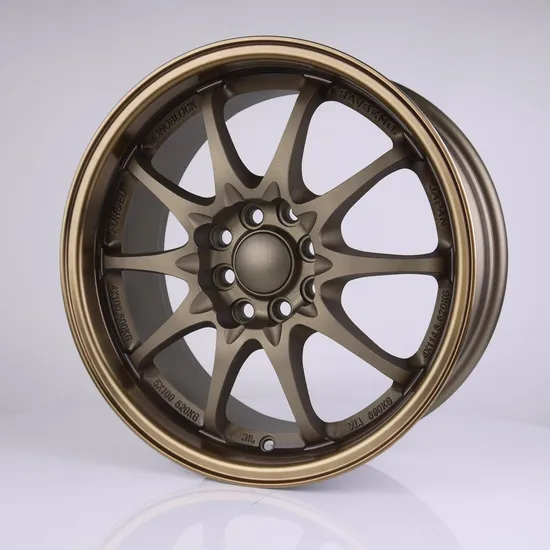
Passenger Car Repair Workshops Auto Parts Wholesale Supplier FAQ
Most workshop owners believe that securing the lowest per-piece price is the ultimate key to profitability, but in reality, ignoring precise fitment data guarantees costly reverse logistics that wipe out those initial savings.
Sourcing alloy wheels for passenger car repair workshops requires strict adherence to vehicle fitment data and international certifications to avoid costly returns and ensure safety. The core answer to common buyer questions is that exact offset and center bore specifications, combined with verified regional certifications, are non-negotiable prerequisites for successful bulk purchasing.
I still remember the early days of running the exhibition floors at AAPEX in Las Vegas and Automechanika in Frankfurt with my mentor. We were navigating the chaotic aisles, trying to decode what independent shops actually needed versus what they thought they needed. During one particular show in Vegas, a procurement manager from a连锁 repair chain in California approached us. He wanted to bulk order a massive batch of 18-inch matte black wheels. The price was right, the style was trendy, and he was ready to sign. I almost processed the order based purely on the visual appeal and his budget. However, right before finalizing, I asked about his primary service bays. It turned out his shop handled a heavy mix of light-duty pickup trucks and mid-size SUVs. I dug into the fitment sheets and realized the offset and center bore data for those specific wheels were tailored for European sedans. If I had shipped that full container without correcting the specs, those wheels would have literally not mounted on the hubs. The shop would have faced installation failures, and we would have eaten the massive reverse freight costs. That single near-miss changed my entire approach. Now, whenever a wholesale inquiry lands on my desk, my very first question is always about the specific vehicle makes their bays service most frequently.
Understanding this dynamic is crucial, so let us break down the practical realities of supplying these facilities.
Why is exact fitment data critical for workshop wheel sourcing?
Precise offset and center bore data prevent installation failures and financial losses, making a comprehensive workshop alloy wheel fitment guide the most valuable tool in a procurement manager’s arsenal.
When passenger car repair workshops order wheels, the assumption is often that a 5×114.3 bolt pattern is enough to guarantee a fit. This is a dangerous oversimplification. The offset dictates how the wheel sits within the wheel well. If the offset is too high, the wheel tucks in and might rub against the suspension components or brake calipers during full lock. If the offset is too low, it pushes out, stressing the wheel bearings and potentially causing the tire to scrub the fender liner.
Center bore mismatches are equally destructive. Many modern vehicles require hub-centric mounting to ensure the wheel is perfectly centered before the lug nuts are torqued. If a supplier provides a wheel with a center bore that is even slightly larger without supplying high-quality hub rings, or if the bore is too small to seat on the hub, the wheel will rely entirely on the lug nuts for centering. This leads to severe vibrations at highway speeds, premature bearing wear, and ultimately, a furious customer returning the vehicle to the passenger car repair workshops for a "fix" that requires buying entirely new wheels.
Consider a scenario where a shop in the Midwest ordered a batch of popular 17-inch wheels for a fleet of local commuter sedans. The supplier shipped wheels with the correct bolt pattern but an incorrect center bore and a slightly aggressive offset. The wheels physically bolted on, but the shop technicians noticed immediate clearance issues with the strut assemblies. The shop had to halt installations, dismantle the mounted tires, and ship the heavy wheels back. The freight costs for returning a full pallet of mounted wheels cost several times the original profit margin of the sale.
To prevent this, professional auto repair shop wheel suppliers must provide exhaustive fitment verification checklists. This means cross-referencing the vehicle’s year, make, model, and trim against the wheel’s exact engineering drawings. It is not just about the diameter; it is about the millimeter-perfect relationship between the wheel and the vehicle’s suspension geometry.
Which certifications do passenger car repair workshops actually need?
TÜV, ISO, and DOT ensure market access and customer safety compliance, meaning that sourcing TÜV certified wheels for repair shops is a legal and operational necessity, not just a marketing bonus.
The global aftermarket is a patchwork of regional regulations, and passenger car repair workshops are on the front line of liability. If a wheel fails structurally and causes an accident, the workshop that installed it can be held partially liable, especially if they cannot prove the parts met local safety standards.
In Europe, the TÜV certification is the gold standard. It involves rigorous dynamic radial fatigue testing, impact testing, and salt spray corrosion resistance evaluations. A workshop in Germany or Austria cannot legally or ethically install non-TÜV certified wheels on customer vehicles. Similarly, in the United States, while the DOT (Department of Transportation) focuses heavily on tires, the underlying manufacturing quality systems of the wheel factory—often verified through ISO 9001 and specific regional load rating certifications—are what protect the shop from liability. In Japan and markets that respect Japanese engineering standards, the VIA and JWL marks are mandatory indicators of structural integrity.
I once worked with a procurement team for a network of passenger car repair workshops expanding into the Middle East. They initially wanted to source the cheapest available wheels to maximize their margin on basic maintenance jobs. I had to walk them through the certification validation steps. We pulled the test reports from the manufacturer. The cheaper option lacked verifiable dynamic load test data for the specific sizes they were ordering. We pivoted to a manufacturer that provided full batch-level TÜV and ISO documentation. Yes, the per-unit cost was higher, but when a local transport authority conducted a random audit on one of their partner shops, the paperwork was flawless. The workshop avoided a massive fine and a potential suspension of their operating license.
Evaluating a supplier means demanding to see the actual test reports, not just a logo on a website. You must verify that the certification covers the exact diameter, width, and load index of the wheels you are buying. A certificate for a 15-inch wheel does not automatically cover a 20-inch wheel from the same design family.
How to balance inventory between standard passenger cars and trending SUVs?
Analyzing local vehicle parc to optimize SKU selection and reduce dead stock is the secret to maximizing turnover for passenger car repair workshops.
There is a persistent myth in the wholesale business that stocking every possible size and style guarantees more sales. For passenger car repair workshops, this is a recipe for disaster. Dead stock ties up capital and consumes valuable floor space. The reality is that a workshop’s revenue is driven by the local vehicle parc—the specific mix of cars actually driving on the roads in their immediate service area.
In many urban and suburban environments, the volume of standard passenger cars (compact sedans, hatchbacks) far outstrips the volume of large SUVs or light trucks. However, the trend toward crossovers is shifting this balance. A smart procurement strategy involves analyzing the historical repair data of the workshop. If seventy percent of the suspension and wheel damage comes from compact and mid-size sedans, the inventory must heavily reflect the 15-to-17-inch fitments for those vehicles.
Conversely, if a shop is located in a region with harsh winters or rugged terrain, the demand for 18-to-20-inch SUV wheels with robust structural warranties will be higher. The key is to avoid the "long tail" of obscure fitments. Passenger car repair workshops do not need to stock wheels for exotic luxury cars or discontinued models that rarely enter the bays. They need deep inventory in the top-selling passenger car fitments.
When we analyze inventory turnover ratios for successful shops, the ones that focus on a curated list of high-velocity SKUs consistently outperform those trying to be a warehouse for every wheel ever made. They balance the high-volume, lower-margin standard passenger car sizes with a selective, higher-margin range of trending SUV specs. This ensures that when a customer walks in with a damaged wheel from a popular daily driver, the shop has it in stock, ready to mount and balance.
What should you verify when evaluating a new wheel supplier?
Checking OEM capabilities, MOQ flexibility, and structural warranty terms reveals whether a partner can truly support the operational demands of passenger car repair workshops.
Not all manufacturing facilities are created equal. Some are merely trading companies slapping labels on boxes, while others are actual engineering-driven manufacturers. For passenger car repair workshops, the reliability of the supply chain is just as important as the quality of the product.
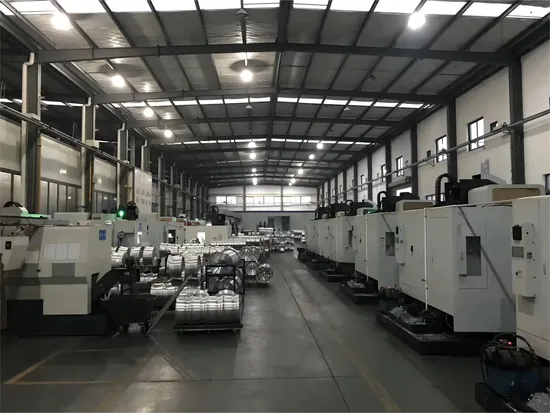
First, verify the OEM capabilities. A factory that supplies wheels directly to vehicle assembly lines for original equipment has already passed the most grueling quality audits in the automotive industry. Their production facilities will have stringent controls over the aluminum alloy composition, the low-pressure die-casting or flow-forming processes, and the CNC machining tolerances. This translates directly to fewer defects when the wheels arrive at your shop.
Second, look at MOQ (Minimum Order Quantity) flexibility. Workshops and their direct distributors often need to test new styles or replenish specific sizes quickly without committing to massive container loads. A supplier that offers low MOQs for stock models allows the workshop to maintain a lean, responsive inventory.
Finally, the structural warranty is the ultimate litmus test. A supplier confident in their manufacturing will stand behind their product with a comprehensive structural warranty. This means if a wheel cracks under normal driving conditions due to a manufacturing defect, the supplier replaces it without a bureaucratic battle.
We supply a massive network of passenger car repair workshops globally, ranging from 12-inch to 24-inch diameters. Our approach is rooted in providing a complete range of passenger car and SUV wheels, backed by multi-certifications like TÜV, ISO, VIA, and DOT. We enforce a strict fitment verification process before any order leaves the production floor, ensuring that the offset, center bore, and bolt patterns are exact. This eliminates the guesswork for the workshop owner and ensures that every wheel installed is safe, compliant, and perfectly matched to the vehicle.
Conclusion
Sourcing wheels for repair facilities is an exercise in precision engineering and risk management, not just price negotiation. By prioritizing exact fitment data, demanding verifiable international certifications, and optimizing inventory based on local vehicle data, workshop owners can protect their margins and ensure customer safety. The right supplier acts as a technical partner, eliminating the costly errors that plague the aftermarket.