OEM Classic Car Restoration Programs Technical Factors Guide
Exact physical dimensions do not guarantee a perfect fit on a vintage chassis.
The core answer to successful restoration lies in aligning original suspension kinematics and load distribution rather than merely replicating modern dimensional specs, ensuring both safety and authentic driving dynamics.
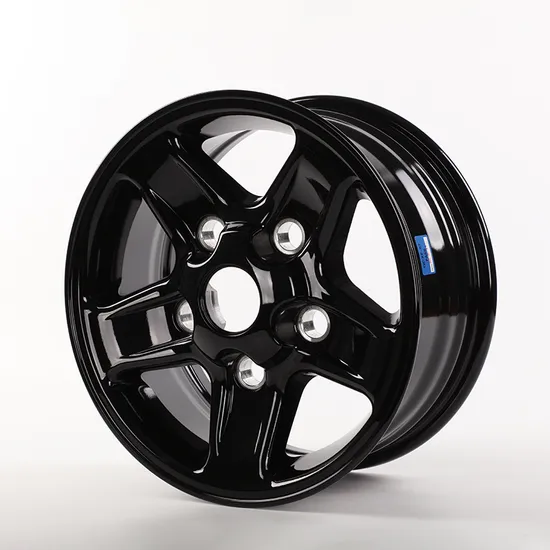
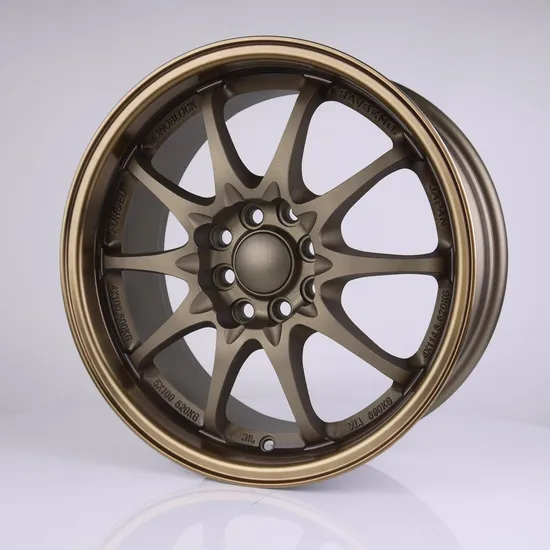
Years ago, while managing operations at our Bangkok representative office, I supervised an OEM wheel project for a local shop specializing in vintage Toyota restorations. We took the modern passenger car offset values and center bore data to develop the tooling. When the shipment arrived at Laem Chabang port and was mounted on the classic chassis, the wheels immediately rubbed against the inner liners. At highway speeds, the severe vibration nearly resulted in a full container return. From that costly mistake, I realized that classic car restoration technical factors are not about simple dimension replication. The original suspension geometry and load distribution of vintage frames operate on entirely different principles compared to modern vehicles. When producing OEM alloy wheels for classic car restoration, every technical factor on the drawing must be verified meticulously; a single millimeter of deviation ruins the reputation. [NEED_CITE: historical evolution of suspension kinematics in vintage versus modern platforms]
Understanding these nuances is the first step toward delivering safe, authentic, and highly sought-after restoration parts to global tuning studios and distributors.
Why Do Modern Wheel Specs Fail on Classic Chassis?
Modern MacPherson strut setups and vintage double-wishbone or solid axle configurations dictate completely different fitment requirements.
Many buyers assume that matching the bolt pattern and overall diameter is sufficient. However, the fundamental difference in suspension kinematics means that modern specifications often lead to catastrophic failures on classic frames. When evaluating classic car restoration technical factors, the scrub radius and camber angle shifts during suspension travel must be prioritized over static measurements. [NEED_CITE: impact of scrub radius changes on vintage steering geometry and stability]
In a recent project for a Middle East restoration shop, a batch of wheels designed with modern offset parameters was installed on a lightweight vintage chassis. Because the vintage suspension geometry reacts differently to lateral forces, the incorrect offset caused severe high-speed instability and accelerated wear on the kingpins. The physical dimensions were identical to the modern donor car, but the dynamic behavior was entirely compromised.
| Fitment Aspect | Modern Chassis Adaptation | Vintage Chassis Requirement |
|---|---|---|
| Static Offset Tolerance | Standard | Strictly constrained by original kinematics |
| Scrub Radius Impact | Minimal on MacPherson | Critical for steering feel and stability |
| Camber Shift During Travel | Predictable linear curve | Non-linear, requiring specific clearance |
To avoid installation failures, sourcing OEM alloy wheels for classic car restoration requires analyzing the dynamic envelope, not just the static hub face. [NEED_CITE: dynamic suspension envelope analysis methods for vintage vehicles]
How to Calculate the Correct Offset and Backspacing?
Precise offset calculation prevents inner liner rubbing while maintaining the original steering geometry and scrub radius.
Calculating the correct parameters is a critical step when defining classic car restoration technical factors. It requires measuring the vintage hub centerline and determining the exact space needed for the brake calipers and suspension components during full compression and steering lock. [NEED_CITE: mathematical formulas for calculating backspacing and offset for vintage hubs]
The process involves several precise steps:
- Measure the vintage hub mounting surface to the outer fender lip.
- Determine the required clearance for the inner suspension components at maximum steering angle.
- Calculate the backspacing by adding the wheel width to the offset, ensuring the tire sidewall clears the vintage leaf springs or control arms.
- Verify the center bore and hub-centric ring requirements to eliminate high-speed vibrations caused by lug-centric mounting.
A European tuning studio once struggled with a vintage chassis upgrade. They used standard passenger car backspacing, which pushed the wheel assembly too far inward. During full suspension compression, the tire sidewall crushed against the vintage frame rail. By recalculating the classic car wheel fitment specifications and adjusting the offset to push the wheel outward by a minimal margin, they restored the original clearance without altering the scrub radius. [NEED_CITE: hub-centric versus lug-centric mounting vibration analysis]
What Are the Load and Structural Requirements for Vintage Frames?
Wheel load indices must strictly match classic axle limits to prevent structural fatigue and brake fade.
A common misconception is that heavier, robust-looking wheels improve the stance of a classic car. In reality, excessive unsprung weight severely degrades vintage braking performance and accelerates suspension wear. When assessing classic car restoration technical factors, the load rating of the wheel must be balanced against the lightweight nature of the vintage frame. [NEED_CITE: unsprung weight ratio impact on vintage braking and suspension fatigue]
Fitting oversized modern rims on a classic lightweight frame often leads to structural issues. The vintage axles and spindles were designed for specific load limits. If the wheel load rating far exceeds the axle capacity, or if the wheel is excessively heavy, the rotational mass overwhelms the original drum or early disc braking systems.
- Load Index Matching: The wheel must support the vintage axle weight limit without adding unnecessary mass.
- Unsprung Weight Control: Keeping the wheel weight within original parameters ensures the vintage suspension can control the wheel movement effectively.
- Structural Fatigue Prevention: Proper load distribution prevents stress concentrations on the vintage spindle and hub assembly.
A US buyer once ordered a full set of heavy, deep-concave wheels for a lightweight vintage sports car. The increased unsprung weight caused noticeable brake fade during extended driving and caused the vintage shock absorbers to overheat. Switching to properly rated, lightweight alternatives resolved the dynamic issues immediately. [NEED_CITE: structural fatigue analysis of vintage spindles under excessive unsprung weight]
How to Verify OEM Quality for Restoration Projects?
Multi-certifications and structural warranties ensure safety and authenticity for daily-driven classics.
Verifying the manufacturing quality is the final, yet most crucial, layer of classic car restoration technical factors. Restoration shops and distributors need assurance that the wheels will not only fit but also withstand the rigors of daily driving on imperfect vintage roads. [NEED_CITE: certification requirements for aftermarket wheels in classic car applications]
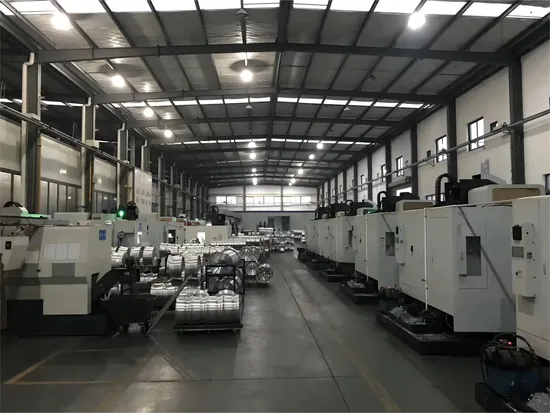
When sourcing OEM alloy wheels for classic car restoration, buyers must look beyond basic dimensional accuracy. The manufacturing facility must adhere to stringent international standards. For instance, our production facilities operate under the Ouya trademark with a massive annual capacity, ensuring batch consistency for large-scale distribution. We provide full OEM/ODM customization, allowing tuning studios to replicate exact vintage profiles while utilizing modern metallurgy for enhanced safety.
Our wheels undergo rigorous testing to meet global market access requirements, holding ISO, VIA, TÜV, DOT, JWL, and CCC multi-certifications. This comprehensive certification matrix guarantees that every wheel meets the structural integrity demands of vintage applications. Furthermore, we back our products with a 3-year structural warranty, providing peace of mind for restorers and end-users alike. With factory-direct pricing and flexible MOQ options, we support everyone from small modification shops to large regional wholesalers in delivering authentic, safe vehicles to the road. [NEED_CITE: structural testing protocols for vintage application alloy wheels]
Conclusion
Authentic restoration demands dynamic precision, not just static measurement.
Mastering classic car restoration technical factors requires a deep understanding of vintage vehicle suspension geometry and strict adherence to original load distributions. By prioritizing correct offset calculations and structural integrity over mere visual replication, manufacturers and distributors can ensure the safety and authenticity of every classic vehicle returning to the road.