How to Evaluate Options for Custom Wheel and Tuning Shops
The cheapest wheel quote you receive today will cost your shop its reputation tomorrow.
To properly evaluate custom wheel suppliers, you must prioritize structural tolerance control and dynamic balancing certifications over mere pricing, ensuring the products survive harsh road conditions without causing catastrophic vehicle failures.
Running aftermarket support operations in Lagos years ago, I witnessed too many modification shops collapse under the weight of failed wheel installations. I recall swapping a batch of large-diameter forged wheels for a local off-road club. The spec sheets looked flawless on paper, but after just a couple of runs on unpaved routes, the center bore tolerances were completely uncontrolled. The resulting vibration literally tore the wheel bearings apart. When I shifted to sourcing, my very first step became inspecting how a factory controls tolerances and performs dynamic balancing. When you evaluate custom wheel suppliers, you have to look past the initial price tag and demand the actual engineering data that keeps vehicles safe on brutal roads [NEED_CITE: correlation between center bore runout and bearing fatigue life].
Let us break down exactly how to separate genuine manufacturers from mere traders.
Why Do Cheap Wheels Fail on Rough Roads?
Hidden structural flaws cause catastrophic failures that go far beyond superficial visual defects.
When you evaluate custom wheel suppliers, the most common trap is assuming visual appeal equals structural integrity. A wheel might look perfect under the showroom lights, but the hidden machining processes dictate its survival on rough terrain. In the off-road scenario mentioned earlier, the vibration did not just annoy the driver; it systematically destroyed the drivetrain. The root cause was a center bore that lacked micron-level precision, causing the wheel to sit slightly off-axis on the hub.
Similarly, consider a daily driver scenario where minor impacts lead to paint peeling and rapid corrosion. This is not just a cosmetic issue; it indicates that the surface treatment lacks the necessary adhesion and thickness to protect the underlying alloy from moisture and road salts. Then there is the fleet scenario, where high-speed steering shakes are traced back to poor dynamic balancing. If the residual imbalance weight is not strictly controlled, the steering components endure continuous stress [NEED_CITE: impact of radial runout on high-speed steering shimmy].
Most buyers think a low price means good value, but the true cost includes warranty claims, replaced suspension parts, and a ruined brand reputation. True quality lies in the hidden structural tolerances that prevent these compounding failures.
How to Verify Tolerance and Balancing?
Requesting verifiable runout data and balancing certificates is the only way to separate real manufacturers from trading companies.
When you evaluate custom wheel suppliers for your tuning shop, you must demand transparency in their quality control. A genuine factory will readily provide batch-level testing reports, while a trader will offer vague assurances.
Here is the methodology you should enforce:
- Center Bore Tolerance: Demand data proving the center bore is machined to strict limits. Uncontrolled tolerances lead to the vibration issues that destroy bearings.
- Radial and Lateral Runout: Ask for the measurement protocols. The factory must measure how true the wheel is both side-to-side and up-and-down.
- Dynamic Balancing Residuals: Require certificates showing the residual imbalance grams after machining.
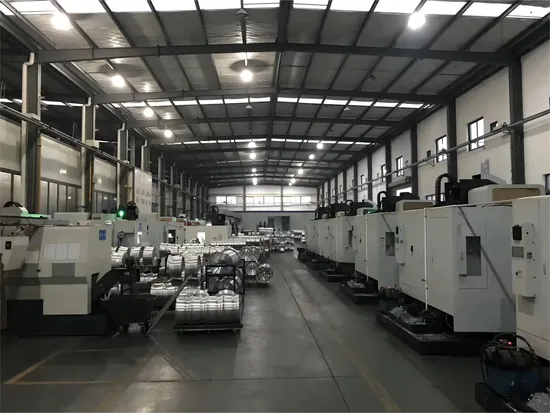
This is where a partner like Yoker Auto Parts proves its worth. Operating under the Ouya trademark with a massive annual production capacity, they do not just claim quality; they back it with multi-certifications including VIA, TÜV, ISO, DOT, JWL, and CCC. Their production facilities enforce strict tolerance control, ensuring that every wheel, from compact sizes to large-diameter options, meets international standards. Furthermore, they offer an extended 3-year structural warranty, a massive indicator of their confidence in their machining precision. When you evaluate custom wheel suppliers, a multi-year structural warranty is the ultimate proof of tolerance control [NEED_CITE: industry standard testing protocols for structural wheel integrity].
What Surface Treatments Survive Harsh Conditions?
Evaluating paint adhesion and corrosion resistance is critical for ensuring long-term durability in harsh environments.
A wheel that looks stunning on day one can look ruined months later if the surface treatment is inadequate. When you evaluate custom wheel suppliers, you must look beyond the initial color match and investigate the pre-treatment and coating processes.
The environment dictates the required treatment level. For coastal areas or regions where roads are heavily salted in winter, standard paint will fail quickly. You need to ask about their salt spray testing endurance. A reliable manufacturer will subject their wheels to extended salt-spray endurance tests to ensure the coating resists bubbling and peeling.
| Treatment Tier | Pre-Treatment Process | Salt-Spray Endurance | Adhesion Level |
|---|---|---|---|
| Premium Custom | Multi-stage chemical wash & nano-ceramic coating | Substantially extended | Robust |
| Standard Aftermarket | Basic acid etching & primer | Standard | Resistant |
| Budget / Unbranded | Minimal cleaning | Noticeably reduced | Vulnerable |
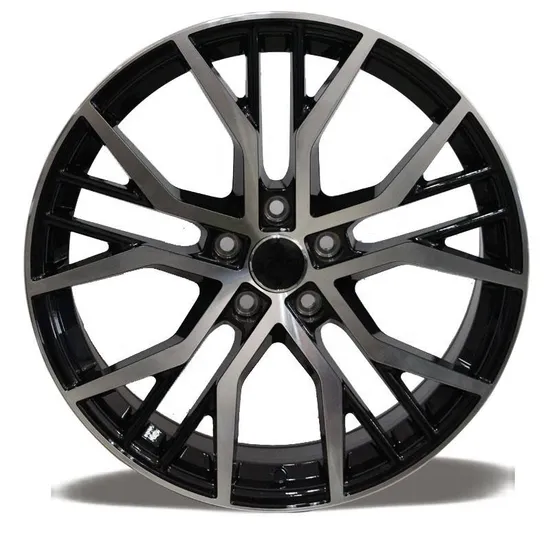
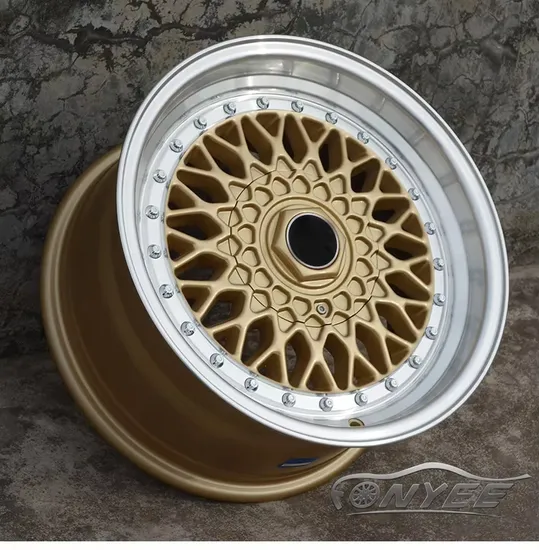
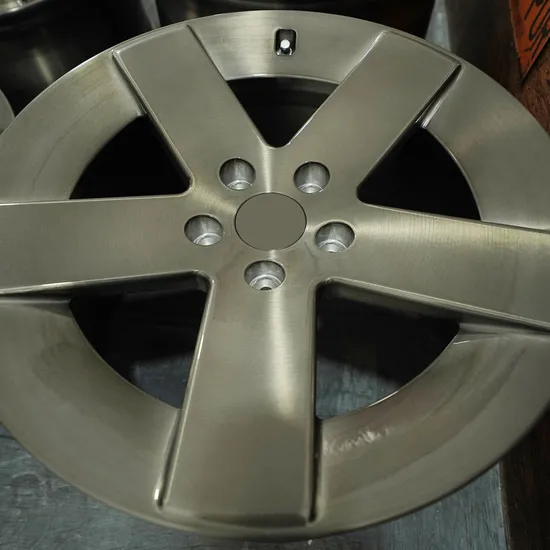
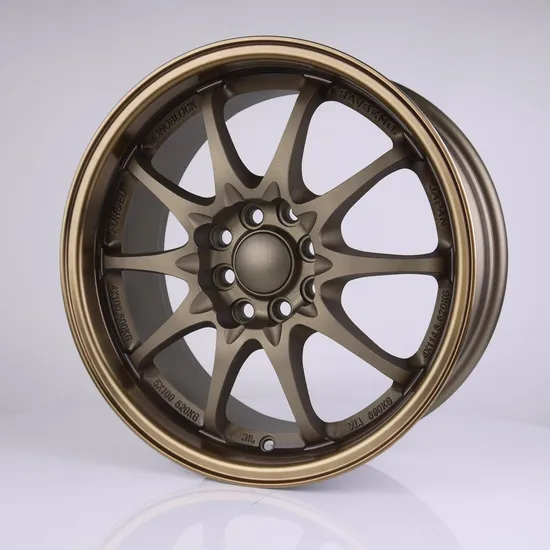
Yoker provides a comprehensive range of surface finishes, including machined face, chrome, gloss and matte black, bronze, gunmetal, hyper silver, and full custom paint options. Their advanced coating lines ensure that whether you need a deep concave mesh style for a show car or a rugged finish for an SUV, the surface treatment survives the elements. When you evaluate custom wheel suppliers, always request physical samples to test the coating thickness and adhesion yourself [NEED_CITE: methodology for evaluating automotive wheel coating adhesion and corrosion resistance].
How to Assess Supplier Reliability?
Checking certifications, warranty terms, and after-sales support structures reveals the true operational stability of a partner.
Pricing and product catalogs are just the entry ticket. To truly evaluate custom wheel suppliers, you must audit their business infrastructure. A reliable partner understands the specific needs of tuning shops and modification stores, offering low minimum order quantities to allow for fast inventory rotation and trend testing.
You need a supplier that supports full OEM and ODM customization, allowing you to create exclusive styles for your clients without massive volume commitments. Lead times must be short and predictable, ensuring your shop does not face empty bays while waiting for stock.
Furthermore, global market access requires proper documentation. Certifications like VIA, TÜV, and JWL are not just marketing badges; they are legal requirements for importing into many regions. A trustworthy supplier provides complete customs documentation and clear logistics support, preventing your containers from getting stuck at ports. When you evaluate custom wheel suppliers, their ability to offer factory-direct pricing that is substantially lower than traditional European or Japanese brands, without sacrificing these certifications, is what maximizes your profit margins [NEED_CITE: importance of international wheel certifications for global aftermarket distribution].
Conclusion
True value in wheel sourcing is defined by engineering precision, not initial price tags.
When you evaluate custom wheel suppliers, prioritizing structural tolerance, dynamic balancing, and robust surface treatments ensures your clients drive safely and your business thrives. Partnering with certified manufacturers who offer verifiable data and long-term structural warranties transforms your shop from a risky gamble into a trusted authority in the modification industry.