Brake Noise Root Cause Checks for Wholesale Auto Parts Suppliers
Brake noise is rarely just a bad batch of pads; it is a symptom of systemic mechanical resonance.
To eliminate brake squeal and avoid false warranty returns, repair shops and distributors must execute systematic brake noise root cause checks across the installation interface, friction materials, and hydraulic layers, rather than simply replacing components based on sound alone.
Years ago, while managing procurement for repair facilities in Jakarta, I faced a nightmare scenario. A wholesale distributor in Surabaya received a bulk shipment of brake pads and immediately filed a massive complaint about severe squealing just days after installation. The threat of a full container return was real. Instead of arguing over material quality, I spent three days crawling under cars in their service bays. The culprit was not the friction material itself. The brake rotors had excessive lateral runout, which, combined with seized caliper guide pins, created a harmonic resonance that screamed under light braking. That ground-level reality reinforced a core truth: diagnosing brake noise requires peeling back the layers of physical installation and mechanical tolerances. [NEED_CITE: correlation between lateral runout and brake squeal frequency per SAE standards]
Let us break down the exact methodology for systematic brake noise root cause checks.
Why Do Brakes Scream?
The automotive aftermarket often operates on a flawed assumption: if the brake pedal vibrates or the wheels howl, the pads are defective. This counter-intuitive reality is that most noise complaints originate from the rotor and hub interface, not the friction couple. Brake noise is fundamentally an acoustic vibration caused by mechanical resonance. When the natural frequency of the brake components aligns with the excitation frequency generated during friction, the system amplifies the sound.
True brake noise root cause checks demand a shift from auditory guessing to physical measurement. Technicians and parts suppliers must understand that over-torquing lug nuts or ignoring microscopic debris on a mounting surface can warp the entire assembly, triggering resonance. [NEED_CITE: mechanical resonance principles in automotive braking systems from international automotive engineering papers]
Step 1: Inspecting the Installation Interface
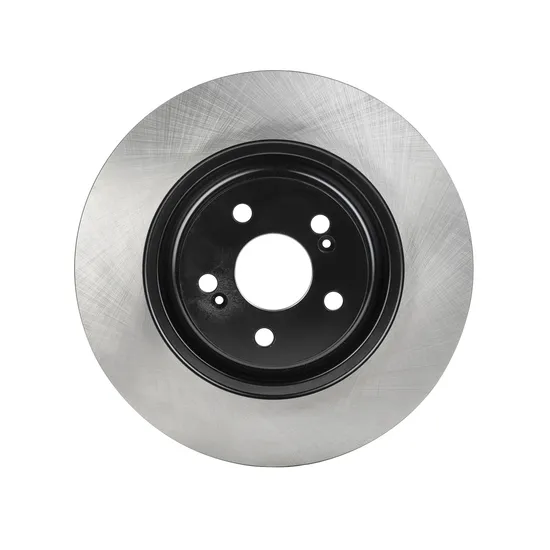
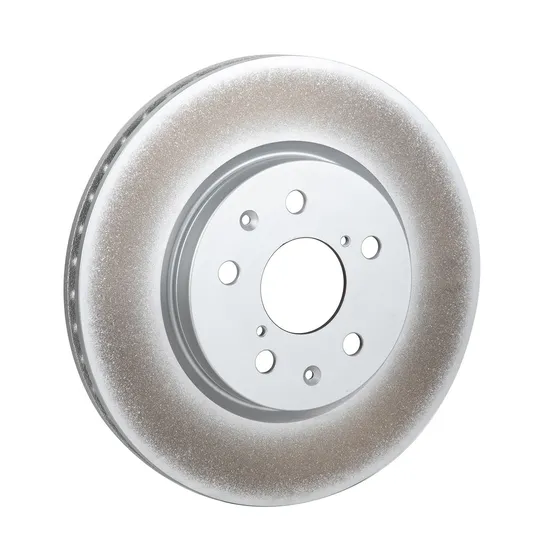
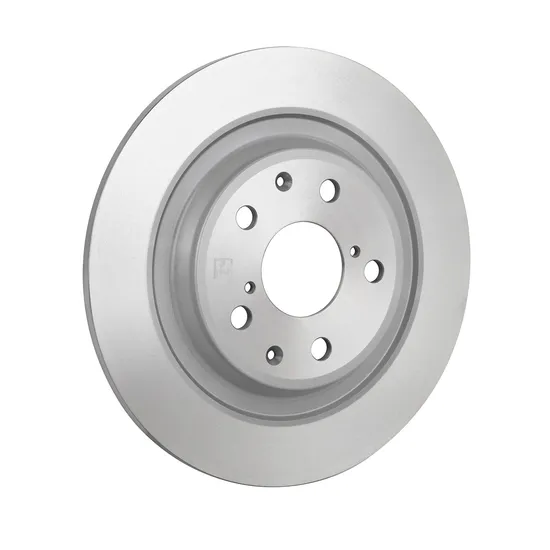
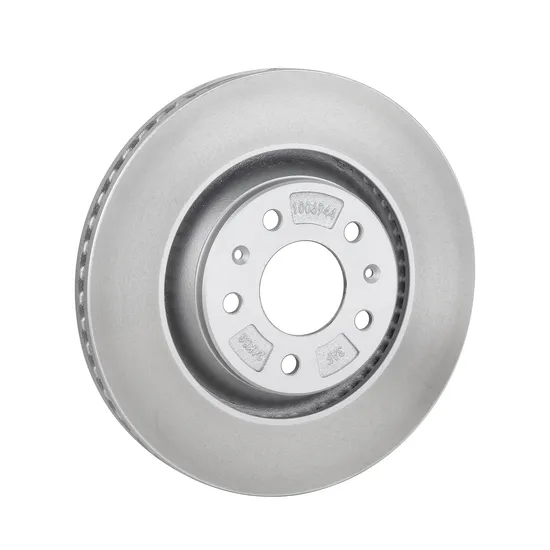
The foundation of any reliable braking system is the mating surface between the wheel hub and the rotor. Hub flatness and rotor runout are the primary culprits for vibration-induced noise. Even a fraction of a millimeter of deviation can cause the rotor to wobble, leading to uneven pad deposition and subsequent squeal.
Procedure for Installation Interface Verification:
- Clean the Hub Mating Surface: Use a wire brush to remove all rust and debris. A single grain of sand can cause uneven clamping force.
- Measure Lateral Runout: Mount a dial indicator on the hub and position the probe against the rotor face. Rotate the rotor slowly. The variance must remain within strict manufacturer tolerances. [NEED_CITE: maximum allowable lateral runout limits for passenger vehicle brake rotors]
- Verify Torque Specifications: Always use a calibrated torque wrench. Tighter torque does not mean less noise; over-torquing warps the mounting surfaces and induces stress concentrations.
- Evaluate Wheel Fitment: The wheel itself plays a critical role. Using precision-machined alloy wheels and matching auto parts ensures perfect hub mounting surface flatness, fundamentally reducing runout-induced brake noise. When the wheel’s center bore and mounting pad are perfectly concentric, it stabilizes the entire rotating assembly.
I once audited a fleet of modified SUVs suffering from chronic brake squeal. The repair shop had replaced pads and rotors multiple times. The issue was traced back to aftermarket wheels with poorly machined mounting pads, causing the rotors to clamp at a slight angle. Switching to precision-machined alloy wheels with exact hub-centric specifications instantly resolved the resonance. [NEED_CITE: impact of wheel mounting surface flatness on brake rotor lateral runout]
Step 2: Evaluating Friction Material & Hardware
Once the installation interface is verified, the focus shifts to the friction couple and the sliding hardware. Pad compressibility and stuck guide pins dictate thermal stability and noise generation. If the caliper cannot float freely, the pad drags, overheats, and glazes, creating a hardened surface that vibrates against the rotor.
Procedure for Friction and Hardware Evaluation:
- Check Guide Pin Clearance: Remove the caliper and inspect the guide pins. They must slide in and out with zero resistance. Any binding indicates worn bushings or degraded grease.
- Perform Pad Compressibility Testing: Use a dial gauge to measure pad thickness under applied pressure. Inconsistent compressibility across the pad surface indicates uneven material density, a direct trigger for squeal. [NEED_CITE: pad compressibility testing standards for aftermarket friction materials]
- Inspect Shims and Abutment Clips: Anti-rattle clips and insulating shims must be present and undamaged. They act as mechanical dampers to absorb high-frequency vibrations.
- Match Friction Material to Operating Conditions: Incompatible friction material for local driving conditions leads to rapid wear and noise. A high-metallic pad designed for heavy-duty towing will squeal miserably in stop-and-go urban traffic due to inadequate thermal management.
A distributor in the Middle East faced constant brake noise causes for distributors regarding a specific semi-metallic pad line. The local climate involved extreme ambient heat and aggressive driving. The pads were operating far beyond their optimal temperature thresholds, causing rapid resin burn-off and metal-on-metal resonance. Reformulating the compound to handle higher thermal loads and advising the use of high-temperature caliper grease eliminated the complaints. [NEED_CITE: friction material temperature thresholds and wear rate correlations]
Step 3: Verifying the Hydraulic System
The final layer in brake noise root cause checks involves the hydraulic actuation system. Caliper piston retraction and fluid quality prevent residual drag and overheating. If the piston fails to retract slightly after the pedal is released, the pad maintains constant contact with the rotor, generating continuous heat and a persistent low-frequency groan or high-pitched squeal.
Procedure for Hydraulic System Verification:
- Test Piston Retraction: Compress the caliper piston using a C-clamp or specialized tool. The resistance should be smooth and consistent. Any gritty feeling indicates internal corrosion or contaminated fluid.
- Inspect Brake Fluid Condition: Moisture-contaminated fluid lowers the boiling point and causes internal caliper corrosion. Fluid should be clear or light amber; dark, murky fluid requires immediate flushing.
- Check Flexible Brake Hoses: Old hoses can deteriorate internally, acting as a one-way check valve that traps pressure in the caliper, preventing piston retraction.
- Bleed the System: Air in the hydraulic lines causes a spongy pedal and uneven clamping force, leading to erratic pad contact and noise.
During a diagnostic session for a repair shop in Southeast Asia, a luxury sedan arrived with a severe brake groan. The pads and rotors were within specification. The root cause was a degraded internal liner in the flexible brake hose, trapping hydraulic pressure and keeping the pads dragged against the rotors. Replacing the hose and flushing the system restored proper retraction and silenced the brakes. [NEED_CITE: hydraulic pressure retention and caliper piston retraction dynamics]
Conclusion
Brake noise is a mechanical symptom, not a material mystery. Systematic brake noise root cause checks across the hub interface, friction hardware, and hydraulic lines are the only reliable method to eliminate squeal and protect profit margins. By prioritizing precision installation and physical measurement over guesswork, suppliers and repair shops can drastically reduce false warranty claims and build lasting trust in the aftermarket.