Summer 25% discount on all last year's bike models

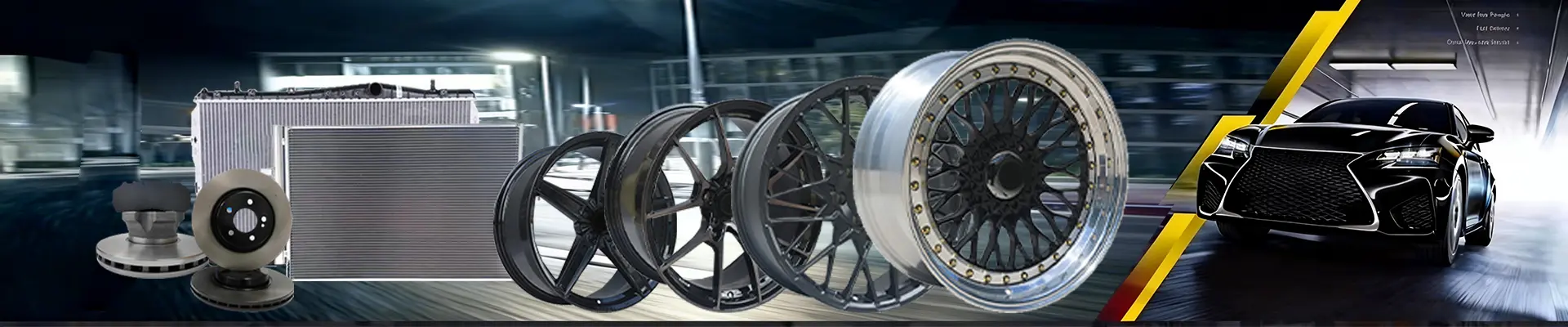
4×4 Off-Road Wheels Wholesale: Bulk Order from China

4×4 Off-Road Wheels Wholesale: Bulk Order from China
Heavier does not mean stronger — improper heat treatment can make a thick-looking wheel dangerously brittle.
Wholesale 4×4 off-road wheels from China deliver a substantial cost advantage over Japanese and European equivalents, but buyers must validate load ratings, confirm finish durability against salt-spray exposure, and lock down correct HS codes before committing to container-load orders — otherwise landed costs can jump sharply from duty reclassification or port-side finish rejection.
I still remember a full container of aftermarket rims bound for Manzanillo that got held at customs for weeks. The commercial invoice listed a generic alloy-wheel HS code, but Mexican customs argued the deep-concave, beadlock-style profile pushed the shipment into a "racing modification part" category — and the duty rate nearly doubled overnight. The buyer had to pay storage fees, reclassify paperwork, and absorb a margin hit that wiped out the entire freight saving. That single shipment taught me that spec sheets and price lists are only half the battle; the other half is customs logic, finish survival, and platform compatibility. [NEED_CITE: WCO HS nomenclature classification rules for aluminum alloy road wheels vs. racing parts]
Getting the sourcing right starts with matching wheel specs to the vehicles your end customers actually drive, then layering in pricing, certification, finish, and supplier reliability one step at a time.
What Specs Matter Most When Buying 4×4 Off-Road Wheels in Bulk?
Load rating, PCD, offset, and diameter must align with target vehicle platforms before any pricing conversation happens.
Ordering 4×4 off-road wheels wholesale without a fitment matrix is the single most common reason bulk shipments end up with slow-moving SKUs. A Latin American distributor I worked with once placed a container order of 17-inch to 20-inch beadlock-style wheels based purely on visual appeal — only to discover that the offset they chose caused rubbing on the most popular mid-size pickup platforms in their market. The wheels were structurally fine, but they simply would not bolt on correctly without spacers, which added cost and warranty risk.
| Parameter | Why It Matters for 4×4 | Typical Range for Mid-Size SUVs/Pickups |
|---|---|---|
| Load Rating | Must exceed vehicle GVWR per axle split | Certified for heavy-duty use vs. standard passenger rating |
| PCD (Bolt Pattern) | Determines physical bolt-on compatibility | Varies significantly across Toyota, Ford, Jeep platforms |
| Offset (ET) | Controls scrub radius and fender clearance | Negative offset common for off-road stance |
| Diameter | Affects tire sidewall and speedometer accuracy | 16-inch to 20-inch most popular for 4×4 |
| Center Bore | Hub-centric fitment reduces vibration | Vehicle-specific or multi-bore ring adaptable |
[NEED_CITE: vehicle-specific PCD and offset database for major 4×4 platforms]
A practical approach is to build a fitment matrix covering the top-selling 4×4 models in your target market — Toyota Hilux, Ford Ranger, Jeep Wrangler, Chevrolet S10 for Latin America; Land Cruiser and Patrol for the Middle East — and then cross-reference each wheel SKU against that list. Any 4×4 wheel manufacturer China works with should be able to supply this mapping before you commit to a production run.
The second spec trap is ignoring load rating in favor of visual thickness. I have seen buyers reject a wheel because it "felt light," not realizing that a properly heat-treated T6 wheel can carry the same load at lower weight than an overbuilt, poorly treated counterpart. VIA and JWL certifications exist precisely to validate this under controlled dynamic testing, not static weight guesses. [NEED_CITE: VIA and JWL dynamic testing standards for light truck and off-road wheels]
How Do You Compare Wholesale 4×4 Wheel Prices and MOQ from China?
Per-piece pricing only becomes meaningful once you anchor it to a specific MOQ tier, customization level, and container-load volume.
A modification shop in the Middle East once asked me why their reorder cycle kept breaking down. They were ordering small batches of staggered-fitment deep-concave rims — front and rear different sizes — and each reorder came with a color batch consistency issue. The matte black on the rear axle was visibly darker than the front after two ocean shipments. The root cause was not the wheel price; it was the surcharge structure for low-MOQ custom colors combined with the factory’s paint-batch scheduling.
| Order Scenario | MOQ Tier | Customization Level | Pricing Behavior |
|---|---|---|---|
| Stock models, mixed sizes | Low MOQ accessible | No custom finish or logo | Substantially lower per-piece cost |
| Custom finish, existing mold | Moderate MOQ required | Color and logo customization only | Moderate surcharge over stock |
| Full custom design, new mold | Higher MOQ expected | Entire wheel structure customized | Significant mold amortization added |
[NEED_CITE: industry-standard MOQ tier structures for alloy wheel customization]
When you evaluate a wholesale 4×4 wheels supplier, the real comparison is not the quoted FOB price on a single SKU. It is the landed cost per unit after you factor in mold amortization, finish surcharges, packaging upgrades, and the freight efficiency of your container loading plan. A 40-foot high-cube container loaded with 20-inch wheels carries noticeably fewer units than the same container loaded with 16-inch wheels — and that density difference directly changes your per-unit freight cost.
| Rim Diameter | Approximate Units per 20ft Container | Approximate Units per 40HQ Container |
|---|---|---|
| 16-inch | Higher capacity | Maximum capacity |
| 17-inch to 18-inch | Standard capacity | Standard capacity |
| 19-inch to 20-inch | Reduced capacity | Reduced capacity |
[NEED_CITE: container loading calculation methodology for alloy wheels by diameter]
Jinan Yoker’s structure illustrates how this works in practice: stock models are accessible from a low MOQ starting point, while custom designs require a moderate production run to absorb mold and setup costs. Lead time typically falls within a standard production window, and factory-direct pricing sits well below Japanese and European branded equivalents — which is where the real margin opportunity lives for distributors who move container volumes.
Which Certifications and HS Codes Prevent Customs Delays?
Correct HS code selection and recognized certification paperwork are the difference between a smooth release and a weeks-long customs hold.
Most buyers assume "off-road wheel" maps to a single HS code. It does not. Beadlock-style wheels, wheels with specific load ratings above a threshold, and wheels classified as racing parts can fall into different tariff headings — and the duty gap between them is substantial. I have seen reclassification push effective duty rates up by a significant margin, turning a profitable container into a break-even or loss-making shipment. [NEED_CITE: WCO HS code differentiation between standard aluminum alloy wheels and racing or special-purpose wheels]
| Certification | Market Relevance | What It Validates |
|---|---|---|
| VIA / JWL | Japan, and widely recognized across Asia-Pacific | Dynamic fatigue and impact resistance |
| DOT | United States | Compliance with federal safety standards |
| TÜV | Europe, and increasingly requested in premium markets | Structural and dimensional engineering approval |
| ISO/TS 16949 (IATF 16949) | Global OEM and serious aftermarket buyers | Quality management system for automotive production |
| CCC | China domestic market; sometimes referenced in export documentation | China compulsory product certification |
[NEED_CITE: certification requirements for alloy wheel exports by destination region]
An e-commerce seller I advised was preparing to ship 16-inch off-road wheels to an Amazon FBA warehouse. Their first instinct was to use the cheapest available HS code their freight forwarder suggested. I had them cross-check with a licensed US customs broker instead — and the broker flagged that the wheel’s load rating and bead profile could trigger a different classification than a standard passenger-car rim. The reclassification added a modest per-unit cost, but it prevented a potential seizure and penalty at the port of entry.
A reliable 4×4 wheel manufacturer China partners with should provide complete certification documentation and support correct customs classification on commercial invoices. Jinan Yoker maintains a full portfolio including ISO, VIA, TÜV, DOT, JWL, and CCC, and supplies the documentation package that distributors and modification shops need to clear customs without reclassification surprises.
What Finish and Packaging Options Survive Off-Road Use and Ocean Shipping?
Finish durability and packaging integrity determine whether your wheels arrive sellable — or become a rejection-rate write-off.
The cheapest FOB price is never the lowest landed cost if the finish cannot survive humid port conditions and months of container transit. A distributor in Southeast Asia once received a full container of matte black 4×4 rims where a significant portion showed water-staining and early adhesion failure — not because the paint was cheap, but because the packaging allowed condensation to pool against the machined face during a prolonged port stay in a tropical climate. [NEED_CITE: salt-spray and humidity resistance testing standards for automotive wheel finishes]
| Finish Type | Off-Road Abrasion Resistance | Ocean-Shipping Humidity Resistance | Visual Appeal |
|---|---|---|---|
| Machined Face with Clear Coat | Moderate — vulnerable to rock chips | Vulnerable if clear coat is thin | High — premium look |
| Matte Black Powder Coat | Robust — strong abrasion resistance | Resistant — closed pore structure | High — popular aftermarket look |
| Gloss Paint | Moderate | Vulnerable to water-spotting | High — classic finish |
| Chrome | Low for off-road — chips and peels risk | Moderate if sealed properly | High — show-quality appearance |
[NEED_CITE: comparative durability testing of wheel surface finishes for off-road conditions]
For e-commerce sellers, packaging becomes a separate cost center that directly affects margin. Amazon-ready packaging — individual boxes with foam inserts, corner protectors, and branded labeling — costs noticeably more per unit than bulk pallet packaging with interleaving cardboard. But bulk packaging that allows rim-to-rim contact during ocean transit guarantees edge damage and finish scratches, which means a rejection rate that eats any packaging savings.
A practical middle ground is to use reinforced individual cartons for high-value finishes (machined face, chrome, deep-concave custom colors) and bulk pallet packaging for high-volume, abrasion-resistant finishes (matte black powder coat). This hybrid approach keeps per-unit packaging cost reasonable while protecting the SKUs most likely to generate customer returns.
How to Choose a Reliable 4×4 Wheel Wholesale Supplier in China?
Factory audit depth — not just the price quote — separates a long-term supply partner from a single-shipment gamble.
A Latin American distributor once switched suppliers mid-year because the new factory quoted a lower per-piece price. The first container arrived on time. The second container was delayed by weeks because the factory could not source the correct alloy ingot batch. The third container had a structural warranty claim rate that forced the distributor to pull inventory and inspect every single wheel. The "savings" from the lower price were completely erased by air-freight emergency restocking and warranty labor.
| Audit Dimension | What to Verify | Red Flag |
|---|---|---|
| Certification Portfolio | ISO, VIA, TÜV, DOT, JWL — verifiable and current | Self-reported only, no certificate copies |
| Lead Time Consistency | Standard production window with documented tracking | Vague promises, no historical data |
| Warranty Terms | Structural warranty with clear claim process | No warranty or verbal-only commitment |
| Documentation Completeness | Commercial invoice, packing list, CO, test reports | Missing or inconsistent paperwork |
| Customization Capability | Mold development, finish matching, private-label packaging | Stock-only, no engineering support |
[NEED_CITE: factory audit checklist elements for automotive alloy wheel manufacturers]
Jinan Yoker differentiates itself through a combination of full multi-certification coverage, a standard lead time window that allows reliable container planning, and a structural warranty that gives distributors confidence to move volume without inspecting every unit on arrival. The company operates under the Ouya trademark with substantial annual production capacity, serving aftermarket, OEM, and modification markets across multiple regions. For buyers evaluating a wholesale 4×4 wheels supplier, the combination of accessible MOQ for both stock and custom orders, complete customs documentation support, and factory-direct pricing creates a sourcing foundation that scales from test orders to full container programs.
Conclusion
Spec alignment, certification accuracy, and finish survivability matter more than the lowest quoted FOB price. Sourcing 4×4 off-road wheels wholesale from China rewards buyers who build fitment matrices, validate HS codes with destination-country brokers, and choose finishes proven to survive ocean transit — turning a substantial factory-direct cost advantage into real, protectable margin.


