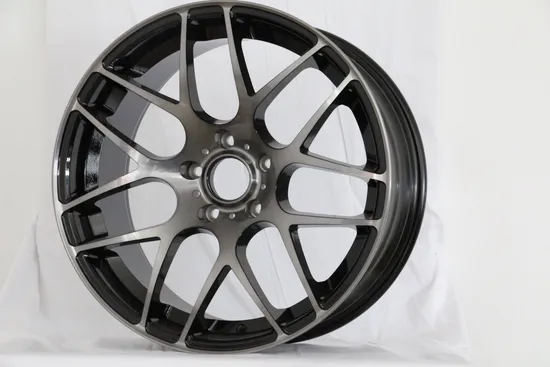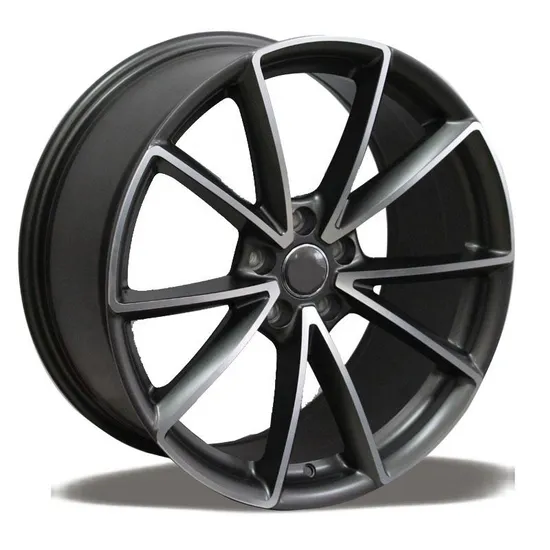
Car Rims Supplier for Qatar: China Factory Direct Wholesale
Most Middle East buyers think the lowest unit price wins the deal. They are wrong. The real cost killer is not the rim itself — it is the port delay, the missing certificate, the wrong PCD on a full container.
Sourcing from a reliable Car Rims Supplier for Qatar requires three things working together: factory-direct pricing that survives margin pressure, complete export certifications that clear Doha customs without a single document rejection, and DDP logistics that shift the port-risk burden off your balance sheet. Missing any one of these turns a profitable shipment into a storage-yard lesson.
I spent months sitting in repair shops across the Gulf, watching modification shops pull Japanese-brand rims off display cars and measure bolt patterns with calipers. One shop owner in Doha kept a stack of rejected rims near his compressor — the center bore was half a millimeter off, and the hub rings he ordered separately did not sit flush. He had paid a trading company’s price for what the trading company called "OEM spec." When I asked him why he did not go direct to a factory, he said he had tried — the factory asked for a mold fee, and he only needed a few hundred pieces. That is the gap a serious Car Rims Supplier for Qatar has to close: custom capability without punishing small-batch buyers. [NEED_CITE: common fitment rejection causes in aftermarket wheel distribution]
The rest of this guide walks through what actually matters when you are choosing a Car Rims Supplier for Qatar — spec ranges that match local demand, certifications that survive customs scrutiny, how to tell a real factory from a trading desk, the DDP paperwork that prevents port delays, and the order terms that protect your cash flow.
Qatar Market Needs What Rim Specs?
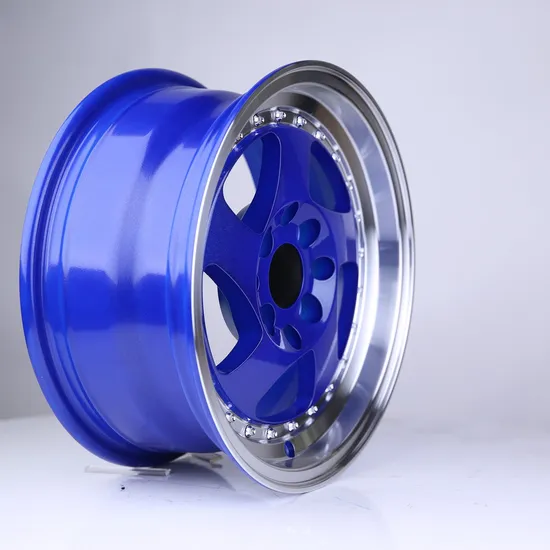
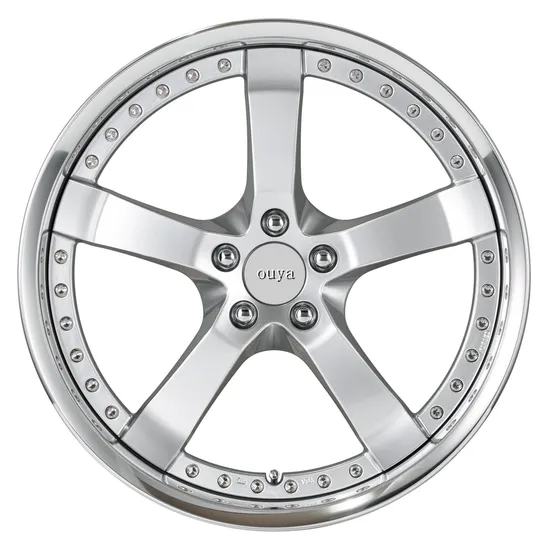
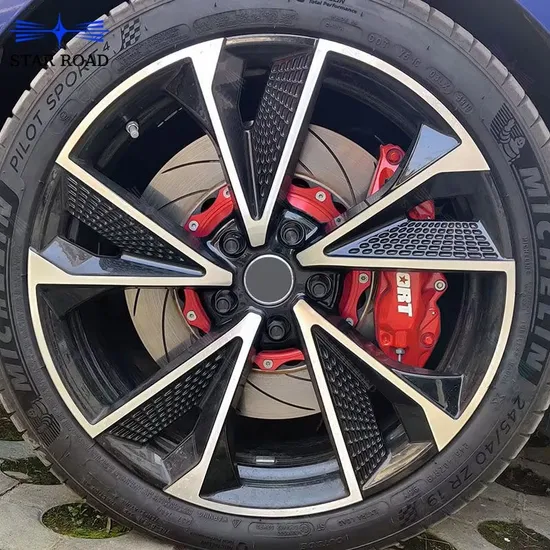
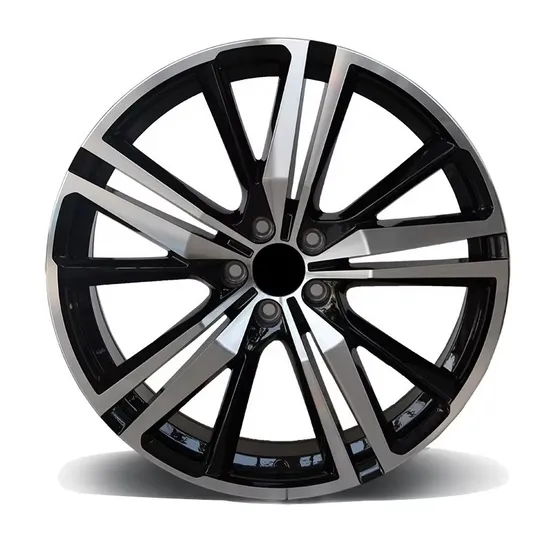
The sweet spot in Qatar sits between 17 and 20 inches, with deep concave and multi-spoke designs gaining share among modification shops and private buyers. Passenger car fitments cluster around PCD 5×114.3 and 5×120, while larger SUV and pickup applications pull in 6×139.7 territory. Getting these wrong at the ordering stage is the single most expensive mistake a buyer can make — a full container of 20-inch rims with the wrong offset does not get "adjusted at the shop," it gets stored.
| Parameter | Passenger / Sedan | SUV / Crossover | Pickup / Off-Road |
|---|---|---|---|
| Diameter Range | 16"–20" | 18"–22" | 17"–20" |
| Common PCD | 5×114.3 / 5×120 | 5×114.3 / 5×120 / 5×130 | 6×139.7 / 5×150 |
| Offset (ET) Range | +35 to +45 | +25 to +40 | +15 to +30 |
| Center Bore | Model-specific | Model-specific | Model-specific |
| Popular Finish | Machined face / Hyper silver | Matte black / Gunmetal | Bronze / Satin black |
| Style Trend | Multi-spoke / Mesh | Deep concave / Flow-formed | Beadlock-look / Heavy-duty |
Source data on regional fitment preferences confirms that 5×114.3 remains the dominant PCD across Toyota, Nissan, and Hyundai models widely sold in the Gulf, while 5×120 covers most European-nameplate vehicles registered locally. [NEED_CITE: dominant PCD distribution across Middle East vehicle parc]
A modification shop client near Al Wakrah ordered a run of 20-inch deep concave rims in matte black for a Nissan patrol build. The first sample came back with an ET value that pushed the wheel too far inward — the caliper clearance was fine, but the fender line looked wrong. We re-cut the mold profile, adjusted the disc thickness, and the second sample sat flush. That kind of iteration is only possible when your Car Rims Supplier for Qatar controls the mold library in-house. A trading company would have told you the spec was "within tolerance" and shipped the rest of the container anyway.
The takeaway is simple: confirm PCD, offset, and center bore against the actual vehicles your end customers drive — not against a generic catalog. A credible Car Rims Supplier for Qatar will ask you for the vehicle list before quoting, not after.
Which Certifications Actually Matter for Qatar Customs?
VIA and TUV are the certifications that modification shops and end buyers recognize as quality proof; CO and COC are the documents that customs will not let you skip. Many buyers confuse "certification for sale" with "certification for clearance" — they are not the same thing. You can have a beautiful rim that passes every quality test, but if the paperwork does not match what Qatar customs expects at the port, that rim sits in a bonded warehouse while you pay daily storage fees.
Let me walk you through a real situation. A wholesale buyer in the Gulf had a container of alloy wheels cleared through a neighboring port under FOB terms. The trading company he worked with provided a commercial invoice and a packing list. What they did not provide was a properly legalized Certificate of Origin, and the VIA test report they attached was for a different rim diameter. Customs flagged the shipment. The buyer ended up paying storage and re-inspection costs that ate into the margin of the entire order. He later told me the delay cost more than the price difference between the trading company and a direct factory. [NEED_CITE: Qatar customs documentation requirements for imported alloy wheels]
| Certification | What It Proves | Who Recognizes It | Clearance Role |
|---|---|---|---|
| ISO 9001 / IATF 16949 | Factory quality management system | B2B buyers, OEM procurement | Indirect — supports credibility |
| VIA / JWL | Japanese structural testing standard | Modification shops, enthusiasts | Not mandatory for clearance, but demanded by end buyers |
| TUV | European structural and dimensional compliance | GCC spec regulators, premium buyers | Often required for type-approval reference |
| DOT | US market compliance | North America-focused buyers | Not directly used in Qatar, but signals testing rigor |
| CO (Certificate of Origin) | Country of manufacture | Customs authorities | Mandatory for clearance and tariff treatment |
| COC (Certificate of Conformity) | Product meets stated standards | Import regulators | Frequently requested at GCC ports |
The pattern you should notice: the certifications that matter to your customer (VIA, TUV) are different from the certifications that matter to the port (CO, COC). A complete Car Rims Supplier for Qatar provides both sets, pre-checked before the container leaves the factory floor.
One more point that catches buyers off guard: VIA certification is often assumed to be only relevant for the Japanese domestic market. In the Gulf, however, modification shop customers actively look for the VIA stamp as a trust signal — it tells them the rim has passed dynamic radial fatigue, dynamic cornering fatigue, and impact testing to a recognized standard. If your Car Rims Supplier for Qatar cannot show you a valid VIA report for the exact SKU you are ordering, you are selling your end customer a promise without proof.
Factory-Direct vs Trading Company: How to Verify Real Manufacturer?
A real manufacturer can show you the mold, the production schedule, and the testing equipment on the same site. A trading company can show you a brochure. This is not a theoretical distinction — it determines whether you can get a custom offset, whether your order gets priority when raw material prices spike, and whether the person you are negotiating with actually controls the production line.
I have visited operations that called themselves "factories" and found a small office with a display wall of rim samples, no casting line, and no flow-forming equipment. When I asked where the rims were made, the answer was always "our partner facility." That setup works fine if you are buying stock sizes in small quantities. It falls apart the moment you need a custom PCD, a non-standard width, or a batch of five hundred pieces in a specific bronze finish with your logo on the center cap.
Here is what a proper factory verification looks like in practice:
- ISO certificate cross-check. Pull the certificate number and verify it on the issuing body’s public database. Confirm the certified scope includes alloy wheel manufacturing — not just "auto parts trading." [NEED_CITE: how to verify ISO certificate validity on accredited registrar databases]
- Production capacity and current load. Ask for the monthly output range and the current queue for custom molds. A factory running at full capacity will tell you honestly; a trading company will promise any lead time to win the order.
- Mold library walkthrough. A real manufacturer keeps physical or digital records of every mold they have produced. Request a live video walkthrough. If the person on the other end hesitates or says "we will confirm with the engineering team," you are talking to a middleman.
- Testing equipment on site. Dynamic radial fatigue testers, impact testers, salt-spray chambers, and X-ray fluorescence guns for alloy composition should be visible and operational. These are not optional for a serious Car Rims Supplier for Qatar.
A modification shop owner in the Middle East once switched from a trading company to a direct manufacturer and immediately noticed the difference in batch consistency. The first three orders from the trading company had visible finish variation — some rims in the same batch came out slightly darker in matte black, others had minor clear-coat orange peel. When he moved to a factory-direct relationship, the coating line was computer-controlled, the curing temperature was logged per batch, and the color match held across repeat orders. That kind of consistency is what keeps your customers coming back.
The Ouya production facilities in Jinan, for example, maintain an annual capacity that covers the full 12-inch to 24-inch range across passenger, SUV, luxury, and modification applications, with in-house mold design, flow-forming, and multi-certification testing under one roof. When a buyer asks for a custom 20-inch deep concave rim in古铜色 — pardon, in bronze — the mold design, sample production, and certification paperwork all happen within the same operational structure. That is what "factory-direct" should mean for a Car Rims Supplier for Qatar.
DDP Shipping to Doha: What Documents Prevent Port Delays?
FOB looks cheaper on the spreadsheet. DDP looks more expensive. But when you factor in the cost of a customs hold, the wrong Incoterm is the most expensive line item on your purchase order. This is the single most counterintuitive lesson I have seen repeat across Middle East buyers. The trading company quotes you FOB Shanghai, and the number looks great. Then the container arrives in Doha, the broker asks for a document the trading company "forgot" to prepare, and you are paying daily port storage while the trading company says "that is your import side, not ours."
Let me break down what actually happens at the port. Qatar customs requires a specific set of documents for alloy wheel imports: commercial invoice, packing list, bill of lading, Certificate of Origin (often requiring attestation from the Qatar embassy or a recognized chamber of commerce), and — critically — any product-specific compliance certificates that match the declared HS code. If the VIA or TUV report you provide references a different rim model than what is on the invoice, customs can hold the shipment for re-inspection. [NEED_CITE: Qatar customs clearance document checklist for alloy wheel imports under HS code 8716]
| Shipping Term | Who Handles Export Clearance | Who Handles Ocean Freight | Who Handles Import Clearance | Who Bears Port Delay Risk |
|---|---|---|---|---|
| FOB | Seller | Buyer | Buyer | Buyer |
| CIF | Seller | Seller | Buyer | Buyer |
| DDP | Seller | Seller | Seller | Seller |
Under DDP terms, the Car Rims Supplier for Qatar takes responsibility for the entire chain — export clearance, ocean freight, import clearance, and final delivery. The practical advantage is not just convenience; it is risk allocation. When the supplier handles import documentation, they have a direct financial incentive to get the paperwork right the first time. Under FOB or CIF, the supplier’s incentive ends once the container is on the water.
A wholesale buyer who regularly imports full containers into the Gulf shared his experience: on one shipment under CIF terms, the Certificate of Origin was issued without the required attestation stamp. The container sat at the port for over a week. The storage fees alone ran into a mid-four-figure sum — and that was before the broker’s expediting charges. On his next order, he switched to DDP with a Car Rims Supplier for Qatar that pre-submits all documents for review before the vessel departs. The unit price was slightly higher, but the total landed cost was lower, and more importantly, predictable.
The operational discipline here is straightforward: a reliable Car Rims Supplier for Qatar will submit your complete document package for pre-review well before the vessel arrives. That means the CO, the COC, the VIA or TUV reports, and the commercial invoice are all cross-checked against each other and against Qatar’s current import requirements. If anything is missing or inconsistent, it gets fixed at the factory — not at the port.
MOQ Lead Time and Warranty: What Terms Protect Your Cash Flow?
The right order terms do not just affect your unit cost — they determine whether your capital is sitting in a warehouse or turning over on your shop floor. This is where many buyers focus exclusively on price per piece and miss the larger cash-flow picture. A slightly higher unit price with a smaller MOQ, faster lead time, and a real structural warranty often produces better return on capital than the cheapest possible rim with a two-hundred-piece minimum and no warranty backing.
Here is how the typical terms break down for a Car Rims Supplier for Qatar that operates as a genuine manufacturer:
- Stock models. MOQ as low as twenty pieces per SKU. This matters for modification shops that need to test a new style or color without committing to a full pallet. Lead time runs in the neighborhood of two to three weeks from order confirmation.
- Custom models. MOQ around one hundred pieces per SKU, reflecting the mold setup and first-article sampling cost. Lead time extends to roughly three to four weeks, depending on finish complexity and certification requirements.
- Structural warranty. A credible Car Rims Supplier for Qatar stands behind the rim for a multi-year period against structural defects — typically three years. This is not a cosmetic warranty; it covers cracking, bead failure, and air-leak issues that trace back to manufacturing.
| Term | Stock Models | Custom Models |
|---|---|---|
| MOQ | Low (around twenty pieces) | Moderate (around one hundred pieces) |
| Lead Time | Short (a few weeks) | Moderate (several weeks) |
| Customization | Finish and center cap only | Full spec: PCD, ET, width, finish, logo |
| Warranty | Multi-year structural | Multi-year structural |
| Best For | Modification shops, retailers | Wholesalers, OEM projects, exclusive designs |
A tire shop and retail operation in the Gulf used to order from a supplier that required a very large MOQ per finish. The result: slow-moving colors sat in the back room for months, tying up capital. When they switched to a Car Rims Supplier for Qatar that offered low-MOQ stock models, they could rotate finishes seasonally — matte black and gunmetal in the cooler months, machined face and hyper silver when the show season hit. Their inventory turns improved noticeably, and the dead-stock problem disappeared.
The warranty point deserves separate emphasis. A three-year structural warranty from a Car Rims Supplier for Qatar is not just a customer-service gesture — it is a signal that the factory trusts its own testing. If the rims were not running through proper dynamic fatigue and impact testing before shipment, no manufacturer would offer that kind of backing. For a wholesale buyer, it also means your own liability to your end customers is covered at the source.
Conclusion
Price is the easiest number to compare and the least reliable indicator of total cost. A Car Rims Supplier for Qatar that delivers factory-direct pricing, complete VIA/TUV/CO/COC documentation, and DDP logistics removes the three biggest profit killers in Middle East wheel importing: margin compression, customs holds, and port storage fees. Match your specs to the actual vehicles on the road, verify the factory behind the quote, and structure your order terms around inventory turnover — not just per-piece cost.