Summer 25% discount on all last year's bike models

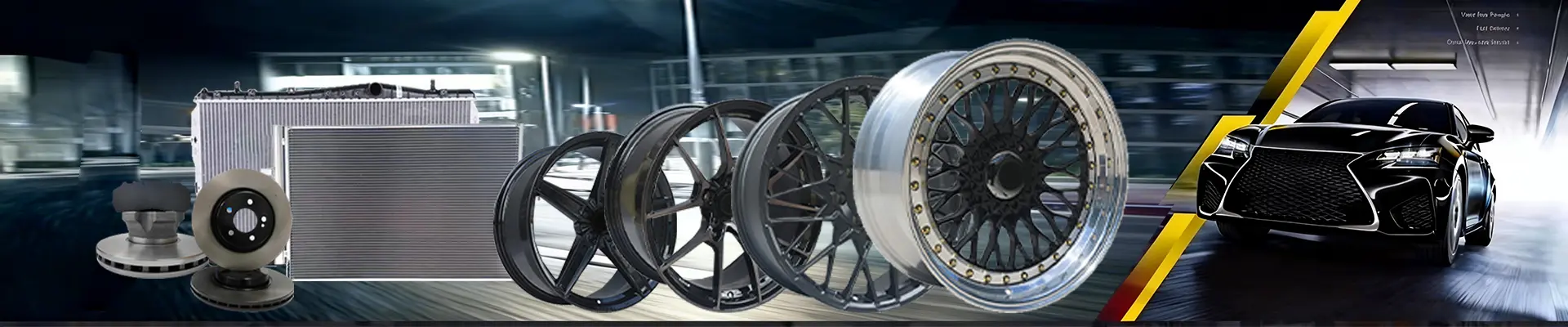
Buy 4×4 Off-Road Alloy Wheels: China Factory Direct Wholesale Supplier

Buy 4×4 Off-Road Alloy Wheels: China Factory Direct Wholesale Supplier
Cheaper 4×4 off-road alloy wheels often fail because buyers compare price tags instead of coating thickness and certification paperwork.
Sourcing 4×4 off-road alloy wheels directly from Chinese factories can cut procurement costs substantially while maintaining quality, provided buyers verify material certifications, salt-spray endurance ratings, and structural test reports before placing orders.
I still remember a container that sat at Jebel Ali port for weeks, unable to clear customs. A Middle East distributor had ordered a full shipment of 17-inch matte black wheels based purely on per-piece pricing. The coating started peeling within months of desert use, and the return claim cost several times the original savings. That container taught me something no brochure mentions: the surface finish specification matters far more than the alloy grade stamp. [NEED_CITE: correlation between coating thickness and salt-spray test endurance per ASTM B117] Since then, I have inspected hundreds of wheel production lines and reviewed thousands of test certificates, and the pattern remains consistent—buyers who skip verification steps pay the price later.
Let me walk you through exactly what matters when you source these wheels, what to ask for, and where the hidden risks sit.
4×4 Off-Road Wheels: What Specs Matter Most?
Size, load rating, and manufacturing method determine whether a wheel survives off-road abuse or cracks on the first rocky trail.
When buyers search for 4×4 off-road alloy wheels, they often fixate on diameter and bolt pattern. Those matter, but they are the easy part. The specifications that separate a trail-ready wheel from a roadside hazard are load index, manufacturing process, and bead retention design.
Here is a comparison of the three main manufacturing methods you will encounter:
| Manufacturing Method | Weight Profile | Load Capacity | Typical Use Case | Cost Tier |
|---|---|---|---|---|
| Gravity Cast | Heaviest | Basic | Light off-road, street use | Entry |
| Flow-Formed (Rotary Forged) | Noticeably reduced | Substantially higher | Moderate off-road, overlanding | Mid |
| Fully Forged | Lightest | Highest | Extreme off-road, rock crawling | Premium |
[NEED_CITE: structural integrity comparison between cast, flow-formed, and forged aluminum wheels per SAE J2530]
A gravity-cast wheel and a flow-formed wheel in the same 17-inch size can differ noticeably in weight, yet the flow-formed version carries a meaningfully higher load rating because the barrel section is compressed under pressure during spinning, aligning the grain structure. Fully forged wheels take this further with a single-piece billet process that delivers the highest strength-to-weight ratio.
Load index is where many buyers get burned. A wheel stamped for a passenger SUV may look identical to a 4×4 off-road alloy wheel designed for a loaded pickup, but the internal spoke geometry and rim thickness differ. Always cross-reference the wheel’s stated load rating against the gross axle weight rating of the vehicle it will mount on.
Offset and backspacing matter equally for off-road applications. Too much positive offset pushes the wheel inward, risking contact with suspension components at full compression. Too little positive offset stresses the wheel bearings beyond their design limits. The correct specification depends on the vehicle, the tire size, and whether spacers are planned.
China Factory Direct: How Much Can You Save?
Buying 4×4 off-road alloy wheels directly from Chinese manufacturers typically delivers substantial cost advantages over European and Japanese branded equivalents, but the real savings depend on order volume and specification accuracy.
The pricing gap exists for a structural reason: branded wheels carry licensing fees, distribution markups, and marketing costs that have nothing to do with manufacturing quality. A factory-direct 4×4 off-road alloy wheel produced to the same material specification and passing the same dynamic radial fatigue test will cost noticeably less than its branded counterpart.
However, "factory direct" is a loosely used term. Some suppliers are trading companies that add their margin on top of the factory price. Others are manufacturers who sell direct but lack the export infrastructure to handle documentation properly. The key is to verify whether the entity you are dealing with actually operates the production line.
| Verification Point | What to Request | What It Proves |
|---|---|---|
| Business license scope | Manufacturing vs. trading | Whether they make or resell |
| Production equipment list | Casting machines, CNC lathes, X-ray stations | Actual manufacturing capability |
| Quality lab equipment | Dynamic balance machines, impact testers, salt-spray chambers | In-house testing capability |
| Export history | Bill of lading samples, customs declarations | Track record in your target market |
[NEED_CITE: verification methods for distinguishing aluminum wheel manufacturers from trading companies in China]
A modification shop in Australia once ordered a small batch of deep-concave 4×4 off-road alloy wheels with a specific matte bronze finish. They needed a low minimum quantity because they were testing market demand. The factory accommodated the request, but the lead time ran noticeably longer than a standard stock order because the color had to be mixed and sprayed in a dedicated batch. The per-piece cost was higher than a full-container order, but still well below what the same wheel would cost through a branded distributor. The lesson: factory-direct pricing scales with volume, and buyers should plan their order quantities accordingly.
Another factor is tooling cost. If you need a custom design, the mold and tooling investment is a one-time charge that amortizes across your order. For a first-time buyer ordering a few dozen pieces, the tooling cost per unit looks steep. For a distributor ordering multiple containers per year, it becomes negligible.
Certifications: Why VIA/JWL/DOT Are Non-Negotiable?
Skipping certification verification on 4×4 off-road alloy wheels does not save money—it creates customs blockage, liability exposure, and potential recall costs that dwarf the original purchase price.
Every major market has wheel certification requirements, and they are not optional paperwork. They are legal prerequisites for import and sale.
| Certification | Applicable Market | What It Tests | Risk of Non-Compliance |
|---|---|---|---|
| JWL / VIA | Japan | Structural fatigue, impact resistance | Customs rejection, legal liability |
| DOT | United States | Material composition, dimensional accuracy | Import seizure, fines |
| TÜV | Germany / EU | Comprehensive structural and dimensional | Cannot register vehicle with non-certified wheels |
| ISO 9001 | Global (quality system) | Manufacturing process consistency | No direct customs impact, but signals reliability |
| CCC | China (domestic) | Chinese market compliance | Not required for export, but indicates factory maturity |
[NEED_CITE: certification requirements for aftermarket alloy wheels by country and region]
An African distributor once received a container of 4×4 off-road alloy wheels only to discover at the port that the DOT certification documents listed a different wheel model than what was physically shipped. The mismatch meant the wheels could not clear customs. The delay stretched across weeks, storage fees accumulated, and the supplier had to arrange air-freight replacement documents—a process that cost a mid-five-figure sum in logistics and penalties.
The verification process is straightforward but often skipped:
- Request the actual certificate, not a summary statement.
- Cross-check the certificate number against the issuing body’s public database where available.
- Confirm that the wheel model, size, offset, and load rating on the certificate match your purchase order exactly.
- Ask whether the certificate covers the specific surface finish you ordered, as some certifications are finish-specific.
[NEED_CITE: how to verify authenticity of JWL/VIA wheel certification through VIA registry]
A reputable 4×4 off-road alloy wheels supplier will provide complete certification documentation without hesitation. If a supplier deflects, offers "similar" certificates, or claims that certification is unnecessary for your market, treat that as a red flag.
Surface Finishes: Which Lasts in Off-Road Conditions?
The surface finish on 4×4 off-road alloy wheels determines how long they look acceptable and how well they resist corrosion—far more than most buyers realize during the purchasing decision.
Off-road environments are punishing. Mud, road salt, stone impacts, UV exposure, and temperature swings all attack the wheel surface. A finish that looks premium in the showroom may degrade rapidly in real-world use if the coating process was rushed or the primer layer was insufficient.
| Finish Type | Corrosion Resistance | Stone Chip Resistance | Maintenance Requirement | Typical Salt-Spray Endurance |
|---|---|---|---|---|
| Gloss Black Paint | Moderate | Moderate | Regular cleaning | Standard |
| Matte Black Powder Coat | Substantially extended | Robust | Low | Noticeably extended |
| Machined Face with Clear Coat | Vulnerable (if clear coat chips) | Moderate | High (clear coat restoration) | Basic |
| Chrome Plating | Robust | Moderate | Moderate cleaning | Substantially extended |
| Bronze / Gunmetal Powder Coat | Substantially extended | Robust | Low | Noticeably extended |
[NEED_CITE: comparative corrosion resistance of powder coat versus liquid paint on aluminum alloy wheels per ASTM salt-spray testing]
The Middle East desert case I mentioned earlier is a textbook example. The matte black finish looked correct visually, but the powder coat layer was too thin and the adhesion promoter was inadequate for the extreme temperature range. Within months, the coating lifted at the spoke edges where stone impacts were most frequent. The entire batch had to be replaced.
When evaluating a supplier’s finish quality, ask for:
- Salt-spray test reports specific to the finish you are ordering, not a generic certificate.
- Cross-hatch adhesion test results per ASTM D3359.
- Film thickness measurements taken at multiple points on the wheel.
- Accelerated UV exposure test data if the wheels will be used in high-sunlight environments.
A quality 4×4 off-road alloy wheel with a properly applied powder coat finish should show no white corrosion or adhesion failure after extended salt-spray exposure. If a supplier cannot provide finish-specific test data, they likely do not control their coating process tightly enough for off-road applications.
MOQ & Lead Time: What to Expect from China Suppliers?
Minimum order quantities and production lead times for 4×4 off-road alloy wheels vary significantly between stock models and custom designs—planning ahead prevents costly delays.
Chinese wheel factories typically operate on two tracks: stock models and custom production. Understanding the difference helps you plan inventory and manage cash flow.
For stock models—popular sizes and finishes that the factory produces continuously—the minimum order quantity is relatively accessible. A modification shop or e-commerce seller can place a trial order of a few dozen pieces to test market response. Lead time for stock models is typically measured in weeks rather than months, assuming the specific size and finish are currently in production rotation.
For custom designs—your own spoke pattern, specific offset, unique finish, or private-label packaging—the minimum order quantity rises substantially because the factory must produce molds, set up dedicated painting lines, and commit production capacity. Lead time for custom orders runs noticeably longer than stock orders due to tooling fabrication and first-article approval cycles.
| Order Type | Typical MOQ Range | Lead Time Range | Tooling Cost |
|---|---|---|---|
| Stock models | Low threshold | Weeks | None |
| Custom design | Higher threshold | Noticeably longer | One-time investment |
| OEM private label | Varies by factory | Moderate | Minimal if using existing mold |
[NEED_CITE: typical MOQ and lead time structures for Chinese aluminum wheel manufacturers serving export markets]
A US-based e-commerce seller once needed 4×4 off-road alloy wheels in a specific 20-inch matte gunmetal finish for an Amazon launch. They ordered stock models first, received samples within days, and had a full container shipped within weeks. Six months later, when sales justified a custom offset for their specific vehicle fitment, they placed a custom order. The tooling was a one-time cost, and the per-piece price dropped noticeably because the larger volume spread fixed costs across more units.
Key planning considerations:
- Request a production calendar from your supplier to understand seasonal capacity constraints. Chinese factories often experience peak demand periods that extend lead times.
- Build buffer time into your launch schedule for first-article approval. The sample you receive must match your specification exactly before full production begins.
- Confirm packaging specifications early. Amazon-ready packaging, pallet requirements, and container loading plans all affect the timeline.
- Ask about the supplier’s raw material sourcing stability. Aluminum ingot price fluctuations can affect production scheduling if the supplier does not maintain adequate inventory.
Conclusion
Sourcing 4×4 off-road alloy wheels from Chinese factories delivers real cost advantages, but only when buyers verify certifications, demand finish-specific test data, and plan order quantities around stock versus custom production realities. The wheels that survive off-road conditions and satisfy end customers are the ones where the buyer asked the right questions before the order was placed—not after the container arrived.


