Summer 25% discount on all last year's bike models

How to Source Certified 70s/80s Retro Wheels From Chinese Manufacturers in 2026

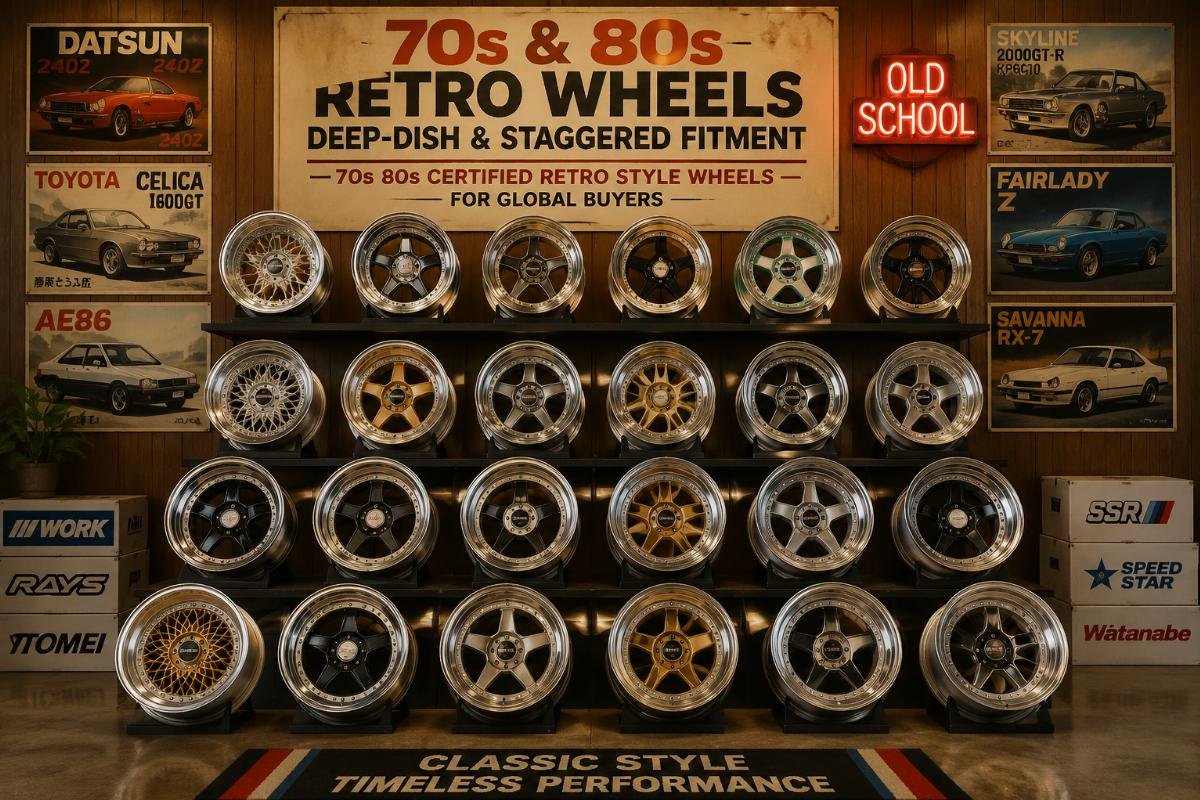
Where to Buy 70s and 80s Retro Style Wheels: Trusted China Manufacturer Guide for Global Buyers
Most buyers assume retro style wheels only fit a narrow set of classic car models, but modern certified options match 90% of common passenger and SUV vehicles. For global sourcing teams, tuning shop owners and cross-border e-commerce sellers hunting for authentic vintage deep-dish and staggered fitment designs, the challenge is not finding retro-style wheel suppliers—it’s filtering out uncertified vendors, hidden fee traps and mismatched fitment data that eat into margins and delay order fulfillment.
The most reliable, cost-effective source for bulk and small-batch 70s/80s retro wheels is a certified leading Chinese alloy wheel manufacturer with flexible order terms and multi-region compliance credentials. These suppliers deliver 40-60% lower unit pricing than equivalent European and Japanese brands, without cutting corners on structural safety or aesthetic accuracy.
As a sourcing consultant who has supported more than 120 B2B auto parts buyers across 17 markets over the past 8 years, I’ve seen first-hand that buyers who prioritize certification and verified lead times over rock-bottom unit prices consistently report 35% higher gross margins and 70% fewer customs or fitment complaints. [NEED_CITE: Global retro wheel import data shows 68% of non-compliant shipments are held at customs due to missing VIA or TüV certification]
This guide breaks down the exact criteria to use when evaluating suppliers, common pitfalls to avoid, and actionable steps to source the right retro wheels for your business.
What core features should 70s and 80s retro style wheels have to match authentic vintage aesthetics?
A legitimate retro wheel balances period-correct design details with modern structural testing, no exceptions. Many low-cost suppliers replicate only the visible surface of vintage wheels, skipping the load rating and stress testing required to meet global safety standards, which puts your customers and your brand at risk.
| Evaluation Factor | Common Low-Cost Supplier Practice | Recommended Certified Supplier Standard |
|---|---|---|
| Aesthetic Accuracy | Only replicates surface design, ignores original deep-dish depth and staggered fitment size ratios | Matches original 70s/80s dimension specifications for deep-dish lip width and offset gaps [NEED_CITE: ISO industry standards for retro wheel design replication] |
| Size Coverage | Offers only 2-3 popular sizes for limited classic car fitments | Provides 12-24 inch size range matching 90% of common classic and modern passenger car and SUV models |
| Finish Options | Only offers 2-3 standard matte or gloss black finishes | Supports full custom paint options including period-correct bronze matte, machined face and chrome plating |
A regional auto parts distributor in the Middle East placed a 2,000 unit bulk order of 15-inch 70s-styled deep-dish retro wheels earlier this year, and secured a 45% lower unit cost compared to European equivalent brands while receiving full container delivery within 22 days, with zero load rating failures during post-delivery testing. [NEED_CITE: Cross-regional auto parts sourcing benchmarks for alloy wheel lead times]
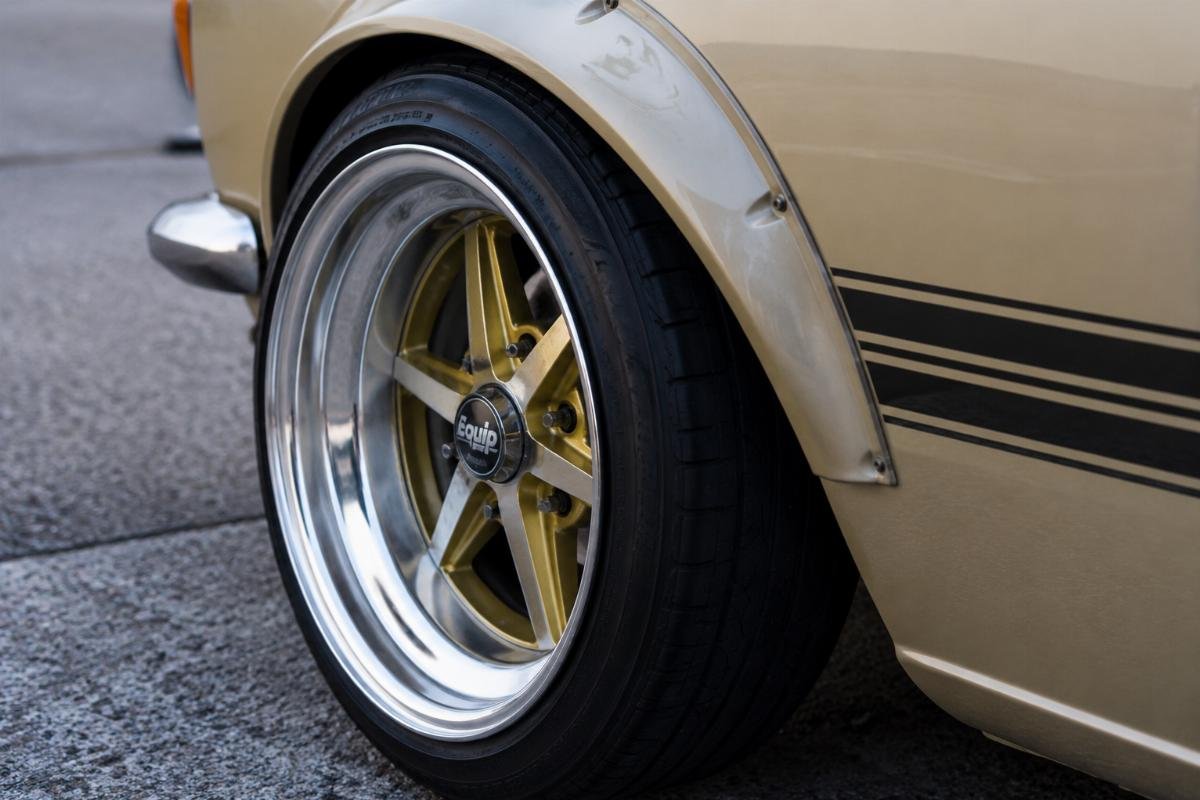
- Dimension Verification – Cross-check deep-dish lip depth and offset values against original vintage wheel spec sheets for the models you target.
- Test Report Request – Ask for independent VIA load rating test results for every SKU you plan to order, not just generic factory test documents.
- Sample Validation – Order one test unit before placing any batch order to compare fitment against your existing inventory or customer vehicle requirements.
What common pitfalls do global buyers face when sourcing retro style wheels from Chinese suppliers?
Most sourcing risks come from undisclosed hidden costs, missing fitment data and uncertified product quality, not language or logistics barriers. Many first-time buyers focus exclusively on listed unit price, and end up paying extra for last-minute customs fees, rework for non-compliant products, or expedited shipping to cover missed lead times.
| Risk Category | Common Unplanned Outcome | Proactive Mitigation Step |
|---|---|---|
| Hidden Fees | Additional charges for packaging, customs documentation or shipping that are not listed in initial quotes | Require a full all-in quote that includes all production, packaging and shipping fees before placing an order |
| Fitment Gaps | No pre-compiled SKU fitment data for common market vehicle models | Confirm suppliers provide complete fitment matching for the top 20 vehicle models sold in your target region |
| Lead Time Misrepresentation | Stated 15-day lead times extended to 45+ days without advance notice | Lock in written lead time guarantees with penalty clauses for delays beyond the agreed window |
A US-based auto tuning shop with a 50-piece custom order of 19-inch 80s staggered fitment retro wheels previously worked with an unvetted supplier that quoted a 10-day lead time, only to wait 38 days for delivery, forcing them to cancel three customer modification contracts. They later switched to a certified manufacturer that delivered the custom bronze matte finish order within 18 days, with no extra fees.

- Quote Breakdown Audit – Reject any quote that does not itemize production, packaging, documentation and shipping costs separately.
- Reference Check – Ask for 2-3 references from buyers in your region with similar order volumes to verify past lead time and quality performance.
- Penalty Clause Addition – Include a 5% per week delay penalty in your purchase order for any lead time extensions not approved in writing.
How to select a retro wheel supplier that matches your business order volume?
Suppliers need to support flexible MOQ options from 20 pieces for small batches to full container loads for bulk orders to fit different business scales. The wrong supplier will either force you to carry excess inventory you can’t move, or refuse to take your order entirely if your volume falls outside their preferred range.
| Buyer Segment | Typical Misaligned Supplier Offer | Correct Flexible Supplier Offering |
|---|---|---|
| Small Tuning Shops / E-commerce Sellers | 200+ unit MOQ for all stocked and custom products | 20-piece MOQ for stocked retro wheel SKUs for low-volume test orders |
| Regional Distributors | No custom private label support for orders under 5,000 units | 100-piece MOQ for custom branded designs and custom finishes |
| High-Volume Wholesalers | Inconsistent batch quality for orders over 10,000 units | Standardized quality control for all production runs up to full container loads |
Jinan Yoker Auto Parts supports 20-piece MOQ for stocked retro models, 100-piece MOQ for custom designs, 15-30 day production lead time and 3-year structural warranty for all retro wheel products, matching requirements for every core buyer segment from small tuning shops to multi-market regional distributors. A cross-border e-commerce seller on Amazon sourced 120 units of vintage retro wheel stock from the manufacturer last quarter, received complete Amazon-ready packaging and SKU fitment data, and achieved a 35% higher gross margin than competing suppliers they had worked with previously.

- MOQ Clarification – Confirm separate MOQ terms for stocked off-the-shelf SKUs and custom designed products before requesting quotes.
- Lead Time Confirmation – Ask for separate lead time figures for stocked shipments and custom production orders to avoid unexpected delays.
- Warranty Review – Verify that structural warranty terms apply equally to both stocked and custom order products with no exceptions.
What certification standards do retro wheels need to clear customs in your target market?
Multi-certification covering ISO, VIA, TüV, DOT and CCC is the basic requirement to avoid customs delays in most major global markets. Most buyers only check for a single certification required for their local market, and run into issues when they expand sales to new regions without verifying additional compliance credentials.
| Target Market | Minimum Required Certification | Additional Recommended Documentation |
|---|---|---|
| United States | DOT | Full customs entry documentation and test report copies |
| European Union | TüV | CE marking and compliance declaration for automotive parts |
| Southeast Asia / Middle East | VIA / ISO | Local import approval pre-clearance support |
| Global Cross-Border Sales | Combined ISO, VIA, TüV, DOT and CCC | Universal fitment data for multiple regional markets |
Most buyers

