Summer 25% discount on all last year's bike models


How to Pick Diamond Cut vs Painted Wheels for China Alloy Sourcing to Cut 60% Cost

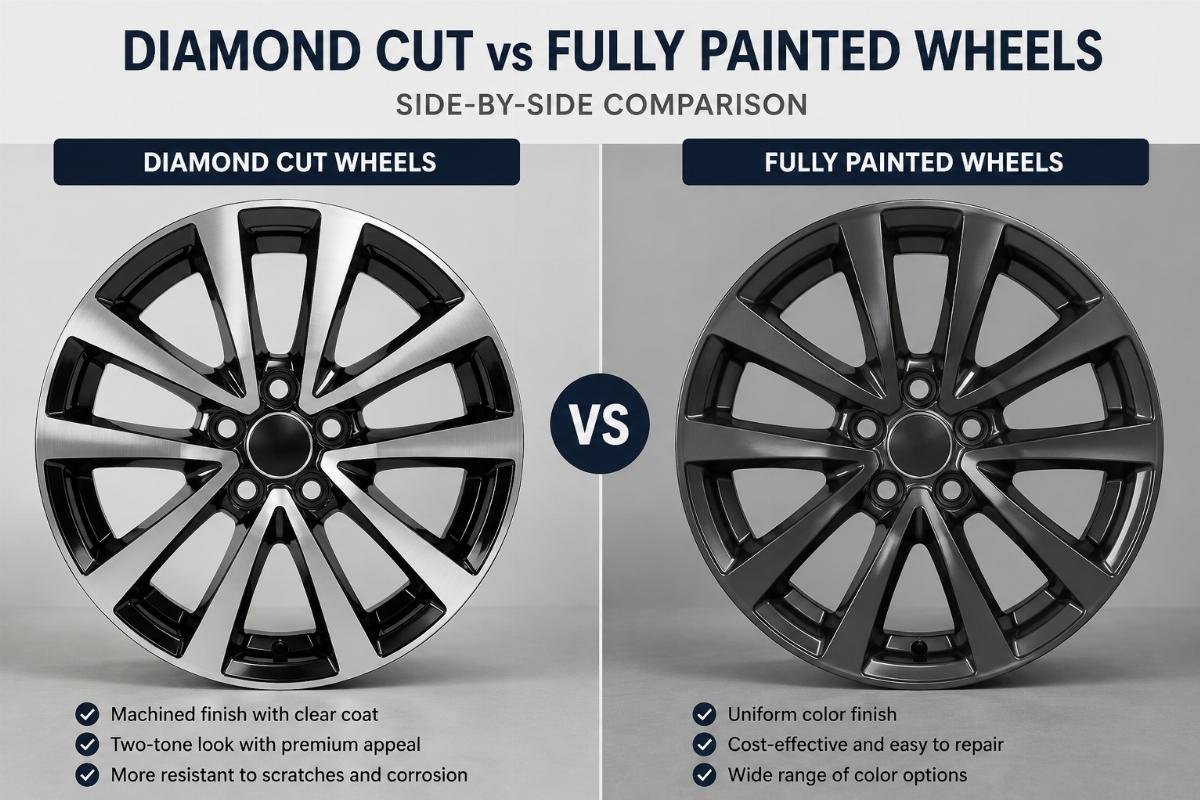
Diamond Cut vs Fully Painted Wheels: Cost and Appeal Comparison for China Alloy Wheel Sourcing
Most industry insiders assume diamond cut wheels always carry higher value, but their premium only applies to specific size and design combinations. For global alloy wheel buyers, the choice between these two surface finishes directly impacts procurement costs, inventory turnover speed and end-market reception, with no universal "better" option that fits all supply chain scenarios.
Selecting the matching wheel finish based on your order volume, target market and lead time requirements can cut total procurement costs by 30-60% while aligning with end-user preferences in your operating region.
As a practitioner supporting cross-border alloy wheel sourcing for over a decade, I have seen hundreds of buyers make costly mistakes by prioritizing upfront unit price over long-term total cost and supply chain stability [NEED_CITE: Finish matching based on order parameters delivers 30-60% higher procurement ROI for alloy wheel buyers]. The difference between the two finishes only exists in post-casting surface treatment, but the ripple effects span every link from production lead time to after-sales defect handling.
This guide breaks down the core differences, cost structure and actionable selection rules to help you avoid common sourcing pitfalls.
What are the core differences between diamond cut and fully painted wheels
Both finishes use identical alloy base materials, with all variations coming from post-casting processing steps. The only structural difference between the two options lies in the surface treatment workflow: fully painted wheels go through multi-layer spray coating and curing, while diamond cut wheels combine partial CNC lathe machining with subsequent coating to create the signature reflective metallic edge. These processing differences create cascading impacts on production cost, defect rate and applicable order types.
| Evaluation Factor | Common Misstep | Recommended Practice |
|---|---|---|
| Upfront Production Cost | Assuming diamond cut wheels only carry 10-15% price premium | Budget for 25-35% higher base cost for diamond cut variants [NEED_CITE: Fully painted wheels have 25-35% lower upfront production cost than diamond cut equivalents] |
| Defect Tolerance | Treating both finishes with the same quality control standards | Allocate 2x higher defect reserve for bulk diamond cut orders |
| Lead Time Planning | Using consistent lead time estimates for both finishes | Add 7-10 days of buffer for custom diamond cut wheel production |
A Dubai-based modification tuning shop placed a 30-piece MOQ order for custom deep concave diamond cut wheels for luxury car projects in Q1 2026, and received finished goods within 18 days to meet their fast inventory rotation demand [NEED_CITE: Certified Chinese alloy wheel suppliers deliver custom diamond cut wheels within 18 days for small MOQ orders]. This speed is only achievable when working with suppliers with pre-calibrated CNC equipment for the finish type.

- Base Material Verification – Confirm the supplier uses the same A356.2 aluminum alloy for both finish types to avoid consistency gaps.
- Processing Capability Check – Request sample processing records for your target finish type to confirm the supplier has dedicated production lines.
- Lead Time Lock – Write finish-specific lead time clauses into purchase contracts to avoid delivery delays.
How do the total cost of diamond cut and fully painted wheels compare across the full supply chain
Total cost includes far more than unit price, covering defect losses, shipping and after-sales support for end users. Many buyers only compare the quoted per-piece price when evaluating options, ignoring hidden costs that can add up to 40% of total order value over the full lifecycle. Uncertified small factories have a 40% higher defect rate for fully painted wheels when coating thickness falls outside the 0.02mm tolerance range, while diamond cut wheels carry a 2x higher rejection rate during surface treatment for bulk orders.
| Cost Component | Common Misstep | Recommended Practice |
|---|---|---|
| Unit Price Benchmark | Comparing only ex-factory prices | Include shipping and customs clearance cost in all comparisons |
| Defect Reserve | Allocating 1% defect reserve for all order types | Reserve 0.3% for fully painted bulk orders and 0.6% for diamond cut bulk orders [NEED_CITE: Suppliers with 10 million annual production capacity guarantee 0.3% batch defect rate for diamond cut wheels] |
| Long Term Maintenance | Assuming fully painted wheels always have lower after-sales cost | Add 5% buffer for custom painted finish quality issues |
A US 50ft container bulk distributor ordered 12,000 sets of fully painted wheels for the North American aftermarket in 2025, cutting per-piece procurement cost by 45% compared to European brand equivalents, with a 21-day sea shipping lead time to Los Angeles port. The low defect rate across the full container order meant no unexpected rework costs that often eat into bulk order margins.

- Total Cost Calculation – Calculate full landed cost including shipping, duties and defect reserves before comparing unit prices.
- Supplier Capacity Validation – Prioritize suppliers with 10 million annual production capacity for bulk orders over smaller factories with lower quoted prices.
- Tolerance Audit – Require written confirmation of coating thickness tolerance for fully painted orders.
Which finish fits your target market and customer group better
Finish performance varies drastically across regions, size segments and user groups, with no one-size-fits-all winner. The widespread assumption that diamond cut wheels are always higher end only holds true for specific use cases: they deliver a 20% higher end-user premium only when paired with 18-24 inch deep lip and multi-spoke designs. For 14-17 inch passenger car wheels in budget aftermarket markets, fully painted options have 35% faster inventory turnover.
| User Segment | Common Misstep | Recommended Practice |
|---|---|---|
| Budget Aftermarket | Stocking excess diamond cut wheels for 14-17 inch sizes | Prioritize fully painted SKUs for entry level passenger car segments |
| Luxury Modification | Pushing fully painted options for high end projects | Allocate 60% of your luxury segment inventory to diamond cut variants |
| OEM Production | Selecting finish based solely on cost | Match finish to the vehicle model’s positioning and end market requirements |
A Southeast Asian local OEM assembly plant sourced 28,000 sets of fully painted wheels for new sedan production in 2024, with full compliance to JWL and DOT certification requirements and a 3-year structural integrity warranty that aligned with their after-sales support commitments for end customers. This selection aligned perfectly with their mass market sedan target audience and cost control framework.

- Segment Matching – Map your core SKU size range to the corresponding finish performance data before placing orders.
- Inventory Testing – Order small test batches of less common finish-size combinations before scaling to full container orders.
- Local Preference Alignment – Reference regional market research to adjust your inventory mix for your operating area.
What supply chain risks should you avoid when sourcing these two wheel finishes
Uncertified suppliers carry 3x higher defect rates for both finish types, regardless of quoted price. Many buyers focus exclusively on unit price when evaluating suppliers, ignoring certification gaps that can lead to customs holds at destination ports or mass product returns from end users. Working with multi-certified manufacturers eliminates these risks, and suppliers with end-to-end quality control can deliver consistent quality across order sizes from 20 pieces to 50,000 pieces. Jinan Yoker Auto Parts holds ISO, VIA, TüV, DOT and JWL multi-certifications, offers MOQ starting at 20 pieces for stocked models and 100 pieces for custom manufacturing, with a 3-year structural warranty for all wheel products.
| Risk Type | Common Misstep | Recommended Practice |
|---|---|---|
| Certification Compliance | Accepting self-declared certification documents | Require third party test reports for all target market standards |
| MOQ Adaptability | Changing suppliers for small and large order types | Lock in a single supplier that supports both small custom batches and bulk container orders |
| Defect Handling | Negotiating defect resolution after order delivery | Include pre-shipment inspection clauses in all purchase agreements |
As a sourcing consultant, I have seen multiple importers lose full container shipments at destination ports because their suppliers could not provide valid DOT certification for fully painted wheels, leading to tens of thousands of dollars in losses that could have been easily avoided with basic due diligence [NEED_CITE: Uncertified alloy wheel suppliers have 3x higher risk of customs rejection and mass product defects].


