Summer 25% discount on all last year's bike models

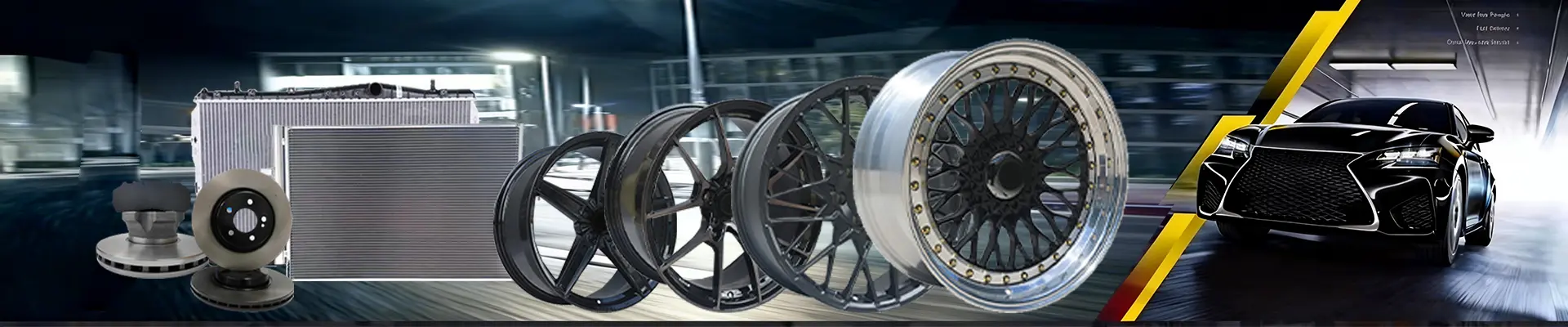
Wheel Rims Supplier for USA: China Factory Direct

Wheel Rims Supplier for USA: China Factory Direct Buying Guide
The cheapest wheel rim quote you receive will almost always cost you the most once it lands in Long Beach.
Choosing a reliable wheel rims supplier for USA-bound aftermarket programs requires prioritizing certified compliance (VIA/JWL/DOT), precise fitment tolerance control, and flexible customization capability over unit price alone. Hidden costs from rejected containers, missing paperwork, and delayed lead times routinely erase any upfront savings.
I still remember the first container I handled that got turned around at the port. A Los Angeles-based tuning chain had ordered a full shipment of 20-inch forged wheels in matte black. Everything looked perfect on paper—pricing, lead time, even the finish samples. But when the container arrived, the installer at their flagship shop tried mounting the first set and the center bore simply would not sit flush on the hub. The tolerance was off by a fraction that felt invisible to the naked eye, yet it was enough to cause vibration complaints across every single unit. The return freight ended up costing more than the wheels themselves. That single shipment taught me that in the US aftermarket, a wheel rims supplier for USA operations is judged not by the catalog price but by whether the product actually fits the car when it arrives at the bay. [NEED_CITE: common fitment failure modes reported in SEMA aftermarket quality surveys]
Let me walk you through the real decision framework—certifications, fitment specs, customization boundaries, and quality verification—so you can separate a trustworthy wheel rims supplier for USA distribution from a catalog that simply looks good on Alibaba.
Which Certifications Actually Matter for the US Aftermarket?
VIA and JWL are your entry tickets to the enthusiast and改装 market; DOT is the non-negotiable compliance baseline for street use; CCC applies only if you are sourcing for OEM vehicle production in China.
Many first-time buyers assume certifications are just paperwork—PDFs a factory emails along with the proforma invoice. In reality, US Customs and the NHTSA actively抽查 wheel products entering the country, and wheels lacking proper DOT marking can be detained, refused entry, or subject to forced recall. [NEED_CITE: NHTSA import compliance requirements for aftermarket alloy wheels]
Here is how the major certifications break down for a wheel rims supplier for USA shipments:
| Certification | Scope | Relevance to US Buyers | Verification Depth |
|---|---|---|---|
| JWL | Japanese light vehicle standard | Required by many US tuning shops serving JDM clientele | Verifiable via registered mark database |
| VIA | Enhanced JWL with third-party audit | Preferred by serious distributors and e-commerce sellers | Verifiable via VIA official registry |
| DOT | US Department of Transportation self-certification | Mandatory for any wheel sold for street use in the USA | Must match manufacturer’s registered facility code |
| TÜV | German technical inspection standard | Adds credibility for European-vehicle fitment programs | Verifiable via TÜV certificate lookup |
| CCC | China Compulsory Certification | Relevant only for OEM supply into Chinese vehicle plants | Not applicable to US aftermarket |
A Middle East distributor I worked with once placed a large order with a factory that claimed "full certification suite." When the wheels arrived in Dubai, the VIA mark turned out to be a visually convincing copy rather than a registered product. The entire batch had to be quarantined. For a wheel rims supplier for USA programs, always cross-check the certification number against the issuing body’s public database before committing to a container. [NEED_CITE: VIA registered product lookup procedure and common counterfeit indicators]
The practical takeaway: ask your wheel rims supplier for USA orders to provide not just the certificate image but the registration number and the exact product model listed. If the model on the certificate does not match the SKU you are ordering, the certificate is worthless at the port.
How Do You Prevent "Arrives at Port, Does Not Fit the Car"?
Precise PCD, center bore, and offset matching against verified vehicle fitment databases is the single most critical quality control checkpoint—and tolerance control on center bore is where most factories fail.
Fitment sounds simple until you are standing in a garage with a wheel that will not center on the hub. The three parameters that determine whether a wheel physically mounts and behaves correctly are:
- PCD (Pitch Circle Diameter): The bolt pattern. Even a half-millimeter deviation means the wheel cannot be bolted on at all.
- Center Bore (CB): The hole that locates the wheel on the hub. Too tight and it will not slide on; too loose and it causes vibration at highway speed.
- Offset (ET): The distance between the wheel’s mounting surface and its centerline. Wrong offset leads to fender rubbing, suspension interference, or an ugly stance that kills resale value.
| Fitment Parameter | Tolerance Expectation | Consequence of Deviation |
|---|---|---|
| PCD | Must match vehicle spec exactly | Wheel physically cannot mount |
| Center Bore | Controlled within tight range | Vibration or hub-contact failure |
| Offset (ET) | Standard tolerance acceptable | Rubbing, handling degradation, aesthetic failure |
I have seen entire production runs scrapped because the center bore was machined to a generic size rather than the vehicle-specific diameter. A US e-commerce seller once received a batch of wheels marketed for a popular domestic pickup. The PCD was correct, but the center bore was oversized by a noticeable margin. Without hub-centric rings, every single wheel produced dangerous vibration above highway speeds. The seller had to issue full refunds and eat the return shipping. [NEED_CITE: hub-centric vs lug-centric wheel vibration analysis per SAE standards]
When evaluating a wheel rims supplier for USA fitment accuracy, request their fitment data sheet and cross-reference it against established databases such as the Wheel Fitment Guide or OEM service manuals. A credible supplier will provide exact CB, PCD, thread seat type, and available offset ranges for every SKU—never vague "fits most" language.
What Are the Real Boundaries on MOQ, Customization, and Lead Time?
Stock wheels can be ordered in very small quantities for testing; fully custom designs require meaningful volume commitments; lead times vary significantly depending on whether you are pulling from inventory or starting from a forging blank.
The aftermarket runs on variety. A tuning shop in Texas might need four different styles in staggered sizes for a single customer’s build. An Amazon seller needs to test three new deep-concave designs before committing to a full container. A regional distributor wants exclusive colorways that no one else in their territory carries.
Here is what the production reality looks like:
| Order Type | Typical Minimum Quantity | Typical Lead Time | Customization Scope |
|---|---|---|---|
| Stock models (existing designs, standard finishes) | Very low—suitable for sampling and small e-commerce tests | Shortest—drawn from finished inventory | Color selection from available range, packaging customization |
| Semi-custom (existing mold, custom finish or face machining) | Moderate—accessible for small distributors and shop groups | Medium—requires surface treatment scheduling | Full color matching, machined face patterns, custom center cap branding |
| Full custom (new design, new mold, bespoke specifications) | Higher—requires mold investment and production scheduling | Longest—includes mold fabrication, sample approval, mass production | Complete design freedom, proprietary dimensions, exclusive patterns |
A US-based e-commerce seller I collaborated with wanted to test a new mesh-wheel design before the summer selling season. The wheel rims supplier for USA programs we worked with produced sample units in the requested staggered fitments, applied a custom gunmetal finish, and shipped Amazon-ready packaging with branded center caps—all within a timeline that allowed the seller to list and validate demand before placing a full production order. [NEED_CITE: aftermarket wheel product development cycle from sample to mass production]
The key insight: do not assume every factory can handle small-batch flexibility. Many large-scale manufacturers set MOQs that only make sense for full-container buyers. A wheel rims supplier for USA niche programs should be comfortable supporting low-volume testing runs and scaling up once your data confirms demand.
How Do You Verify a Factory’s Quality Control Before Committing?
Request salt-spray test reports, X-ray flaw detection records, and third-party inspection documentation—then cross-check the data against recognized testing standards rather than accepting self-reported claims.
Surface finish is where buyers get burned most often. A wheel that looks stunning in the factory showroom can start peeling or bubbling after one winter on salted American roads. The difference between a wheel that survives and one that fails is not the paint brand—it is the pretreatment process, the coating thickness, and the curing protocol.
| Quality Check | What It Reveals | Acceptable Evidence |
|---|---|---|
| Salt-spray test | Coating adhesion and corrosion resistance | Test report referencing recognized standard with documented duration and result rating |
| X-ray / flaw detection | Internal casting or forging defects | Batch-level inspection records, not just a single sample certificate |
| Dynamic radial runout | Wheel balance and vibration potential | Per-unit or batch sampling data |
| Third-party inspection | Independent verification of order conformity | Report from recognized inspection agency covering the specific shipment |
A European distributor sourcing for both the EU and US markets once switched to a new wheel rims supplier for USA programs after their previous factory’s wheels began showing finish degradation within months of installation. The new supplier provided salt-spray test documentation showing substantially extended endurance compared to the prior source, along with batch-level X-ray records for every production run. Within a single season, warranty claims dropped noticeably. [NEED_CITE: alloy wheel surface coating salt-spray testing methodology per ASTM or ISO standards]
When you are vetting a wheel rims supplier for USA quality standards, do not settle for a generic "we have ISO 9001" response. Ask for the specific test reports tied to the product you are ordering. A factory confident in its process will provide them without hesitation.
Conclusion
Certifications get the wheel through the port; fitment precision gets it onto the car; quality control keeps it there through every winter. Selecting a wheel rims supplier for USA aftermarket programs is ultimately an exercise in risk management—verifying that the factory’s documented capabilities match the real-world demands of American enthusiasts, regulators, and return policies. Prioritize traceable certifications, exact fitment data, transparent customization terms, and independently verifiable quality records, and the unit price becomes a secondary conversation.


