Summer 25% discount on all last year's bike models

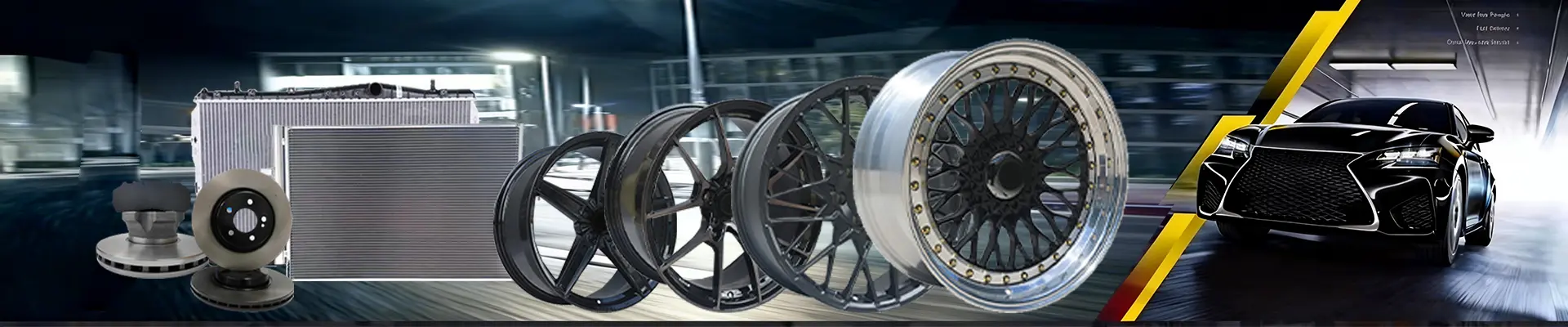
Wheel Rims Price in Jordan: 2026 OEM Wholesale Supplier Guide

Wheel Rims Price in Jordan: 2026 OEM Wholesale Supplier Guide
Most buyers assume wheel size drives the price tag. In reality, surface finish alone can swing your per-unit cost by nearly half — and that is where margins quietly disappear.
The wheel rims price in Jordan for 2026 is shaped by six variables: factory base price, surface treatment complexity, rim diameter and weight, minimum order quantity tier, ocean freight, and Jordanian customs duty. Buyers who map each variable before placing orders avoid paying premium-tier prices for mid-range products.
I learned this the hard way. Years ago, I loaded a full container of 17-inch machined-face rims bound for the Middle East. When the container reached the port, the buyer’s inspector found subtle water-wave patterns on the clear coat under warehouse lighting. The entire shipment was rejected. Demurrage fees piled up for weeks, and the cost of re-exporting and replacing the goods wiped out the profit from that order and several after it. Since that day, I scrutinize every finish specification and MOQ clause before a single rim leaves the floor. [NEED_CITE: surface finish cost variance across alloy wheel treatments]
Understanding how each cost layer stacks up is the only way to buy smart. Let me walk you through the structure.
What Determines Wheel Rims Price in Jordan in 2026?
The landed price of any alloy rim in Jordan is never just the factory quote. It is the sum of manufacturing cost, finish complexity, physical dimensions, order volume, logistics, and import duties — and each layer behaves differently.
At the factory level, the base price of a cast or flow-formed alloy rim depends on raw aluminum alloy pricing, mold amortization, and machining time. [NEED_CITE: global aluminum alloy price trend for wheel manufacturing] Larger diameters require more material and longer cycle times on the CNC lathe, which pushes the base cost upward. But here is where most buyers get the sequence wrong: they compare quotes by diameter alone, ignoring the finish column on the same quotation sheet.
Consider this typical cost structure for a mid-range 17-inch rim:
| Cost Component | Low Complexity | Mid Complexity | High Complexity |
|---|---|---|---|
| Base Casting and Machining | Standard | Standard | Standard |
| Surface Preparation | Minimal | Moderate | Extensive |
| Finish Application | Noticeably lower | Moderate | Substantially higher |
| Quality Inspection Level | Sample-level | Full batch-level | Full batch-level with salt-spray testing |
| Packaging for Export | Basic | Reinforced | Reinforced with individual wrapping |
A gloss black rim and a fully machined-face rim of the same size can carry a cost gap that surprises first-time importers. The machining process requires additional CNC passes, protective clear coating, and more rigorous visual inspection — all of which add cost before the rim even reaches the pallet. [NEED_CITE: alloy wheel surface treatment process cost comparison]
Then there is the order volume question. A buyer ordering a full container of a single SKU gets a fundamentally different per-piece price than a modification shop ordering a mixed pallet of staggered sizes. The factory’s mold setup time, production scheduling, and raw material batching all shift with volume.
Shipping to Aqaba Port adds another layer. Rim weight directly affects container utilization — a container loaded with 20-inch forged rims carries fewer pieces than one loaded with 15-inch cast units, which means the per-piece freight cost climbs even though the FOB price per kilogram might look similar. [NEED_CITE: ocean freight cost per weight unit for automotive parts to Middle East]
Finally, Jordan’s customs duty on alloy wheels, combined with clearance fees and inland transport to Amman or Irbid warehouses, forms the last mile of cost. Buyers who only compare FOB prices from Alibaba often discover the truth when the first invoice arrives.
The takeaway: wheel rims price in Jordan cannot be reduced to a single number. It is a formula, and every variable in that formula deserves your attention before you sign a purchase order.
How Does Surface Finish Affect Rim Pricing?
Surface finish is the single largest hidden cost driver in alloy wheel pricing — and most buyers only discover this after receiving their first sample batch.
When I review quotations for Middle East clients, I often see the same mistake: the buyer selects a rim style, confirms the diameter, and then casually picks a finish from a color chart without asking how that finish changes the unit price. The result is a budget that looks right on paper but collapses at the payment stage.
Here is a qualitative comparison of common finish types and their cost impact:
| Finish Type | Process Complexity | Material Cost | Inspection Rigor | Relative Cost Level |
|---|---|---|---|---|
| Gloss Black Paint | Standard | Moderate | Standard | Noticeably lower |
| Matte Black Paint | Standard | Moderate | Moderate | Noticeably lower |
| Machined Face with Clear Coat | High | Moderate | High | Substantially higher |
| Chrome Plating | Extensive | High | Extensive | Substantially higher |
| Bronze or Gunmetal Metallic | Moderate | Moderate-High | Moderate | Moderate |
| Hyper Silver Metallic | Moderate | Moderate | Moderate | Moderate |
The reason is straightforward. A gloss black or matte black finish involves powder coating or liquid paint application, curing, and a visual check. The process is well-established, the materials are commodity-grade, and the defect rate is relatively low. [NEED_CITE: powder coating versus liquid paint process for alloy wheels]
A machined-face rim, by contrast, goes through a secondary CNC operation after painting. The lathe cuts a thin layer off the face to expose bare aluminum, creating that mirror-like contrast between the painted spokes and the shiny face. This step requires precise tooling, slower cycle times, and a protective clear coat to prevent oxidation. Any vibration mark, tool chatter, or clear coat run becomes a reject. The scrap rate climbs, and that cost flows into the unit price.
Chrome plating is even more demanding. The rim must go through multiple chemical baths — copper strike, nickel plating, then chrome — with rigorous rinsing between each stage. Environmental compliance costs have risen globally, and chrome-plated rims carry a premium that has grown noticeably over recent years. [NEED_CITE: environmental compliance cost impact on chrome plating for automotive wheels]
I once worked with a modification shop in the Gulf that wanted to switch their best-selling 18-inch mesh wheel from gloss black to machined face for a premium product line. The per-unit price increase was significant enough that they had to restructure their retail pricing. They had not anticipated the gap because their original supplier’s quotation had buried the finish differential in a single line item.
For buyers sourcing wheel rims price in Jordan, the practical lesson is this: always request a breakdown that separates base rim cost from finish cost. If a supplier cannot or will not provide that separation, you are flying blind.
What Is the Real Cost Difference Between MOQ Levels?
Lower minimum order quantities feel safer, but the per-unit premium on small batches can erase the inventory risk advantage entirely — especially for custom finishes.
The alloy wheel industry typically operates on two MOQ tiers. The first is stock models — rims that the factory produces in volume and holds in warehouse. These can ship in quantities as low as a few dozen pieces because the molds are already paid for, the production run is complete, and the rims are waiting for a buyer. The per-unit price is higher than a dedicated production run, but the total cash outlay is small, and the lead time is short.
The second tier is custom production — rims made to the buyer’s specification, whether that means a unique finish color, a specific fitment, or a private-label center cap arrangement. Here, the factory must set up molds, schedule a dedicated production slot, and commit raw material. The MOQ threshold is higher because the factory needs to amortize setup costs across enough units to make the run economical. [NEED_CITE: mold amortization economics in alloy wheel manufacturing]
| Order Type | MOQ Threshold | Per-Unit Cost Level | Lead Time | Inventory Risk |
|---|---|---|---|---|
| Stock Models | Noticeably lower | Noticeably higher | Noticeably shorter | Noticeably lower |
| Custom Production | Noticeably higher | Noticeably lower | Noticeably longer | Noticeably higher |
A modification shop ordering twenty pieces of a staggered fitment set — say, 19-inch fronts and 20-inch rears — is buying from stock. The convenience is real, but the per-piece price reflects that convenience. Multiply that premium across a full catalog of SKUs, and the annual spend climbs faster than expected.
On the other hand, a wholesale distributor in Jordan committing to a full container of a single 17-inch model in matte black gets a meaningfully lower per-unit price. The trade-off is capital commitment and the risk that the chosen size or finish does not rotate quickly.
I have seen buyers in East Africa order small mixed batches repeatedly, paying the stock premium each time, and then wonder why their landed cost per rim exceeds what larger competitors pay. The math is simple but often overlooked: the stock premium on small orders, compounded over twelve months, can surpass the carrying cost of a larger single-run order.
For buyers evaluating wheel rims price in Jordan, the decision is not just about the unit price on the invoice. It is about total cost of ownership — including inventory turnover, warehouse space, and the opportunity cost of capital tied up in slow-moving stock.
How to Calculate Landed Cost for Wheel Rims Imported to Jordan?
FOB price is the starting line, not the finish line. The real cost of wheel rims in Jordan includes customs duty, clearance fees, port handling, inland freight, and quality loss — and these layers can add a significant percentage on top of the factory quote.
Many first-time importers focus exclusively on the FOB number. They compare supplier quotes, pick the lowest, and feel confident. Then the container reaches Aqaba, and the true cost reveals itself.
The landed cost structure for alloy wheels imported into Jordan typically includes the following layers:
- FOB Price — The factory’s quoted price including packaging. This is what you see on the proforma invoice.
- Ocean Freight — Calculated per container, but effectively distributed across the number of rims inside. Heavier rims mean fewer pieces per container, which raises the per-unit freight share. [NEED_CITE: typical container load capacity for alloy wheels by diameter]
- Marine Insurance — A small percentage of the CIF value, but non-negotiable for high-value shipments.
- Jordanian Customs Duty — Alloy wheels fall under specific HS codes, and the duty rate applies to the CIF value. [NEED_CITE: Jordan customs duty rate for alloy wheel imports under relevant HS code]
- Clearance and Port Handling Fees — Agent fees, terminal handling charges, documentation fees, and inspection charges if applicable.
- Inland Transport — Trucking from Aqaba Port to your warehouse in Amman, Zarqa, or Irbid. Distance and road conditions affect this cost.
- Quality Loss Allowance — The inevitable percentage of rims that arrive with cosmetic defects, requiring replacement or discounting to end customers.
A wholesale buyer in the Middle East once told me that after adding all these layers, their actual landed cost per rim was substantially higher than the FOB price they had budgeted around. The gap was large enough to turn a profitable SKU into a breakeven one.
The practical approach is to build a spreadsheet that captures each layer for every SKU you import. Do not rely on the supplier’s estimate for freight or duty — get your own freight forwarder quote and verify the HS code classification with a local customs broker. [NEED_CITE: HS code classification for alloy wheels in Jordan tariff schedule]
For buyers serious about controlling wheel rims price in Jordan, this spreadsheet is not optional. It is the difference between guessing and knowing.
How to Avoid Quality Traps That Destroy Your Margins?
The cheapest rim on the quotation sheet often becomes the most expensive rim in your warehouse — because quality failures at the destination port carry costs that dwarf any per-unit savings.
I mentioned my own experience at the beginning — the rejected container, the demurrage fees, the months of profit erased. That was not a rare event. It is a recurring pattern in the alloy wheel trade, and it happens because buyers optimize for the wrong variable.
Quality failures in alloy wheels typically fall into three categories:
| Failure Category | Root Cause | Detection Point | Cost Impact |
|---|---|---|---|
| Structural Defects | Inadequate heat treatment or material contamination | Post-arrival X-ray or load testing | Substantially higher — product unusable |
| Surface Cosmetic Defects | Poor paint adhesion, clear coat runs, machining marks | Visual inspection at destination | Noticeably higher — rework or discount |
| Dimensional Inaccuracy | CNC programming error or mold wear | Fitment check at installation | Moderate — returns and replacements |
The first category is the most dangerous. A rim that fails structurally is not just a financial loss — it is a liability risk. This is why certification matters. Standards like VIA, TÜV, JWL, and DOT exist precisely because the consequences of structural failure are catastrophic. [NEED_CITE: alloy wheel structural certification standards comparison VIA TÜV JWL DOT]
The second category is the most common. Cosmetic defects do not compromise safety, but they destroy resale value. A rim with a visible clear coat run or a paint adhesion chip cannot be sold at full price. The buyer must either absorb the discount or pay for rework — and rework on a finished rim is expensive and often impossible to do perfectly.
The third category causes operational headaches. A rim that does not seat properly on the hub or has incorrect offset creates installation problems, customer complaints, and return logistics.
The defense against all three categories is the same: require certification documentation, insist on pre-shipment inspection reports, and build a quality loss allowance into your cost model. Suppliers who resist providing these documents are telling you something about their process control — whether they intend to or not. [NEED_CITE: pre-shipment inspection best practices for alloy wheel imports]
For buyers evaluating wheel rims price in Jordan, the question is not just "how much does this rim cost?" It is "how much will this rim cost me if five percent of the batch fails inspection at the port?"
Conclusion
Wheel rims price in Jordan is a multi-layer calculation, not a single number — and buyers who treat it as a single number pay for that simplification. Surface finish, order volume, logistics, customs, and quality risk each contribute to the final landed cost. Map each layer before you commit, and the numbers will work in your favor rather than against you.


