Summer 25% discount on all last year's bike models

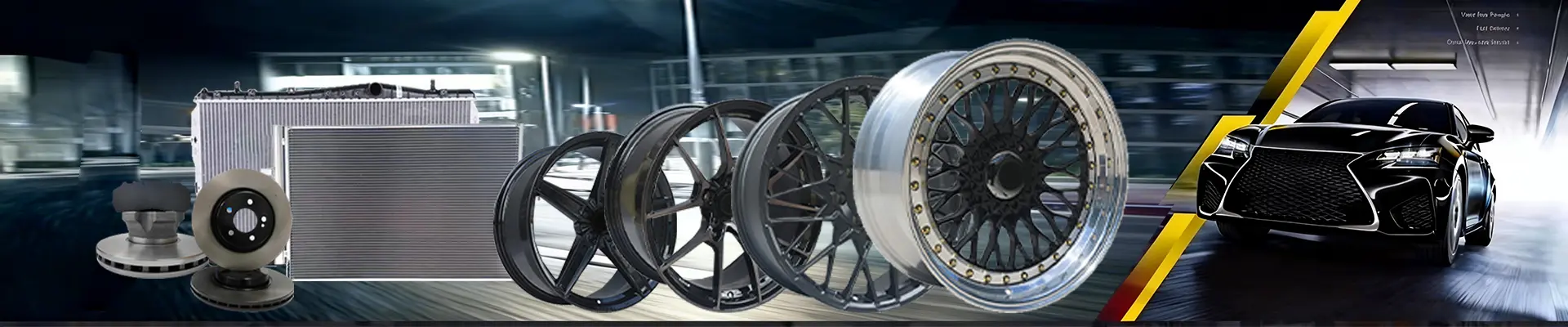
Buy Wheel Accessories for Distributors

Buy Wheel Accessories for Distributors
Unit price is the cheapest trap in wheel accessories procurement.
Distributors buying wheel accessories in bulk must prioritize vehicle fitment verification, container-load packaging logic, and after-sales claim terms over per-piece cost. A mismatched center cap or wrong-thread lug nut turns a full container into dead stock, and the write-off cost dwarfs any savings negotiated on the invoice.
I still remember the afternoon a Middle East distributor opened container after container of center caps we had shipped, only to find the clips would not snap into the hub rings of the most common sedans on his streets. The clips were a fraction of a millimeter off the specification his local vehicles required. He had ordered by brand name alone, assuming one Toyota emblem meant one universal clip size. The entire shipment sat in a bonded warehouse for months, accruing storage fees that eventually exceeded the cargo value. That single order taught me how fast a "good price" deal becomes a mid-six-figure loss when fitment is guessed rather than verified. [NEED_CITE: regional vehicle registration data by make and model year]
The lesson is simple but rarely written into purchase contracts: when you Buy Wheel Accessories for Distributors, the real cost is not the piece price, it is the cost of a container that cannot be sold.
What Wheel Accessories Should Distributors Prioritize for Their Market?
SKU priority must follow local vehicle parc data, not factory best-seller lists.
A factory in Shandong will naturally push the center caps and lug nuts that move fastest in its existing customer base. That list usually skews toward European and Japanese nameplates common in East Asia. A distributor in West Africa, however, may find that older-model pickup trucks and regional utility vehicles dominate the road, while a Latin American buyer may see a heavy concentration of compact hatchbacks from a different set of OEMs. Ordering the factory’s "top ten" without cross-checking against the local parc is how dead stock begins.
The practical workflow looks like this. First, pull the latest registration statistics from the target country’s transport authority or a recognized industry database. [NEED_CITE: national vehicle registration statistics by make and model] Second, rank the top vehicle platforms by volume. Third, map each platform to its specific center cap diameter, clip count, lug nut thread pitch and seat type, and valve stem configuration. Fourth, build the purchase order around that map, not around the supplier’s catalog highlights.
A buyer in Southeast Asia once shared his reorder pattern with me. His first order was heavily weighted toward center caps for mid-size sedans, because that was what his previous supplier in Japan had stocked. After checking local registration data, he realized that compact MPVs and pickup-based SUVs actually made up the majority of vehicles on the road in his city. He restructured the next container so that the high-volume SKUs reflected those platforms, and the sell-through rate on the first warehouse cycle improved noticeably.
When you Buy Wheel Accessories for Distributors, the SKU mix is a market research exercise before it becomes a purchase order.
How to Verify Fitment Before Placing a Container Order?
Require a cross-reference list from the manufacturer and run physical clip-and-thread tests on sample vehicles before releasing the full order.
Fitment verification is the single most under-invested step in bulk wheel accessories procurement. Many distributors assume that a center cap listed for a certain brand and model range will fit every variant in that range. In reality, the same brand can use different clip diameters, clip counts, and hub bore diameters across model years and even across trim levels within the same year. Lug nuts are equally unforgiving: a shift from conical seat to ball seat, or a change in thread pitch, will render an entire pallet unusable on the target vehicle.
The verification process should follow a clear sequence. Request a written cross-reference list from the manufacturer, mapping each accessory SKU to specific OEM part numbers and vehicle platforms. [NEED_CITE: OEM part number cross-reference standards for wheel accessories] Obtain physical samples of the highest-volume SKUs. Install those samples on actual vehicles representing the target platforms, not just on a display rim in the factory showroom. Document the fit: does the center cap clip engage with a clean snap, or does it require force that risks cracking the cap? Does the lug nut seat flush against the wheel bore without binding? Does the valve stem angle clear the TPMS sensor on vehicles so equipped?
A distributor in Latin America learned this the hard way. He ordered a full container of lug nuts based on a catalog listing that grouped several vehicle platforms under one thread specification. When the cargo arrived, a significant portion of the lug nuts had a seat geometry that did not match the wheel bores of the most common local variants. The supplier’s catalog had been technically correct for some markets, but not for his. The rework and replacement cycle cost several times the original freight savings he had negotiated.
Jinan Yoker Auto Parts addresses this gap by providing a complete cross-reference list covering center caps, lug nuts, valve stems, and hubcaps, tied directly to OEM platforms. Samples are available for physical testing on real vehicles before a container commitment is made. When you Buy Wheel Accessories for Distributors from a manufacturer willing to invest in that verification step, the risk of a bonded-warehouse write-off drops substantially.
What MOQ and Packaging Options Work for Bulk Buyers?
Flexible MOQ and container-sharing logic allow distributors to test markets without overcommitting, while retail-ready packaging reduces downstream labor cost.
A common misconception among first-time importers is that wheel accessories must be ordered in massive single-SKU quantities to justify a container. In practice, the economics of wheel accessories are well suited to mixed containers, especially when the accessories are being shipped alongside alloy wheels from the same manufacturer. Center caps, lug nuts, valve stems, hubcaps, and spacers are compact and relatively light, so they can fill the gaps in a wheel container without triggering a separate freight bill.
The MOQ structure matters for cash flow and inventory risk. A manufacturer offering low MOQs on stock models allows a distributor to place a trial order of a few dozen pieces per SKU, test the local market response, and then scale the reorder. This is far safer than committing to thousands of pieces of a single SKU based on a catalog assumption. For custom or private-label orders, the MOQ threshold is naturally higher, but the ability to consolidate those custom accessories into the same container as the wheels keeps the per-unit landed cost competitive.
Packaging is the other half of this equation. A distributor selling to retail counters needs individually bagged, barcoded units with the retailer’s branding or the distributor’s private label. A distributor supplying installation shops may prefer bulk-packed units in larger cartons to minimize unpacking labor. The same SKU can often be packed either way, but the instruction must be given before production, not after the cargo arrives. A buyer in the Middle East once received a container of valve stems and center caps packed in loose bulk cartons, even though his end customers were retail chains requiring individual poly bags with hang tabs. The cost of repacking the entire container locally consumed a significant portion of the margin he had built into the order.
Ouya-branded wheel accessories are designed to ship in the same container as alloy wheels, with private-label packaging options available for center caps, lug nuts, and valve stems. The MOQ starts at a level that allows meaningful market testing without locking up excessive working capital. When you Buy Wheel Accessories for Distributors, the packaging instruction is as much a part of the purchase order as the SKU list.
How to Structure After-Sales Terms to Protect Your Investment?
Define defect-rate thresholds, claim response timelines, and replacement logistics in the contract before the first container ships.
After-sales terms are the clause most often left vague, and the clause that causes the most damage when a problem actually occurs. A distributor who discovers a batch defect after the cargo has cleared customs faces a dilemma: return the goods at enormous freight cost, absorb the loss, or attempt to negotiate a partial credit with a supplier thousands of miles away. None of those options is pleasant, and the outcome depends almost entirely on what was written into the contract before production began.
The key terms to lock down are three. First, the acceptable defect-rate threshold. Every manufacturing process produces some level of defect, but the threshold must be defined numerically or by reference to an inspection standard, and the consequence of exceeding it must be specified. [NEED_CITE: ISO 2859 sampling inspection standards for automotive accessories] Second, the claim response timeline. How many days does the supplier have to acknowledge a defect claim, and how many days to propose a resolution? Without a defined timeline, claims can drift for months while the distributor’s customers lose patience. Third, the replacement logistics. Will the supplier ship replacements by air at the supplier’s expense, or will they be consolidated into the next container order? If the defect rate is high enough, the distributor may need immediate air freight to keep retail shelves stocked, and that cost must be allocated clearly in the contract.
A buyer in Africa shared a pattern that illustrates the risk. His first trial order went smoothly, and he placed a substantially larger reorder based on that experience. When a portion of the reorder arrived with a surface finish defect on the center caps, the supplier’s response was slow, and the contract was silent on who would bear the cost of air-shipping replacements. The dispute dragged on for months, and the buyer’s end customers had already shifted part of their orders to a competitor. The financial impact was manageable, but the reputational damage in a small market took far longer to repair.
When you Buy Wheel Accessories for Distributors, the after-sales clause is not a legal formality. It is the mechanism that determines whether a bad batch becomes a manageable inconvenience or a relationship-ending dispute. Jinan Yoker Auto Parts structures its supply agreements with defined defect-rate thresholds, clear claim response timelines, and pre-agreed replacement logistics, so that both parties know exactly where they stand before the first piece is loaded into the container.
Conclusion
Fitment, packaging, and after-sales terms matter more than piece price in wheel accessories procurement.
Distributors who Buy Wheel Accessories for Distributors succeed by treating each container as a market-specific project, not a catalog clearance. Verify fitment against local vehicle data, structure MOQs and packaging around the actual sales channel, and write after-sales terms with the precision of an engineering drawing. The suppliers who support that discipline, rather than just quoting the lowest unit price, are the ones whose cargo actually sells when the container doors open.


