Summer 25% discount on all last year's bike models

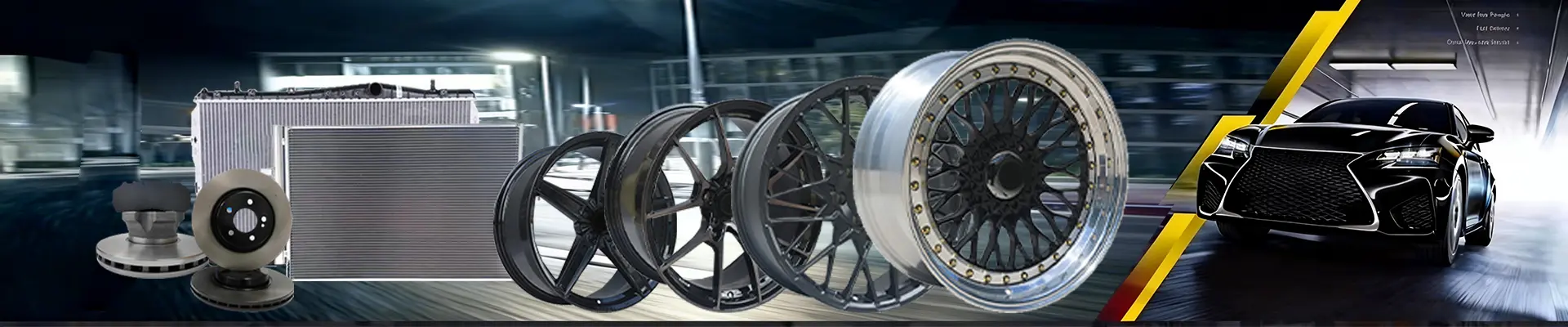
Alloy Wheels Price in Peru: 2026 Wholesale Supplier Guide

Alloy Wheels Price in Peru: 2026 Wholesale Supplier Guide
Most buyers think heavier wheels cost less—reality shows forging工艺 and material grade determine pricing, not weight alone.
The alloy wheels price in Peru for 2026 reflects three stacked cost layers: factory FOB pricing, ocean freight plus insurance, and Peru’s 12% import duty combined with 18% IVA. Wholesale direct procurement saves substantially compared to local retail, but requires meeting minimum order quantities and managing import documentation. Understanding this structure separates profitable buyers from those overpaying through multiple distribution layers.
Working through wheel manufacturing floors before moving into export coordination gave me a different lens on pricing. When I visited assembly operations in Addis Ababa and Lagos, the pattern repeated: shops paying retail markups never traced costs back to origin. One modification shop in Lima showed me their supplier invoice—nearly triple what the same specification cost at factory level. The alloy wheels price in Peru isn’t mysterious; it’s transparent once you understand the components. [NEED_CITE: Peru customs tariff structure for aluminum alloy wheel imports under Harmonized System code 8716.90]
Let me walk through what actually drives these numbers and how to position your purchasing for real margin.
What Determines Alloy Wheel Prices in Peru in 2026?
Terminal pricing combines manufacturing base cost, logistics expenditure, and government-imposed tariffs—each layer compounds the previous.
The foundation starts at manufacturing. Gravity-cast wheels from standard A356 aluminum alloy sit at the entry tier. Low-pressure cast variants with improved porosity control occupy the middle range. Flow-formed wheels, where the barrel is stretched under heat and pressure, command premium positioning. Fully forged monoblock constructions represent the ceiling. [NEED_CITE: VIA testing standards for structural integrity across casting, flow-forming, and forging processes]
Ocean freight from Asian manufacturing hubs to Callao port adds another layer. Container rates fluctuate based on seasonal demand, fuel surcharges, and route availability. A full forty-foot container distributes freight cost across maximum unit count, while less-than-container-load shipments multiply per-piece logistics expense substantially.
Peru’s import regime applies specific duties on aluminum alloy wheels plus the general consumption tax. These aren’t optional add-ons—they’re fixed percentages applied to CIF value. [NEED_CITE: Peru SUNAT import duty rates and IVA application for automotive wheel categories]
Currency movement matters too. The sol-to-dollar exchange rate directly impacts landed cost when factories quote in USD. Buyers paying in local currency through intermediaries absorb conversion spreads multiple times through the chain.
I watched a distributor in Arequipa calculate their actual cost after receiving a shipment. The invoice showed one figure; after customs clearance, port handling, inland transport, and tax payments, the real per-unit cost ran considerably higher. This gap between quoted price and actual landed cost catches many buyers off guard.
The alloy wheels price in Peru ultimately reflects whoever controls the supply chain depth. Factories selling direct absorb zero middleman margin. Traders adding two or three intermediaries before reaching Lima shops multiply the base cost accordingly.
Wholesale vs Retail: How Much Can You Save Buying Direct?
Volume procurement from certified factories delivers dramatic savings over local dealer networks, but shifts import responsibility to the buyer.
A modification shop in Lima needed seventeen-inch sport wheels for customer builds. Their local distributor quoted retail pricing that included warehouse markup, showroom overhead, and multiple profit layers. When we calculated factory-direct pricing plus shipping and duties, the per-piece difference was substantial—enough to justify handling import paperwork independently.
The wholesale approach requires committing to minimum order quantities. Stock models often accept smaller batches, while custom specifications demand higher thresholds to justify production line setup. This isn’t arbitrary—manufacturers balance setup costs against order volume. [NEED_CITE: Industry standard MOQ structures for stock versus custom alloy wheel production runs]
| Procurement Channel | Pricing Tier | Documentation Support | Certification Access |
|---|---|---|---|
| Factory Direct | Base manufacturing cost | Full export paperwork provided | Original test certificates |
| Trading Company | Moderate markup | Partial documentation | Copies or transfers |
| Local Distributor | Substantial retail markup | None needed locally | Reprinted or unavailable |
| Multi-layer Import | Highest consumer price | Irrelevant to end buyer | Often missing entirely |
A tire shop in Trujillo compared their regular supplier against direct import calculation. After factoring container shipping, customs clearance, and tax payments, their per-unit cost dropped noticeably. The catch: they needed to order full container quantities and wait for production plus shipping lead time. For shops with steady demand and storage space, this tradeoff makes financial sense. For those needing immediate small batches, local sourcing remains necessary despite higher cost.
The alloy wheels price in Peru through wholesale channels reflects true manufacturing economics. Retail pricing reflects convenience premiums and inventory carrying costs. Buyers choosing between these paths must weigh cash flow timing against unit economics.
One distributor I worked with runs a regional operation from Cusco. They order OEM-branded wheels with custom packaging. The factory handles certification documentation, export declarations, and production scheduling. The distributor manages Peru-side customs clearance and distribution. Neither party carries the other’s overhead.
Price Range by Size and Finish: 15" to 20" Breakdown
Diameter increases drive cost escalation through material volume and machining time, while surface treatments add finishing layer premiums.
Fifteen and sixteen-inch wheels dominate economy segments—taxi fleets, entry-level replacements, budget-conscious buyers. These sizes use less aluminum, cycle through casting or forming faster, and accept simpler finishes. The alloy wheels price in Peru for these diameters stays accessible because manufacturing efficiency peaks here.
Seventeen and eighteen-inch wheels occupy the mainstream performance and aesthetic upgrade market. Material volume increases noticeably. Machining time for spoke profiles and center bores extends. Finish options expand—machined faces with painted pockets, gloss black with lip details, hyper silver across full surfaces. Each finish adds processing steps and quality control checkpoints.
Nineteen and twenty-inch wheels serve luxury and aggressive stance applications. The material differential becomes pronounced. A twenty-inch wheel uses substantially more aluminum than a fifteen-inch counterpart. Low-pressure casting or flow-forming becomes necessary to maintain weight targets. Finish complexity increases—chrome plating, mirror polishing, multi-layer paint systems. [NEED_CITE: Material weight progression across wheel diameter ranges from 15 to 20 inches]
| Diameter Range | Manufacturing Complexity | Typical Finish Options | Market Segment |
|---|---|---|---|
| 15-16 inch | Standard gravity casting | Basic paint, silver, black | Economy, fleet, replacement |
| 17-18 inch | Low-pressure or flow-form | Machined face, gloss, matte | Mainstream upgrade, sport |
| 19-20 inch | Flow-form or forged | Chrome, mirror, multi-tone | Luxury, performance, show |
Surface treatment pricing follows its own logic. Standard gloss black adds minimal cost—single paint layer, straightforward curing. Machined face requires secondary CNC operation after painting, then clear coating. Chrome plating involves multiple chemical baths, extended processing time, and stringent environmental compliance. Mirror polishing demands labor-intensive hand finishing.
The alloy wheels price in Peru for chrome-finished twenty-inch wheels can reach multiples of basic painted fifteen-inch units. This isn’t arbitrary markup—it reflects genuine manufacturing cost differences in material, machine time, chemical consumption, and labor.
A shop owner in Lima showed me their best-selling sizes. Seventeen-inch machined-face wheels moved fastest. The visual upgrade justified the price jump for customers, while the shop maintained healthy margins because the manufacturing cost differential stayed reasonable.
Hidden Costs: Import Duties, Shipping, and Certification Fees
Beyond unit pricing, buyers must budget for mandatory government levies, variable logistics charges, and certification validation expenses.
Peru applies specific import duties on alloy wheels based on Harmonized System classification. The base duty percentage combines with the eighteen percent value-added tax applied to CIF value plus duty. These aren’t negotiable—they’re statutory obligations. [NEED_CITE: Peru import duty schedule and IVA calculation methodology for automotive components]
Ocean freight varies by origin port, destination, season, and container type. Twenty-foot containers suit smaller orders but spread freight cost across fewer units. Forty-foot containers maximize unit count but require larger order commitment. Less-than-container-load shipments multiply per-piece freight expense because you’re paying for partial space plus consolidation handling.
Insurance covers transit damage and loss. The premium percentage applies to total shipment value. For high-value forged wheels, insurance cost rises proportionally.
Certification documentation carries its own economics. VIA, TÜV, DOT, JWL—each testing body charges for validation. Factories amortize these costs across production volume. A factory producing massive annual output spreads certification expense across many units, keeping per-piece impact minimal. A buyer ordering small quantities from a factory without existing certifications faces the choice of paying for new testing or accepting uncertified product.
The alloy wheels price in Peru without proper certification may look attractive initially. But wheels lacking recognized testing validation face rejection at customs, inability to pass vehicle inspection, and liability exposure if structural failure occurs. [NEED_CITE: International wheel certification requirements including VIA, TÜV, and JWL testing protocols]
A buyer I encountered imported wheels without verifying certification. Customs held the shipment pending documentation. The delay incurred storage fees, the missing certificates required retroactive testing, and the total cost exceeded what proper sourcing would have cost initially.
Port handling charges at Callao add another layer. Container unloading, customs inspection if selected, inland transport to warehouse—each step carries fees that don’t appear in factory quotations.
| Cost Component | Predictability | Buyer Control | Typical Impact |
|---|---|---|---|
| Import duty | Fixed by regulation | None | Mandatory percentage of CIF |
| IVA tax | Fixed by regulation | None | Applied to duty-inclusive value |
| Ocean freight | Variable by market | Partial through timing | Significant per-unit addition |
| Insurance | Fixed percentage | Minimal | Proportional to shipment value |
| Certification | One-time or amortized | Choose certified factory | Minimal per-piece when spread |
| Port handling | Fixed schedule | None | Per-container or per-unit fees |
Understanding these components prevents budget surprises. The factory quotation is just the starting point.
How to Verify Supplier Pricing Is Legitimate?
Legitimate pricing withstands documentation scrutiny—certificates, factory verification, and export history separate real manufacturers from trading middlemen.
Request original certification documents. VIA, TÜV, DOT, JWL certificates should bear official testing body letterheads, serial numbers, and date ranges. Factories maintaining active certification programs can provide current documentation. Traders often supply photocopies, expired certificates, or documents belonging to other manufacturers. [NEED_CITE: VIA certification verification process and certificate validity requirements]
Ask for factory production footage. Real manufacturers operate production floors with visible casting lines, machining centers, painting booths, and testing equipment. Video calls or recorded walkthroughs show actual capability. Suppliers unable to provide current footage typically lack manufacturing assets.
Review export declaration samples. Factories exporting regularly maintain customs documentation showing shipment history, destination countries, and product descriptions. This proves active export operations rather than domestic-only production repackaged as export capability.
The alloy wheels price in Peru from verified manufacturers reflects genuine cost structures. Suspiciously low quotes often indicate corner-cutting on material quality, skipped testing, or misrepresentation of manufacturing process.
A modification shop owner received quotes varying widely for identical specifications. The lowest bidder couldn’t provide current TÜV certificates, refused factory video calls, and had no export documentation. The slightly higher bidder provided complete documentation, showed active production lines, and demonstrated regular shipments to South America. The price difference reflected legitimate quality and compliance costs versus corner-cutting.
| Verification Element | Real Manufacturer | Trading Intermediary | Suspicious Supplier |
|---|---|---|---|
| Certification documents | Original, current, verifiable | Copies or transfers | Missing or expired |
| Factory access | Live video or visit available | Limited or staged | Refused entirely |
| Export history | Regular shipments documented | Occasional or unclear | None provided |
| Pricing structure | Transparent cost breakdown | Vague or defensive | Unusually low without justification |
Request samples before committing to full orders. Physical inspection reveals finish quality, weight consistency, balance characteristics, and packaging standards. Factories confident in their product facilitate sampling. Those avoiding samples typically know their product won’t withstand comparison.
Check reference customers. Manufacturers serving international markets maintain relationships with distributors, shops, or fleet operators who can confirm quality consistency and delivery reliability.
The alloy wheels price in Peru from legitimate sources includes the cost of doing things correctly—proper material, validated processes, certified testing, documented compliance. Buyers who verify these elements before purchasing avoid the false economy of uncertified, unverified sourcing.
Conclusion
The alloy wheels price in Peru reflects manufacturing base cost, logistics expenditure, and statutory import charges—understanding each layer enables informed purchasing decisions.
Wholesale direct procurement delivers substantial savings over retail channels for buyers meeting volume requirements and managing import processes. Size, finish, and certification choices drive cost variation within legitimate ranges. Verification through documentation, factory access, and export history separates genuine manufacturers from questionable sources. Buyers who trace costs to origin and validate supplier claims position themselves for sustainable margins rather than false economy.


