Summer 25% discount on all last year's bike models

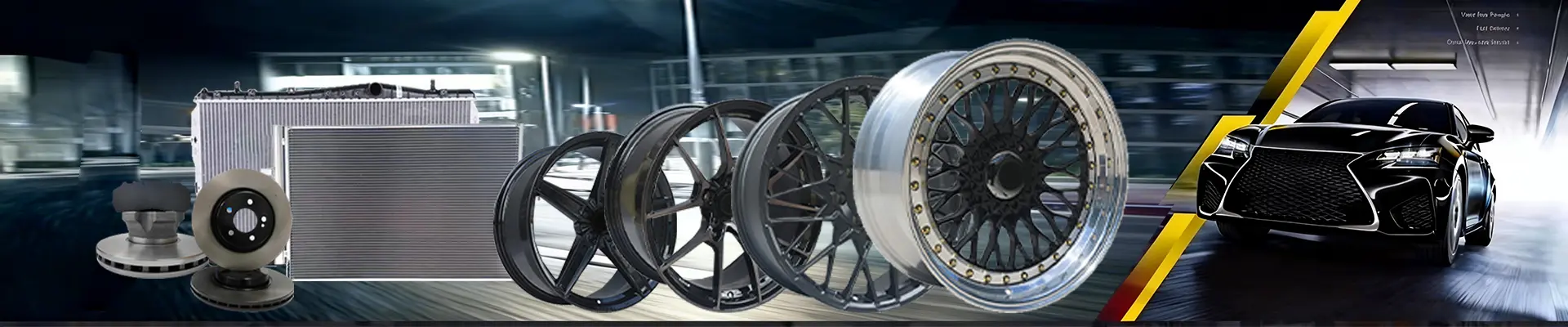
Alloy Wheels Price in Brazil: 2026 Wholesale Supplier Guide

Alloy Wheels Price in Brazil: 2026 Wholesale Supplier Guide
The FOB price you see on a quotation sheet is not the price you will actually pay in Brazil.
The real landed cost of alloy wheels in Brazil in 2026 is typically 40%–55% higher than the factory gate price, driven by INMETRO certification amortization, IPI/ICMS tax cascading, and Santos port demurrage — not the per-piece manufacturing cost itself.
Back when I was sourcing wheels for改装 shops in São Paulo, the first lesson I learned the hard way was this: two suppliers quoting the same FOB price could land at wildly different per-piece costs once the cargo cleared customs. One buyer I worked with chose the lowest FOB quote from a Southeast Asian factory, only to discover that the wheels lacked INMETRO pre-approval documentation, which triggered a six-month certification delay and a warehouse holding cost that wiped out the initial savings. That experience reshaped how I evaluate every quotation — not by the unit price, but by the fully landed, tax-inclusive, certification-cleared cost per wheel at the buyer’s doorstep. [NEED_CITE: Brazilian Federal Revenue import tax structure for HS 8716.90 alloy wheel components]
Let me walk you through what actually determines the alloy wheels price in Brazil when the cargo reaches your warehouse.
What Is the Real Landed Cost of Alloy Wheels in Brazil in 2026?
The factory price accounts for less than half of what you ultimately pay; taxes, freight, and port fees form the majority of the final cost.
When Brazilian buyers ask me about the alloy wheels price in Brazil, they are usually referring to the per-piece wholesale number they see on Alibaba or a supplier’s PDF. But that number is only the starting point. The full landed cost structure in Brazil includes the following layers, each of which compounds on the previous one:
- FOB price — the base manufacturing and packaging cost
- Ocean freight — calculated per CBM or per container, varying by origin port and Santos port congestion surcharges
- Marine insurance — typically a small percentage of CIF value
- Import Duty (II) — applied on the CIF value
- IPI (Industrialized Products Tax) — a federal excise tax calculated on CIF + II
- PIS/COFINS — federal social contributions calculated on CIF + II + IPI
- ICMS — state-level VAT calculated on the cumulative total above, creating a cascading effect
- Port handling charges and demurrage — Santos port storage fees if containers are not cleared within the free-period window [NEED_CITE: Santos Port Authority tariff schedule for container storage and demurrage]
The cascading tax structure is what catches most first-time importers off guard. Each tax layer is calculated on the cumulative total of all previous layers, meaning the effective tax rate is substantially higher than the nominal sum of individual tax percentages. A wheel that costs a modest amount at FOB can easily double in cost by the time it reaches a São Paulo warehouse.
I once reviewed a case where a regional distributor in Minas Gerais imported a full container of 17-inch machined face wheels. The FOB price seemed competitive, but the IPI classification placed the wheels in a higher tax bracket than the buyer had anticipated, and the ICMS rate in that state added another significant layer. The final per-piece landed cost was nearly double the original FOB quote. The buyer had not modeled the tax cascade and was unprepared for the cash flow requirement at customs clearance.
How Do Surface Finishes and Sizes Affect Wholesale Pricing?
Surface finish selection can shift the per-piece factory price by a substantial margin, and larger diameters increase both manufacturing cost and shipping cost per unit.
The alloy wheels price in Brazil varies noticeably depending on two physical factors: the surface treatment applied at the factory and the wheel diameter. These are not minor details — they directly affect your per-piece cost, your container utilization, and your freight expense.
| Factor | Impact on Factory Price | Impact on Shipping Cost | Certification Complexity |
|---|---|---|---|
| Matte Black / Gloss Black | Baseline range | Standard weight per piece | Standard INMETRO submission |
| Machined Face | Noticeably higher due to secondary CNC process | Slightly heavier due to material removal tolerance | Standard INMETRO submission |
| Chrome Plating | Substantially higher due to multi-layer electroplating | Heavier per piece, reduced container yield | Additional surface durability testing may apply |
| Custom Paint (Bronze, Gunmetal, Hyper Silver) | Variable depending on color complexity and batch size | Standard to slightly heavier | Standard INMETRO submission |
| 15"–17" diameter | Baseline manufacturing cost | Highest container yield per CBM | Lightest weight, lowest freight cost per piece |
| 18"–20" diameter | Moderately higher material and machining cost | Reduced container yield | Moderate weight increase |
| 21"–24" diameter | Substantially higher material cost, specialized machining | Significantly reduced container yield, possible oversize surcharges | Heaviest category, highest freight cost per piece |
[NEED_CITE: INMETRO certification testing requirements by wheel surface finish type]
A modification shop in Curitiba once ordered a mixed batch of 18-inch and 20-inch machined face wheels for a luxury SUV fitment program. The 20-inch wheels cost noticeably more per piece at the factory, but the real shock came at the freight stage — the larger diameter reduced the number of wheels that could fit in a 40-foot container by a meaningful margin, pushing the per-piece freight cost substantially higher. The buyer had budgeted based on the 18-inch container yield and was caught short.
The key takeaway: when comparing the alloy wheels price in Brazil across suppliers, always normalize the quote to the same diameter, same finish, and same container loading configuration. Otherwise, you are comparing apples to oranges.
What Hidden Costs Do First-Time Importers Overlook?
INMETRO certification amortization, IPI misclassification, and Santos port demurrage are the three hidden cost traps that turn a good FOB deal into a financial loss.
First-time importers into Brazil tend to focus almost entirely on the per-piece price and the freight quote. They rarely model the certification cost, the tax classification risk, or the port storage fee exposure. These three items are where the real money is lost.
INMETRO Certification Cost and Amortization
Every alloy wheel sold in Brazil must carry INMETRO certification, which requires structural testing, dimensional verification, and factory audit documentation. The certification process involves fixed costs — testing fees, documentation preparation, and audit logistics — that must be amortized across the order quantity. [NEED_CITE: INMETRO official certification procedure and fee structure for imported alloy wheels]
For a first-time importer placing a small trial order, the per-piece certification cost can be substantial. For a returning buyer placing a repeat order under an existing certification, the per-piece amortization drops to a negligible amount. This means the first order’s true per-piece cost is significantly higher than subsequent orders — a fact that many buyers fail to account for when comparing their first quotation against a competitor’s repeat-order price.
IPI Tax Classification Risk
The IPI rate applied to alloy wheels depends on the specific HS code classification and the wheel’s intended use category. A misclassification — even an innocent one — can push the wheel into a higher IPI bracket, increasing the tax base for all subsequent cascading taxes (PIS, COFINS, ICMS). I have seen cases where a customs broker’s classification error added a meaningful percentage to the total tax burden, and correcting it required a lengthy administrative process. [NEED_CITE: Brazilian Federal Revenue HS code classification guidance for alloy wheel imports]
Santos Port Demurrage
Santos port offers a limited free-storage window for imported containers. If customs clearance is delayed — due to documentation errors, certification queries, or tax classification disputes — demurrage charges accumulate daily. For a full container of alloy wheels, even a short delay can add a significant per-piece cost. In one case I observed, a documentation mismatch between the commercial invoice and the packing list caused a clearance delay that resulted in demurrage charges equivalent to a noticeable percentage of the original FOB value.
How to Compare Supplier Quotes Accurately?
The only valid basis for comparing the alloy wheels price in Brazil is the fully landed, tax-inclusive, certification-cleared per-piece cost — not the FOB number.
When Brazilian buyers receive multiple quotations from different suppliers, the natural instinct is to line up the FOB prices and pick the lowest one. This approach is fundamentally flawed for the Brazilian market, because the FOB price does not reflect the tax structure, the certification cost, or the freight variables that determine the final cost.
To compare quotes accurately, you need to build a landed cost model for each quotation using the same set of assumptions:
- Same diameter and finish — normalize the product specification
- Same origin port and freight route — use a single freight forwarder’s quote for consistency
- Same tax classification — confirm the HS code and IPI rate with your customs broker before comparing
- Same certification amortization basis — divide the total INMETRO cost by the order quantity to get the per-piece certification cost
- Same port clearance timeline — model the demurrage exposure based on realistic clearance durations
Only after all these variables are standardized can you compare the per-piece landed cost across suppliers meaningfully.
I worked with a distributor in Rio Grande do Sul who received three quotations for a container of 17-inch matte black wheels. The FOB prices varied within a narrow range, but when we built the landed cost model, one supplier’s quote came in substantially lower than the others. The reason: that supplier already held INMETRO certification for the specific wheel design, eliminating the certification amortization cost entirely. The other two suppliers required the buyer to bear the certification cost on a relatively small order, pushing their per-piece landed cost significantly higher.
What MOQ and Lead Time Should Brazilian Buyers Expect?
Stock models and custom models operate under entirely different MOQ, lead time, and certification frameworks — buyers must plan their procurement strategy accordingly.
The alloy wheels price in Brazil is also influenced by the procurement model you choose. Stock models — wheels that the manufacturer produces in standard sizes and finishes for general aftermarket distribution — typically carry lower MOQ requirements and shorter lead times. Custom models — wheels designed to the buyer’s specification, including custom offsets, bolt patterns, center bore configurations, and exclusive finishes — require higher MOQs and longer lead times due to the tooling and setup involved.
| Procurement Model | Typical MOQ Range | Typical Lead Time | INMETRO Certification | Best Suited For |
|---|---|---|---|---|
| Stock models | Low MOQ, suitable for trial orders | Short lead time, rapid inventory turnover | Existing certification, no additional cost per piece | Modification shops, e-commerce sellers, tire retailers |
| Custom models | Higher MOQ due to tooling commitment | Extended lead time for tooling, sampling, and production | New certification required, cost amortized across order | Distributors building exclusive product lines, OEM programs |
[NEED_CITE: Industry standard lead time ranges for stock vs. custom alloy wheel manufacturing]
A tuning shop in Belo Horizonte wanted to test a new mesh-style wheel design before committing to a large order. They sourced a small batch of stock models in 18-inch machined face finish, which arrived within a short timeframe and required no additional certification cost. The test batch sold well, and the shop then placed a larger order for the same model, benefiting from the established certification and the supplier’s existing production setup.
For buyers considering custom designs, the key is to understand that the first order carries the full weight of tooling cost and certification amortization. The per-piece cost on the first order will be substantially higher than on repeat orders. Planning for this cost structure — and negotiating the certification cost sharing with the supplier — is essential to making the custom model economically viable.
Conclusion
The alloy wheels price in Brazil is not a single number — it is a layered cost structure where taxes, certification, and logistics determine the final per-piece expense far more than the factory quote does.
Buyers who evaluate suppliers based solely on FOB price will consistently make suboptimal decisions. The disciplined approach is to model the full landed cost — including INMETRO amortization, IPI/ICMS cascading, freight variables, and port demurrage exposure — and to normalize all quotations to the same specification, certification basis, and clearance timeline. Only then can you identify the supplier that truly offers the best value for the Brazilian market.


