Summer 25% discount on all last year's bike models

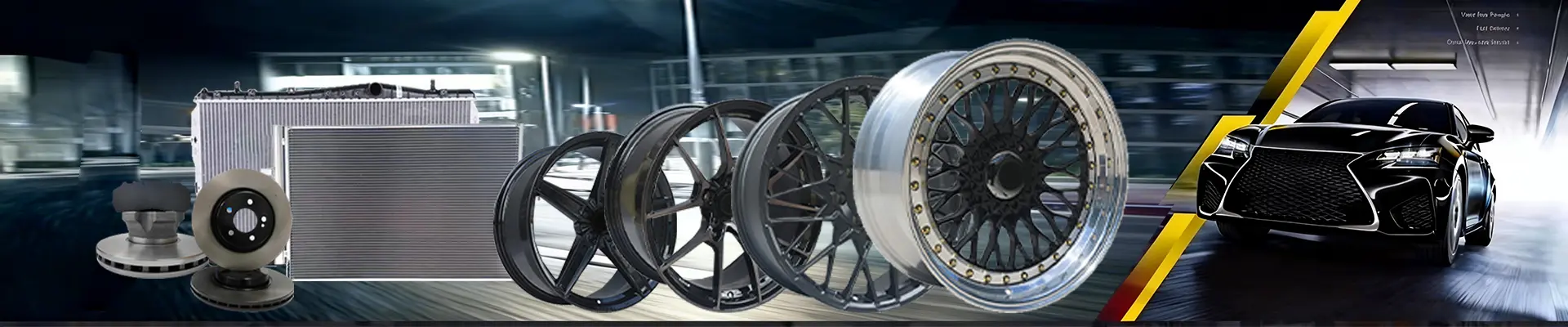
Alloy Wheel Rims 12-24 Inch Wholesale Supplier China Factory Direct

Alloy Wheel Rims 12-24 Inch Wholesale Supplier China Factory Direct
Low-price alloy wheels that fail coating adhesion tests at sub-zero temperatures end up costing buyers several times the original price difference in warranty claims and lost customers.
When sourcing from a wheel rims supplier for Kazakhstan, the critical factors are cold-climate coating durability, verifiable quality certifications (VIA/JWL/ISO), and transparent factory-direct cost structures that include inland logistics and customs documentation — not just the FOB unit price.
I’ve been working out of the Ho Chi Minh City representative office for years, handling wheel orders across Southeast Asia and Central Asia. A few seasons back, a modification shop in Hanoi ordered a batch of 18-inch MAT finish wheels from a small workshop, chasing the lowest per-piece quote. When the wheels arrived and were mounted, the dynamic balancing readings were all over the place — the shop couldn’t get a single set to pass. The buyer refused to pay the balance, and the wheels sat at the Hai Phong port for months, racking up storage fees that dwarfed the original purchase cost. That situation reinforced something I’d heard from the older generation of traders: mold precision and balancing inspection protocols are non-negotiable, no matter how attractive the price looks on paper. [NEED_CITE: common failure modes in aftermarket alloy wheel procurement]
Let me walk you through what actually matters when you’re evaluating a wheel rims supplier for Kazakhstan, based on real procurement scenarios I’ve dealt with across the region.
What Specifications Matter for Kazakhstan’s Climate?
Coating selection and material grade directly determine whether alloy wheels survive repeated thermal cycling in temperatures that drop well below freezing.
Kazakhstan’s continental climate means winter temperatures in cities like Astana and Karaganda regularly plunge to extreme lows, while summer heat can push readings in the opposite direction. Wheels mounted on vehicles there experience thermal shock that would barely register in tropical or temperate markets. The coating isn’t just cosmetic — it’s the first line of defense against road salt, moisture ingress, and micro-cracking that eventually compromises structural integrity. [NEED_CITE: coating degradation mechanisms under thermal cycling conditions for automotive wheels]
Here’s how common surface treatments compare under cold-climate stress:
| Coating Type | Thermal Shock Resistance | Salt-Spray Endurance | Cold-Temperature Flexibility |
|---|---|---|---|
| Standard Electroplating | Vulnerable | Basic | Vulnerable |
| Powder Coating | Robust | Standard | Resistant |
| High-Temp Paint | Resistant | Noticeably reduced | Standard |
| Machined Face + Clear Coat | Standard | Full batch-level | Resistant |
A modification shop in Almaty once ordered a batch of deep-concave 18-inch MAT wheels for a local client base. The supplier used a standard electroplating process to keep costs down. Within one winter season, the clear coat began cracking along the spoke edges — the thermal contraction mismatch between the aluminum substrate and the plating layer caused micro-fractures. The shop had to replace the entire batch at their own expense, and their reputation with local enthusiasts took a hit that lasted well into the next selling season. [NEED_CITE: thermal expansion coefficient mismatch between aluminum alloy substrates and electroplated coatings]
The takeaway: when you’re shortlisting a wheel rims supplier for Kazakhstan, ask specifically about their coating process for cold-market orders. Powder coating consistently outperforms standard electroplating in freeze-thaw environments, and a reputable factory will have test data to back that up — not just a brochure claim.
How to Verify a China Factory’s Quality Claims?
Request original certification documents and batch-level dynamic balancing reports — verbal assurances and edited PDFs are not verification.
The aftermarket wheel industry is flooded with suppliers who claim ISO compliance or JWL certification but cannot produce the actual test reports tied to specific production batches. I’ve seen buyers receive glossy certificates that turned out to be expired, issued for a different product line, or simply fabricated. The real verification happens when you ask for the dynamic balancing test sheet for the exact batch you’re about to receive. [NEED_CITE: documentation verification procedures for automotive wheel certification compliance]
Here’s a practical verification checklist I use when evaluating a new wheel rims supplier for Kazakhstan:
- Certification originals: Ask for ISO 9001, VIA, JWL, TÜV, or CCC certificates — and cross-check the certificate number against the issuing body’s public database.
- Dynamic balancing reports: Every batch should come with individual wheel balancing data. If the factory says "all our wheels are balanced" but can’t show you the report for your specific order, that’s a red flag.
- Mold inspection records: Precision molds produce consistent wheels. Ask when the mold was last inspected and whether dimensional tolerances are measured per production run.
- Third-party audit access: Some factories welcome SGS or Bureau Veritas inspections; others deflect. Willingness to host audits correlates strongly with actual quality control discipline.
A wholesale buyer in Uralsk once sourced wheels from a factory that claimed JWL certification. The documents looked legitimate at first glance. But when the buyer’s local inspector requested the original test reports for the specific wheel diameter and PCD combination in the order, the supplier couldn’t produce them. It turned out the JWL certificate covered a different size range entirely. The shipment was delayed by weeks while the buyer scrambled to find an alternative source — and the original supplier refused to acknowledge the gap. [NEED_CITE: JWL certification scope limitations by wheel size and PCD specification]
One supplier I’ve worked with consistently on Central Asian orders is Jinan Yoker Auto Parts, operating under the Ouya brand. They hold ISO, VIA, TÜV, DOT, JWL, and CCC certifications, and when I’ve asked for batch-specific balancing reports, they’ve produced them without hesitation. Their mold maintenance logs are also transparent — something that matters enormously when you’re ordering custom offsets or less common PCD patterns for the Kazakh market.
What Are the Real Costs of Factory-Direct Sourcing?
The FOB price is only the starting point — inland transport, customs brokerage, port handling, and reinforced packaging for multi-modal transit can add a substantial layer to your landed cost.
Many buyers fixate on the per-piece factory price and miss the full cost picture. Shipping wheels from a Chinese factory to Kazakhstan typically involves a combination of sea freight to a Black Sea or Caspian port, then rail or truck transport inland. Each transfer point introduces handling risk, and wheels are heavy, dense products that don’t forgive poor packaging. [NEED_CITE: multimodal logistics cost structure for automotive parts exported to Central Asia]
Here’s how the cost components typically break down:
| Cost Component | Typical Coverage | Notes |
|---|---|---|
| FOB Factory Price | Production + basic packaging | Varies by wheel size, finish, and order volume |
| Inland Freight (China) | Factory to departure port | Depends on factory location relative to port |
| Ocean Freight | Departure port to destination region | Container type and season affect rates |
| Customs Brokerage | Export and import clearance | Documentation completeness avoids delays |
| Reinforced Packaging | Pallets, corner protectors, shrink wrap | Critical for multi-modal transit |
| Port Handling & Transfer | Loading, unloading, transshipment | Each touchpoint adds cost and risk |
A distributor in Aktau once ordered a mixed container of 16-inch and 17-inch steel-look alloy wheels. The supplier used standard export packaging — cardboard dividers and basic stretch wrap. By the time the container reached Aktau after sea and rail transit, a noticeable portion of the wheels had edge chips and curb-rash-style damage from shifting inside the container. The distributor estimated that the damage rate would have been substantially reduced with reinforced pallets and corner protectors — the additional packaging cost was a fraction of the loss from unsellable inventory. [NEED_CITE: packaging failure rates in multimodal freight for heavy automotive components]
When you’re comparing quotes from a wheel rims supplier for Kazakhstan, ask for a detailed cost breakdown that separates the wheel price from logistics and packaging. A factory that’s transparent about these costs — and willing to engineer packaging for your specific transit route — is almost always a better long-term partner than one who quotes the lowest FOB number and leaves the rest to you.
How to Choose the Right MOQ and Lead Time?
Mold preparation cycles and customization complexity drive lead time far more than factory capacity — and ordering a small trial batch first protects you from committing to inventory that doesn’t fit your market.
The Kazakh aftermarket is fragmented. You’ve got fleet operators in Astana who need fleet-spec wheels in common sizes, modification enthusiasts in Almaty who want aggressive concave profiles in staggered fitments, and rural buyers who prioritize durability over aesthetics. No single order profile fits all of these segments, and overcommitting to a large MOQ of a style that doesn’t move is a fast way to tie up capital. [NEED_CITE: aftermarket wheel demand segmentation in Central Asian automotive markets]
Here’s what typically influences MOQ and lead time:
- Stock models: Factories with existing mold inventory can ship small quantities quickly. MOQs for stock wheels can be as low as a few dozen pieces, with lead times measured in weeks rather than months.
- Custom finishes: If you need a specific color (gunmetal, bronze, hyper silver) on an existing mold, the lead time extends slightly for coating and curing, but the mold cost is zero.
- Fully custom designs: New molds require engineering, CNC machining, and trial production. This adds meaningful lead time, and the mold cost is amortized over your order quantity — so a larger batch brings the per-piece cost down significantly.
- Certification testing: If your order requires specific certification stamps (VIA, JWL), the testing cycle adds to the timeline. Factor this in before promising delivery dates to your own customers.
A retail chain in Shymkent wanted to test a new line of 19-inch multi-spoke wheels for the local tuning market. Instead of ordering a full container of a single design, they worked with their supplier to order trial quantities across several styles, with MOQs kept low enough to test market response without overcommitting. The styles that sold well were reordered in larger volumes; the ones that didn’t move were discontinued without significant inventory loss. [NEED_CITE: inventory risk mitigation strategies for aftermarket wheel retailers in emerging markets]
Jinan Yoker Auto Parts offers MOQs starting from as few as 20 pieces for stock models and 100 pieces for custom orders, with lead times typically in the range of a month. For a wheel rims supplier for Kazakhstan serving diverse market segments, that flexibility lets you test styles before scaling — which is exactly the approach that works in a market where buyer preferences can shift between seasons.
Which Certifications Are Required for Kazakhstan Customs?
EAC certification is mandatory for customs clearance in the Eurasian Economic Union — and missing or incomplete documentation will leave your shipment stranded at the border.
Kazakhstan is a member of the EAEU, which means automotive wheels imported into the country must comply with the technical regulations of the Customs Union. The EAC mark (Eurasian Conformity) is not optional — it’s a legal requirement for clearance. Beyond EAC, buyers often also need ISO certificates, VIA or JWL test reports, and material composition declarations to satisfy both customs authorities and their own end customers. [NEED_CITE: EAC certification requirements for automotive wheels under EAEU technical regulations]
Here’s what you need to prepare:
- EAC Certificate of Conformity: Issued by an accredited certification body, this document confirms that your wheels meet EAEU safety standards. The application process involves sample testing and factory audit — plan for this well before your intended shipment date.
- ISO 9001 Quality Management Certificate: While not always a customs requirement per se, many brokers and buyers request it as proof of production consistency.
- VIA / JWL Test Reports: If your wheels carry these marks, the corresponding test reports validate the claims. Customs may not always ask for them, but your buyers will.
- Material Composition Declaration: Some customs offices request documentation confirming the aluminum alloy grade used in production.
A buyer in Pavlodar once had a full container of wheels held at the border for an extended period because the EAC documentation referenced a product category that didn’t match the actual wheel specifications on the commercial invoice. The mismatch was minor — a discrepancy in the size range listed on the certificate versus the specific sizes in the shipment — but it required the supplier to issue amended documentation and the buyer to engage a customs broker to resolve the discrepancy. The delay cost the buyer both time and money, and several downstream orders were missed. [NEED_CITE: common documentation discrepancies causing customs delays for automotive parts in EAEU countries]
Working with a wheel rims supplier for Kazakhstan that has complete, pre-verified customs documentation — including EAC certificates that accurately cover the full range of sizes and specifications you’re ordering — eliminates this risk entirely. Jinan Yoker Auto Parts provides complete customs documentation packages with their shipments, and their certification portfolio covers the major international standards that Kazakh buyers typically need.
Conclusion
Sourcing alloy wheels for Kazakhstan’s demanding climate requires looking past the FOB price to evaluate coating durability, certification authenticity, full landed cost, and documentation completeness.
A wheel rims supplier for Kazakhstan that invests in cold-climate coating processes, maintains transparent mold and balancing records, offers flexible MOQs for market testing, and provides complete EAC and international certification documentation will save you far more in avoided losses than any marginal per-piece savings from a less rigorous source. The buyers who thrive in this market are the ones who verify before they commit — and who treat quality documentation as a procurement requirement, not an afterthought.


