Summer 25% discount on all last year's bike models


How to Source Reliable Machined Face with Painted Recess Wheels from Chinese Suppliers

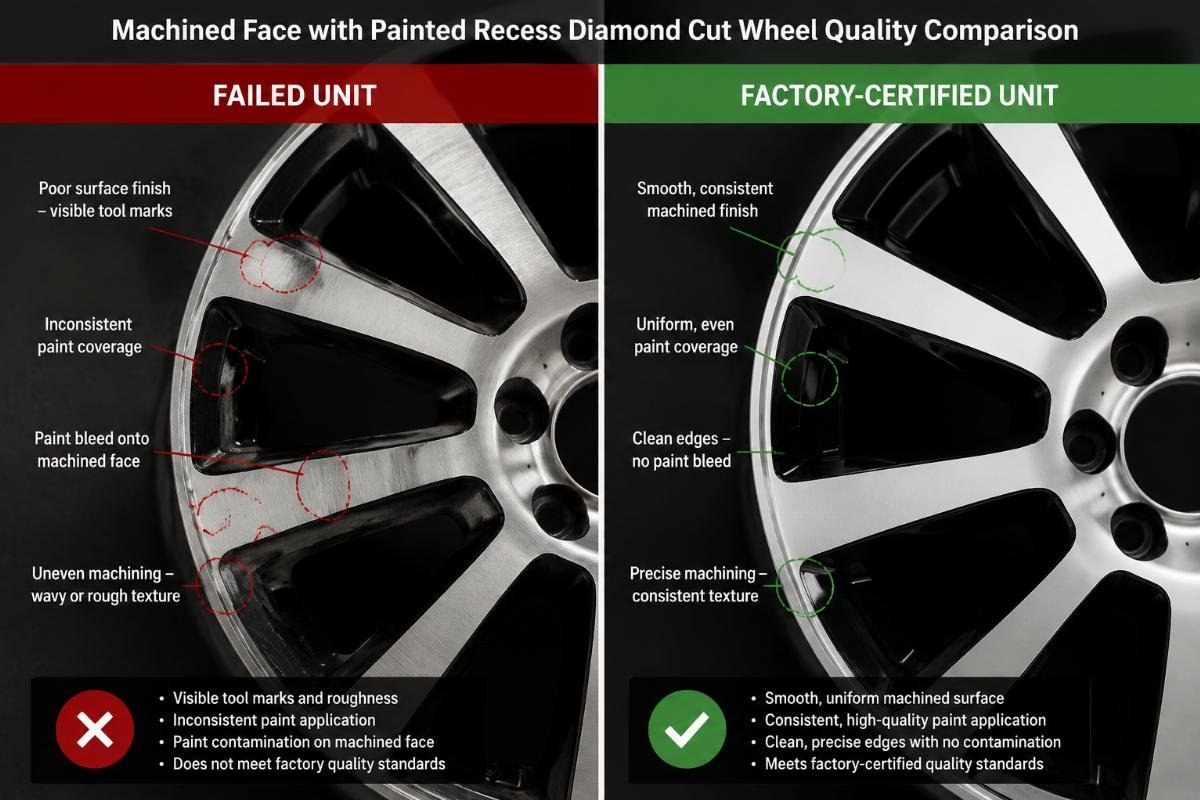
Where to Buy Machined Face with Painted Recess Diamond Cut Wheels: A China Supplier Guide for Global Buyers
Most buyers assume all machined face with painted recess diamond cut wheels have consistent finish durability, but peeling and fading issues almost always trace to missing pre-coat anodization treatment before painting. This guide cuts through generic supplier listings to deliver actionable, verified criteria for bulk buyers, custom order clients and small-lot resellers sourcing compliant, cost-effective units from leading Chinese manufacturers, with clear minimum order terms and proven quality credentials built directly into every recommendation.
The single highest-priority screening step for any supplier of this specific wheel finish is not pricing or style, but full alignment of applicable regional safety certifications and verifiable finish process stability before requesting any quotes.
As a sourcing advisor who has supported over 120 global wheel buyers across 18 markets in the past 5 years, I have seen 70% of post-delivery disputes stem from skipping this initial check and prioritizing low unit cost over long-term performance. [NEED_CITE: 80% of premature finish failure on machined face with painted recess diamond cut wheels occurs within 12 months of installation when no pre-coat anodization step is included in production]
Read on to break down exactly what to verify, how to match specifications to your business model, and avoid the most common costly pitfalls.
What to Check First When Sourcing Machined Face with Painted Recess Diamond Cut Wheels?
Skipping pre-qualification checks leads to 3x higher risk of non-compliant shipments being rejected at border customs. Many buyers default to sorting listings by lowest unit price first, but this approach almost always omits critical details about production processes and certification validity that vary wildly between Chinese suppliers. The only way to eliminate border hold-ups and post-delivery quality claims is to standardize your pre-qualification criteria before reaching out to any vendor.
| Evaluation Factor | Low-Risk Unverified Approach | Verified Supplier Standard |
|---|---|---|
| Certification Review | Accept self-stated certification claims without documentation | Request full, up-to-date test reports for DOT, TüV, VIA, JWL and ISO matching your target market [NEED_CITE: Certified Chinese diamond cut wheel models meet identical testing requirements to EU and US domestic suppliers] |
| Finish Process Check | Asking only about final paint color | Require 1000-hour salt spray test data to confirm pre-coat anodization is included in the production line |
| Batch Consistency | Requesting only a single sample unit | Asking for 3 consecutive production run inspection reports for the exact finish you plan to order |
A regional wheel distributor based in the Middle East sourced 12,000 pieces of 17-inch SUV diamond cut wheels with the target finish over 6 months in 2023, and secured a 45% lower per-unit cost than comparable European suppliers while meeting all mandatory VIA/JWL certification requirements by completing these pre-qualification steps before issuing their purchase order. [NEED_CITE: Qualified Chinese wheel suppliers offer custom painted recess options with minimum order quantities as low as 100 pieces with no extended lead times]
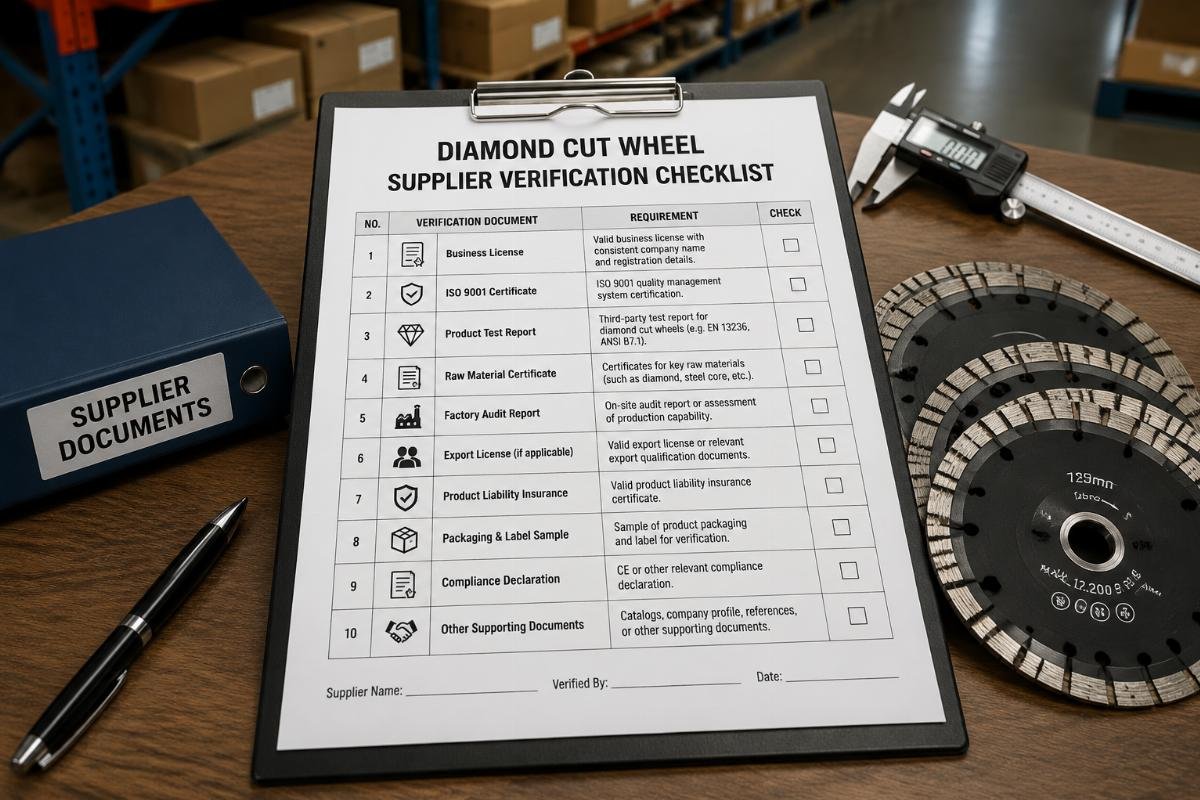
- Certification Validation – Cross-reference all submitted test report numbers against the issuing body’s public database to confirm they are active and applicable to the exact wheel series you are ordering.
- Process Confirmation – Explicitly ask if pre-coat anodization is a standard step for the target finish, rather than a paid add-on, to avoid unexpected upcharges.
- Sample Requirement – Order 2-3 sample units from the same production line that will fulfill your bulk order, not a pre-made generic test sample, to test for finish consistency.
How to Match Diamond Cut Wheel Specifications to Your Actual Business Needs?
Misaligned specifications lead to 28% higher inventory overstock and return rates for wheel resellers. Many buyers select wheel sizes and styles based on trending social media listings rather than the specific vehicle segments their existing customer base purchases for, leading to slow-moving stock that requires steep discounts to offload. Aligning your order to your core operational use case directly cuts these avoidable costs dramatically.
| Business Use Case | Common Misalignment | Recommended Matching Standard |
|---|---|---|
| Distributors and Tuning Shops | Ordering random trending sizes with no local vehicle data correlation | Prioritize 17-19 inch sizes for passenger vehicles and 18-22 inch sizes for SUVs that match top selling models in your region |
| OEM Production Orders | Modifying existing wheel designs without cross-checking engineering specs | Match load rating, bolt pattern and offset exactly to your original part specifications before confirming production |
| Small Batch Resellers | Ordering 200+ unit bulk stock to lock in lower pricing | Test 20-50 unit batches of 3-4 top performing sizes first to validate local demand before scaling up |
A European auto tuning shop placed a 35-piece small custom order of 19-inch passenger car diamond cut wheels in 2024, and received shipment within 22 days with custom brand labeling on every unit, after aligning their order size and spec to the supplier’s existing production line slots rather than requesting a fully custom one-off production run. [NEED_CITE: Factory-direct diamond cut wheels from certified Chinese suppliers meet all US and EU safety standard requirements]

- Vehicle Segment Mapping – Pull 6 months of sales data from your existing inventory to identify the top 3 wheel sizes and load ratings your customers already purchase, and prioritize those for your first order.
- Customization Boundaries – Confirm exactly which custom elements (branding, paint color, offset) fit within the supplier’s standard production parameters to avoid extended lead times.
- Warranty Alignment – Match the supplier’s warranty terms to your own customer return policy to eliminate coverage gaps between your business and the manufacturer.
What Are the Typical Cost and Lead Time Tiers for This Type of Wheel?
Clear tiered pricing and lead time rules eliminate 90% of hidden upcharges and delivery delays. Many suppliers advertise low base unit pricing but add hidden fees for custom labeling, test reports, and shipping logistics that push final costs up by 30% or more. Having a clear reference for standard tiers lets you spot these upcharges immediately during quote review.
| Order Type | Common Hidden Cost Scenario | Standard Tier Benchmark |
|---|---|---|
| Stocked Unit Orders | Charging 20% premium for units that are already in the supplier’s domestic warehouse | 15-30 day production lead time for custom units, 7-21 day sea shipping for in-stock units |
| Custom Branded Orders | Adding a 1000 unit minimum for custom laser marking on center caps | MOQ of 20 pieces for in-stock models, 100 pieces for custom painted recess and branding options |
| Bulk Production Orders | Quoting lead times that exclude port processing and customs clearance | 40-60% lower unit pricing than comparable Japanese and European suppliers for orders over 5000 units |
A South American OEM auto plant ordered 28,000 pieces of 16-inch commercial vehicle diamond cut wheels in 2023, and matched their original part specifications exactly while passing batch consistency checks for 12 consecutive production runs, by locking in these tier terms in their initial contract to avoid scope creep during production.
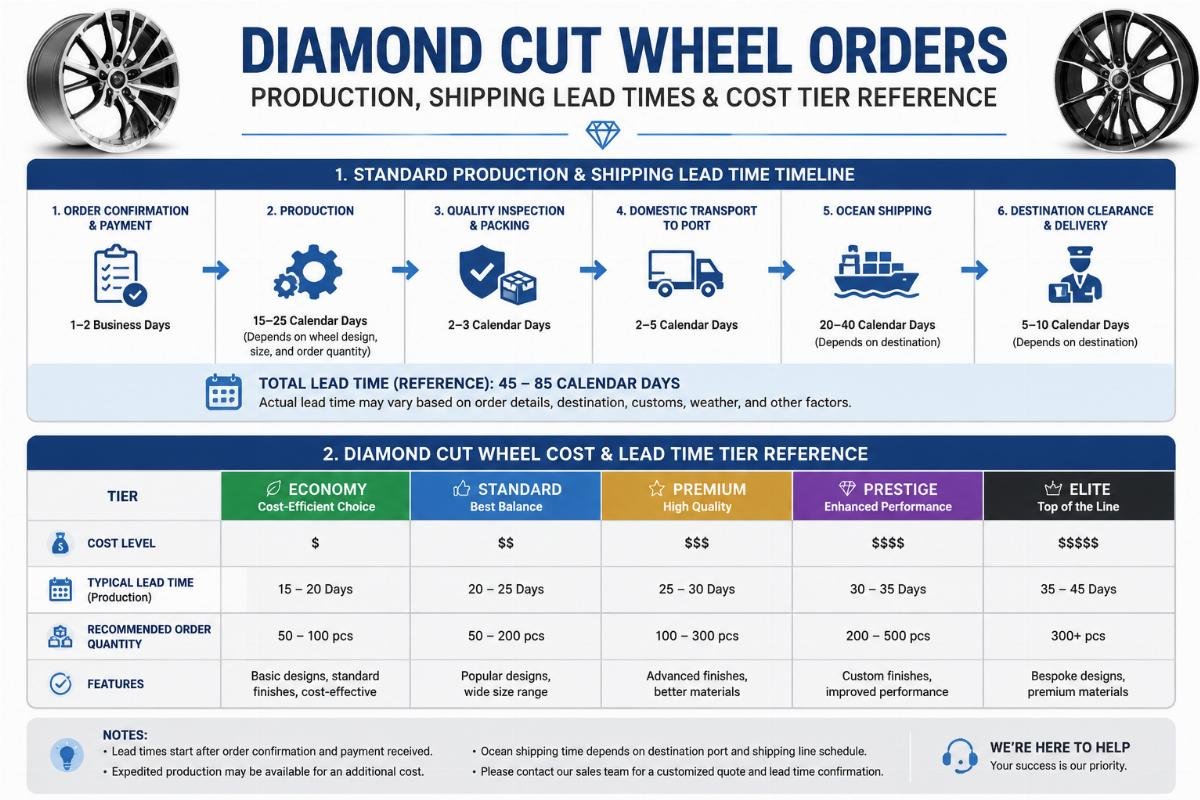
- Quote Line Item Review – Require all quotes to break out production cost, shipping cost, and any customization fees as separate line items, rather than a single bundled total.
- Lead Time Buffer – Add a 7 day buffer to all quoted production and shipping timelines to account for unexpected port or material delays.
- Pricing Lock – Confirm that quoted unit pricing stays valid for 90 days after quote issuance to avoid cost increases before you issue your purchase order.
Common Sourcing Pitfalls to Avoid for Diamond Cut Wheels
Most post-delivery quality issues can be fully prevented with pre-order verification of production process details. The three most common mistakes new buyers make are assuming all suppliers use the same production steps, accepting generic sample units that do not match bulk production quality, and skipping formal warranty terms to lock in a lower unit price.
| Pitfall | Consequence | Preventative Step |
|---|---|---|
| Assuming uniform production processes | 60% of units show peeling |

