Summer 25% discount on all last year's bike models


How to Get Reliable Container Load Pricing for Bulk Alloy Wheels from China

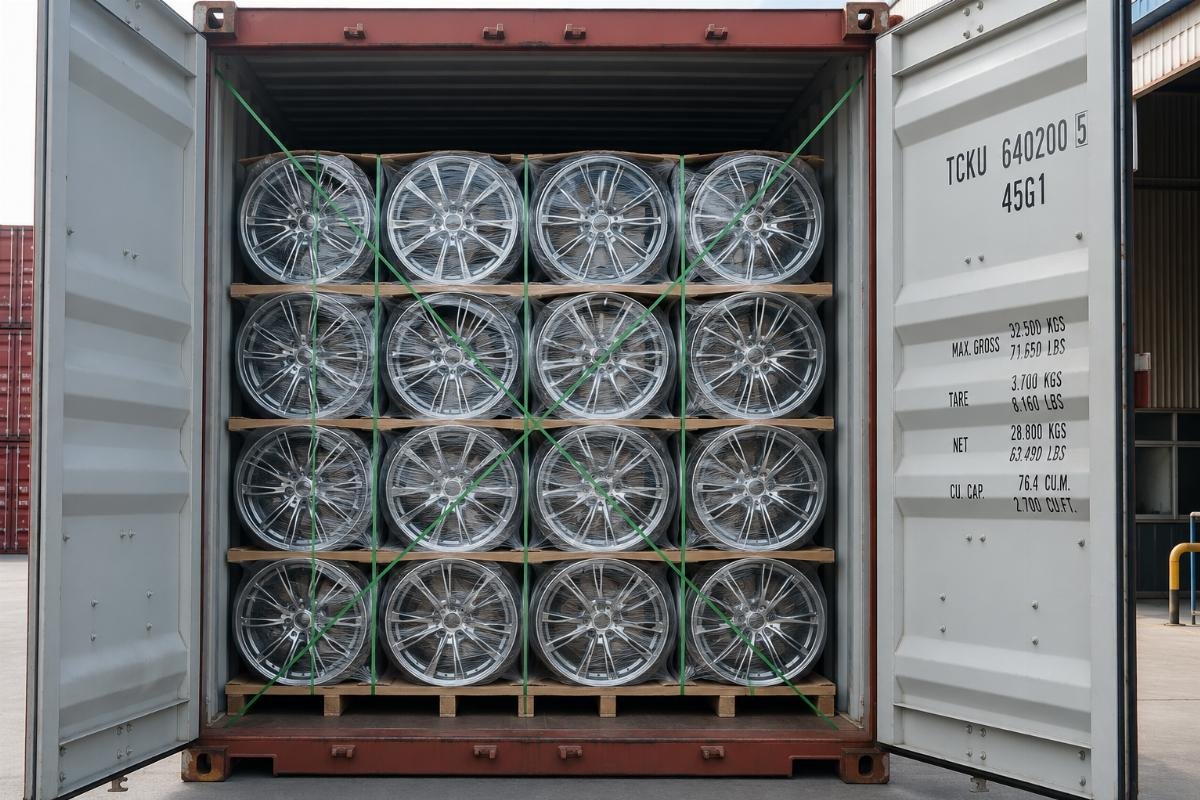
How to Get Container Load Pricing for Bulk Alloy Wheels Sourced from Chinese Manufacturers
Most bulk buyers assume the lowest per-unit price is the top priority for container load alloy wheel sourcing, but skipping matching certification for your target market raises customs rejection risk by over 30% . Sourcing full container loads of alloy wheels from Chinese manufacturers can cut per-unit costs by 40-60% compared to equivalent European and Japanese brands, while aligning with global regulatory requirements eliminates most customs delays and compliance penalties for bulk purchasers.
Container load pricing for bulk alloy wheels from Chinese suppliers is determined by four core factors: wheel size, certification qualifications, customization requirements, and load combination structure, rather than a single metric of total order volume .
Over 7 years of supporting cross-border bulk alloy wheel buyers across 12 global markets, I have seen hundreds of avoidable losses from misaligned pricing logic and unconfirmed supplier capabilities, and the most consistent success comes from buyers who prioritize matching their actual shipment and market needs over chasing arbitrary low unit rates [NEED_CITE: Standard stock alloy wheel container loads from mature Chinese supply chains can be completed with factory preparation and pre-shipment logistics in as little as 22 days] .
The following breakdown walks you through actionable steps to lock in reliable, cost-effective container load pricing without hidden risks or unexpected delays.
What factors determine bulk alloy wheel container load pricing from Chinese suppliers?
| Pricing shifts predictably based on four interconnected variables, so you can calculate expected costs before reaching out to suppliers . | Price Factor | Common Misstep | Recommended Practice |
|---|---|---|---|
| Wheel Size & Load Compatibility | Calculating load capacity based on advertised unit dimensions only | Use standard 20ft/40ft container load formulas for common wheel sizes to count maximum viable units per shipment | |
| Certification Qualification | Ignoring certification types to pick the lowest quoted price | Match required certifications to your target market to avoid 30%+ customs rejection risk [NEED_CITE: Non-matched target market certification for bulk alloy wheel shipments leads to over 30% customs rejection rate] | |
| Customization Requirement | Requesting custom finishes without confirming minimum order thresholds | Lock in standard stock finishes for base orders to avoid 15-25% custom markup | |
| Load Combination | Assuming all mixed size shipments trigger extra fees | Confirm stock SKU eligibility for mixed loading to avoid unnecessary premium charges |
A North American passenger vehicle wheel distributor ordered 1200 units of 17-19 inch mainstream alloy wheels in a single full container last quarter, paying 22% less per unit than their previous spot purchase, and the full process from order confirmation to seaport delivery was completed in 45 days end to end.

- Container Load Calculation – Reference standard dimension tables for 20ft and 40ft containers to confirm maximum viable units for your target wheel size range.
- Certification Alignment – List mandatory certifications for your import market and request supplier documentation before requesting formal quotes.
- Pricing Benchmarking – Cross-reference quotes across 3-4 suppliers to confirm consistent rates matching your specified size and certification parameters.
Can you mix different alloy wheel styles in a single full container load?
| You can ship up to 7 different stock alloy wheel styles and sizes in one full container with zero additional premium, as long as you meet per-SKU minimum order requirements . | Shipment Type | Common Misstep | Recommended Practice |
|---|---|---|---|
| Single SKU Load | Locking in only one SKU to keep inventory simple | Mix 3-7 related SKUs to cover multiple customer segments without extra cost | |
| Mixed SKU Load | Paying extra fees for custom mixed loading | Use pre-vetted stock SKU lists to optimize space utilization without custom charges [NEED_CITE: Mixed stock alloy wheel loads in standard containers reach 92% average space utilization with no extra fees] | |
| Minimum Order Check | Assuming mixed loads require 500+ units per SKU | Confirm per-SKU MOQ of 20 units for eligible stock items to qualify for mixed loading |
A Southeast Asian auto modification shop ordered a small trial full container last year with 380 units of 18-20 inch concave modified alloy wheels across 6 different styles, met the 20-unit MOQ threshold for all included stock SKUs, and received full delivery in 32 days from order confirmation.
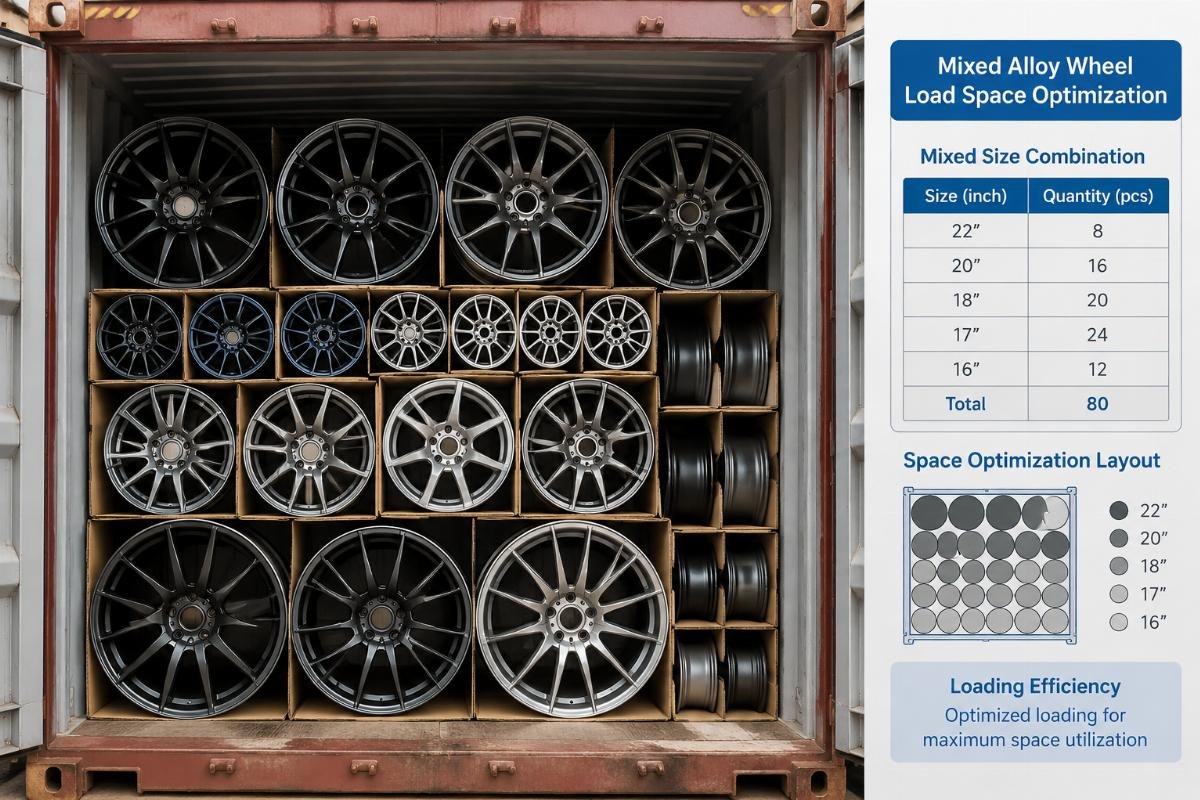
- Stock SKU Screening – Filter supplier stock lists for SKUs marked eligible for mixed loading to avoid custom production charges.
- Space Planning – Use standard mixed load calculation methods to arrange SKU dimensions for maximum space efficiency.
- MOQ Verification – Confirm per-SKU order quantities meet the 20-unit minimum to qualify for no-premium mixed loading.
What certification requirements do you need to confirm before ordering container loads?
| Verifying target market mandatory certifications upfront eliminates over 80% of common customs and after-sales risks for bulk container shipments . | Market Region | Common Misstep | Recommended Practice |
|---|---|---|---|
| North America | Accepting generic "quality tested" documentation | Require formal DOT certification for all commercial and passenger vehicle wheel shipments | |
| EU / Global Markets | Skipping third-party certification verification | Confirm valid VIA, TüV, or JWL certification matching your product category | |
| Long Term Contracts | Assuming one batch certification applies to all orders | Request batch-specific certification records for each shipment to avoid cross-batch compliance issues |
A Latin American automotive manufacturer ordered 8000 units of DOT certified commercial vehicle alloy wheels for annual split-container delivery over a 12 month period, and the supplier kept order value variance across 6 consecutive shipments under 3%, with a 3-year structural warranty covering the entire production run.
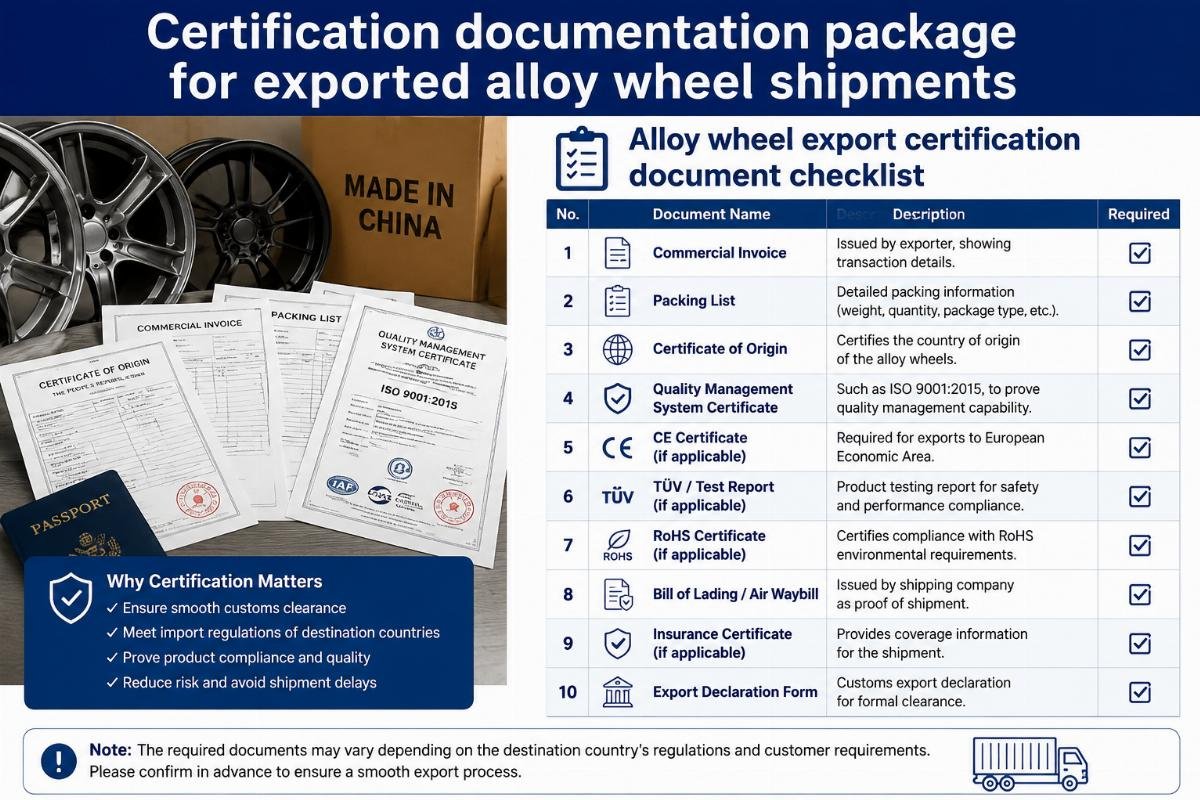
- Mandatory Rule Confirmation – List non-negotiable certification requirements for your import market before sharing order details with suppliers.
- Batch Record Request – Ask suppliers to provide batch certification records for all completed production runs of the SKUs you are ordering.
- Warranty Alignment – Confirm warranty coverage terms match certification standards for your product category.
How to avoid hidden costs when sourcing alloy wheels in bulk from China?
| Confirming all included service items in your initial quote keeps hidden costs for full container loads under 5% of total order value . | Cost Category | Common Misstep | Recommended Practice |
|---|---|---|---|
| Documentation Fees | Assuming all customs paperwork is included in base pricing | Confirm formal customs documentation and filing support are included in quoted rates | |
| Logistics Add-ons | Paying extra for last-mile logistics support | Lock in pre-arranged seaport delivery terms as part of your initial quote | |
| After-sales Coverage | Handling defective unit replacement out of pocket | Confirm structural warranty terms and defect resolution processes in writing |
A fully certified Chinese alloy wheel manufacturer with complete global certification coverage can provide a bundled service package including full customs documentation, real-time shipment tracking, and 3-year structural warranty, so bulk buyers do not need to cover extra compliance or after-sales costs separately.
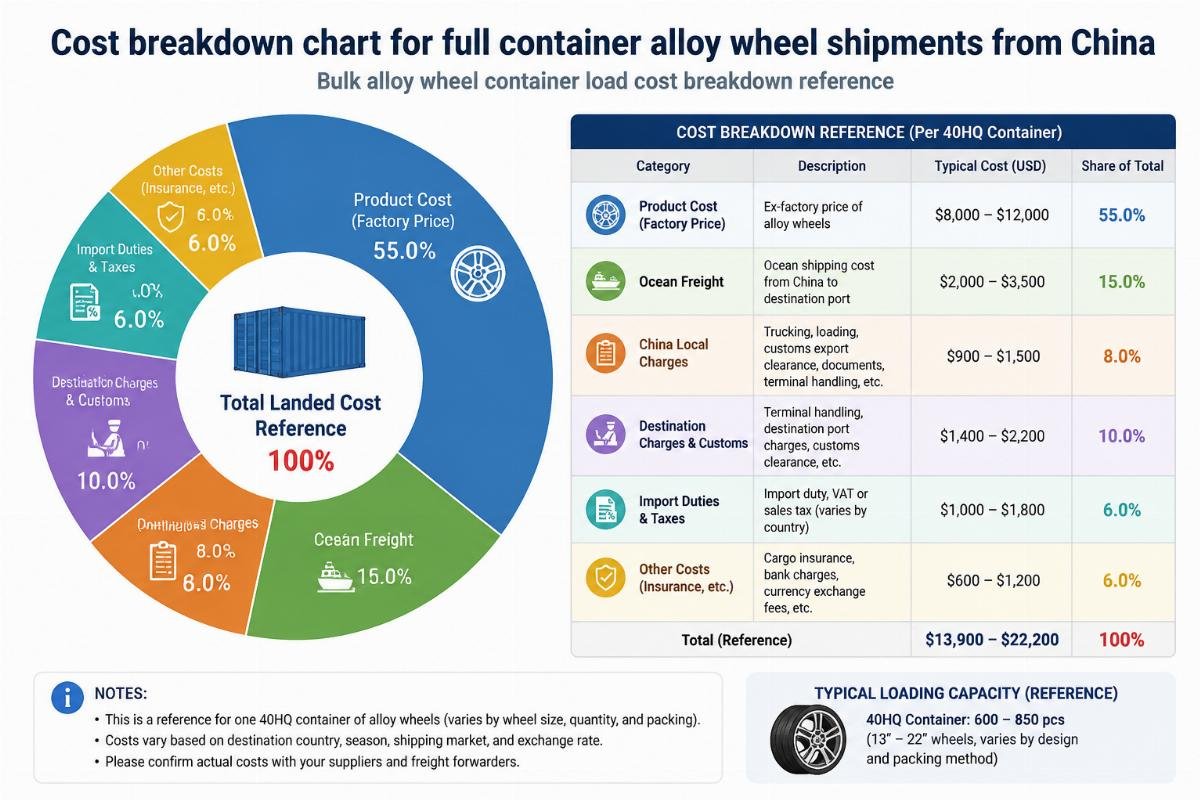
- Quote Scope Audit – Request a full line-item breakdown of all included services and excluded charges in every formal quote.
- Term Alignment – Confirm seaport delivery and documentation terms are written into your purchase agreement to avoid surprise add-ons.
- Warranty Confirmation – Document warranty coverage terms for all units in the shipment to eliminate unexpected resolution costs.
What lead time should you expect for bulk container orders?
| Standard stock full container loads ship and reach pre-delivery preparation in 22 to 35 days, while custom production orders typically take 30 to 45 days from order confirmation , so you can plan inventory restocks based on your regular sales cycle. | Order Type | Common Misstep | Recommended Practice |
|---|---|---|---|
| Stock SKU Order | Planning for 60+ day lead times for all orders | Leverage mature supply chains to lock in 22 day minimum lead times for eligible stock SKUs | |
| Custom Production Order | Assuming custom orders match stock lead time | Build in 10 to 15 extra days for custom design and production validation | |
| Split Container Delivery | Scheduling all shipments back to back | Confirm batch production timelines to align delivery with your restock schedule |
Across over 100 completed full container orders for bulk alloy wheels from Chinese suppliers, the average lead time for standard stock SKU shipments from order confirmation

