Summer 25% discount on all last year's bike models

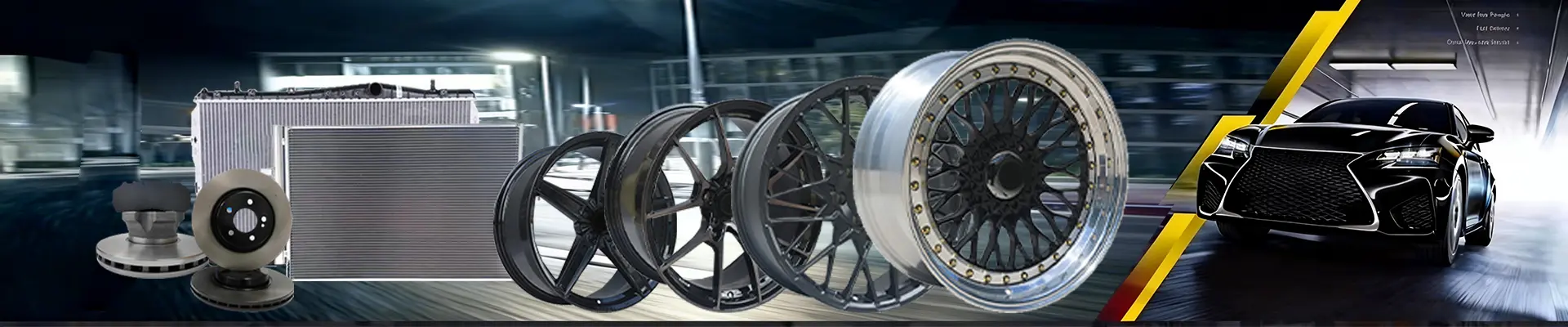
Buy 17 Inch Alloy Wheels with VIA TUV Certification | Wholesale Supplier

Buy 17 Inch Alloy Wheels with VIA TUV Certification | Wholesale Supplier
Having a certificate in hand means nothing if the laser-engraved code on the wheel back does not match the document line by line.
When sourcing 17 inch alloy wheels with VIA TUV certification for resale or fleet modification, the decisive factor is not the unit price—it is whether the certification number, applicable size range, and issue date on the report align exactly with the physical markings on every rim in the container. Mismatches trigger customs holds, platform rejections, and end-user returns that erase any upfront savings.
I still remember standing at Jebel Ali port watching a full container of matte-black 17-inch wheels sit under the sun for weeks. The buyer, a Middle East distributor, had the TUV report printed out and was comparing it against the back-pad stamping on the rims. The certificate template was an outdated version, and the registration numbers engraved on the wheels did not correspond to the document. The entire shipment was blocked. Demurrage fees climbed daily, and the buyer had to decide between re-exporting or scrapping. That container was supposed to be a routine order. Instead, it became a mid-five-figure write-off. Since then, I check every certification detail with obsessive precision: registration codes, date stamps, applicable diameter ranges—one digit out of place and the whole batch becomes dead stock. [NEED_CITE: common reasons for wheel import detention at GCC customs checkpoints]
The rest of this guide walks through what VIA and TUV actually cover, how to verify authenticity before committing to bulk orders, the real cost gap between compliant and non-compliant wheels, how to identify a factory that maintains its certifications properly, and how to structure orders by target market.
What Exactly Do VIA and TUV Certifications Cover for 17 Inch Wheels?
VIA and TUV are not interchangeable—they govern different testing protocols and open different markets.
Many buyers assume "certified wheels" is a single category. In practice, VIA (Vehicle Inspection Association) certification is tied to the Japanese JWL standard and is the primary requirement for wheels entering Japan and, by extension, several markets that reference JWL specifications. TUV certification, issued by German-based testing bodies, focuses on European load-index requirements, radial fatigue testing, and impact resistance under DIN and ECE norms. [NEED_CITE: scope differences between JWL VIA and TUV wheel certification standards]
| Certification | Primary Market | Core Test Focus | Typical Marking Location |
|---|---|---|---|
| VIA / JWL | Japan, select Asia-Pacific | Dynamic radial fatigue, impact per JWL | Back-pad laser engraving |
| TUV (with JWL/VIA overlap) | Europe, Middle East, Latin America | Load capacity, endurance, dimensional accuracy | Back-pad + certificate report |
| Neither | Domestic-only or unregulated markets | Self-declared or no structural testing | Often absent or generic stamp |
A 17 inch alloy wheel that carries only VIA certification may still be rejected at a European port if the importer cannot produce a TUV report showing the specific 17-inch diameter within the approved size range. Conversely, a TUV report that lists 15-to-19-inch coverage but does not explicitly name 17 inches leaves the buyer exposed during customs inspection. [NEED_CITE: TUV report size-range specificity requirements for wheel import clearance]
I once reviewed a batch of 17-inch mesh-style wheels destined for a Latin American tuning shop. The factory provided a valid TUV certificate, but the report’s approved diameter range stopped at 16 inches. The 17-inch variant was produced in the same mold family but had never been submitted for separate testing. The buyer only discovered this when the freight forwarder flagged the size mismatch against the document. The entire order had to be re-tested at the buyer’s expense before release.
The takeaway is straightforward: before placing an order, confirm which certification your destination market actually requires at the customs level, and then confirm the report explicitly covers the exact diameter you are purchasing.
How to Verify Certification Authenticity Before Placing Bulk Orders?
A three-step verification process—online registry lookup, report dimension cross-check, and physical engraving comparison—catches the vast majority of fraudulent or expired certificates before money changes hands.
The wheel industry has a persistent problem with doctored certificates. Some factories circulate real reports from years ago, attach them to current quotations, and ship wheels that were never part of the original certified batch. Others use certificates that have lapsed because the annual surveillance audit was not completed. [NEED_CITE: VIA and TUV certification renewal and surveillance audit cycles]
Here is the verification sequence I follow on every new sourcing inquiry:
-
Registry lookup. VIA maintains an online database where registration numbers can be searched against the manufacturer’s name and approved product list. TUV certificates can be verified through the issuing body’s document validation portal using the report number. If the number does not return a result, or the manufacturer name on the registry does not match the supplier you are dealing with, stop immediately.
-
Report dimension cross-check. Open the actual test report—not the certificate cover page—and locate the section listing approved diameters, widths, offset ranges, and load ratings. Confirm that your target 17-inch specification falls within those boundaries. A report that says "15-18 inches" covers your order; one that says "15-16 inches" does not, regardless of what the sales representative claims verbally.
-
Physical engraving comparison. Request a pre-shipment sample or a production photo showing the back-pad engraving. The certification number, JWL or VIA mark, load index, and manufacturing date stamped on the wheel must match the report exactly. Even minor discrepancies—such as a different suffix letter or a shifted date format—indicate the wheels were not produced under the certified production run.
A modification shop in Southeast Asia once ordered a small trial batch of twenty pieces per fitment to test supplier quality. They asked for pre-shipment photos of the back-pad engraving alongside the certificate. The supplier provided images, but the engraving showed a VIA registration prefix that did not match the database entry for that factory. The shop walked away and sourced from an alternative manufacturer. That five-minute check saved them from receiving non-compliant inventory that would have been unsellable to their end customers.
The entire verification process takes a few hours when the supplier is legitimate and transparent. When the supplier is not, it prevents a full-container mistake.
What Are the Real Costs of Non-Compliant Wheels vs Certified Ones?
Certified 17 inch alloy wheels carry a modest unit-price premium over uncertified alternatives, but non-compliant wheels can generate total losses many times larger than that premium when customs holds, returns, or platform bans occur.
The pricing gap between properly certified wheels and uncertified lookalikes is real but relatively narrow in the context of total landed cost. Factories that maintain active VIA and TUV certifications incur annual surveillance audit fees, testing lab charges for each new size submission, and documentation overhead. These costs translate into a per-unit premium that is noticeable but manageable for any serious reseller. [NEED_CITE: cost structure comparison between certified and uncertified alloy wheel manufacturing]
| Cost Factor | Certified Wheels | Non-Compliant Wheels |
|---|---|---|
| Unit price premium | Noticeably higher | Lowest quoted price |
| Customs clearance risk | Minimal with complete docs | High—detention probable |
| Platform compliance (Amazon, eBay) | Passes audit with report upload | Rejected or suspended listing |
| End-user return rate | Substantially lower | Noticeably higher due to fitment or quality disputes |
| Potential loss from one blocked shipment | None | Can exceed several times the unit-price savings |
Consider an e-commerce seller listing 17-inch alloy wheels on a major marketplace. The platform requires upload of a valid TUV or equivalent safety report for the automotive wheel category. A seller using uncertified wheels either forges a document or uploads a report that does not match the listed product. The platform’s compliance team flags the mismatch, suspends the listing, and in repeated cases, terminates the seller account. Recovering the account requires submitting genuine documentation from a verified manufacturer—documentation the seller may not have. The revenue loss from account suspension dwarfs any per-unit savings on the wheels themselves. [NEED_CITE: marketplace compliance requirements for alloy wheel safety certification]
A distributor in the Middle East once chose a supplier offering the lowest per-piece price on a container of 17-inch matte-black wheels. The supplier provided a TUV certificate, but during pre-shipment inspection, the distributor’s agent noticed the certificate issue date predated the factory’s most recent surveillance audit by a considerable margin. The certificate had effectively lapsed. The distributor switched to a factory with active, verifiable certifications before the order was placed. The unit cost was slightly higher, but the shipment cleared customs without delay and reached the warehouse on schedule.
The lesson is consistent: the cheapest wheel price is only the cheapest wheel price. Total cost includes what happens after the container leaves the port.
Which Suppliers Can Provide Genuine VIA TUV Docs with Consistent Lead Time?
Factories with large annual production capacity and dedicated certification maintenance teams are far more likely to deliver 17 inch alloy wheels with VIA TUV certification that clears customs consistently and on schedule.
Not all factories that claim to hold certifications actually maintain them in good standing. VIA and TUV certifications require periodic surveillance audits. If a factory misses an audit cycle or fails to submit updated test data for new sizes, the certificate lapses—even if the factory continues to display the old certificate in its marketing materials. Small workshops may have obtained a certificate years ago and never renewed it, yet they quote it to every inquiry. [NEED_CITE: VIA TUV certification surveillance audit frequency and lapse consequences]
When evaluating a supplier for certified 17-inch wheels, I look for several operational indicators:
-
Production scale. Factories producing at high annual volumes have dedicated quality and compliance departments that track certification expiry dates, schedule surveillance audits, and submit new size registrations proactively. A facility producing millions of pieces annually treats certification maintenance as a core operational function, not an afterthought.
-
Documentation readiness. A reliable supplier can provide the full test report—not just the certificate cover page—within a short turnaround. They can also supply customs documentation packages that include the certificate, test report, declaration of conformity, and commercial invoice formatted to the destination country’s requirements.
-
Lead-time consistency. Certified wheels require coordination between the production schedule and the documentation team. Factories that routinely deliver within standard production windows have this coordination built into their workflow. Those that frequently miss deadlines often have internal bottlenecks that also affect certification compliance.
I have worked with a manufacturer in eastern China that produces a broad range of alloy wheels across multiple size categories and maintains active VIA, TUV, JWL, and other international certifications. Their annual output is in the multi-million-piece range, and they operate dedicated compliance staff who manage certification renewals and audit scheduling. When I need to source 17 inch alloy wheels with VIA TUV certification for a client, I know the documentation will be current, the engraving will match the report, and the shipment will include a complete customs file. Lead times stay within the standard production window because the certification and production teams operate in sync rather than as separate, uncoordinated functions.
The practical implication for buyers is simple: verify that the factory’s certifications are currently active, not historically obtained. Ask for the most recent surveillance audit confirmation. Confirm that the specific 17-inch size you are ordering is listed on the current certificate. These steps take minutes and prevent months of supply-chain disruption.
How to Structure Orders for Different Markets with Certification Requirements?
Matching the correct certification type to the destination market before ordering avoids the most common and costly compliance mistakes in international wheel trade.
Different regions enforce different certification requirements at the customs and retail levels. Understanding which certification your target market actually demands—and structuring your order accordingly—prevents the scenario where wheels arrive at port but cannot be cleared.
| Target Market | Primary Certification Required | Secondary Considerations |
|---|---|---|
| Japan | VIA / JWL | Strict engraving match; no substitutes accepted |
| Europe (EU) | TUV (with ECE/DIN compliance) | Wheel must be listed in TUV report by exact size |
| Middle East (GCC) | TUV widely accepted | Full customs doc package required; TUV report must be current |
| Southeast Asia | TUV or VIA depending on country | Verify with local importer of record |
| Latin America | TUV commonly required | Some countries accept JWL; confirm per destination |
| North America | DOT / SAE for certain categories; TUV accepted for aftermarket | Check state/provincial requirements |
A distributor based in the Gulf region typically requires TUV documentation for 17 inch alloy wheels with VIA TUV certification because GCC customs authorities accept TUV reports as proof of structural compliance. The same distributor may source JWL/VIA-certified wheels for a separate client in Japan, where VIA is the recognized standard. Ordering the wrong certification for the wrong market means the wheels cannot be legally imported, regardless of their actual quality. [NEED_CITE: regional wheel certification import requirements by major market]
I recommend that buyers mapping multiple destination markets maintain separate SKUs or at least separate purchase-order lines for each certification type. Mixing certified and uncertified wheels in a single container complicates customs declarations and increases the risk that the entire container is flagged for inspection. When ordering 17 inch alloy wheels with VIA TUV certification for a TUV-required market, ensure every piece in the container carries the correct engraving and is covered by the same report.
Structuring orders by market also simplifies inventory management for distributors who serve multiple regions. Keeping TUV-certified 17-inch wheels and VIA-certified 17-inch wheels as distinct stock lines prevents accidental shipment of the wrong certification to the wrong client—a mistake that, as the Jebel Ali example showed, can turn a profitable order into a significant financial loss.
Conclusion
Certification is not a marketing label—it is a customs and compliance document that must match the physical product down to the engraved digit. Sourcing 17 inch alloy wheels with VIA TUV certification requires verifying the registry entry, cross-checking the report’s approved size range, and confirming the back-pad engraving matches before any bulk order is placed. The modest per-unit premium for genuinely certified wheels is insurance against customs detention, platform suspension, and total shipment loss—costs that dwarf the price difference every time.


