Summer 25% discount on all last year's bike models

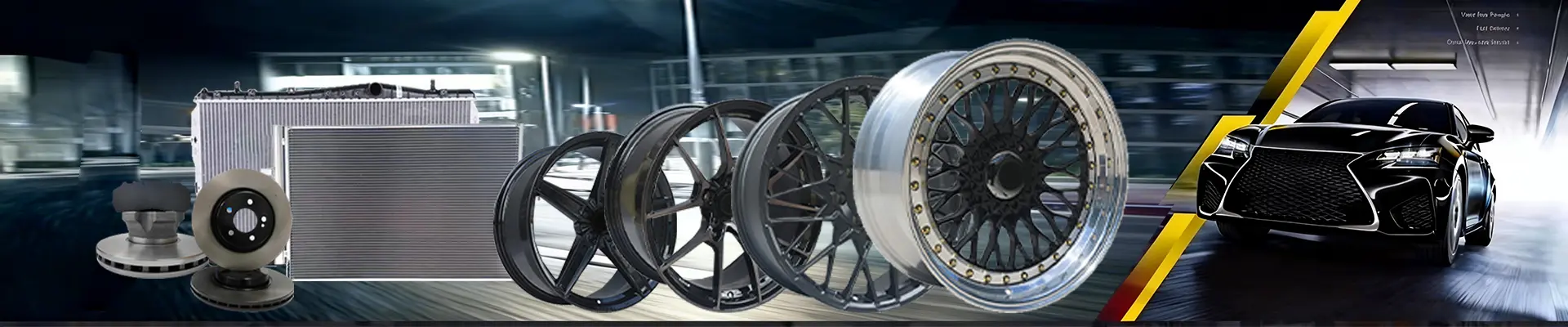
Wheel Rims Supplier for Kenya: China Factory Direct Wholesale

Wheel Rims Supplier for Kenya: China Factory Direct Wholesale
Most importers think the cheapest unit price wins. In reality, a single mismatched center bore can erase an entire container’s margin in port storage fees alone.
Sourcing a reliable Wheel Rims Supplier for Kenya requires matching exact PCD and center bore specifications for dominant East African models like Toyota HiAce and Nissan Caravan, verifying international certifications such as JWL and VIA to clear Mombasa customs, and calculating total landed cost rather than just FOB price.
I still remember a shipment that arrived at Mombasa years ago—a full container of matte black 17-inch rims destined for a Nairobi-based aftermarket distributor. The wheels looked perfect, the finish was flawless, and the price was right. But when the customer’s team tried to mount them onto Toyota HiAce vans, the center bore was off by a fraction. The entire container sat at the port for weeks. The demurrage and stacking charges alone consumed what would have been half a year’s profit on that order. That single oversight reshaped how I approach every fitment conversation with East African buyers. A Wheel Rims Supplier for Kenya who cannot confirm PCD, offset, and center bore data before loading is not saving you money—just deferring the cost to the destination port [NEED_CITE: East African Community customs demurrage regulations for mismatched automotive parts].
Let me walk you through how a serious buyer should evaluate options, verify specs, and avoid the traps that quietly destroy margins in this trade.
Kenya’s Hot-Selling Rim Sizes: Which PCD and Center Bore Fit Your Market?
Toyota and Nissan light commercial vehicles dominate Kenya’s replacement and modification market, with 15-inch to 17-inch rims forming the core demand tier. Getting the bolt pattern and hub diameter right is not optional—it is the single most consequential decision before you even discuss pricing with any Wheel Rims Supplier for Kenya.
The East African aftermarket is heavily driven by Toyota HiAce, Toyota Land Cruiser Prado, Nissan Caravan, and Nissan Patrol. These platforms share certain PCD conventions, but center bore diameters differ meaningfully between generations and trims. A rim that physically bolts on may still vibrate dangerously if the hub-centric ring or center bore is incorrect.
| Vehicle Platform | Typical PCD | Typical Center Bore | Popular Rim Sizes | Fitment Criticality |
|---|---|---|---|---|
| Toyota HiAce (H200/H300) | 6-hole pattern | Larger hub diameter | 15"-17" | High |
| Toyota Land Cruiser Prado | 6-hole pattern | Larger hub diameter | 17"-18" | High |
| Nissan Caravan / Urvan | 6-hole pattern | Distinct from Toyota | 15"-16" | High |
| Nissan Patrol (Y61/Y62) | 6-hole pattern | Larger hub diameter | 17"-18" | High |
| Mid-size Sedans (e.g., Premio, Axio) | 5-hole pattern | Smaller hub diameter | 15"-16" | Moderate |
[NEED_CITE: Toyota and Nissan wheel fitment specifications for East African market vehicles]
A wholesale buyer in Dar es Salaam once compared quotes from a Japanese brand distributor and a direct China factory. The Japanese-branded rims carried a recognizable name and came with polished packaging. The China-factory rims were visually similar but priced noticeably lower. What the buyer initially missed was that the Japanese brand’s center bore was engineered specifically for JDM-spec hubs, while the China factory’s tooling was set to the wider center bore used on Middle East and African-spec Toyota models. The "cheaper" option was actually the correct one for the market. The price gap between branded and factory-direct rims from a qualified Wheel Rims Supplier for Kenya typically falls in a substantial range, but the real savings come from avoiding fitment returns and customs holds.
Always request a physical sample or at least a calibrated drawing with PCD, center bore, offset, and bolt seat type before committing to a full container. A responsible Wheel Rims Supplier for Kenya will provide this documentation without hesitation.
Factory Direct vs. Trading Company: Where Does the Real Cost Gap Lie?
A direct factory relationship eliminates layered markups, but it also transfers certification verification and documentation responsibility to the buyer.
Trading companies offer convenience—consolidated shipments, flexible payment terms, and sometimes faster response times for small orders. However, their pricing inherently includes sourcing margins, warehousing overhead, and a buffer for the quality variability that comes from rotating between multiple unnamed workshops. When you source through a Wheel Rims Supplier for Kenya that operates its own production facilities, the cost structure changes fundamentally.
Consider a real scenario: a Nairobi-based auto parts wholesaler needed to replenish a fast-moving SKU of 16-inch silver painted rims for Toyota Hilux. The trading company quote included a comfortable margin over the actual manufacturing cost, and the goods were sourced from a workshop that rotated between three different polishing lines. Batch-to-batch color consistency was unpredictable. By contrast, a direct factory with controlled surface treatment lines can maintain color matching across production runs, because the paint formulation, curing temperature, and application process remain under one roof.
| Sourcing Channel | Unit Price Level | Certification Transparency | Batch Consistency | Customization Flexibility |
|---|---|---|---|---|
| Trading Company | Higher due to layered margins | Self-reported, often unverifiable | Variable across batches | Limited to catalog stock |
| Direct Factory | Substantially lower | Verifiable through third-party databases | Controlled and repeatable | Full OEM and ODM support |
[NEED_CITE: Cost structure comparison between direct factory and trading company alloy wheel sourcing]
The manufacturer I work with in Jinan operates under the Ouya trademark, with production capacity reaching into the millions of pieces annually. Their facility holds ISO, VIA, TÜV, DOT, JWL, and CCC certifications—meaning the documentation a Kenyan importer needs for Mombasa customs clearance is generated in-house, not borrowed from a subcontractor’s file. A 3-year structural warranty backs every rim, which matters when your retail customers start asking about liability after a pothole impact.
The trade-off is straightforward: factory direct demands that you understand your market’s fitment requirements and certification needs before ordering. There is no intermediary to absorb the confusion. But for buyers who have done their homework, the margin improvement is significant and sustainable.
MOQ and Lead Time: How to Test the Market Without Overstocking?
Minimum order quantities from a flexible Wheel Rims Supplier for Kenya can be as low as a few dozen pieces for stock items, enabling small-batch market testing without committing to full containers.
Many East African buyers—particularly modification shops in Nairobi and Mombasa—want to test new styles before dedicating warehouse space and capital. Deep concave designs, mesh patterns, and staggered fitments are trending, but demand is uneven. Ordering a full container of one SKU based on a hunch is how inventory becomes dead stock.
A responsible manufacturer structures MOQ tiers to accommodate this reality:
- Stock models: Low MOQ threshold, allowing buyers to order mixed sizes and finishes in a single shipment. Ideal for retail shops and e-commerce sellers testing demand.
- Custom models: Higher MOQ applies, because custom painting, machining, or mold development requires dedicated production setup. Still accessible for established distributors planning exclusive regional lines.
- Lead time: Production and quality control cycles typically span a few weeks for stock items and extend moderately for custom orders. This is fast enough to support seasonal restocking without forcing buyers to predict demand half a year in advance.
[NEED_CITE: Alloy wheel industry standard MOQ and production lead time ranges for aftermarket suppliers]
A modification shop owner in Dar es Salaam once told me he used to order only what he could sell within a single rotation cycle—otherwise, the capital tied up in unsold rims would choke his cash flow. By working with a Wheel Rims Supplier for Kenya that accepts small-batch orders and ships mixed containers, he could rotate through six or eight different styles per quarter, keeping inventory lean and responding to customer requests within weeks rather than months.
The key is finding a supplier whose production system is standardized enough to handle small batches without treating them as an afterthought. Mold inventory, surface treatment flexibility, and packaging customization all need to be in place.
Certification Checklist: Avoiding Customs Rejection and Structural Failures
JWL, VIA, TÜV, and CCC certifications are not optional paperwork—they are the structural integrity guarantee that protects your customers and your business from catastrophic liability.
There is a persistent misconception in some import markets that certifications are merely customs formalities—pieces of paper to show the officer at Mombasa. This is dangerously wrong. Certifications like JWL (Japan Light Alloy Wheel) and VIA (Vehicle Inspection Association) involve rigorous dynamic fatigue testing, impact testing, and radial runout measurement. A rim that passes JWL testing has survived simulated cornering forces, lateral impacts, and sustained radial loads far beyond normal driving conditions.
When a rim fails structurally on a loaded HiAce carrying passengers on a rough rural road, the consequences are not just a warranty claim. They are legal liability, reputational destruction, and potentially loss of life.
| Certification | Issuing Body | Core Testing Scope | Relevance to Kenya Market |
|---|---|---|---|
| JWL | Japan Light Alloy Wheel Testing Association | Dynamic fatigue, impact, radial runout | High—recognized across East Africa |
| VIA | Vehicle Inspection Association (Japan) | Enhanced JWL + ongoing factory audits | High—premium market positioning |
| TÜV | Technischer Überwachungsverein (Germany) | Structural integrity, material analysis | Medium—valued by discerning buyers |
| CCC | China Compulsory Certification | Domestic market compliance baseline | Baseline—required for China export |
| ISO | International Organization for Standardization | Quality management system | Baseline—factory system verification |
[NEED_CITE: JWL and VIA certification testing standards and structural requirements for alloy wheels]
A Wheel Rims Supplier for Kenya who cannot produce verifiable certification documents linked to specific production batches is exposing you to unacceptable risk. The Ouya-brand facility I referenced earlier maintains full certification coverage and provides batch-traceable documentation. Every rim shipped carries traceability back to the production lot, the heat treatment record, and the surface treatment batch. This is not bureaucracy—it is the foundation of a defensible supply chain.
Before placing an order, verify certifications directly through the issuing body’s database. Do not accept photocopies or self-printed certificates. A legitimate Wheel Rims Supplier for Kenya will welcome this verification and provide the necessary reference numbers.
Conclusion
Sourcing wheel rims for Kenya is a fitment-first, certification-anchored, landed-cost-driven exercise—not a unit-price race to the bottom. Match PCD and center bore to the dominant Toyota and Nissan platforms, verify JWL and VIA certifications through official databases, leverage factory-direct pricing while accepting documentation responsibility, and use flexible MOQ structures to test styles before committing capital. The suppliers who treat these disciplines as non-negotiable are the ones whose containers clear Mombasa smoothly and whose rims stay on the road.


