Summer 25% discount on all last year's bike models

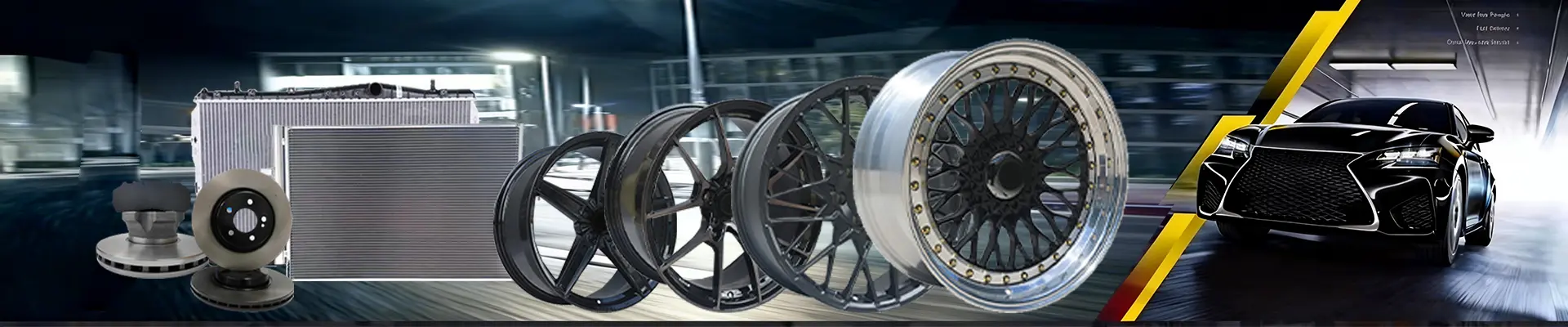
Car Rims Supplier for Vietnam: China Factory Direct OEM Alloy Wheels

Car Rims Supplier for Vietnam: China Factory Direct OEM Alloy Wheels
Most Vietnamese importers think a scanned JWL certificate is enough to clear customs. It is not. The Vietnam Register actually cross-checks the annual audit records tied to the factory behind that certificate, not the paper itself.
Sourcing a reliable Car Rims Supplier for Vietnam requires verifying four dimensions before placing any deposit: certification traceability, fitment parameter accuracy for dominant local models, process-cost alignment with your buyer segment, and completeness of customs documentation. A failure in any single dimension can strand an entire container at Cat Lai port, with daily warehousing fees eroding margins faster than the factory discount ever created them.
I learned this the hard way back when I was running parts procurement for a modification shop in District 5, Ho Chi Minh City. My first bulk order from a Chinese supplier arrived with a certificate that looked legitimate—until the customs broker flagged it as a PS-level document, not JWL. On top of that, the center bore spec on the packing list did not match the Toyota Vios and Honda City platforms that made up most of our customer base. Over forty rims sat bonded, burning through storage fees every single day. That experience pushed me to spend extended time on production floors in Jinan and Yantai, learning the real differences between gravity casting and flow forming, and understanding what Vietnam’s vehicle registration authority actually demands on the paperwork side. Now, when I evaluate a Car Rims Supplier for Vietnam, I start by pulling the original certification and matching it against recent shipment records—no spec sheet replaces watching a rim go through X-ray inspection.
Let me walk you through the four checkpoints that separate a workable Car Rims Supplier for Vietnam from an expensive lesson.
How to Verify a China Wheel Supplier’s JWL/VIA Certification for Vietnam Import?
A certificate PDF proves nothing; what matters is whether the factory’s annual surveillance audit is current and whether the product batch falls within the certified scope. Vietnam’s Register does not simply stamp paperwork—they pull the certification body’s database to confirm the factory name, address, and product range match the physical goods arriving at port [NEED_CITE: Vietnam Register import inspection procedures for automotive wheels].
Here is the verification matrix I use when screening a Car Rims Supplier for Vietnam:
| Verification Item | Certified & Traceable | Self-Reported Only | Not Provided |
|---|---|---|---|
| JWL/VIA Original Certificate | Verifiable against certification body database | Scan only, no reference number | Request ignored |
| Annual Surveillance Audit | Current year audit completed, report available | Audit expired or missing | No record |
| Product Scope Match | Ordered sizes and PCD listed in certificate appendix | Generic certificate, no size range | Mismatch found |
| Factory Address Consistency | Certificate address matches business license and shipping origin | Address differs across documents | Discrepancy flagged |
A distributor in Hai Phong once shared a story with me: their supplier claimed JWL certification for a batch of 17-inch flow-formed rims. The certificate looked clean. But when the Hai Phong customs office ran the verification, the factory name on the certificate belonged to a trading company, not the actual manufacturing facility. The entire shipment was held for re-inspection, and the delay cost the distributor a full season’s worth of aftermarket orders.
The fix is straightforward. Ask the Car Rims Supplier for Vietnam to provide the original certificate with the certification body’s contact reference. Then, independently confirm the factory’s annual audit status. If the supplier hesitates or offers only a laminated copy, move on. Factories that maintain genuine multi-certification systems—covering ISO, VIA, TÜV, DOT, JWL, and CCC—will hand over these documents without friction, because their production lines are built around compliance, not around paper tricks [NEED_CITE: JWL/VIA certification scope verification methodology].
What Are the Critical Fitment Parameters for Vietnam’s Top-Selling Car Models?
Vietnam’s vehicle parc is dominated by Toyota, Honda, and Hyundai platforms. If your PCD and center bore data do not match these platforms exactly, the wheels are scrap metal. There is no "close enough" in fitment. A 5×114.3 bolt pattern will not accept a 5×112 hub, and a 60.1mm center bore will not sit flush on a 56.1mm hub without expensive, failure-prone adapters.
I keep a fitment reference matrix for the Vietnamese market. Here is the core of it:
| Vehicle Platform | Bolt Pattern (PCD) | Center Bore | Typical OEM Size | Aftermarket Upgrade Range |
|---|---|---|---|---|
| Toyota Vios / Altis | 4×100 | 54.1mm | 15"–16" | 16"–17" |
| Toyota Camry / Fortuner | 5×114.3 | 60.1mm | 17"–18" | 18"–20" |
| Honda City / Civic | 5×114.3 | 64.1mm | 15"–17" | 17"–19" |
| Hyundai Accent / Tucson | 5×114.3 / 5×112 | 67.1mm / 57.1mm | 16"–18" | 18"–20" |
When I was sourcing for the District 5 shop, we ordered a batch of 16-inch rims with a 73.1mm center bore—standard for certain American platforms. They were physically beautiful, machined face, deep concave. But not a single one fit the Honda City fleet that made up our bread-and-butter customer list. The return logistics alone cost several times the per-unit savings we thought we had locked in.
A competent Car Rims Supplier for Vietnam will maintain a fitment database mapped to Southeast Asian vehicle platforms, not just the global catalog. They should be able to confirm PCD, center bore, offset range, and load rating for your target models before production begins. If they cannot, they are selling wheels, not solutions [NEED_CITE: Southeast Asian vehicle platform PCD and center bore reference data].
Casting vs. Flow-Formed: Which Process Fits Vietnam’s Aftermarket Demand?
Modification shops in Vietnam overwhelmingly prefer flow-formed wheels for their weight-to-strength ratio, while distributors balancing price-sensitive retail channels need gravity casting’s cost advantage. The real decision is not which process is "better"—it is which process matches your buyer’s willingness to pay.
Here is how the two processes compare across the dimensions that matter for Vietnam’s aftermarket:
| Dimension | Gravity Casting | Flow Forming |
|---|---|---|
| Weight | Noticeably heavier | Substantially reduced |
| Structural Strength | Standard | Significantly enhanced |
| Unit Cost | Lower baseline | Moderate premium |
| MOQ Flexibility | High, suitable for mixed SKU orders | Typically requires larger batch per design |
| Target Buyer Segment | Price-driven retail, fleet replacement | Enthusiast改装, performance-oriented shops |
The misconception I encounter most often is that flow-formed wheels are always dramatically more expensive. In reality, when a factory runs its own flow-forming line—as opposed to outsourcing the barrel rolling—the per-unit cost gap narrows considerably at volume. The premium is most pronounced at low quantities, where setup and calibration costs are amortized across fewer pieces.
A tuning shop in Binh Duong told me they switched their core inventory from cast to flow-formed after customer complaints about curb damage and bent lips on rough provincial roads. The flow-formed rims absorbed impacts that would have cracked a cast wheel, and the weight reduction was immediately noticeable in fuel economy feedback from daily drivers. Their average selling price went up, but so did customer retention.
When evaluating a Car Rims Supplier for Vietnam, ask directly whether they operate their own flow-forming equipment or subcontract that step. In-house capability means tighter process control, shorter lead times, and more honest pricing at scale [NEED_CITE: Flow forming vs gravity casting process comparison for alloy wheels].
What Documents Are Required for Vietnam Customs Clearance of Alloy Wheels?
A complete documentation package—Certificate of Origin, certification copies, commercial invoice, packing list, and bill of lading—is non-negotiable. Missing any single document can trigger port holds that run into weeks. Vietnam’s customs authority has tightened inspection protocols for automotive parts in recent years, and alloy wheels fall under a category that requires both quality certification proof and origin verification [NEED_CITE: Vietnam customs documentation requirements for imported alloy wheels].
Here is the documentation checklist I walk every buyer through:
| Document | Purpose | Risk if Missing |
|---|---|---|
| Certificate of Origin (C/O) | Confirms Chinese manufacture for tariff treatment | Shipment held, tariff reassessment |
| JWL/VIA/TÜV Certification Copy | Proves product meets international safety standards | Customs rejection, mandatory re-inspection |
| Commercial Invoice | Declares transaction value for duty calculation | Delayed clearance, penalty assessment |
| Packing List | Matches physical cargo to declared goods | Physical inspection trigger, demurrage |
| Bill of Lading | Proof of shipment and title transfer | Cannot claim goods at port |
The hidden cost most importers overlook is not the document itself—it is the inconsistency between documents. If the certificate lists a factory name that does not match the C/O issuer’s records, or if the packing list quantities do not align with the invoice, customs will flag the shipment for manual review. That review can add extended days to your clearance timeline, during which port storage fees accumulate without mercy.
I have seen shipments from otherwise reliable factories delayed simply because the C/O was issued under a trading company name rather than the manufacturing entity. The goods were correct, the certification was valid, but the paperwork chain had a broken link. A Car Rims Supplier for Vietnam that maintains an integrated export documentation team—one that coordinates between production, certification, and logistics—eliminates this risk entirely [NEED_CITE: Vietnam automotive parts import compliance documentation standards].
How to Negotiate MOQ and Lead Time with a China Factory for Vietnam Orders?
Stock models can go as low as small-quantity trial orders, while custom designs require meaningful batch commitments. Lead times stretch noticeably during peak modification season, so advance planning is not optional—it is survival.
Vietnam’s aftermarket demand cycles around holiday periods and racing seasons. The months leading up to major holidays see a surge in modification shop orders, and factories that serve Southeast Asian markets fill their production calendars well in advance. If you wait until the rush to place an order, you will either face extended lead times or be pushed to the back of the queue.
Here is the negotiation framework I recommend:
| Order Type | Typical MOQ | Standard Lead Time | Peak Season Adjustment |
|---|---|---|---|
| Stock Models (popular sizes/finishes) | Low MOQ available | Relatively short | Moderate extension |
| Custom Designs (private label, special finish) | Meaningful batch required | Standard production cycle | Noticeable extension |
| OEM Programs (vehicle manufacturer supply) | Substantial volume commitment | Extended production planning | Locked schedule required |
A distributor in Da Nang learned this the hard way. They placed a custom finish order six weeks before the peak season, assuming standard lead time would hold. The factory was already running at full capacity for other Southeast Asian clients, and the order slipped by several weeks. By the time the rims arrived, the modification shops had already sourced from competitors with earlier delivery. The distributor lost not just the sale, but the seasonal window for that entire design.
The solution is to lock production slots early. A Car Rims Supplier for Vietnam that operates at meaningful annual capacity—serving global aftermarket, OEM, and modification markets—will have structured production planning that allows committed buyers to secure slots before the rush. They will also offer transparent communication about capacity constraints, rather than overpromising and underdelivering [NEED_CITE: Alloy wheel factory production planning and lead time management for seasonal demand].
Conclusion
Certification traceability, fitment precision, process-cost alignment, and documentation completeness are the four pillars that determine whether a China-to-Vietnam wheel import succeeds or stalls at port. A Car Rims Supplier for Vietnam that can demonstrate strength across all four dimensions—backed by verifiable multi-certification systems, Southeast Asian vehicle platform expertise, in-house process capability, and integrated export documentation—transforms from a vendor into a strategic partner. The margin you protect on the front end by choosing correctly is always greater than the discount you chase on the back end.


