Summer 25% discount on all last year's bike models

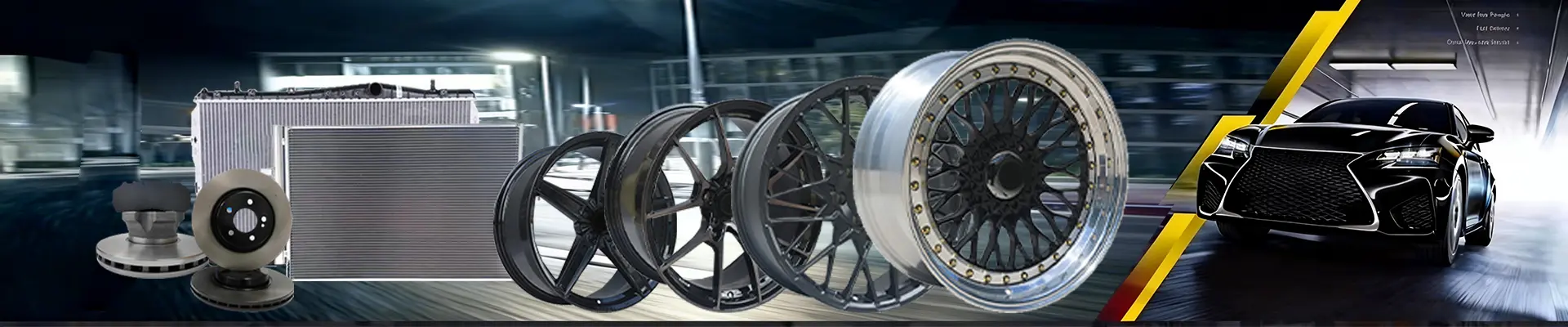
Buy Modified Car Alloy Wheels: China Factory Direct Wholesale Supplier

Buy Modified Car Alloy Wheels: China Factory Direct Wholesale Supplier
Lower factory price does not equal lower total cost when sourcing modified car alloy wheels from China. The real cost drivers are coating durability under humid shipping conditions, structural consistency across mixed-SKU containers, and whether the supplier can back claims with verifiable certifications rather than self-issued certificates.
When buying modified car alloy wheels directly from Chinese manufacturers, the critical decision is matching the correct manufacturing process—gravity casting, flow forming, or forging—to your end-market positioning and budget, combined with surface treatment selection based on destination climate and mandatory certification compliance for market entry.
I still remember a shipment of twenty-inch forged wheels destined for the Middle East. The finish was a brushed bright face, visually sharp when it left the factory floor. Weeks later, the buyer sent photos showing faint oxidation creeping along the spoke edges. The wheels themselves were structurally sound, but the high-humidity, high-temperature sea freight environment had attacked the unprotected margins. The packaging film had trapped condensation against the metal surface during the ocean transit. That single batch taught our entire team that surface treatment and export packaging are not cosmetic afterthoughts—they are the frontline defense against claims that can wipe out an entire order’s margin. From that point forward, every export shipment we handle goes through a tightened moisture-barrier protocol, and we now specify salt-spray endurance requirements before confirming any finish selection. [NEED_CITE: corrosion failure mechanisms in aluminum alloy wheels during maritime transport]
Sourcing modified car alloy wheels successfully requires understanding four interconnected layers: process selection, finish durability, certification verification, and landed-cost calculation. Let us walk through each.
What Manufacturing Processes Are Available for Modified Alloy Wheels?
Gravity casting, flow forming, and forged construction each serve distinct market segments; the optimal choice depends on your customers’ performance expectations and price sensitivity, not on an assumption that forging is universally superior.
Many buyers assume forged wheels are automatically the best option. In practice, the correct process depends on the vehicle application, the buyer’s retail price point, and whether the end user prioritizes weight savings or visual design complexity. A tuning shop selling to weekend enthusiasts may find flow-formed wheels offer the best value-to-performance ratio, while a distributor supplying off-road trucks may prefer cast wheels for their design flexibility and lower replacement cost.
| Parameter | Gravity Casting | Flow Forming | Forged |
|---|---|---|---|
| Material Density | Standard | Noticeably improved | Highest |
| Weight Relative to Baseline | Heaviest | Noticeably reduced | Substantially reduced |
| Design Complexity | Highly flexible | Moderate | Moderate to limited |
| Typical Price Tier | Entry to mid | Mid | Premium |
| Suitability for Deep Concave Profiles | Excellent | Good | Restricted by die geometry |
| Structural Consistency | Sample-level | Full batch-level | Full batch-level |
[NEED_CITE: mechanical property comparison of cast versus forged aluminum alloy wheels per SAE standards]
A Latin American modification shop I worked with ordered a mixed container of five different styles in staggered sizes. Their retail customers wanted aggressive concave profiles that simply could not be achieved through forging at that diameter without prohibitive tooling cost. We supplied those specific designs in flow-formed construction, which delivered meaningful weight reduction over cast alternatives while preserving the deep-dish aesthetics the local market demanded. The cost per piece stayed within a range their customers would accept, and the structural performance exceeded the regional regulatory baseline.
The takeaway: do not default to forging for every order. Evaluate the end-user’s vehicle, driving conditions, and willingness to pay, then match the process accordingly.
Which Surface Finishes Withstand Harsh Climates Best?
Surface finish is not merely an aesthetic decision—it directly determines salt-spray resistance, UV stability, and long-term appearance retention in the destination market’s climate.
Common finishes for modified car alloy wheels include machined face with clear coat, gloss black, matte black, gunmetal, hyper silver, brushed bright, and chrome. Each interacts differently with moisture, road salt, and ultraviolet exposure. A finish that performs well in a dry inland market may degrade noticeably in a coastal tropical environment within a single season.
| Finish Type | Salt-Spray Endurance | UV Resistance | Maintenance Demand | Best-Suited Climate |
|---|---|---|---|---|
| Machined Face + Clear Coat | Moderate | Vulnerable to clear degradation | High | Dry to temperate |
| Gloss Black (Powder Coat) | Robust | Resistant | Low | Broad range |
| Matte Black | Moderate to robust | Resistant | Moderate | Temperate to dry |
| Gunmetal (Painted) | Robust | Resistant | Low | Broad range |
| Chrome Plated | Vulnerable to peeling in humidity | Moderate | High | Dry to temperate |
| Brushed Bright + Sealant | Moderate | Vulnerable without reseal | High | Dry only |
[NEED_CITE: salt-spray test performance of various automotive wheel surface treatments per ASTM B117 methodology]
The Middle East oxidation incident I mentioned earlier involved a brushed bright finish. The clear sealant applied at the factory was adequate for standard domestic use, but the extended sea transit through equatorial humidity exceeded its protective threshold. After resolving that issue, we now recommend powder-coated finishes for any destination with prolonged high-humidity ocean transit, unless the buyer specifically requests a machined or brushed face and agrees to enhanced packaging protocols.
A Southeast Asian distributor who initially insisted on chrome-plated wheels for a luxury retrofit line eventually switched to gunmetal powder coat after two consecutive batches showed edge peeling upon arrival. The visual difference at point of sale was minimal, but the claim rate dropped to near zero.
Always confirm the destination climate and transit duration before locking in a finish specification. The cheapest finish option becomes the most expensive if it triggers customer returns.
How to Verify Quality and Certifications Before Ordering?
Certifications such as VIA, JWL, TÜV, and DOT are not optional marketing badges—they are mandatory market-entry requirements for many regions, and their authenticity must be independently verifiable, not just claimed on a brochure.
When evaluating a potential supplier of modified car alloy wheels, request the actual certificate documents and cross-check the certificate holder name against the factory you are contracting with. A common pitfall is receiving a certificate that belongs to a trading company or a different manufacturing entity. The certification must cover the specific wheel diameter, width, offset range, and vehicle fitment you intend to order.
Key verification steps include:
- Request the original test report, not just the certificate summary page. The report should reference the specific wheel model number and dimensional specification.
- Confirm whether the certification covers the exact surface finish you are ordering, as some test protocols evaluate finish adhesion separately.
- Ask for dynamic radial fatigue test results and impact test documentation, which reflect structural integrity under real-world loading. [NEED_CITE: wheel certification testing protocols per VIA and TÜV standards]
- Verify that the factory maintains an active quality management system certification, and that it is audited by a recognized third-party body rather than self-declared.
- For markets requiring DOT compliance, confirm the factory is registered with NHTSA and that the assigned manufacturer code matches your documentation.
A North American e-commerce seller I assisted discovered during customs clearance that the DOT markings on a batch of wheels did not correspond to any registered manufacturer. The entire container was held at port for weeks, incurring storage fees and delayed marketplace launches. The supplier had subcontracted production to an unregistered facility without informing the buyer. This situation is entirely avoidable with proper due diligence before order confirmation.
Build certification verification into your supplier evaluation checklist before committing to any production deposit.
What Are the Real Costs of Factory-Direct Sourcing?
The quoted FOB price is only the starting point; packaging moisture protection, ocean freight damage rates, and post-arrival quality inspection determine whether factory-direct sourcing actually delivers margin improvement.
Many buyers focus exclusively on the per-piece factory price when comparing suppliers. However, the total landed cost includes variables that are rarely visible in an initial quotation. A supplier offering a marginally lower unit price but using inadequate moisture-barrier packaging may generate a higher effective cost once claims, replacements, and customer dissatisfaction are factored in.
Key cost variables beyond unit price:
- Packaging specification: Standard cardboard boxes with minimal moisture protection suffice for short domestic transit but fail during extended ocean shipping to humid destinations. Upgraded packaging with desiccant inserts and heat-sealed barrier film adds modest per-unit cost but dramatically reduces arrival damage rates.
- Mixed-SKU container loading: Buyers ordering multiple styles and sizes in a single container face higher complexity in load planning and individual box labeling. A factory experienced in mixed-container optimization reduces the risk of damage from improper stacking and improves warehouse receiving efficiency.
- Post-arrival inspection and claim resolution: If the supplier provides complete mill test certificates, coating adhesion reports, and dimensional inspection data with each shipment, the buyer can reduce incoming inspection time and resolve any discrepancies with documented evidence rather than disputed claims.
- Structural warranty coverage: A supplier offering a multi-year structural warranty signals confidence in manufacturing consistency and reduces the buyer’s long-term risk exposure. Our own three-year structural warranty on modified car alloy wheels reflects the confidence we have in our production process and quality control systems.
A European distributor who switched to our factory-direct supply reported that while the per-piece price was comparable to their previous trading-company source, the total cost of ownership dropped noticeably. The reduction came from lower claim rates, faster customs clearance due to complete documentation, and elimination of the trading company’s margin layer. The factory-direct model works when the supplier can deliver both competitive pricing and the operational support that prevents hidden costs from emerging.
Conclusion
Successful procurement of modified car alloy wheels from China requires matching process to application, selecting finishes based on destination climate, verifying certifications independently, and calculating total landed cost rather than comparing unit prices alone. The suppliers who invest in process control, export-grade packaging, and transparent documentation consistently deliver better long-term value than those who compete on price alone. Build your evaluation around verifiable quality evidence and operational reliability, and the margin advantage of factory-direct sourcing will follow.


