Summer 25% discount on all last year's bike models

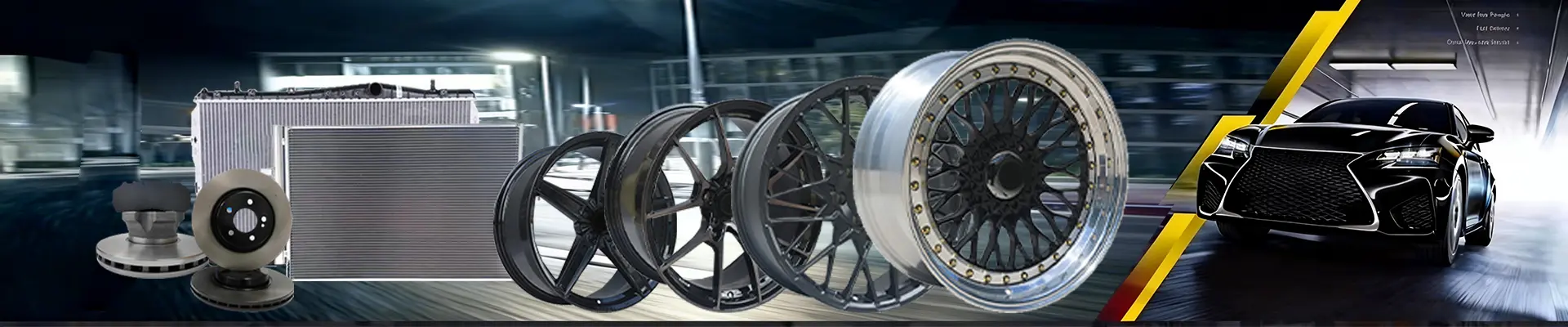
Hyundai Wheel Fitment Guide: Replica Wheels Wholesale Supplier

Hyundai Wheel Fitment Guide: Replica Wheels Wholesale Supplier
Most buyers think bolt pattern alone determines fitment — it does not.
The definitive answer for sourcing Hyundai-compatible replica wheels: five-lug 5×114.3 covers the vast majority of Hyundai passenger models, center bore is 67.1 mm as the baseline standard, and offset must stay within a narrow window of the OEM spec — typically ±5 mm — otherwise caliper interference or suspension contact becomes inevitable.
I still remember the first time a full container of 20-inch replica wheels came back from a Latin American port. The buyer had checked the bolt pattern, the center bore, even the J-width. What nobody measured was the brake caliper diameter on the high-performance trim they were fitting. The wheels cleared the base-model calipers perfectly — but the larger Brembo-style units on the sport variant rubbed the inner barrel on full lock. The entire shipment was rejected. Return freight, customs re-entry, and re-machining costs multiplied the original loss several times over. That single mistake reshaped how I approach every Hyundai fitment conversation. [NEED_CITE: Hyundai factory service manual wheel specification tables by model year]
Fitment is never a single-number game — it is a four-dimensional check, and skipping any one dimension is how containers get returned.
What Are the Key Fitment Specs for Hyundai Wheels?
Four parameters decide whether a replica wheel will mount, sit correctly, and clear all mechanical components: bolt pattern, center bore, offset (ET), and rim width (J-value).
Bolt pattern on Hyundai passenger vehicles is overwhelmingly 5×114.3. A small subset of older or commercial variants uses 5×120, and a few entry-level models historically ran 4-lug patterns — but for the current wholesale replica market, 5×114.3 is the dominant specification. [NEED_CITE: International Wheel & Tire Association bolt pattern reference database]
Center bore on most modern Hyundai models is 67.1 mm. This is a hub-centric mounting standard — meaning the wheel’s center bore must match the vehicle hub pilot diameter exactly, or a precision hub ring must be used. Replica wheels are often produced with a larger universal bore (commonly 73.1 mm) to fit multiple brands, which makes hub rings mandatory for Hyundai applications. Without them, vibration at highway speed is guaranteed. [NEED_CITE: hub-centric vs lug-centric mounting technical comparison per SAE standards]
Offset determines how far the wheel sits in or out relative to the hub mounting surface. Hyundai OEM offsets typically fall between ET35 and ET55 depending on model and trim. A replica wheel with ET30 on a vehicle spec’d for ET48 will push the wheel outward — potentially contacting the fender at full compression. A replica with ET55 on an ET38 application will push the wheel inward — and this is where caliper and suspension strut contact occurs.
| Parameter | Hyundai Passenger Baseline | Replica Wheel Common Range | Fitment Risk if Mismatched |
|---|---|---|---|
| Bolt Pattern | 5×114.3 | 5×114.3 (most) | Non-mountable |
| Center Bore | 67.1 mm | 73.1 mm (universal) | Vibration without hub ring |
| Offset (ET) | ET35–ET55 | ET30–ET45 (typical) | Caliper or fender contact |
| Rim Width (J) | 7J–9J | 8J–10J (aftermarket) | Tire stretch or rubbing |
A Middle East tuning shop once ordered a batch of replica wheels for a popular Hyundai sedan. The ET was only a few millimeters off the OEM figure — technically within the "close enough" range many sellers quote. But the shop was installing these on lowered vehicles with modified strut geometry. The slight inward shift caused the wheel spoke to contact the strut body at full steering lock. The rework cycle — shaving the inner barrel, re-balancing, re-coating — consumed weeks and eroded the shop’s margin entirely. [NEED_CITE: suspension geometry and wheel clearance interaction study]
Which Hyundai Models Share the Same Bolt Pattern?
The 5×114.3 bolt pattern covers the overwhelming majority of Hyundai passenger cars and crossovers sold globally over the past two decades — but model-year mid-cycle refreshes can change other critical dimensions.
The Elantra, Sonata, Tucson, Santa Fe, Kona, and Venue all share 5×114.3 as standard. The i30 / Elantra GT hatchback variants, the Genesis-branded sedans (before Genesis separated as a standalone marque), and most Hyundai N-performance models use the same pattern. This means a single replica wheel SKU in 5×114.3 can theoretically serve a very wide range of Hyundai applications — which is exactly why wholesale buyers favor this specification.
However, the trap lies in assuming full interchangeability across model years. A mid-generation facelift can alter the center bore, change the OEM offset range, or introduce larger brake calipers on upgraded trim levels. The Hyundai Tucson, for example, transitioned between generations with subtle hub and offset changes that are not obvious from bolt pattern alone. [NEED_CITE: Hyundai model-year wheel specification change log]
| Hyundai Model | Bolt Pattern | Center Bore | OEM Offset Range | Notes |
|---|---|---|---|---|
| Elantra (2016–present) | 5×114.3 | 67.1 mm | ET45–ET53 | N-version has larger calipers |
| Sonata (2015–present) | 5×114.3 | 67.1 mm | ET40–ET52 | Hybrid trim may differ |
| Tucson (2016–present) | 5×114.3 | 67.1 mm | ET41–ET48 | Gen change altered offset window |
| Santa Fe (2013–present) | 5×114.3 | 67.1 mm | ET41–ET50 | V6 trims use larger brakes |
| Kona / Venue | 5×114.3 | 67.1 mm | ET35–ET48 | Compact platform |
An e-commerce seller in Southeast Asia once listed a replica wheel SKU as "fits all Hyundai 5-lug" based on bolt pattern alone. Customer complaints poured in when buyers with newer Tucson models found the offset caused the wheel to sit too far inward, rubbing the inner liner. The return rate climbed noticeably, negative reviews accumulated, and the listing was eventually suppressed by the platform. The root cause was not the wheel — it was the missing offset specification in the product listing. [NEED_CITE: e-commerce wheel fitment return rate analysis by cause]
How to Check Brake Caliper Clearance Before Ordering Replica Wheels?
Caliper clearance is the single most overlooked dimension in replica wheel sourcing — and the most expensive one to get wrong after the container has shipped.
The process is straightforward in principle but rarely executed systematically by buyers. The minimum inner diameter of the wheel — measured at the spoke junction nearest the hub — must exceed the maximum outer diameter of the brake caliper assembly. The depth of the wheel barrel must also clear the caliper’s protrusion toward the mounting face. [NEED_CITE: brake caliper dimensional measurement protocol per wheel manufacturer guidelines]
The verification workflow runs as follows:
- Obtain the OEM brake caliper outer diameter and axial protrusion measurement from the vehicle service manual — not from forums or visual estimation.
- Request the replica wheel’s inner clearance diameter and spoke profile drawing from the manufacturer. This data should be available for any serious production facility.
- Compare: the wheel’s inner clearance diameter must exceed the caliper outer diameter with a functional margin. A tight match with no margin is unacceptable — casting tolerances and coating thickness reduce the real-world gap.
- For vehicles with known performance brake packages (Brembo-sourced or equivalent large-piston calipers), treat the clearance check as mandatory regardless of wheel diameter. A 20-inch wheel with a tight spoke design can fail where an 18-inch open-spoke wheel clears easily.
| Clearance Check Step | Required Data Source | Risk if Skipped |
|---|---|---|
| Caliper OD measurement | OEM service manual | Guesswork-based ordering |
| Wheel inner clearance | Manufacturer drawing | Spoke-to-caliper contact |
| Margin verification | Cross-reference both | Zero-tolerance fitment failure |
| Performance trim check | VIN-specific brake code | High-performance variant rejection |
A buyer in the Gulf region ordered a large batch of replica wheels for a fleet of Hyundai sedans used in a ride-hailing service. The base-model calipers cleared without issue. But a subset of the fleet had been upgraded to the sport brake package at the dealer level — larger calipers that the buyer was unaware of. Those wheels could not be mounted. The batch had to be split, partial credit negotiated, and replacement wheels sourced locally at a premium. The total cost impact was a mid-five-figure sum that could have been avoided with a single phone call to verify brake specifications by VIN. [NEED_CITE: fleet vehicle brake trim variation impact on wheel fitment]
What Are Common Fitment Mistakes When Buying Replica Hyundai Wheels?
The three most frequent errors are offset deviation without suspension verification, center bore mismatch without hub rings, and assuming casting consistency matches the manufacturer’s data sheet.
Offset deviation is the most common issue. Buyers often see a replica wheel listed as ET35 and assume it will work because the OEM spec is ET40 — "close enough" reasoning that fails in practice. The 5 mm difference pushes the wheel outward by exactly that amount at the mounting face, which translates to a noticeably wider track. On a stock suspension, this may cause fender lip contact under full compression. On a lowered or modified suspension, the contact is immediate and constant. [NEED_CITE: wheel offset effect on suspension kinematics and fender clearance]
Center bore mismatch is the second trap. Many replica wheels are produced with a 73.1 mm bore to maximize cross-brand compatibility. When mounted on a Hyundai with a 67.1 mm hub, the wheel is technically mountable — the lug nuts hold it in place. But without a precision hub ring, the wheel is not centered. At low speed, nothing is noticeable. At highway speed, vibration escalates rapidly. Buyers who skip specifying hub rings — or who accept low-quality plastic rings instead of aluminum — face customer complaints that are attributed to wheel balance or tire defect, when the real cause is the missing or failed hub ring.
The third mistake is the assumption that the manufacturer’s published specifications match every unit produced. Casting processes involve thermal shrinkage, machining tolerances, and coating buildup. A wheel listed at ET38 may measure ET36 or ET40 depending on the production lot. This is not fraud — it is a function of manufacturing variation — but it means that buyers who do not perform incoming inspection on critical dimensions will occasionally encounter units that fall outside acceptable range. [NEED_CITE: wheel manufacturing tolerance standards per casting process type]
| Common Mistake | Root Cause | Consequence |
|---|---|---|
| Offset deviation ignored | Assumption of interchangeability | Fender or suspension contact |
| Center bore ring omitted | Universal bore without adaptation | Highway-speed vibration |
| No incoming inspection | Trust in data sheet alone | Out-of-tolerance units reach customer |
An automotive modification shop in South America received a batch of replica wheels that measured correctly on paper. But when they began mounting tires and balancing, a noticeable portion of the wheels showed lateral runout beyond acceptable threshold. Investigation revealed that the hub bore on those specific units had been machined slightly off-center — a defect that would not appear in the specification sheet but would manifest as vibration once assembled. The shop had to reject roughly a third of the batch and wait weeks for replacement. The lesson: data sheet verification is necessary but not sufficient. Physical inspection of critical dimensions on arrival is the only reliable safeguard. [NEED_CITE: wheel runout and hub bore concentricity quality standards]
How to Verify Replica Wheel Specs Match Your Order?
Incoming inspection is the final gate — and it must be systematic, documented, and performed on a statistically meaningful sample from every production lot.
The verification process should cover the four critical dimensions before any wheel reaches a customer or goes into inventory. This is not optional — it is the difference between a reliable supply chain and a liability.
- Bolt pattern verification: Use a physical bolt pattern gauge to confirm 5×114.3 accuracy. Visual inspection is insufficient — a wheel with slightly elongated bolt holes may appear correct but will not seat lug nuts concentrically.
- Center bore measurement: Use a calibrated caliper to measure the bore diameter at multiple points. Compare against the 67.1 mm Hyundai standard or the specified adaptation ring size.
- Offset check: Mount the wheel on a fixture or measure from the back pad to the rim edge, then calculate ET. Compare against the ordered specification. A deviation beyond ±2 mm from the stated value should trigger rejection of the lot segment.
- Caliper clearance confirmation: For any wheel destined for a vehicle with known large-brake options, perform a physical mock-up with the actual caliper or a dimensional template.
| Inspection Item | Tool Required | Acceptance Criterion |
|---|---|---|
| Bolt pattern | Dedicated gauge | Exact 5×114.3 hole alignment |
| Center bore | Calibrated caliper | Within tolerance of spec |
| Offset (ET) | Fixture or depth gauge | Within ±2 mm of stated value |
| Inner clearance | Caliper or template | Exceeds caliper OD with margin |
A wholesale distributor in North America implemented a structured incoming inspection protocol after experiencing repeated fitment complaints. They began measuring every pallet’s sample set — bolt pattern, bore, offset, and runout — before releasing wheels to their warehouse. Within the first quarter of implementation, they caught a production lot where the offset had drifted noticeably from the ordered specification. The lot was flagged, the manufacturer was notified, and replacement units were produced before any wheels reached end customers. The cost of the inspection equipment was recovered from the avoided return freight alone. [NEED_CITE: incoming quality inspection protocol for aftermarket alloy wheels]
Conclusion
Hyundai replica wheel fitment is a four-parameter discipline — bolt pattern, center bore, offset, and caliper clearance — and failure on any single dimension produces costly returns.
Sourcing successfully requires treating the manufacturer’s data sheet as a starting point, not a guarantee. Physical verification on arrival, systematic clearance checks before order confirmation, and explicit specification of hub adaptation components separate reliable supply chains from expensive lessons.


